Dr. and Mrs. Vandertramp(p) verbs / Être verbs in the passé composé
 Call Kai
 Learn
 Practice Test
 Spaced Repetition
 Match
 Flashcards
 Knowt Play
1/26

There's no tags or description
Looks like no tags are added yet.
27 Terms
Dr. and Mrs. Vandertramp(p)
A mnemonic device that helps you remember the être verbs
* These are also called the intransitive verbs of motion and the "go-come-stay" verbs.

La Maison d'Etre
another mnemonic device to help you remember these verbs
Auxiliary verb / Helping verb (definition)
-- the first word of the 2-word passé composé verb
-- for "être verbs" the auxiliary will be one of these six words: suis, es, est, sommes, êtes, sont
Past participle (definition)
-- the second word of the 2-word passé composé verb
-- to form regular past participles: take infinitive, drop the -er/-ir/-re, then add ending -é/-i/-u
-- for irregular past participles, they must be memorized: mort, né, venu, devenu, revenu
Past participle agreement (definition)
For être verbs, the past participle has to match the subject of the sentence in gender (m/f) and number (sing/pl).
-- for a masc. sing. subject: add nothing to the past participle
-- for a masc. plural subject: add -s to the end of the past participle (unless it already ends in -s or -x)
-- for a feminine sing. subject, add -e to the end of the p.p.
-- for a feminine plural subject, add -es to the end of the p.p.
devenir (to become)
je suis devenu (e)

revenir (to come back)
je suis revenu (e)

monter (to go up)
je suis monté (e)

rentrer (to reenter, to return home)
je suis rentré(e)

sortir (to go out)
je suis sorti(e)

venir (to come)
je suis venu(e)
arriver (to arrive)
je suis arrivé(e)

naître (to be born)
je suis né(e)

descendre ( to descend, to go down)
je suis descendu(e)

entrer (to enter)
je suis entré(e)

retourner (to return)
je suis retourné(e)

tomber (to fall)
je suis tombé(e)

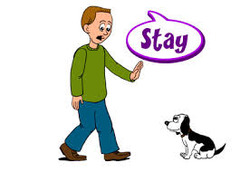
rester (to stay, remain)
je suis resté(e)
aller (to go)
je suis allé(e)
mourrir (to die)
je suis mort(e)

partir (to depart, leave)
je suis parti(e)

passer (to go, stop in at)
je suis passé(e)
We returned.
Nous sommes retournés.
They (masc.) fell down.
Ils sont tombés.
She came to school.
Elle est venue à l'école.
You (informal, masc) went to the party.
Tu es allé à la fête.
They (fem) stayed at the house.
Elles sont restées à la maison.