Cardiac, Lung, and Abdomen Review PowerPoint
 Call Kai
 Learn
 Practice Test
 Spaced Repetition
 Match
 Flashcards
 Knowt Play
1/56

There's no tags or description
Looks like no tags are added yet.
57 Terms
SA node
the heart's pacemaker
40-60 bpm
what is the rate of the AV node?
60-100 bpm
what is the rate of the SA node?
myocardium
muscle layer of heart
endocardium
inner smooth layer of heart
epicardium
layer of heart that contains coronary arteries and veins
pericardium
Lining of heart that prevents friction during systole and diastole
preload
Volume of blood in the ventricle at the end of diastole
afterload
Volume of blood in the ventricles at end of systole
apex (mitral area)
Auscultatory site at the intercostal space midclavicular line
left lateral sternal border (tricuspid area)
Auscultatory site at the fourth intercostal space, left sternal border
preload Erb's Point
Auscultatory site at the third intercostal space, left sternal border
pulmonic area
Auscultatory site at the second intercostal space left of sternum
aortic area
Auscultatory site at the second intercostal space right of sternum
amplitude
Describes pulse strength
+2
Normal pulse amplitude
1-2 cm
Normal point of maximum impulse
sternal angle or angle of Louis
Site for measurement of jugular venous pressure
S1
Sound created by closing of mitral and tricuspid valve
S2
Sound created by closing aortic and pulmonic valves
apex
Auscultatory site where S1 is heard best
base right
Auscultatory site where S2 is best heard
0.12-0.20 seconds
how long is the PR interval?
<0.12 s
how long is the QRS?
aortic 2nd RIC
which heart sound location is pictured?
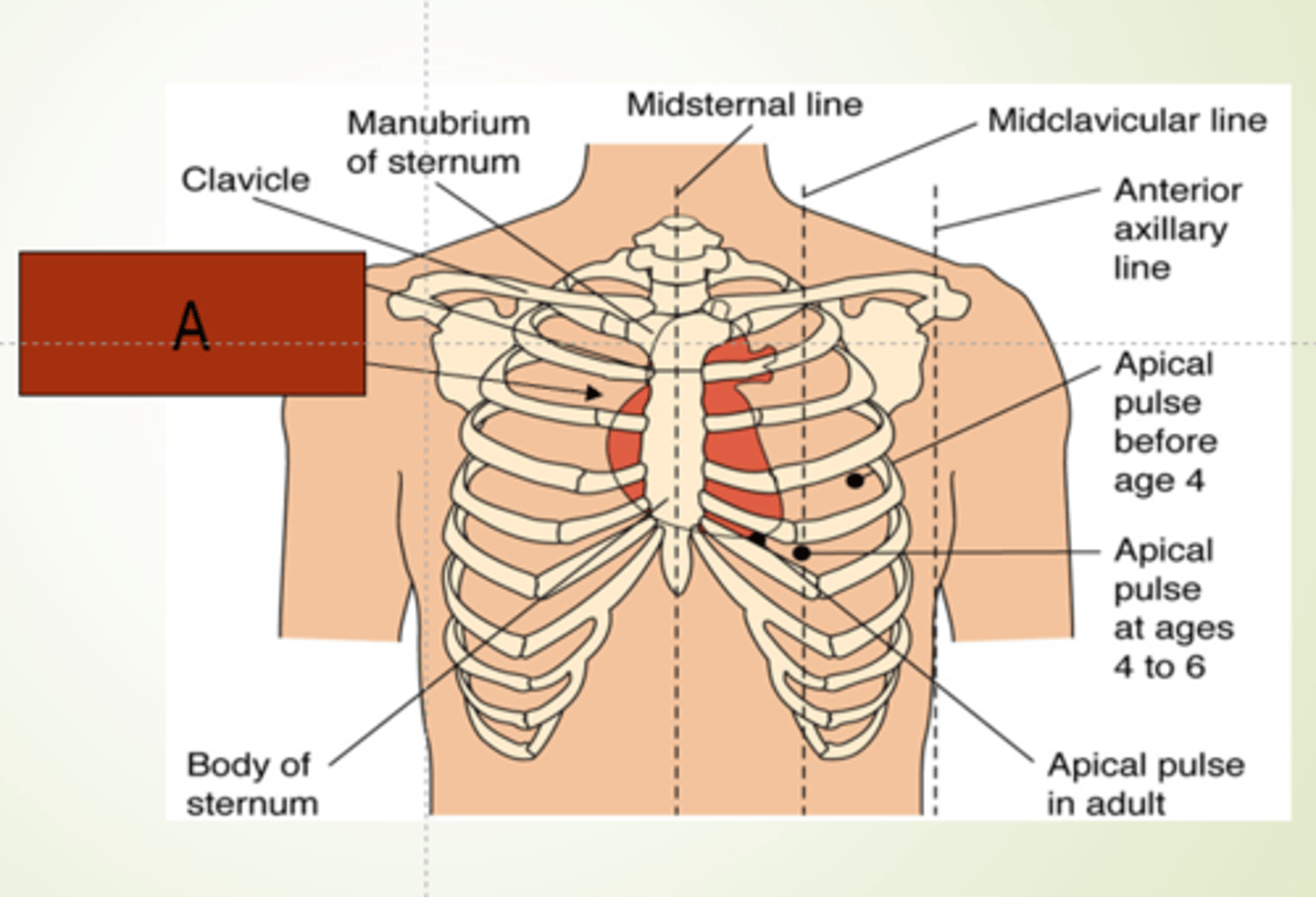
Erb's 3rd Left ICS
which heart sound location is pictured?
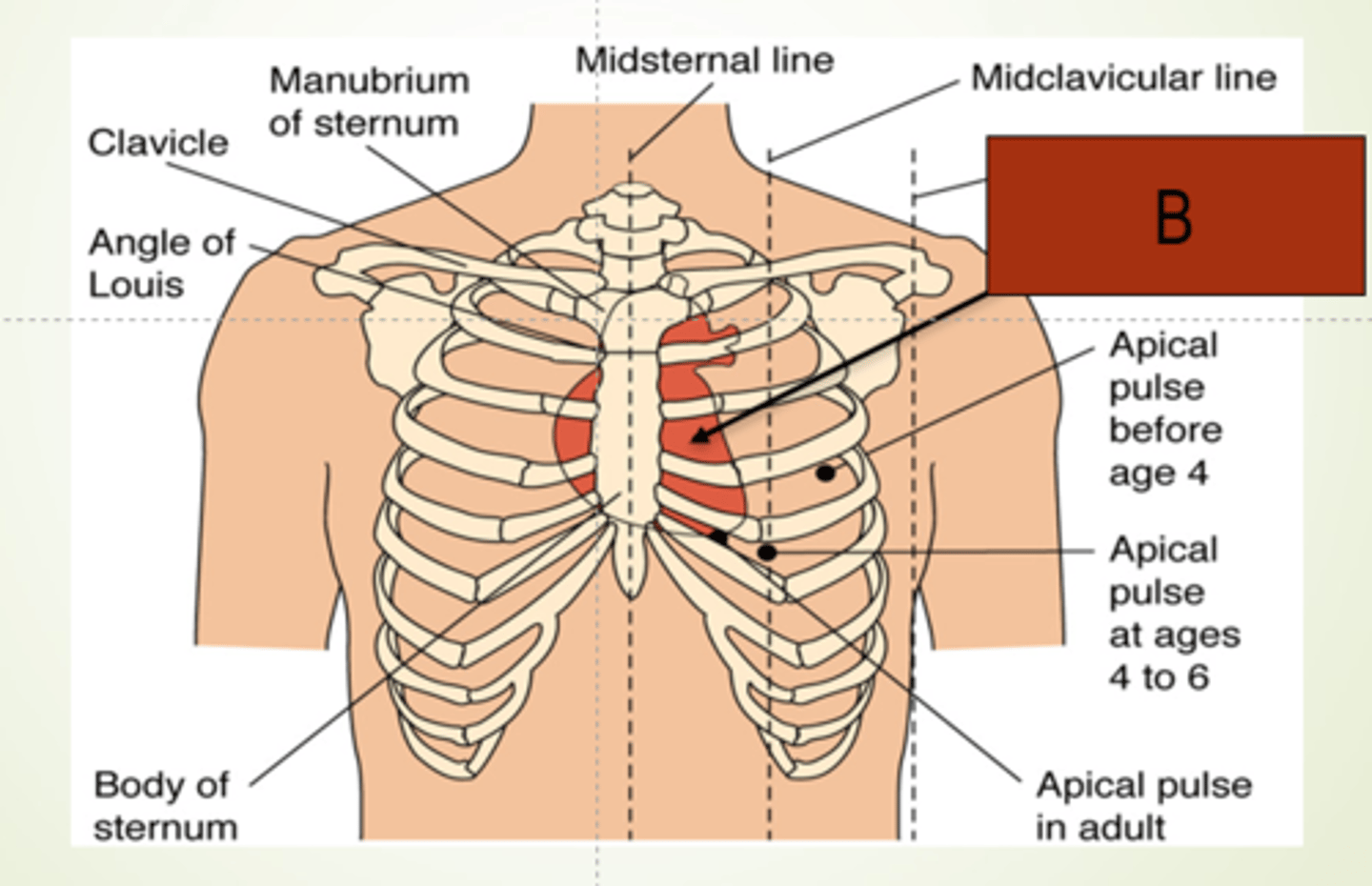
mitral 5th ICS MCL
which heart sound location is pictured?
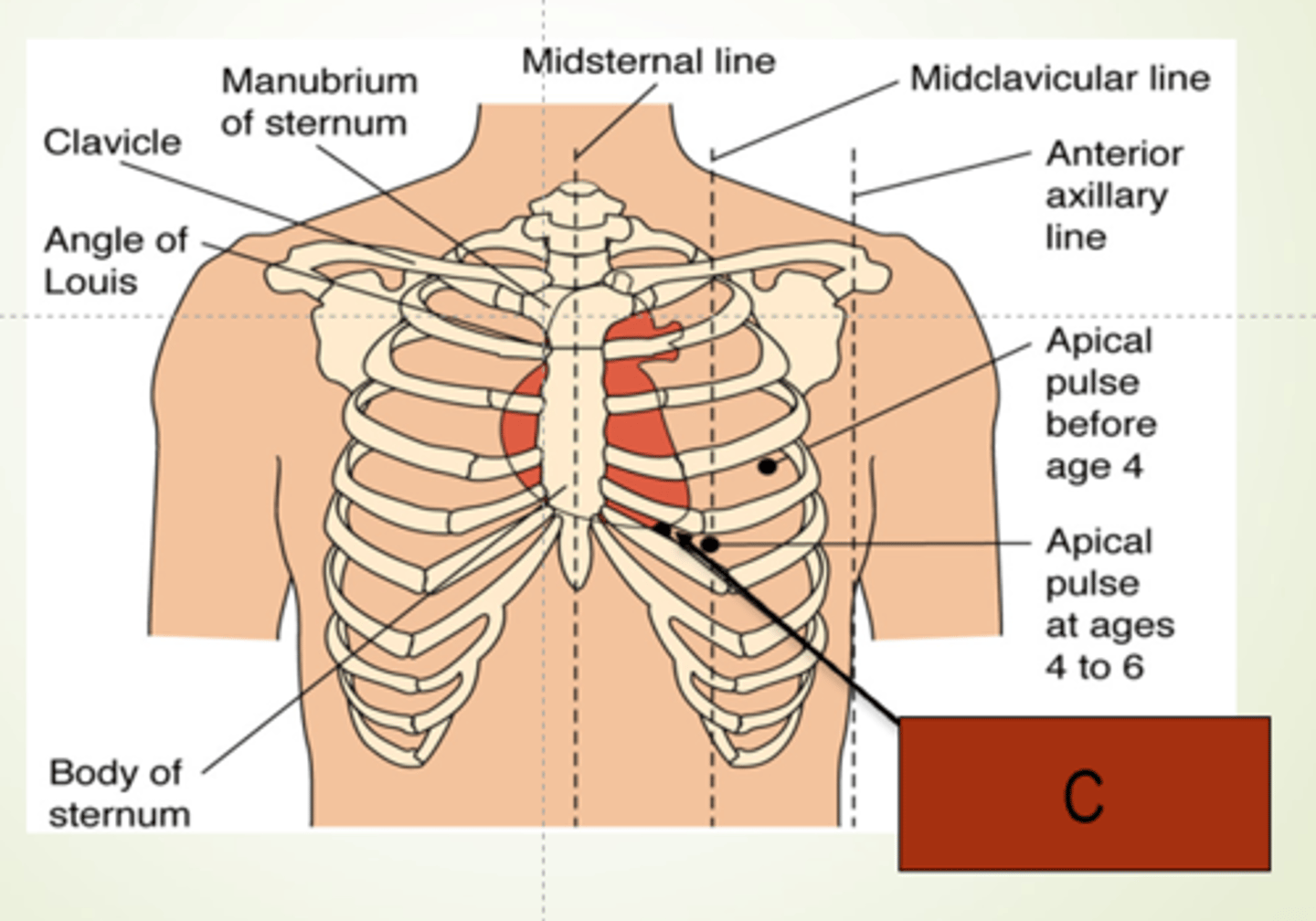
tricuspid
which heart sound location is pictured?
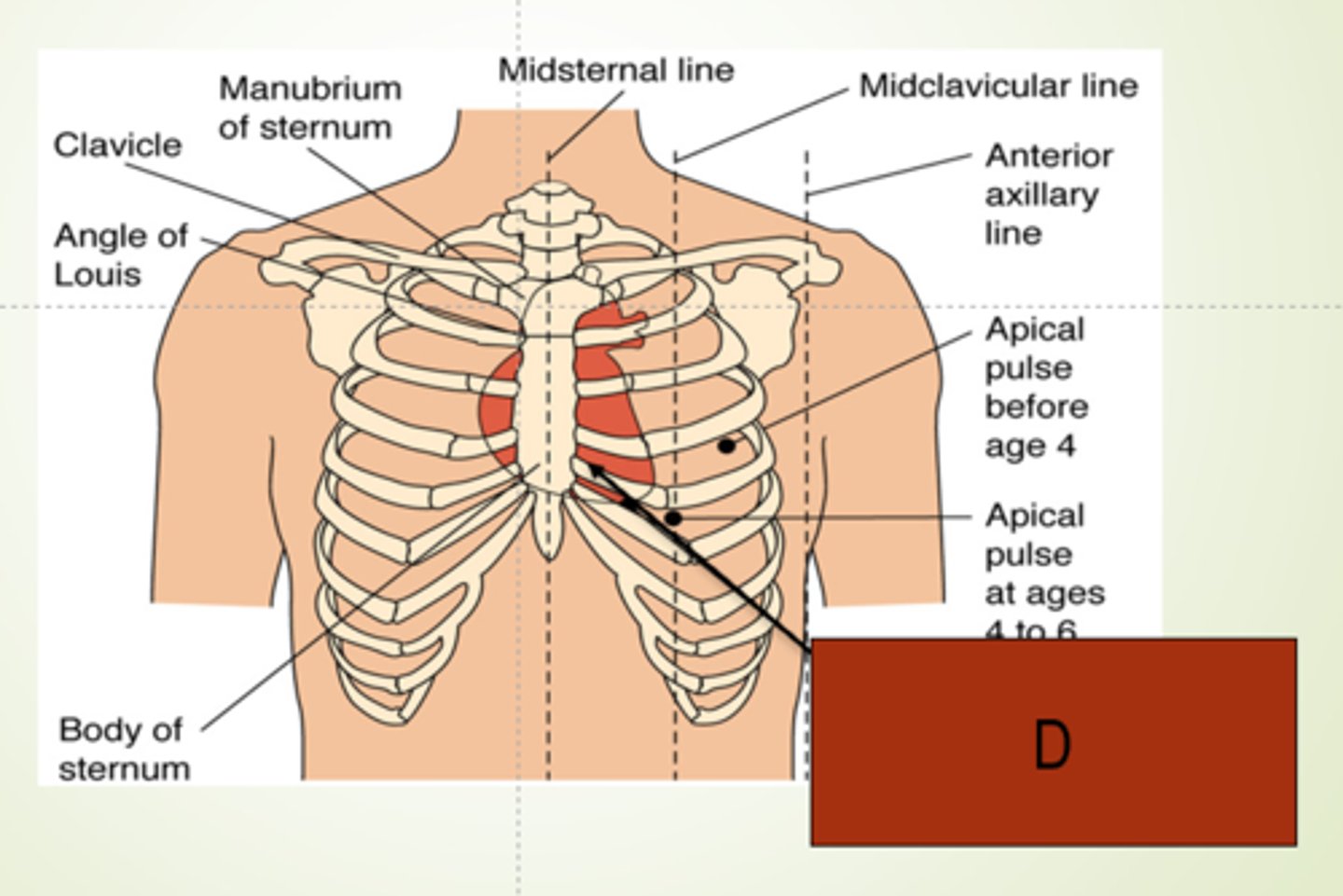
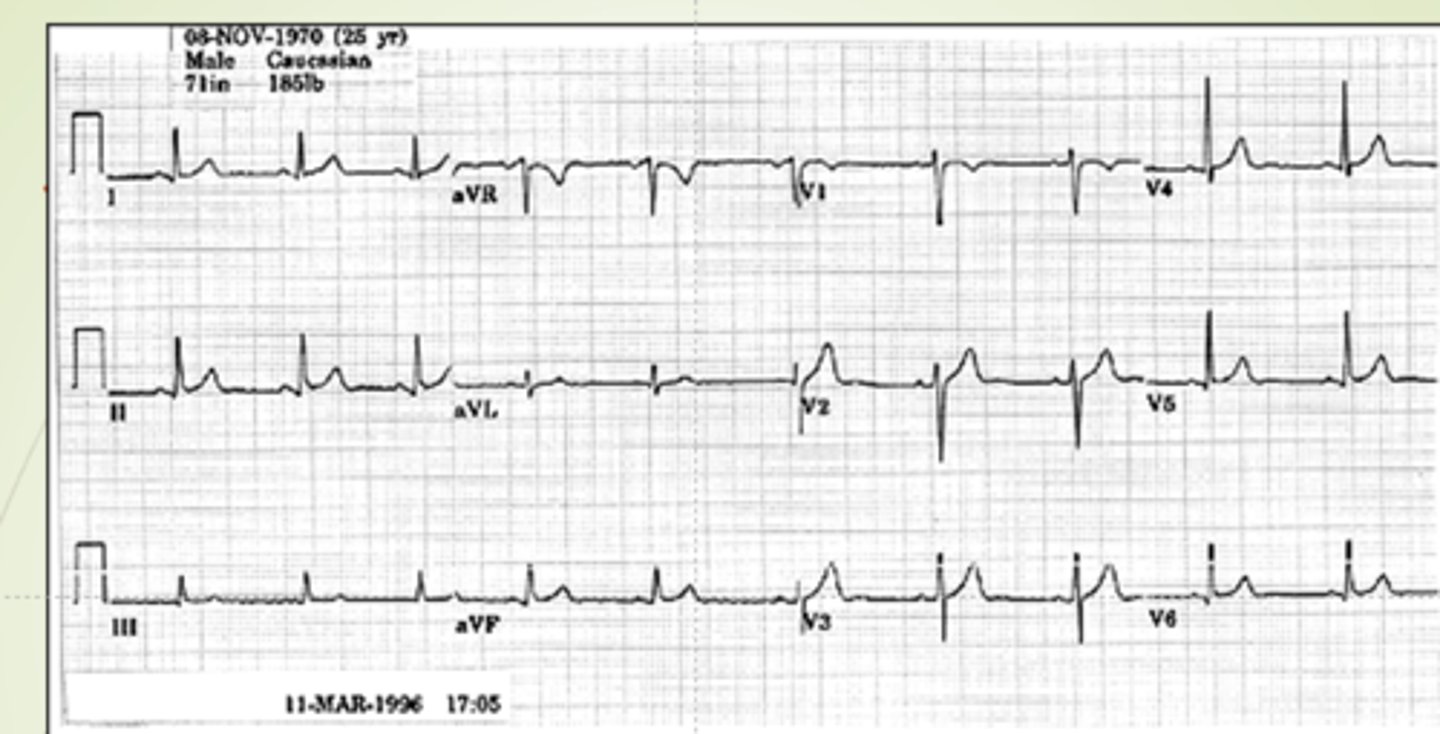
normal sinus rhythm
which rhythm is pictured?
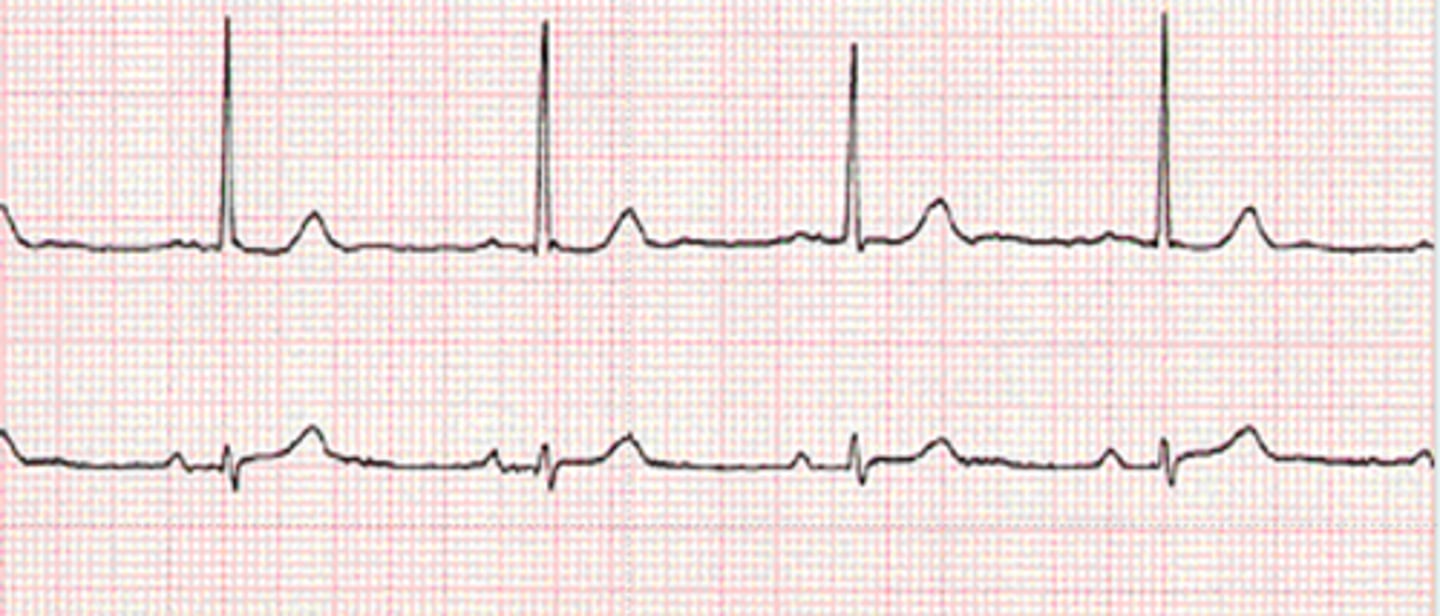
sinus bradycardia
which rhythm is pictured?
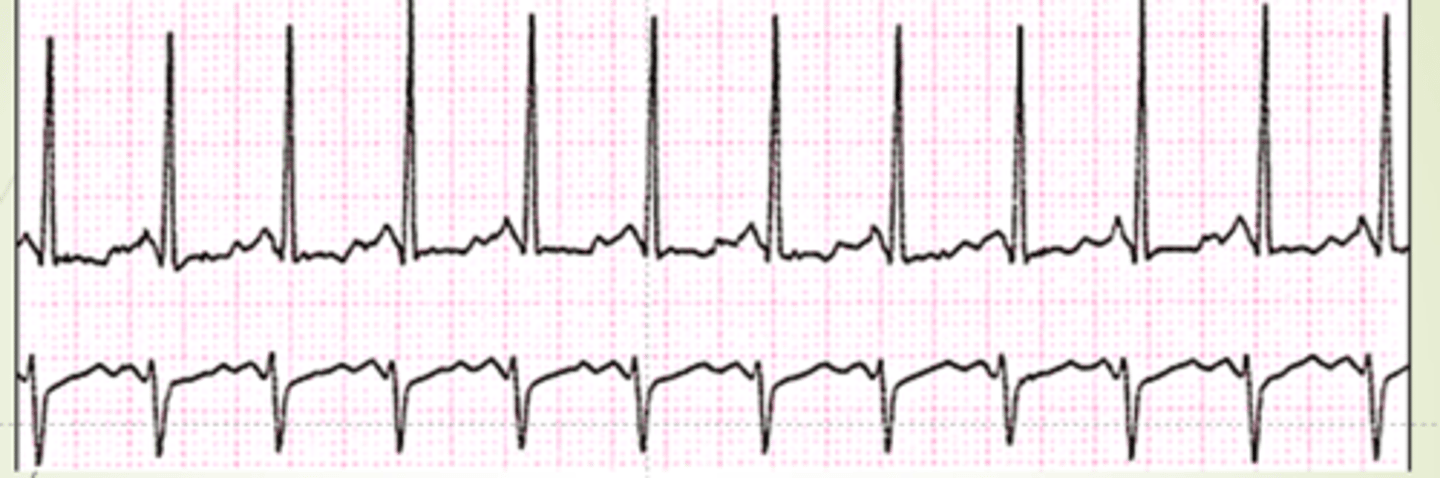
sinus tachycardia
which rhythm is pictured?
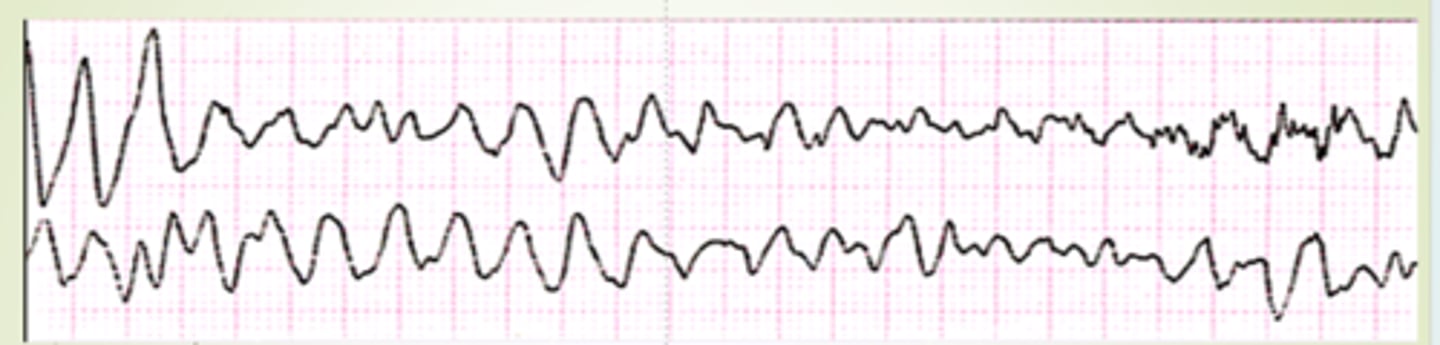
ventricular fibrillation
which rhythm is pictured?
ventricular tachycardia
which rhythm is pictured?
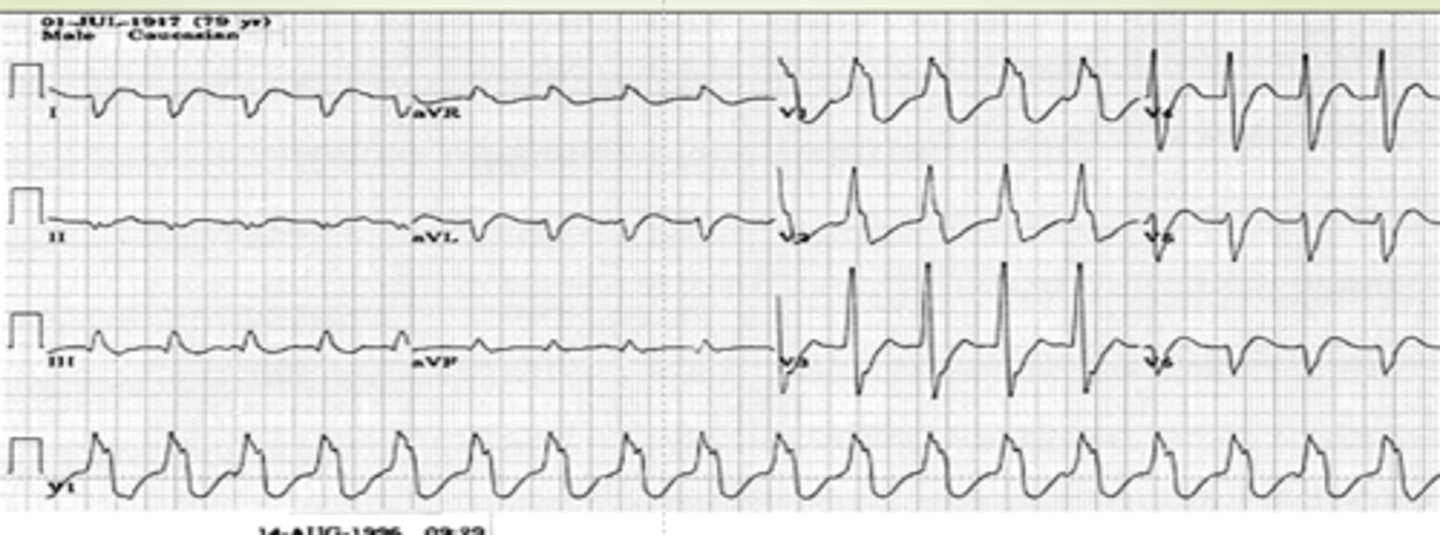
Uncompensated respiratory acidosis
pH 7.23
CO2 50
HCO3 22
Uncompensated metabolic alkalosis
pH 7.50
CO2 42
HCO3 33
Compensated respiratory acidosis
pH 7.36
CO2 50
HCO3 29
resonance
Normal percussion sound heard over healthy lung tissue
vesicular sound
Normal breath sound heard over most of lung field; inspiratory phase longer than expiratory
bronchial sound
Normal breath sound heard over the trachea with inspiration shorter than expiration
T10 and T12
Level of diaphragm posteriorly with relaxed breathing and on deep inspiration
tuberculosis
in which disorder, does the sputum contain large amounts of blood?
carcinoma
in which disorder, does the sputum contain slight, persistent blood streaking?
bacterial infection
in which disorder, does the sputum appear yellow, green, rust, clear, or transparent, purulent, blood streaked, mucoid viscid?
viral infection
in which disorder, does the sputum appear mucoid, viscid, or blood streaked (not common)?
infarction
in which disorder, is the sputum blood clotted and there's large amount of blood?
egophony
Breath sounds heard on auscultation from "e" to "a"
bronchophony
Breath sounds heard on auscultation "99"
5-15 seconds
what is the normal frequency of bowel sounds?
5 min
Amount of time need to listen before saying patient has no bowel sounds
test for hernias
Have patient lift his or her head up off the bed and contract abdominal muscles
dullness
Normal percussion sound elicited over the organs
tympany
Normal percussion sound elicited over an air-or-gas filled intestinal tract
hooking
Technique used to palpate the liver's edge
rebound tenderness and iliopsoas and obturator
test used to assess for peritoneal inflammation
left axillary line
Percussion site for spleen
McBurney's point
Area located about one third from anterior iliac crest and umbilicus
6-12 cm
normal liver span