2. neurons and synaptic transmission
 Call Kai
 Learn
 Practice Test
 Spaced Repetition
 Match
 Flashcards
 Knowt Play
1/30

There's no tags or description
Looks like no tags are added yet.
31 Terms
neuron definition
basic building blocks of the nervous system
they are nerve cells that process and transmit messages through electrical and chemical signals, providing the nervous system with its primary means of communication
vary in size from less than 1mm to up to 1m
there are 100 billion in the human nervous system - 80% in the brain
neuron types
sensory neuron
relay neuron
motor neuron
neurons diagram
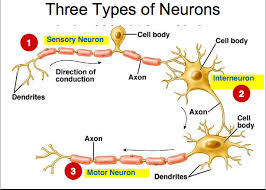
sensory neuron
carry messages from the PNS to the CNS
keep the brain informed about the external and internal environment information coming from the sense organs
only transmit messages one way and cannot receive messages
long dendrites, short axons
relay neuron
connect sensory neurons to the motor and other relay neurons
messages can be transmitted and received
short dendrites, short axons
motor neuron
connect the CNS to effectors such as muscles and glands
transmit and receive messages
control physical movements ie contraction of muscles
short dendrites, long axons
neuron structure
components include
cell body (or soma)
dendrites
axon
myelin sheath
nodes of ranvier
terminal buttons
cell body
includes a nucleus which contains the genetic material of the cell
dendrites
branch like structures protruding from the cell body
carry nerve impulses from neighbouring neurons towards the cell body
axon
carries the impulses away from the cell body down the length of the neuron
myelin sheath
fatty layer covering the axon
protects it and speeds up electrical transmission of the impulse
nodes of ranvier
if the myelin sheath was continuous, it would have the reverse effect and slow down the electrical impulse
thus it is segmented by gaps called nodes of ranvier
they speed up the transmission of the impulse by forcing it to jump across the gaps along the axon
terminal buttons
at the end of the axon
communicate with the next neuron in the chain across a gap known as the synapse
location of neurons
cell bodies of motor neurons may be in the CNS but they have long axons which form part of the PNS
sensory neurons are located outside of the CNS, in the PNS in clusters known as ganglia
relay neurons make up 97% of all neurons and most are found within the brain and visual system
electrical transmission of neurons
when a neuron is in a resting state, the inside of the cell is negatively charged compared to the outside
when it is activated by a stimulus, the inside becomes positively charged for a split second causing an action potential to occur - creates an electrical impulse that travels down the axon towards the end of the neuron
synaptic transmission definition
process by which neighbouring neurons communicate with each other by sending chemical messages across the synapse that separates them
how does chemical transmission work
neurons communicate with each other within groups known as neural networks
each neuron is separated from the next by a tiny gap called a synapse
signals WITHIN neurons are transmitted electrically
signals BETWEEN neurons are are transmitted chemically across the synapse
when the electrical impulse reaches the end of the neuron (presynaptic terminal) it triggers the release of neurotransmitter from tiny sacs called synaptic vesicles
synapse diagram

synaptic transmission steps
signal begins as electrical impulse (action potential) within presynaptic neuron
when it reaches axon end on pre-synaptic knob neurotransmitters released from vesicles
theyre released into the synaptic cleft as a chemical substance
diffuse across synaptic cleft and temporarily bind with receptor sites on postsynaptic membrane
stimulates postsynaptic neuron to generate another action potential that travels down its axon
neurotransmitters then destroyed by enzymes or recycled to prevent continued stimulation
re-absorbed neurotransmitter may be used again by presynaptic neuron
diagram

presynaptic knob
a swelling at the end of the presynaptic neuron
contains vesicles holding neurotransmitters
synaptic cleft
space in between axon of one neuron and dendrites of another
where electrical signals are turned into chemical messengers that can be detected by the next neuron
postsynaptic membrane
membrane receives a signal from presynaptic neuron
neurotransmitter definition
brain chemicals released from synaptic vessicles that relay signals across the synapse from one neuron to another
broad division of neurotransmitters
those that perform an excitatory function
those that perform an inhibitory function
how do neurotransmitters work
diffuses across the synapse
once it has crossed the gap, it is taken up by a postsynaptic receptor site on the dendrites of the next neuron
chemical message is converted back into an electrical impulse
the process of transmission begins again in this other neuron
direction of travel of neurotransmitters
only one way
because they are released from the presynaptic neuron terminal and recieved by the postsynaptic neuron at receptor sites
neurotransmitter types and examples
several dozen types
each has its own specific molecular structure that fits perfectly into a postsynaptic receptor site
also have specialist functions - eg acetylcholine (ACh) is found at each point where a motor neuron meets a muscle, and upon its release, it will cause muscles to contract
excitation
when a neurotransmitter increases the positive charge of the postsynaptic neuron - increases likelihood it will pass on the electrical impulse
eg adrenaline
inhibition
when a neurotransmitter increases the negative charge of the postsynaptic neuron - decreases likelihood it will pass on the electrical impulse
eg seratonin
summation
whether a postsynaptic neuron fires is decided by the process of summation
the action potential of the postsynaptic neuron is only triggered if the sum of the excitatory and inhibitory signals at any one time reaches the threshold