IBS - BODY SYSTEMS
 Call Kai
 Learn
 Practice Test
 Spaced Repetition
 Match
 Flashcards
 Knowt Play
1/22

There's no tags or description
Looks like no tags are added yet.
23 Terms
Components of integumentary system
Skin, hair, fingernails, toenails, sweat glands, and oil glands
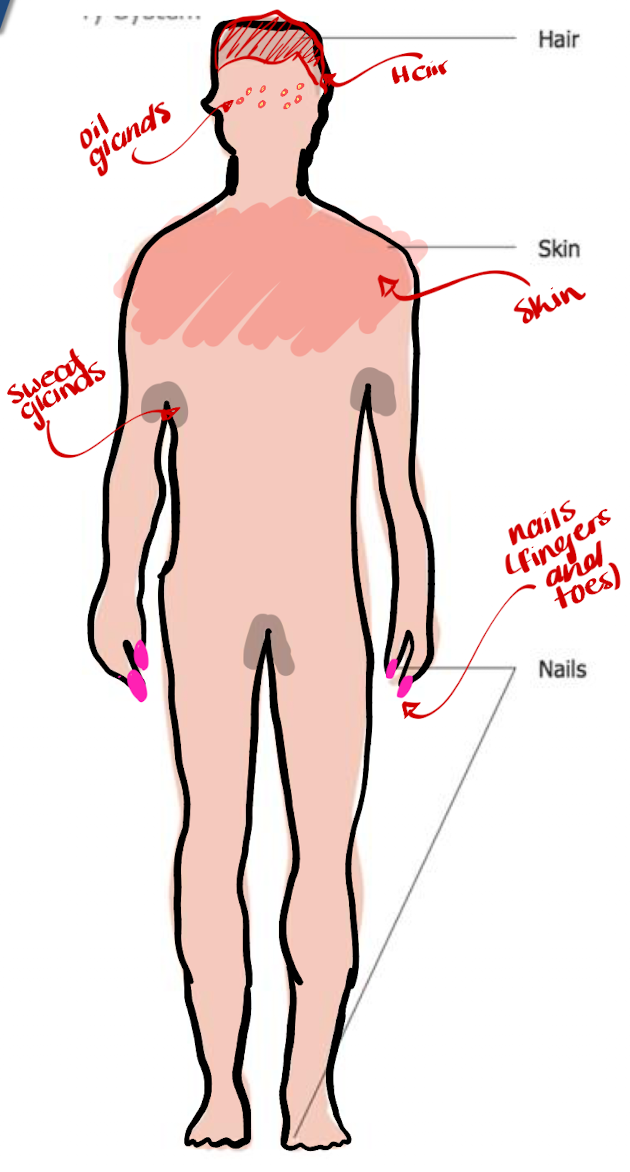
Function of integumentary system
✓ protects body
✓ helps regulate body temp
✓ eliminates wastes
✓ helps make vitamin D
✓ detects sensations: touch, pain, warmth, cold
✓ stores fat - insulation
Components of skeletal system
Bones and joints of the body + associated cartilages

Function of skeletal system
✓ supports and protects body
✓ surface area for muscle attachments
✓ aids body movements
✓ houses cells that produce blood cells
✓ stores minerals and lipids
Components of muscular system
Skeletal muscle tissue, smooth and cardiac muscle
Function of muscular system
✓ participates in body movements
✓ maintains posture
✓ produces heat
✓ boundary to organs
Components of nervous system
brain, spinal cord, nerves
→ special sense organs - eyes and ears

Function of nervous system
✓ generates action potentials to regulate body activities
✓ detects changes in body’s internal and external environments
✓ interprets changes
✓ responds by causing muscular contractions or glandular secretions
Components of endocrine system
Hormone producing glands:
pineal gland
hypothalamus
pituitary gland
thymus
thyroid gland
parathyroid glands
adrenal glands
pancreas
ovaries
testes

Function of endocrine system
✓ regulates body activities by releasing hormones
Components of lymphatic system
lymphatic fluid and vessels
spleen, thymus, lymph nodes, tonsils
cells carry out immune responses (B cells, T cells)
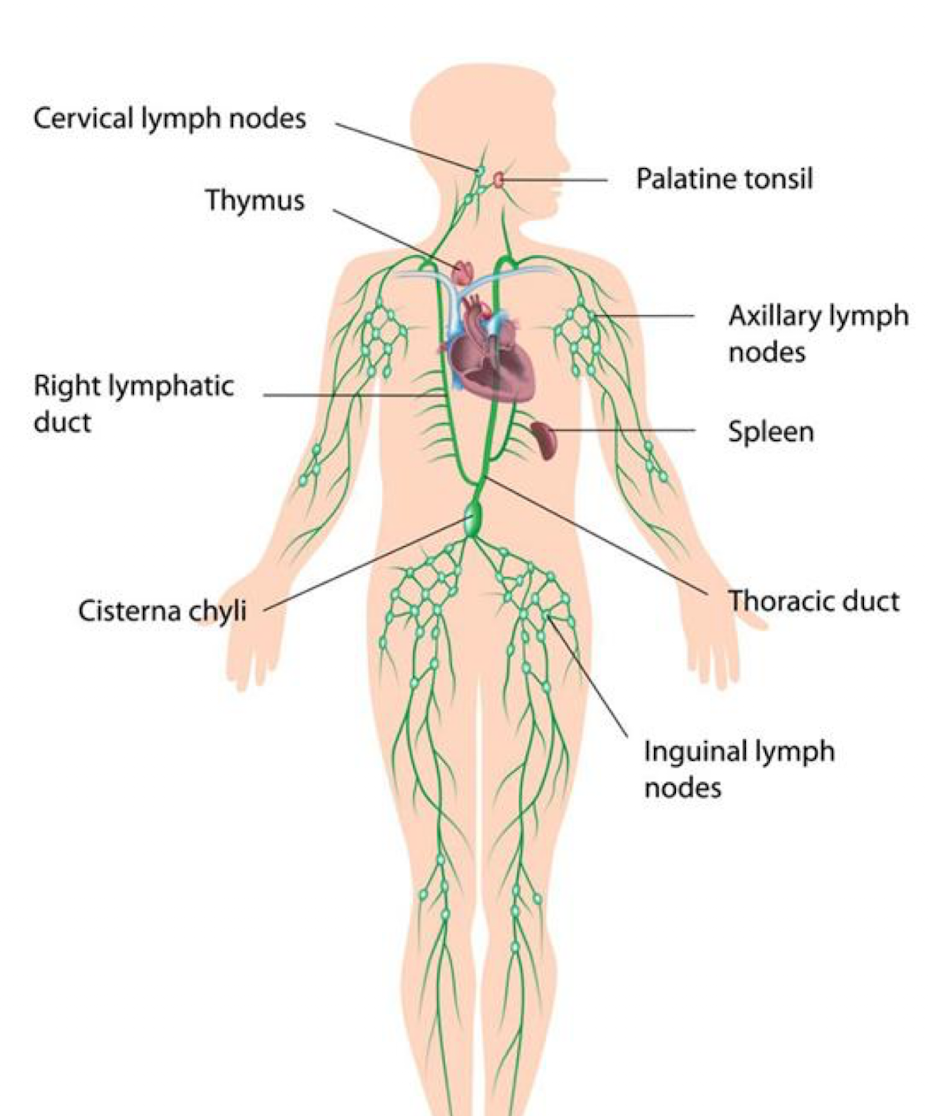
Function of lymphatic system
✓ returns proteins + fluid to blood
✓ carries lipids from gastrointestinal tract to blood
✓ sites of maturation and proliferation of B cells and T cells
Components of cardiovascular system
blood, heart, blood vessels

Function of cardiovascular system
✓ heart pumps blood through blood vessels
✓ blood carries O and nutrients to cells
✓ blood transport CO2 and wastes away from cells
✓ regulate acid–base balance and temp
✓ maintain water content of body fluids
✓ blood components help defend against disease and repair damaged blood vessels

Components of respiratory system
lungs and air passageways (pharynx, larynx, trachea, bronchial tubes)
Function of respiratory system
✓ transfers O from inhaled air to blood
✓ CO2 from blood to exhaled air
✓ regulate acid–base balance of body fluids
✓ air flowing out of lungs through vocal cords produces sounds
Components of digestive system
mouth, pharynx, esophagus, stomach, small and large intestines, anus
• Accessory organs – Salivary glands, liver, gallbladder, pancreas

Function of digestive system
✓ physical and chemical breakdown of food
✓ absorbs nutrients
✓ eliminates solid wastes

Components of urinary system
kidneys, ureters, urinary bladder, urethra
Function of urinary system
✓ produces, stores, and eliminates urine
✓ eliminates wastes
✓ regulates volume and chemical composition of blood**
✓ maintain acid–base balance of body fluids
✓ maintains mineral balance
✓ regulate production of red blood cells
Components of reproductive system
• Gonads
male - testes
female - ovaries
What are the male and female associated organs in the reproductive system?
F - fallopian tubes, uterus, vagina, mammary glands
M - Epididymis, vas deferens, seminal vesicles, prostate, penis

Function of reproductive system
✓ gonads produce gametes
✓ hormones regulate reproduction and other body processes