Respiratory system anatomy
 Call Kai
 Learn
Learn Practice Test
 Spaced Repetition
 Match
Match Flashcards
 Knowt Play
1/32

There's no tags or description
Looks like no tags are added yet.
Name | Mastery | Learn | Test | Matching | Spaced | Call with Kai | Chat |
|---|
No analytics yet
Send a link to your students to track their progress
33 Terms

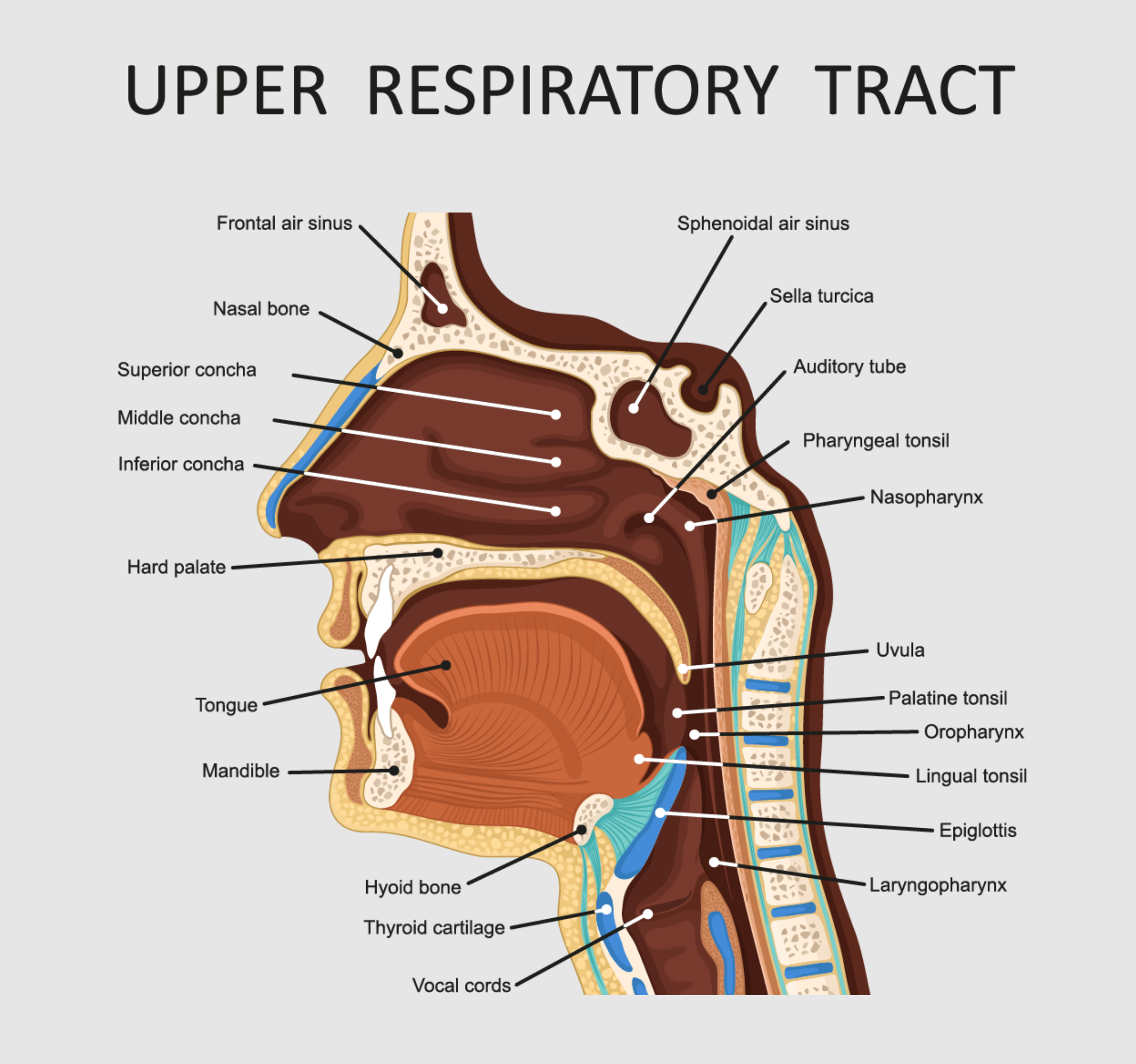
Nasal Cavity
sits above the hard palate and helps with humidifying, warming, and filtering the air
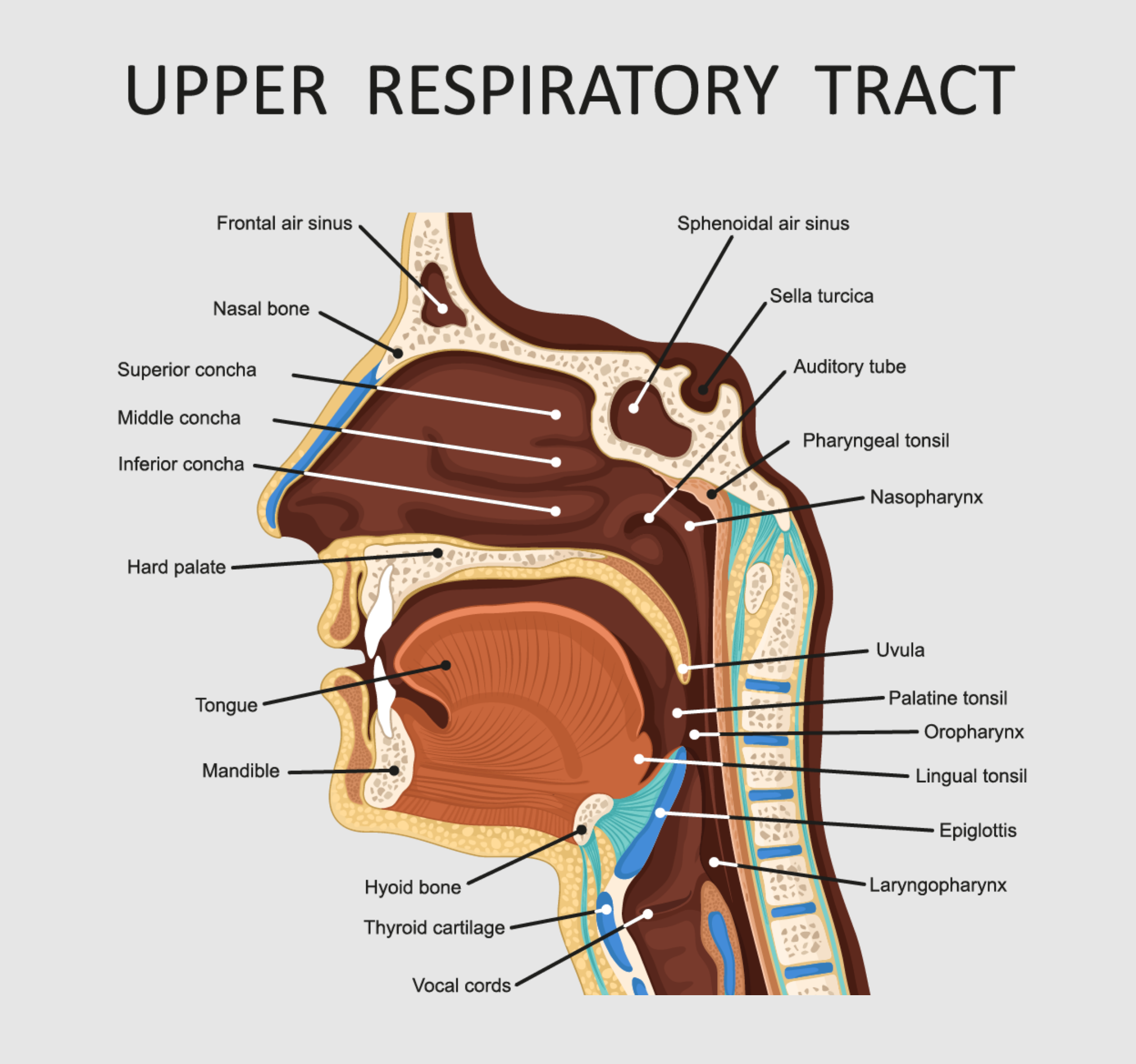
External portion of Nasal Cavity
Consists of Nasal Septum (made up of bone + hyaline cartilage)
Nares (nostrils & opening)
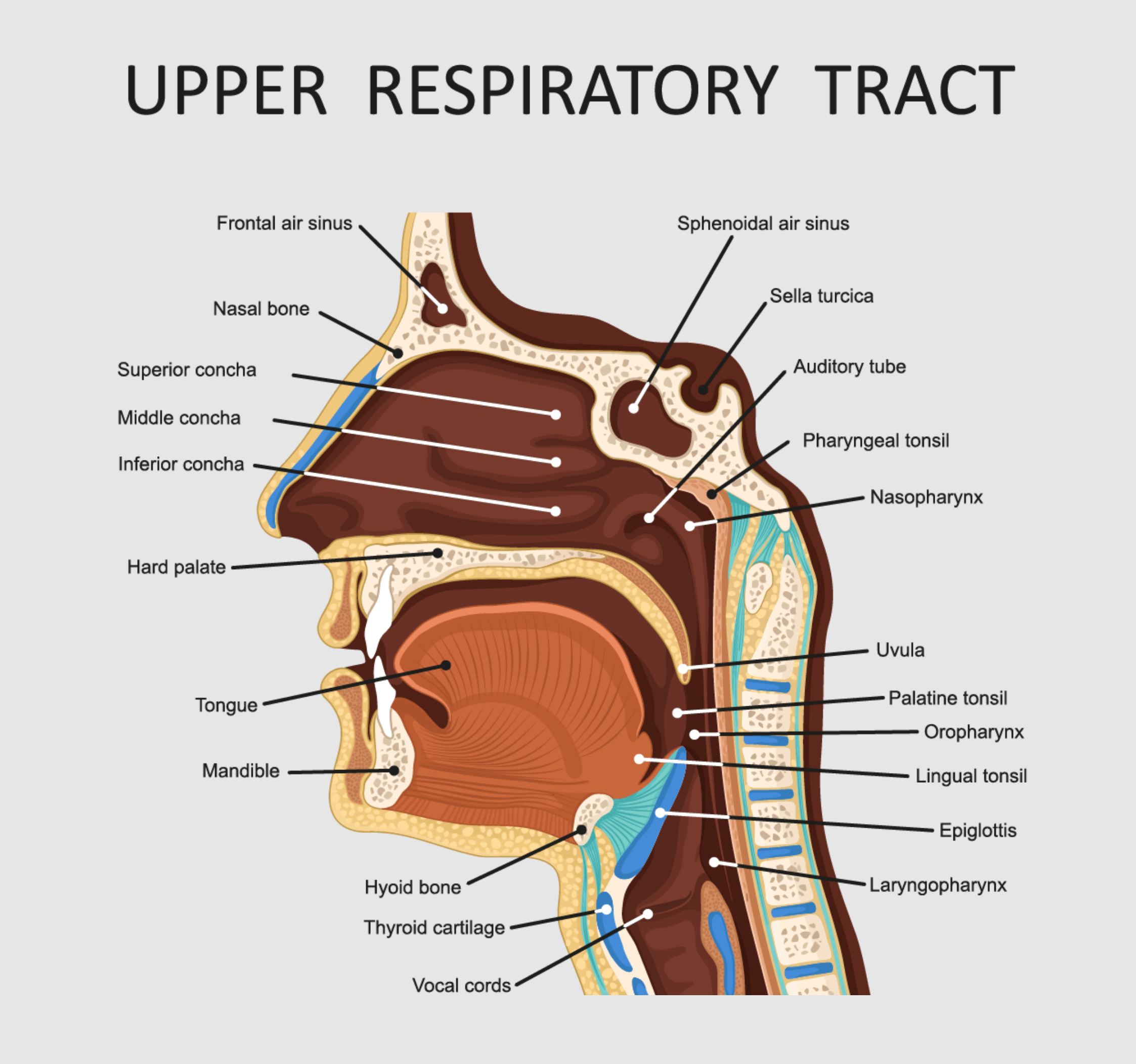
Internal portion of Nasal Cavity
The superior, middle, and inferior nasal concha
Increases surface area & air turbulence for warming, filtering, and humidifying

Internal portion of Nasal Cavity pt.2
Paranasal Sinuses lighten the skull and also create a resonating chamber for speech
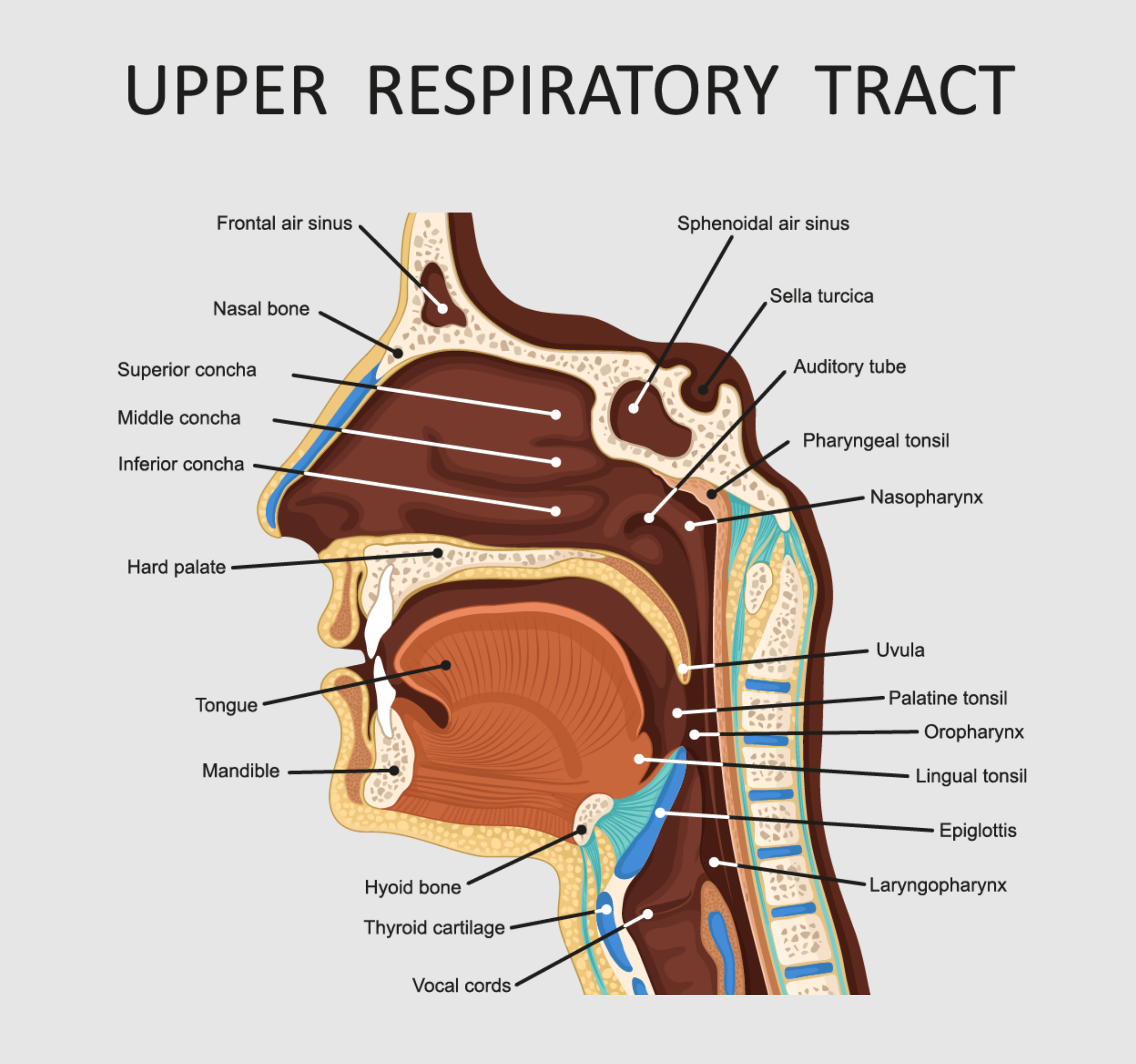
Organs and tissues of the Pharynx (throat)
Uvula
Nasopharynx
Oropharynx
Laryngopharynx

Uvula
The uvula closes the entrance of the nasopharynx when eating to prevent food from getting into the nasal cavity
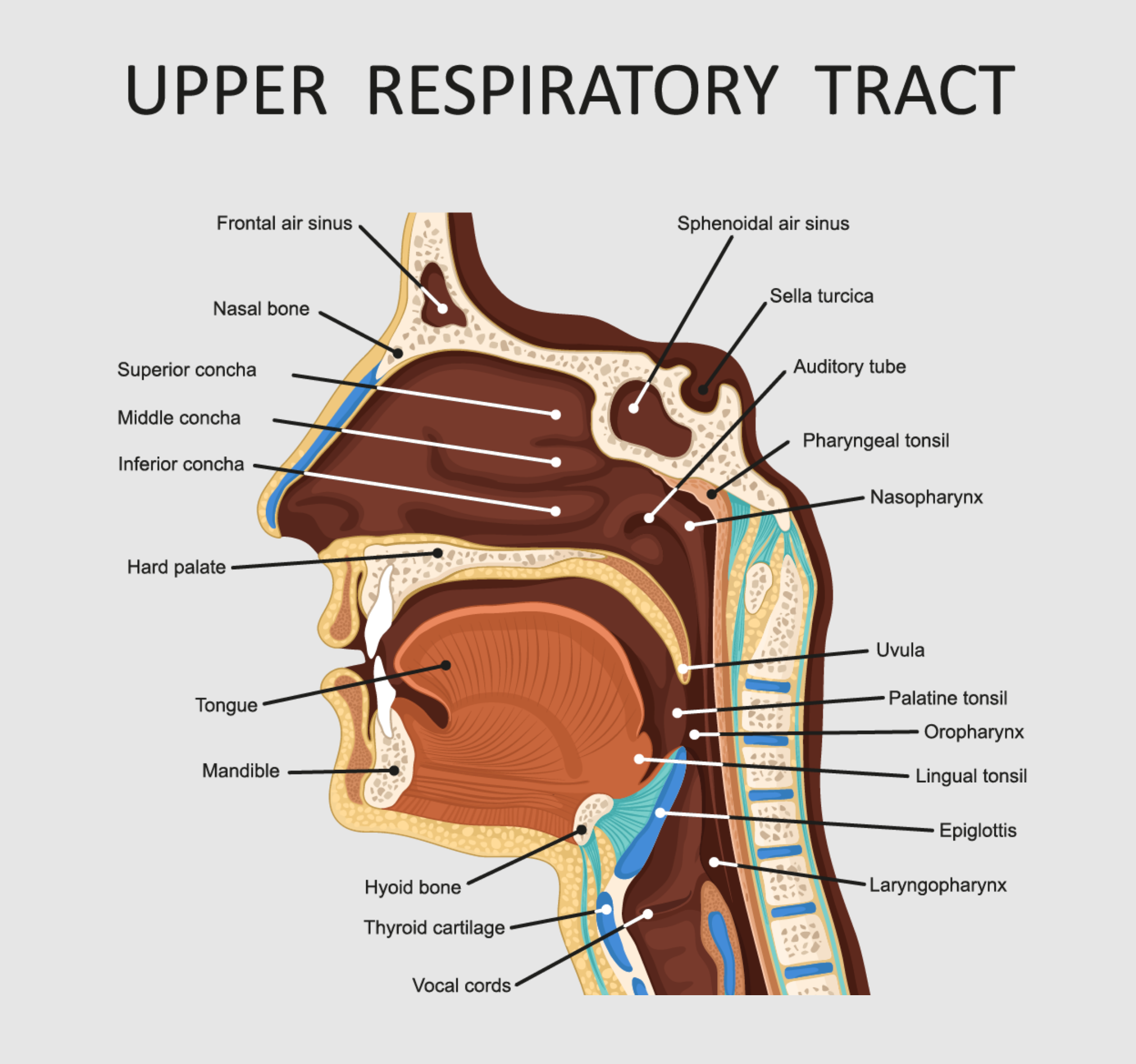
Nasopharynx
An air passage from the nose to the lower respiratory tract
Eustachian tubes maintain pressure balance in the middle ear for eardrum vibration
Pharyngeal tonsil traps airborne pathogens and support immune defense
Oropharynx
Responsible for swallowing, breathing, and vocalization
Palatine tonsils recognize pathogen antigens and protect against pathogens
Lingual tonsils are located at the base of the tongue and work against pathogens

Laryngopharynx
a shared passageway for both air and food. directs air to the larynx and trachea

Components of the Larynx
Hyoid bone
Thyroid cartilage
Epiglottis
Vocal Folds

Hyoid Bone
Supports the larynx and anchor muscles involved in swallowing, speech, and tongue movement

Thyroid Cartilage
Made of Hyaline cartilage to protect the vocal folds posteriorly
The laryngeal prominence is a ridge that was formed from the cartilage coming together

Epiglottis
Prevents food from entering the larynx
during swallowing the pharynx and larynx will rise
elevation of the pharynx widens to receive food
elevation of the larynx causes the free edge of the epiglottis to move down and form a lid over the glottis, closing it to close.

Vocal folds
cause speech and sound

Components of the Trachea
Hyaline cartilage
Tracheal cartilage
Trachealis muscle

Tracheal Cartilage
C-shaped rings in the tracheal wall to prevent collapse during inhalation and exhalation. Contributes to the stability of the respiratory tract.

Trachealis Muscle
smooth muscle that forms the posterior wall of the trachea
does airway constriction
airflow regulation
Swallowing accommodation

Components of the Bronchial Tree
Primary Bronchi
Secondary Bronchi
Tertiary Bronchi
Terminal Bronchiole
all responsible for air conduction
Respiratory Bronchiole
Responsible for gas exchange

Primary Bronchi
Right and left bronchi. Each bronchus enters its respective lung at the hilum

Secondary Bronchi
3 bronchi on right side
2 bronchi on left side

Tertiary Bronchi
Supply bronchopulmonary segments

Terminal Bronchiole
regulate airflow through bronchodilation and bronchoconstriction

Respiratory Bronchiole
initiates gas exchange
Gas Exchange in the Lungs
Respiratory Bronchioles
Alveoli
Cells in the alveoli: Type I
Type I: simple squamous that allows oxygen to diffuse into the blood and carbon dioxide to diffuse out
Cells in the alveoli: Type II
Type II: secretes surfactant onto the surface of the alveoli to reduce surface tension during exhalation (prevents collapse)
Cells in the alveoli: Macrophages
eat the debris that makes it into the air sacs
External anatomy of lungs
Apex (top)
Base (bottom)
Right lung- 3 lobes
Left lung- 2 lobes (cardiac notch)
Parietal pleura
Visceral pleura
Pleural cavity
Parietal pleura
covers the thoracic wall (ribcage)
Visceral pleura
covers the lungs
Pleural cavity
space between the visceral and thoracic pleura, filling the space with serous fluid
Oxygen levels
oxygen levels decrease as it travels down, PO2 drops lowest in the alveoli
The flow of air
nasal cavity—> pharynx—>larynx—>trachea—>primary bronchi—>secondary bronchi—>tertiary bronchi—> bronchioles—>terminal bronchioles—>respiratory bronchioles—> alveolar ducts—> alveolar pores—> alveoli