population ecology
 Call Kai
 Learn
Learn Practice Test
 Spaced Repetition
 Match
Match Flashcards
 Knowt Play
1/12

There's no tags or description
Looks like no tags are added yet.
Name | Mastery | Learn | Test | Matching | Spaced | Call with Kai | Chat |
|---|
No analytics yet
Send a link to your students to track their progress
13 Terms
Generalist
Broad niche, adaptable to many environments, less likely to go extinct
Specialist
narrow niche, less adaptable, more likely to go extinct
R species
no care.
short lifespan, quick reproductivity, many offsrping, small offspring, fast population rate
K species
With care
Long lifespan, slow reproductivity, few offspring, large offspring, slow growing population rate
Type 1 survivorship curve
low death rate as an infant
many individuals live to an old age

Type 2 survivorship curve
,pderate death rate individuals die at all ages
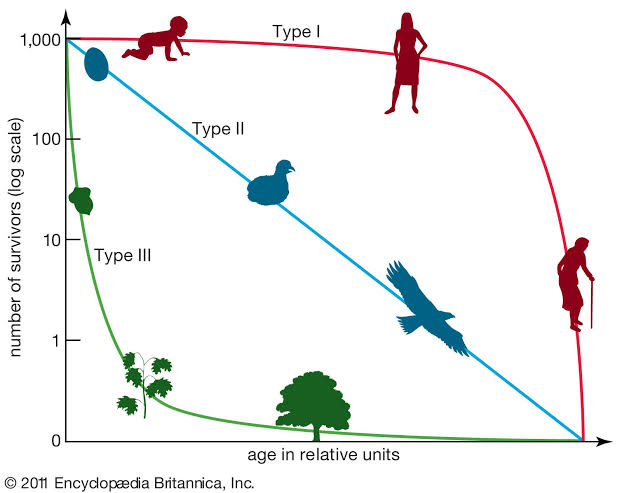
Type 3 survivorship curve
high death rate many indviduals die young, few live to old age

Carrying capacity
the max amount of individuals that the resources in an environment can support
Overshoot
when a population exceeds its carrting capacity
Die back
a sharp, sudden decline in a population when its size severely exceeds the environment's carrying capacity
Biotic potential
maxiumum reproductive rate of a population in ideal conditions
Density dependent
affects the size of the population more significantly with higher populations
diesease, competition and predation
Density independent
affects the size of a population of living things regardless of the desnsity of the population
food or nutrient limitation, pollutiants in environement, climate extreme