Biology Chapter 5 review
 Call Kai
 Learn
Learn Practice Test
 Spaced Repetition
 Match
Match Flashcards
 Knowt Play
1/75

Earn XP
Description and Tags
Membranes
Name | Mastery | Learn | Test | Matching | Spaced | Call with Kai | Chat |
|---|
No analytics yet
Send a link to your students to track their progress
76 Terms
Plasma membrane functions
Defines the outer border of cells and organelles
Controls what enters and exits the cell
Receives external signals and initiates cellular responses
Adheres to neighboring cells
Fluid Mosaic model
A mosaic of components (phospholipids, cholesterol, proteins, and
carbohydrates) that give the membrane a fluid character
describes the cell membrane as a flexible phospholipid bilayer studded with a dynamic patchwork of proteins, cholesterol, and carbohydrates that drift laterally
describes the plasma membrane as a flexible, dynamic phospholipid bilayer with proteins, cholesterol, and carbohydrates drifting laterally throughout it
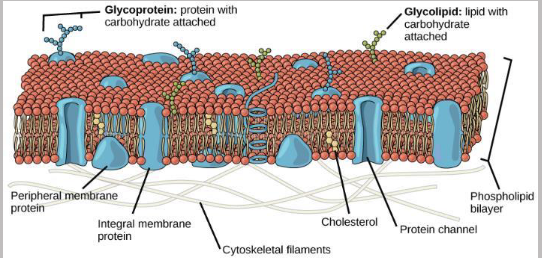
Phospholipid
The plasma membrane is composed of this lipid
Hydrophillic head: a glycerol molecule and a phosphate group (polar)
Hydrophobic tails: 2 fatty acid chains (nonpolar)

Phospholipid tails
The PM is composed of a lipid called phospholipid
Each fatty acid can be either saturated or unsaturated
Saturated = no carbon-carbon double bonds
Unsaturated = one or more double bonds

Phospholipids in water rearrange into bilayer
Phospholipids automatically rearrange into a bilayer in water because they are amphipathic, meaning they have both a hydrophilic (water-loving) region and a hydrophobic (water-fearing) region

Proteins
The second major component of membranes
function as transporters, receptors, enzymes, or in binding
functional proteins embedded within or loosely attached to the phospholipid bilayer of a cell membrane, responsible for transport, cell signaling, and enzymatic catalysis

Types of membrane proteins
Integral proteins - cross completely into the bilayer. a protein permanently embedded within the phospholipid bilayer of a cell membrane
Peripheral proteins - found only on the surfaces
loosely attached to the inner or outer surface of the plasma membrane rather than embedded in its hydrophobic core

Integral membrane protein
A protein permanently embedded within the phospholipid bilayer of a cell membrane
cross completely into the bilayer
contain both hydrophobic (nonpolar) amino acid regions embedded in the membrane's interior and hydrophilic (polar) regions exposed to the aqueous environments
penetrate through membrane and parts of the protein exposed to outside and cytoplasm. Can act as transporters, signaling molecules, receptors

Peripheral membrane protein
A protein that temporarily binds to the surface of a cell membrane or to integral proteins without embedding into the hydrophobic core of the phospholipid bilayer
found only on the surfaces
on the border (outside or cytoplasmic side) of cell membrane but does not penetrate the membrane

Integral protein regions
Integral membrane proteins have regions that are hydrophobic (made of hydrophobic amino acids) and hydrophilic regions
Amphipathic Structure: These proteins contain both hydrophobic (nonpolar) amino acid regions embedded in the membrane's interior and hydrophilic (polar) regions exposed to the aqueous environments inside and outside the cell

Membrane protein functions
Transporter
Enzyme
Cell-surface receptor (signal transduction)
Cell-surface identity marker (cell-cell recognition)
Cell-to-cell adhesior (intercellular joining)
Attachment to the cytoskeleton

Cell membrane carbohydrates
The third major component of PM are carbohydrates
On the exterior surface of the plasma membrane, bound to either proteins (glycoproteins) or to lipids (glycolipids)
Function in cell-cell recognition & attachment
short, branched chains of sugars attached to lipids or proteins on the exterior surface of the plasma membrane, functioning primarily in cell-to-cell recognition and immune signaling.
Immune Response: Allow the immune system to distinguish between "self" cells and "non-self" invaders (such as pathogens or foreign tissue).

Glycoprotein
A membrane protein covalently bonded to a short carbohydrate chain (oligosaccharide) that always faces the extracellular (outside) environment
Functions:
Cell-to-Cell Recognition
Cell Signaling & Communication
Immune Response: Helps the immune system distinguish self cells from foreign invaders or pathogens
Intercellular adhesion
Self-cell recognition

Glycolipid
A lipid molecule covalently bound to a carbohydrate chain, located exclusively on the outer surface of the plasma membrane
Cell-to-cell recognition & attachment
lipids with a carbohydrate chain attached, located on the extracellular surface of the plasma membrane

Self-cell recognition
An organism's ability—primarily through its immune system and cell membranes—to distinguish its own healthy body cells ("self") from foreign cells or molecules ("non-self")
Surface Molecules (Markers): Body cells display specific identifying molecules on their outer plasma membranes, often consisting of glycoproteins and glycolipids
No receptor, no recognition
Glycoproteins: self-cell recognition
An autoimmune disease occurs when this recognition fails. The immune system mistakenly identifies self-antigens as foreign, triggering an adaptive immune response that attacks healthy tissues.
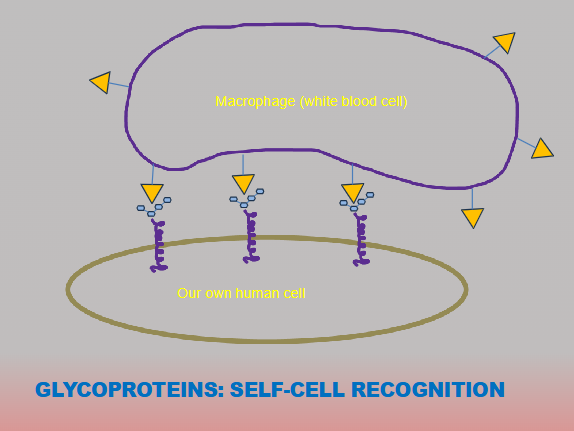
Receptor proteins
Specialized proteins located on the plasma membrane or inside a target cell that bind to specific signaling molecules (ligands) to trigger an intracellular response, marking the crucial first step of cell communication and signal transduction
Our immune system’s T cells have CD4 receptor glycoproteins that recognize HIV as “self”
The shape of the receptor's binding site matches only one specific ligand

Viruses can infect cells by binding to receptor proteins
Viruses infect host cells by using specific viral surface proteins (like capsids or spike proteins) to bind to complementary receptor proteins on the host cell's plasma membrane
Lock-and-Key Fit: The interaction relies on a highly specific structural match between the virus's outer proteins and the host cell's surface molecules
a specific lock-and-key recognition where viral surface proteins (or glycoproteins) physically bind to specific receptor molecules on the outer surface of the host cell membrane

Cell membrane cholesterol
Stabilizes the phospholipid bilayer
Functions as a fluidity buffer in the cell membrane, stabilizing membrane fluidity across a range of temperatures
Prevents membrane from being too fluid at high
temperatures by restraining phospholipid movementAt low temperatures cholesterol wedges between phospholipid tails, preventing them from packing too closely together and being rigid, which keeps the membrane flexible.

What are the major components (molecules) of PM?
Phospholipids
Proteins
Small carbohydrates
Cholesterol

Membrane fluidity
The dynamic, flexible nature of the fluid mosaic model, where individual phospholipids and proteins can move sideways (laterally) within the lipid bilayer
The membrane is fluid but maintains its structure
Fluidity is affected by:
Phospholipid type
Temperature
Cholesterol
Phospholipid type
A factor that affects membrane fluidity
Phospholipids with saturated fatty acids pack together more closely than those with unsaturated FA; the more saturated, the more rigid
Unsaturated Fatty Acids: Contain double bonds that introduce bends or kinks in the hydrocarbon tails, preventing the phospholipids from packing too closely together and maintaining fluidity at lower temperatures.
Saturated Fatty Acids: Lack double bonds, allowing the straight tails to pack tightly together, which decreases fluidity and makes the membrane more rigid

Temperature
A factor that affects membrane fluidity
Cold temperatures compress molecules making
membranes more rigidAt high temperatures molecules gain kinetic energy and move faster, increasing the distance between phospholipids and making the membrane more fluid/ permeable
Cholesterol functions as a fluidity buffer in the cell membrane, stabilizing membrane fluidity across different temperatures

Cholesterol
Affects membrane fluidity
Within the fatty acid layer, keeps membranes fluid when
cold and not too fluid when hotAt high temperatures restricts the movement of phospholipid tails, packing them closer together to decrease fluidity
At low temperatures, cholesterol wedges between phospholipid tails and disrupts tight packing, increasing fluidity to prevent membrane from freezing

Plasma membranes are asymmetric
Because the inner (cytoplasmic) and outer (extracellular) surface of the phospholipid bilayer are different
Interior proteins anchor fibers of the cytoskeleton to the membrane
Exterior proteins bind to the extracellular matrix
the outer layer (exoplasmic leaflet) and the inner layer (cytoplasmic leaflet) of the phospholipid bilayer have completely different chemical compositions, structures, and functions

Selectively permeable
The plasma membrane allows some molecules to pass through, but not others
Allows cytosol to differ from extracellular fluids.
Example: cells keep different concentrations of sodium and potassium ions between the inside and outside
The Cell membrane (plasma membrane) is selectively permeable. This means that some molecules can go into the cell but not others: the cell regulates (controls) what can go into the cell
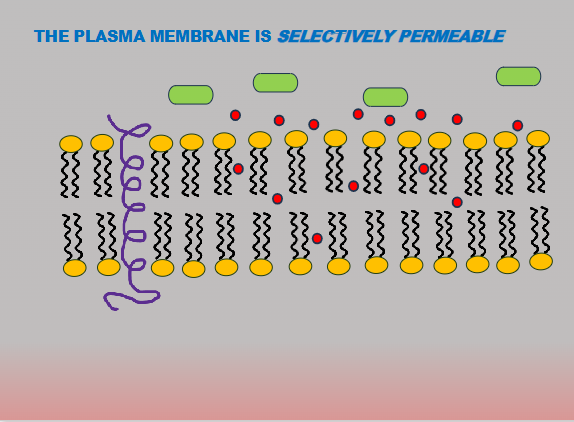
Types of membrane transport
Passive transport: no energy
Active transport: requires energy
Diffusion
The simplest type of passive transport is diffusion
Diffusion is when a substance from an area of high
concentration moves to area of low concentrationthe passive movement of molecules from an area of high concentration to an area of low concentration down a concentration gradient
No energy required

Passive transport
Movement stops when equilibrium is reached
The movement of molecules across a cell membrane down a concentration gradient without using cellular energy (ATP)
Only small nonpolar molecules (gases such O2, CO2, & hormones diffuse through membranes)

What molecules can pass through the plasma membrane?
Small, nonpolar molecules like O2, CO2, and N2 pass freely through the plasma membrane via simple diffusion
What passes freely
Gases: Oxygen (O2), carbon dioxide (CO2), and nitrogen gas (N2)
Hydrophobic/Lipid-soluble molecules: small hydrocarbons and lipid
Factors that affect diffusion rates
Concentration gradients - Greater difference, faster diffusion
Mass of the molecules - smaller molecules diffuse more quickly
Temperature - Molecules move faster when temperatures are higher
Solubility – more nonpolar (lipid-soluble) materials diffuse faster
Concentration gradient
Affects diffusion rates
A higher difference in concentration between two areas means a faster net movement of particles
Greater difference, faster diffusion
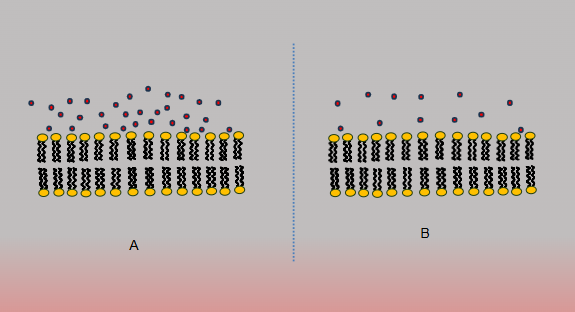
Mass of the molecules
Affects diffusion rates
Smaller molecules diffuse more quickly
The greater the molecular weight of a molecule, the slower its rate of diffusion
The smaller the molecules, the faster the rate of diffusion

Temperature
Affects diffusion rates
Molecules move faster when temperatures are higher
Higher temperatures increase the rate of diffusion because thermal energy raises the kinetic energy (energy of motion) of particles, causing them to move faster and spread out more quick

Solubility
Affects diffusion rates
More nonpolar (lipid-soluble) materials diffuse faster
Substances that are lipid-soluble (hydrophobic, nonpolar molecules like oxygen, carbon dioxide, or small lipids) pass through quickly

Facilitated transport
Moves substances from high to low concentration through integral membrane proteins
A type of Passive transport where molecules move from High to low concentration with the help of a transport protein. It is for ions (charge elements, such as K+) and polar molecules (charged molecules)
Ions and small polar molecules diffuse this way
Types of facilitated transport proteins
Channel proteins
Carrier proteins

Channel proteins
The exposed parts composed of hydrophilic AA: attract ions and/or polar molecules
Some open all the time
Others are gated, open when a signal is received
an integral membrane protein that forms a hydrophilic (water-loving) pore or tunnel through the plasma membrane, allowing specific polar molecules and charged ions to pass by passive transport down their concentration gradient without using ATP

Channel protein examples
An integral membrane protein that forms a hydrophilic pore or tunnel through the cell membrane, allowing specific polar molecules and ions to pass through via passive transport (without ATP)
Aquaporins – only for H2O
Muscle cells have gated ion channels allowing muscle contraction when opened
Integral protein with a cavity (channel) where molecules transported fit
Aquaporins
Specialized channel proteins embedded in the plasma membrane that allow water molecules to cross the cell membrane quickly via facilitated diffusion
specialized integral channel proteins embedded in the plasma membrane that allow water molecules to cross the cell membrane rapidly via facilitated diffusion

Carrier proteins
Carrier proteins are specific to a single substance
Bind substance, changes shape & “carry it” to the other side
Many allow movement in either direction
Example: glucose transport proteins
A transmembrane transport protein that binds to specific molecules on one side of the cell membrane and undergoes a shape change to shuttle them to the other side
bind to molecules being transported across the membrane

Osmosis
The diffusion of water across a membrane
Water always moves from an area of higher water concentration to lower water concentration
the passive diffusion of water across a selectively permeable membrane from an area of higher water potential (lower solute concentration) to an area of lower water potential (higher solute concentration)

Tonicity
The ability of an extracellular solution to make water move into or out of a cell by osmosis, based on the relative concentration of non-penetrating solutes
the ability of an extracellular (surrounding) solution to cause a cell to gain or lose water through osmosis
Solutions outside cells are:
Hypertonic
Isotonic
Hypotonic

NaCI concentration red blood cell
The concentration of dissolved salts inside the cell is equal to a 0.9% saltwater solution
The internal solute concentration of a red blood cell is equivalent to an 0.9% mass/volume NaCl solution

Hypertonic solution
There is more solute (molecules) outside the cell than inside the cell and the solution is said to be Hypertonic. Water leaves the cell and the cell shrinks
There is more solute outside than inside the cell
Water leaves the cell and cells become shriveled (crenated)
Causes plasmolysis and crenation

Hypotonic solutions
An extracellular solution that has a lower solute concentration (and therefore a higher water potential) compared to the cytoplasm inside a cell
The outside has less molecules than inside the cells
Water enters the cell
Cells w/o cell wall burst (hemolysis)
Increase turgor pressure

Isotonic solution
A solution in which the salt concentration outside the cell (saline solution) equals the salt concentration inside the cell
No not movement of water across the membrane
Cells are at equilibrium
Osmoregulation
The active process by which organisms control the balance of water and solutes (such as salts and ions) across cell membranes to maintain internal homeostasis
Ex; Without enough water, the plant on the left has lost turgor pressure (it wilts); the turgor pressure is restored by watering it (right)
The active process by which cells and organisms regulate internal water and solute concentrations to maintain homeostasis

Turgor pressure
The outward hydrostatic pressure caused by water pushing the plasma membrane against the rigid cell wall inside a plant cell
Occurs in hypotonic solutions
Cells with cell walls (plants, fungi, bacteria) prefer hypotonic extracellular solutions
The pressure exerted by the PM against the CW is
critical to organismal growth & functions

Plasmolysis
The process where a plant cell's cytoplasm and plasma membrane shrink and pull away from the rigid cell wall because the cell loses water in a hypertonic environment
Hypertonic solutions cause this (PM detaches from the CW)
Plant leaves wilt
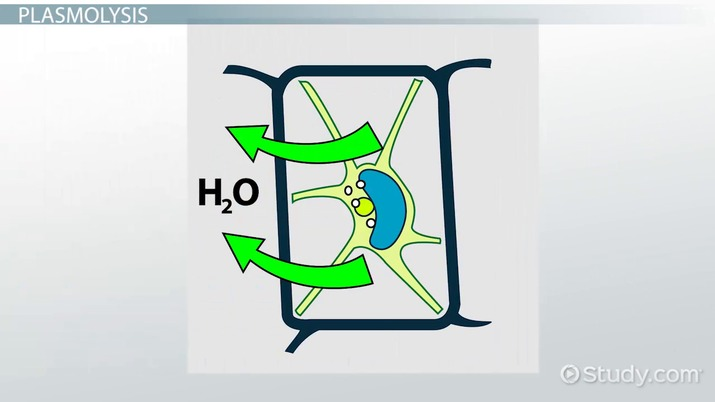
Osmoregulation by other organisms
Freshwater protists, like paramecia and amoebas have vacuoles that pump water out of their cells, so they do not burst
Fish excrete diluted urine to get rid of excess H2O or salts
Osmoreceptors of brain cells monitor solute concentrations in our blood, releasing hormones that affect kidney function

Active transport
The movement of ions or molecules across a cell membrane against their concentration or electrochemical gradient (from low to high concentration), which requires the input of metabolic energy, typically in the form of ATP
Energy is always required

Active transport details
Ion or molecule (like glucose) is transported through a membrane protein:
against its concentration gradient (from low to high concentration) or
against its electrochemical gradient (ex. H+ ions to a solution that is positive)
Energy is always required for active transport
Types of active transport
Primary: ATP provides energy
Secondary: electrochemical gradient provides energy
Primary active transport
A cellular process that uses chemical energy from ATP hydrolysis directly to move ions or molecules across a cell membrane against their concentration or electrochemical gradient
a cellular process that directly uses chemical energy—usually from ATP hydrolysis—to move ions or molecules across a cell membrane against their concentration or electrochemical gradient
Low → High concentration

Secondary active transport
The transport of a molecule or ion against its electrochemical gradient using the energy stored in an existing ion gradient, rather than directly breaking down ATP
It does not use ATP directly. Instead, it taps into the potential energy of an electrochemical gradient
Many amino acids and glucose enter the cell this way

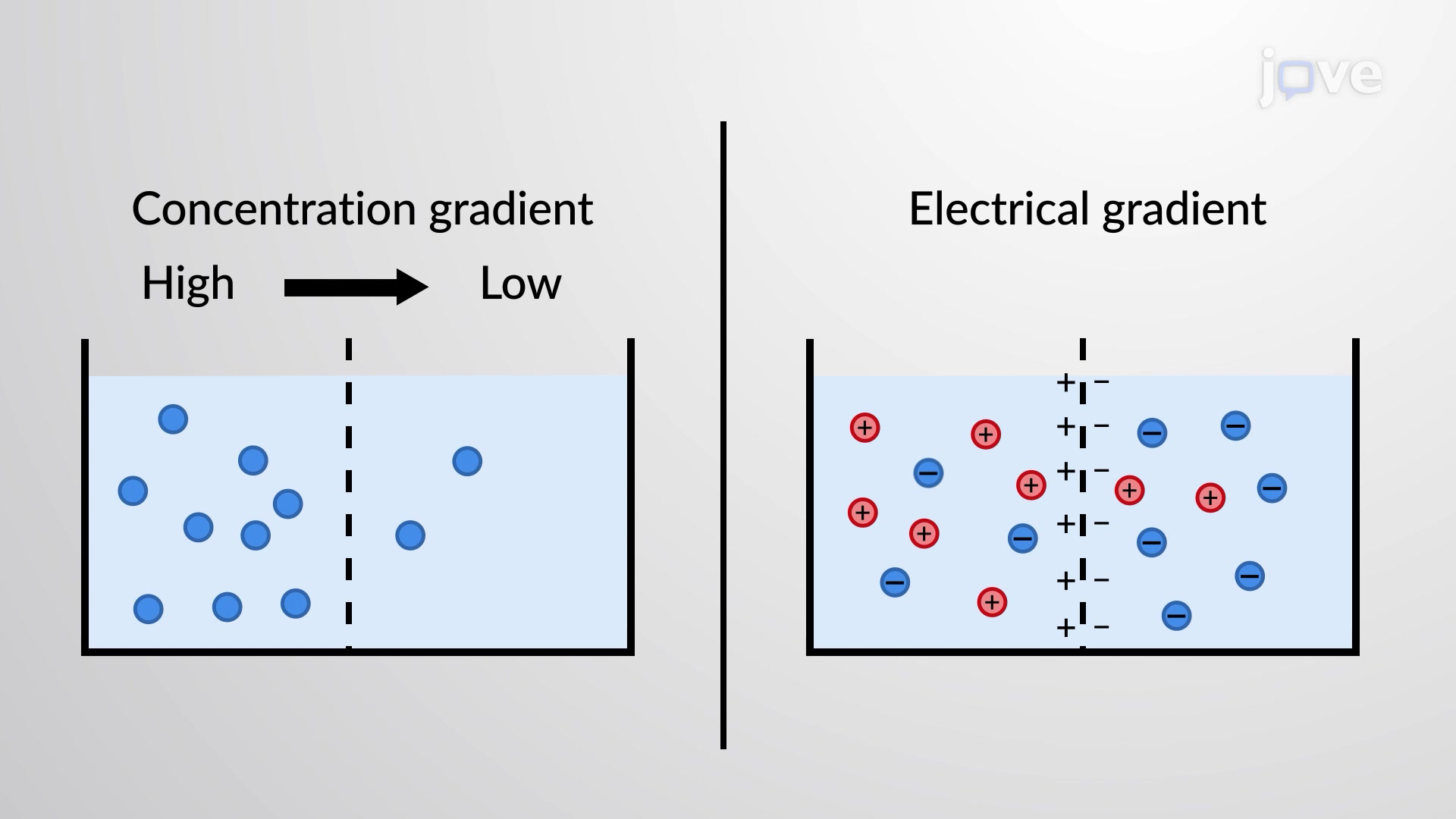
Electrochemical gradients
An electrical gradient, where the cytoplasm contains more negative charged molecules (more neg ions) than the extracellular fluid, is critical for proper cell function
Arise from the effects of concentration gradients and electrical gradients
Chemical gradient: The difference in the concentration of a specific ion (Na+ or K+) between the inside and outside of a cell; ions tend to move from high to low concentration
Electrical gradient: The difference in total electrical charge across the plasma membrane; the interior of a resting cell is typically negative relative to the exterior, attracting positive ions inward

Electrochemical gradients explained
The combined force of a chemical concentration difference and an electrical charge difference across a cell membrane that dictates the net direction an ion will move
The Chemical Gradient (Concentration Gradient): The difference in the concentration of the ion across the membrane. Ions naturally tend to diffuse from an area of high concentration to an area of low concentration.
The Electrical Gradient (Membrane Potential): The difference in charge or voltage across the membrane. Because ions carry charges, they are physically attracted to the side of the membrane with the opposite charge and repelled by the side with the same charge
Carrier proteins
Active transport occurs through transmembrane, integral carrier proteins called pumps
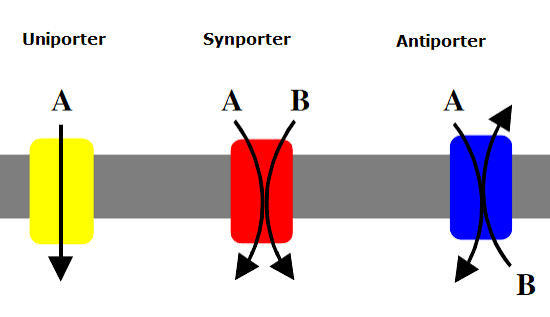
There are 3 types of pumps:
Uniporter
Symporter
Antiporter
Uniporter
An integral membrane transport protein that moves a single type of molecule or ion across a biological membrane in one direction
It operates via facilitated diffusion (passive transport)
Not used in active transport because it moves that single substance down its concentration gradient (from high to low concentration).

Symporter
A membrane protein that moves two or more different molecules or ions across a cell membrane in the same direction at the same time
A type of cotransporter protein used in secondary active transport.
Carries two different molecules or ions, in the same
direction

Antiporter
A membrane protein that moves two or more different molecules or ions in opposite directions across a cell membrane
Carries two different molecules or ions, in different
directionsan integral membrane protein that moves two or more different molecules or ions in opposite directions across a cell membrane using secondary active transport

Primary active transport
Moves an ion or molecule against its concentration gradient using energy from ATP
Example: Na+-K+ pump
Moves 3 Na+ out and 2 K+ in using 1 ATP
Sodium-potassium pump is an antiporter
The sodium-potassium pump is classified as primary active transport because it directly uses energy from ATP hydrolysis to move sodium (Na+) and potassium (K+) ions against their respective concentration gradients

Secondary active transport
Uses electrochemical gradient created by primary active transport to move a substance against its concentration gradient
Primary active transport creates electrochemical gradients by using energy from ATP to move ions across the cell membrane against their natural concentration and electrical directions
Many amino acids and glucose enter the cell this way
How It Works
Energy Source: It relies on an ion gradient (usually Na⁺) that was previously created by primary active transport using ATP.
Coupled Transport: The driving ion moves down its electrochemical gradient (high to low concentration), releasing stored potential energy.
Uphill Movement: That released energy immediately powers a second molecule to move against its gradient (low to high concentration)
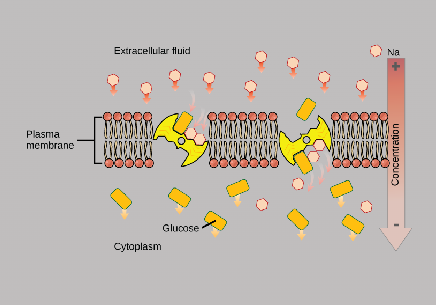
How can secondary active transport be called active transport when ATP is not used? Why doesn’t it use ATP instead?
Definition of Active Transport: Any transport process that moves a substance against its gradient (from low to high concentration) requires an input of cellular energy
Energy Source: Instead of using ATP directly, secondary active transport uses an electrochemical gradient (stored potential energy) that was previously built by primary active transport
Coupled Movement: A driving ion (Na+) moves down its gradient (releasing energy), and that coupled energy forces a second molecule up its gradient. Because at least one molecule is actively pumped against its gradient using stored cellular energy, the entire linked process is classified as active transport
Why do you think a K+ solution injection is lethal?
A potassium (K+) solution injection is lethal because it floods the extracellular fluid with potassium, which dissipates the vital electrochemical gradient across cell membranes
Bulk transport
When cells import or export molecules/particles that are too large to
pass through a transport protein
An energy-requiring process by which cells move large molecules, macromolecules, or large quantities of smaller particles across the plasma membrane using membrane-bound vesicles
A type of active transport
Energy is required
Importing by bulk transport is called endocytosis and exporting is called exocytosis

Endocytosis
An active transport process where a cell engulfs external substances by folding its plasma membrane inward to form a vesicle that brings materials into the cell
Importing by bulk transport is called endocytosis
an active transport process where a cell brings large molecules, fluids, or whole cells inside by folding its plasma membrane inward to form a vesicle

Three types of endocytosis
Phagocytosis
Pinocytosis
Receptor mediated endocytosis
Phagocytosis
A type of bulk transport and endocytosis where a cell engulfs large, solid particles or whole cells using its plasma membrane
(cellular eating), the cell membrane surrounds a particle and engulfs it
a type of active transport (bulk transport) known as "cell eating," where a cell engulfs large, solid particles or whole cells into a vesicle
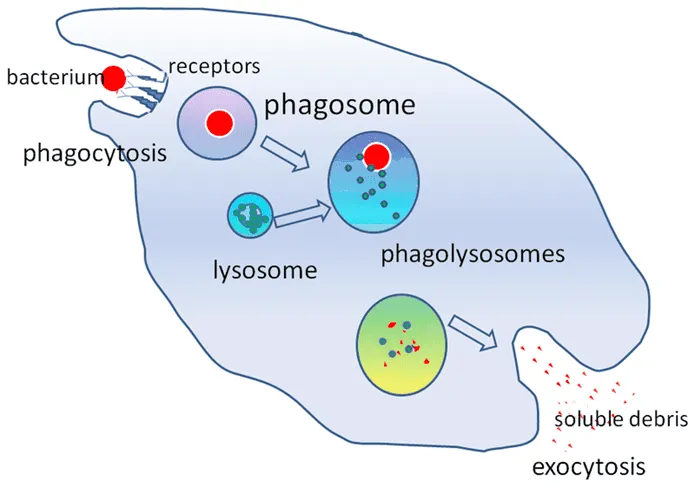
Pinocytosis
A type of active transport and endocytosis where a cell engulfs extracellular fluid and dissolved solutes by folding inward to form small, fluid-filled vesicles
(cellular drinking), the cell membrane surrounds a small volume of fluid, and pinches off

Receptor-mediated endocytosis
A targeted cellular process where specific extracellular molecules (ligands) bind to specialized receptor proteins on the cell membrane, triggering the membrane to fold inward and pinch off into a vesicle
A specific substance binds to receptors on the external surface of the membrane
an active, highly specific type of bulk transport where a cell internalizes specific extracellular macromolecules (ligands) by infolding its plasma membrane
substance binds to a receptor on the surface of the membrane. Binding of receptor triggers the membrane to engulf the particles and brings them
inside the membrane through a vesicle

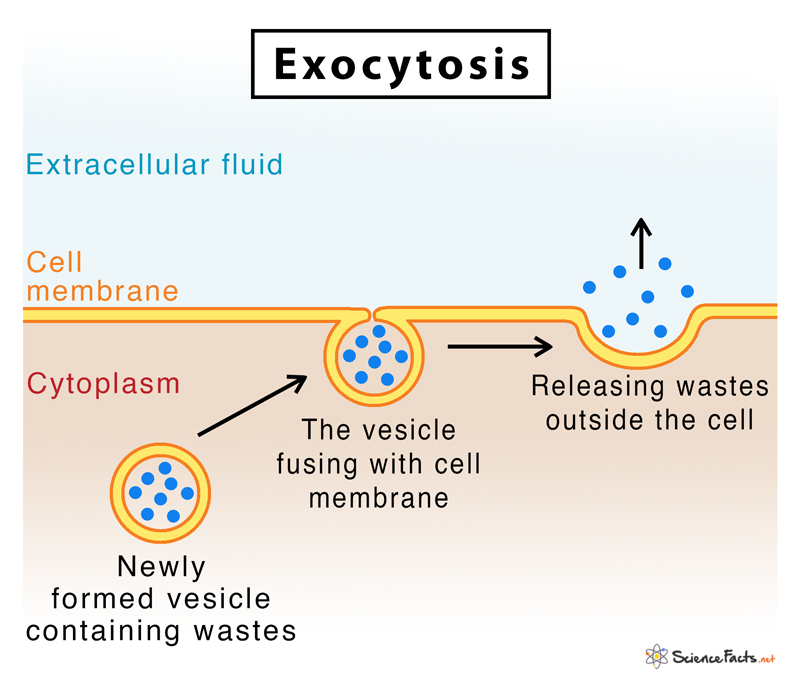
Exocytosis
Vesicles containing substances fuse with the plasma
membrane. The contents are then released to the exterior of the cell
Exporting by bulk transport is called exocytosis
Discharge of materials out of the cell
Used in plants to export cell wall material
Used in animals to secrete hormones, neurotransmitters, digestive enzymes
Ion channel
A transmembrane protein that forms a hydrophilic pore, allowing specific charged ions to pass passively through the hydrophobic plasma membrane down their electrochemical gradient
Passive Transport: Ions move via facilitated diffusion, requiring no metabolic energy (ATP)
Channels are specific, letting only particular ions (like Na⁺, K⁺, Ca²⁺, or Cl⁻) pass through based on size and charge

Coupled transport
Also known as secondary active transport or cotransport, is the movement of one substance across a cell membrane against its concentration gradient, powered by the simultaneous downhill movement of another substance down its electrochemical gradient
Energy Source: It does not use ATP directly. Instead, it uses stored energy from an electrochemical gradient created earlier by primary active transport (like the sodium-potassium pump)
Cotransport
A type of secondary active transport where a membrane protein couples the "downhill" diffusion of one molecule down its electrochemical gradient to the "uphill" transport of another molecule against its concentration gradient
Facilitated diffusion
The passive transport of polar molecules and ions across a cell membrane via specialized transport proteins down their concentration gradient, requiring no metabolic energy (ATP)
Channel Proteins: Form hydrophilic tunnels or pores that let specific ions or small polar molecules pass through. (Example: Aquaporins for water, ion channels for K+ or Na+)
Carrier Proteins: Bind to a specific molecule, change shape, and release it on the other side of the membrane. (Example: GLUT transporters for glucose)

Cell membrane carbohydrates function in
Cell-to-cell recognition & attachment
Carbohydrates on the cell membrane primarily function as cell-to-cell recognition markers and attachment sites
Glycoproteins: self-cell recognition