Mamm Lab Rodentia Quiz
 Call Kai
 Learn
 Practice Test
 Spaced Repetition
 Match
 Flashcards
 Knowt Play
1/24

There's no tags or description
Looks like no tags are added yet.
25 Terms
Aplodontia rufa
Family: Aplodontiidae
Mountain Beaver (Aplodontia rufa); monotypic
Range: Nearctic Zone: Pacific Northwest from British Colombia to N California.
Characteristics:
Medium sized, short ears, enlarged foreclaws
Vestigial tail
Sciurognathous
Small infraorbital foramen, no zygomatic plate
Flattened, triangular shaped skull
Flask-shaped auditory bullae
Teeth: 1.0.2.3/1.0.1.3
Molars are "D" shaped with single buccal projection
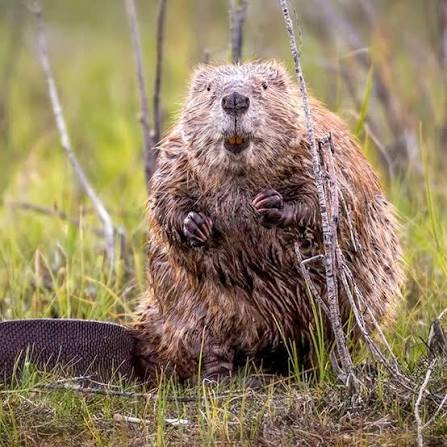
Sciuridae
Squirrels, Chipmunks, and Marmots; 53, genera, 321 species Range: worldwide except Madagascar, Oriental, and Australian Zones Characteristics:
Varied body sizes, shapes, and colors
Sciurognathous
Sciuromorphous
Domed cranium
Postorbital process
ー
Present
Large zygomatic plate
Teeth: 1.0.(1-2).3/1.0.1.3
Variable molar surfaces (flat/simple to complex infoldings)

Gliridae
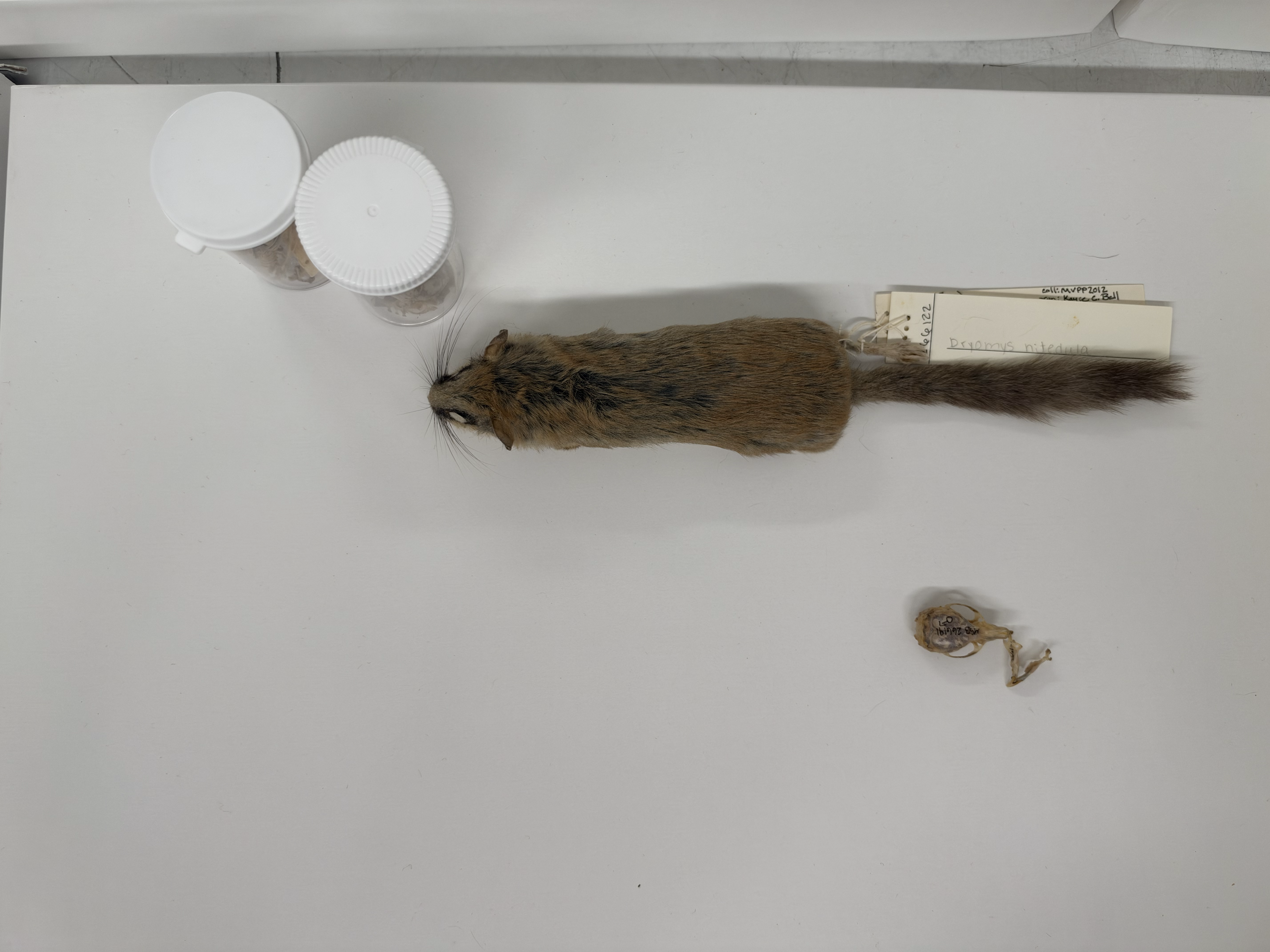
Dormice: 9 genera, 30 species.
Range: Afrotropical, Saharo Arabian, Palearctic, Sino Japanes Zones, Europe, most of Africa ano
Central Asia
Characteristics:
Small-to-medium sized squirrel-like body
Tail long and moderately bushy
Large eyes and ears
Sciurognathous
Myomorphous
No post-orbital process (compared to Sciurids)
Slightly rounded skull
Relatively large auditory bullaeTeeth: 1.0.(0-1).3/1.0.(0-1).3
Crowns of molars with series of enamel bands (most) or basin shaped with indistinct ridges (Graphiurus), branchyodont
Hystricidae
Old Wold Porcupines; 3 genera, 11 species
Range: Afrotropical, Saharo-Arabian, Palearctic, Oriental, Sino-Japanes Zone. Sub-Saharan Africa, southern Europe, and much of west, central, and Southeast Asia in wide variety of habitats Characteristics:
Large bodies covered in medium to long quills
Quills are often black and white
Skull elongated, rounded, and smooth
Hystricognathous
Hystricomorphous
No ridge on dentary
Small auditory bullae
Teeth: 1.0.1.3/1.0.1/3
Incisors may have faint labial grooves
Molars flat with enamel fold forming islands of dentin

Heterocephalidae
Naked Mole-rat (Heterocephalus glaber); monotypic
Range: Afrotropical Zon: Eastern Africa
Characteristics:
Small size with pink, wrinkled, nearly hairless skin
Incisors emerge from outside lips
Tiny eyes and no ear pinnae
Robust, slightly curved cranium
Broad zygomatic arch with narrow rostrum
HystricognathousSciuromorphous (appears somewhat myomorphous)
Large but flat auditory bullae
No ridge on dentarry
Teeth: 1.0.0.3/1.0.0.3
Large procumbent incisors, with no labial grooves
Molars with a simple ring shape

Bathyergidae
African Mole-rats; 5 genera, 26 speices
Range: Afrotropical Zone, Sub-Saharan Africa, mostly in dry deserts with soft soils Characteristics:
Small to medium-sized, mole-shaped, furred bodies
Blunt head, incisors emerge from outside lips
Short tail, legs
Small eyes, no ear pinnae
Robust, curved cranium
Broad zygomatic arch with narrow rostrum
Hystricognathous
Sciuromorphous (but appears somewhat myomorphous)
Large but flat auditory bullae
No ridge on dentary
Teeth: 1.0.(2-3).(0-3)/1.0. (2-3). (0-3)
Large procumbent incisors, may have labial grooves
Molars are usually a simple ring shape, but some have infoldings forming a figure 8.

Erethizontidae
New World Porcupines: 3 genera, 18 species
Range: Nearctic, Panamanian, Neotropical Zones; Most of North, Central, and South America in a variety of habitats Characteristics:
Medium to large-sized bodies covered in sharp, barbed quills and sometimes hair
Short legs, tail variable in length
Blocky skull, flat or curved in profile
Hystricognathous
Hystricomorphous
Short or no paroccipital process
Enlarged auditory bullae
No ridge on dentary
Teeth: 1.0.1.3/1.0.1.3
Incisors may have faint labial grooves
Molars lophodont with narrow or wide infoldings but not forming dentin islands (c.f.,

Cuniculidae
Pacas; 1 genus, 2 species
Range: Panamanian, Neotropical Zones; Central and South America, primarily in tropical forests Characteristics:
Medium-sized, piglike, 3-4 rows of white spots
Reduced numbers of digits on all feet
Short limbs
Hystricognathous
Hystricomorphous
Enlarged zygomatic arch with large sinuses
Hollow chamber inside zygomatic arch
Rough textured plates over jugals and maxillae
Rostrum short
Teeth: 1.0.1.3/1.0.1.3
Molars with 1-3 infoldings on each side

Caviidae
Cavies, Maras, and Capybaras; 6 genera, 24 species
Range: Neotropical Zone: South America, barely into Central America, in a wide variety of habitats Characteristics:
Body Small to large in size with large heads
Variable body shapes
No visible tail
Hystricognathous
Hystricomorphous
Prominent paroccipial processes
Prominent lateral groove in dentary
Teeth: 1.0.1.3/1.0.1.3
Molars hypsodont with deep infoldings
Upper tooth rows converge anteriorly to form

Dasyproctidae
Agoutis and Acouchis; 2 genera, 15 species
Range: Panamanian, Neotropical Zones: Central and South America, primarily in tropical forests Characteristics:
Medium-sized, coarse fur
Long limbs, short tails
Hystricognathous
Hystricomorphous
Elongated skull
Nasals and premaxilla extend beyond incisors
Lacrimal canal forms complete lateral hole on rostrum
Teeth: 1.0.1.3/1.0.1.3
Molars with lateral infoldings forming islands with age
Chinchillidae
Chinchillas and Viscachas; 3 genera, 7 species (1 extinct)
Range: Neotropical Zone: western and southern South America in dry, rocky habitats Characteristics:
Medium-sized, with soft and dense fur
Long bushy tail, large eyes & ears
Elongated skull
Broad zygomatic arch
Auditory bullae huge in chinchillas, small in viscachas
Sciurognathous
Hystricomorphous
No ridge on dentary
Teeth: 1.0.1.3/1.0.1.3
Molars with rows of 2-3 transverse platesccc

Ctenomyidae
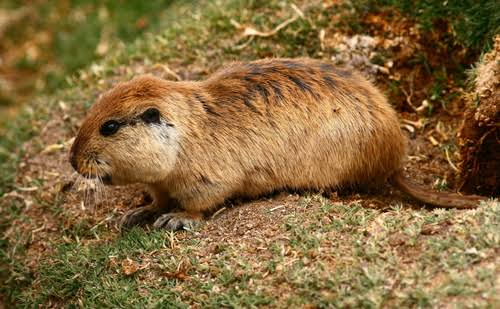
Tuco-tucos; 1 genus, 68 species
Range: Neotropical Zone; southern South America, mostly in open biomes like grasslands, steppes, and shrublands Characteristics:
Small to medium-sized thick bodies
Large head, small ear pinnae, small eyes
Short tails, short legs
Blocky skull
ー
Wide zyogmatic arches
Hystricognathous
Hystricomorphous
Short paroccipital process attached to auditory bullae
Teeth: 1.0.1.3/1.0.1.3
Molars with simple kidney or C-shaped enamel rims forming a dentin lake
Octodontidae
Degus, Coruro, and Rock and Viscacha Rats; 7 genera, 16 species (1 extinct)
Range: Neotropical Zone: central and southern Andes of South America in desert scrub, shrublands, and beech forests Characteristics:
Small to medium-sized bodies, soft fur
Large heads with pointed muzzles.
Elongated skull
Short paroccipital process attached to auditory bullae
Hystricognathous HystricomorphousTeeth: 1.0.1.3/1.0.1.3
Molars with one infolding on each side (deep or shallow), sometimes forming a figure 8 or kidney.
Castoridae
Beavers; 1 genus, 2 species
Range: Nearctic, Palearctic Zones; northern Eurasia and North America, wherever there's water Characteristics:
Medium to large stocky body, small ears
Tail spatulate (flattened), webbed hindfoot
Sciurognathous
Sciuromorphous
Large depression in basioccipital bone
No postorbital process (compare with Sciurids)
Enlarged incisors for cutting branches and small trees
Zygomatic plate large, small slit-like infraorbital foramen
Teeth: 1.0.1.3/1.0.1.3
Molars with several complex infoldings

Geomyidae
Pocket Gophers; 7 genera, 42 species
Range:Nearctic & Panamanian Zones; Western Hemisphere; S Canada, through Mexico, to extreme N Columbia
Characteristics:
Small to medium fusiform bodies
Fur-lined external cheek pouches
Short tail, small ears, large foreclaws
Sciurognathous
Myomorphous
Two large holes/depressions on palatine posterior to molars
Extra process on angular of dentary
Infraorbital foramen flattened on rostrum
Nasals don't extend beyond upper incisors
Teeth: 1.0.1.3/1.0.1.3
Enlarged "8" shaped premolar
Simple oval-shaped molars

Heteromyidae
Pocket Mice and Kangaroo Rats and Mice; 5 genera, 70 species
Range: Nearctic, Panamanian, Neotropical Zones; central and western North America, Central America, and northwest South America, in a variety of habitats Characteristics:
Small to medium sized bodies, varied in form
Fur-lined external cheek pouches
Elongate hindlimbs and tails in kangaroo mice and rats
Sciurognathous
Myomorphous
Infraorbital foramen flattened on rostrum, entirely pierces it, forming a hole
Nasals and premaxillae extend anteriorly of incisors
Greatly enlarged auditory bullae in some species
Teeth: 1.0.1.3/1.0.1.3
Molars bilophodont or oval-shaped
Anomaluridae
Scaly-tailed Squirrels; 2 genera, 6 species
Range: Afrotropical Zone; west and central Africa, mostly in tropical rainforests Characteristics:
Small to large bodies
Patagium for gliding
Cartilaginous rod on elbow to support patagium
Long tufted tail
Scales on underside of tail
Sciurognathous
Hystricomorphous
Blocky skulls (but less than Pedetidae)
Nasals extend beyond incisors
Teeth: 1.0.1.3/1.0.1.3
Molars with 4 transverse enamel ridges

Pedetidae
Springhares; 1 genus, 2 species
Range: Afrotropical Zone: west and southern Africa arid to semiarid regions
Characteristics:
- Large rodents with bipedal stance
Hindlimbs longer than forelimbs
Large eyes and ear pinnae, long furred tail
Sciurognathous
Hystricomorphous
Large infraorbital foramen, broad zygomatic arch/plate
Extensive fossa on rostrum for attachment of the medial masseter
Broad frontal & nasal bones, blocky skull
Large auditory bullae
Hindlimbs much longer than forelimbs
Teeth: 1.0.1.3/1.0.1.3
Molars bilophodont with buccal and lingual enamel
Sminthidae
Birch Mice; 1 genus, 19 species
Range: Palearctic Zone Eurasia in a variety of habitats
Characteristics:
Small with brown fur, often with dark, narrow stripes
Limbs of equal length
Long, semi-prehensile tail (shorter than jerboas)
Sciurognathous
Hystricomorphous
Zygomatic plate narrow entirely below large infraorbital foramen
Teeth: 1.0.1.3/1.0.0.3
Molars with 4 cusps separated by wide fissures
Zapodidae
Jumping Mice; 3 genera, 11 species
Range: Nearctic, Palearctic Zones; North America and east Asia, mostly in woody habitats near
water
Characteristics:
Small with yellow/red fur
Short forelimbs
Hindlimbs and hindfeet very long
Slightly haired tail, very long
Small ear pinnae
Sciurognathous
Hystricomorphous
Zygomatic plate narrow entirely below large infraorbital foramen
Nasals extend beyond upper incisors
Non-inflated auditory bullae
Teeth: 1.0.1.3/1.0.0.3
Grooved upper incisors
Complex infoldings on molars
Dipodidae
Jerboas; 14 genera, 41 species
Range: Afrotropical, Saharo-Arabian, Palearctic Zones; central and west Asia into north Africa, mostly in arid and semiarid habitats Characteristics:
Small to medium-sized
Short forelimbs
Hindlimbs very long, soles of feet furred
Hairy tail longer than head and body, often tufted in black-and-white hair
Long ear pinnae
Sciurognathous
Hystricomorphous
Zygomatic plate narrow entirely below large infraorbital foramen
Inflated auditory bullae
Teeth: 1.0.(0-1).3/1.0.0.3
Incisors with no groove
Spalacidae
Zokors, Blind Mole-rats, Bamboo Rats, and Root Rats; 7 genera, 41 species Range: Afrotropical, Palearctic, Oriental, Sino-Japanese Zones: eastern Europe, west Asia, and northeastern and western Africa, as well as east and southeast Asia in a variety of habitats ranging from arid grasslands and deserts to tropical rainforests Characteristics:
Small to medium-sized, mole-like bodies
Small tails, eyes, and ears
Robust skull, wide zygomatic arches
Sciurognathous
Myomorphous
Teeth: 1.0.0.3/1.0.0.3
Molars with several enamel infoldings (S-, Z-, or W- shaped)
Nesomyidae
African Pouched Rats, Climbing Mice, and Fat Mice; 21 genera, 71 species Range: Afrotropical Zone: Sub-Saharan Africa, including Madagascar, in virtually all habitat types Characteristics:
Small to medium-sized, variable in shape
Variable eyes, ears, and tails
Murid skull shape
Nasals and premaxillae extend beyond incisorsSciurognathous
Myomorphous
Teeth: 1.0.0.3/1.0.0.3
Molars with variable shape, often cuspidate
Cricetidae
Hamsters, Voles, Lemmings, and New World Rats and Mice; 156 genera, 876 species (17 extinct)
Range: Worldwide except Afrotropical, Madagascan, Oceanian, Australian Zones Characteristics:
Small to large bodies
Highly variable in shape and size
Tail lightly furred
Sciurognathous
Myomorphous
V-shaped infraorbital foramen
ー
Nasals extend beyond upper incisors
Teeth: 1.0.0.3/1.0.0.3
Molars either cuspidate or flat and prismatic/semiprismatic
Cuspidate molars with 2 longitudinal cusp rows
Muridae
Gerbils and Old World Rats and Mice; 163 genera, 869 species (19 extinct)
Range: natively throughout Eurasia, Africa, and Australia, but introduced worldwide (Rattus and Mus), found in nearly every habitat type Characteristics:
Small to medium-sized bodies
Mostly furless, scaly tails
Sciurognathous
Myomorphous
V-shaped infraorbital foramen
Teeth: 1.0.0.(2-3)/1.0.0.(2-3)
- Molars with 3 longitudinal cusp rows