2.4.3 Equalibirum Levels of Real National Output txtbk
 Call Kai
 Learn
 Practice Test
 Spaced Repetition
 Match
 Flashcards
 Knowt Play
1/14

There's no tags or description
Looks like no tags are added yet.
15 Terms
what happens when AD go up and down
up : output and prices rise
down - output and prices fall
what happens when SRAS rise and fall
rise - output go up and prices go down
fall - output go down and prices go up
where does SRAS pass through the point
LRAS = AD
what is the key argument / difference between kenysian and classical econamists
argue the extent which workers react to unemployment by accepting wage cut
what do kenysians argue about workers and wage cuts
workers do not accept them and the market does not clear
what do classical say about wage cuts and workers
more unemployment
less wages
so increase in quantity demanded for labour
and full employment is reached quickly
for classical what happens when there is a rise in AD
no change in real output in long run, as LRAS is alreayd the maximum productive capacity

explain what happen in the graph here
incerease in AD shfit SRAS out
econamy is beyond full employment so it is diffuclt to find new labour
so cost go up
SRAS is drawn assuming cost is constant, so if cost go up SRAS shift left
the equlibrium is still formed on the line but at point
what do classical beleive when AD rises what is it the same as
infaltion

why do classical belive in supply side policy
they believe rise in LRAS lead to more output and decreased price
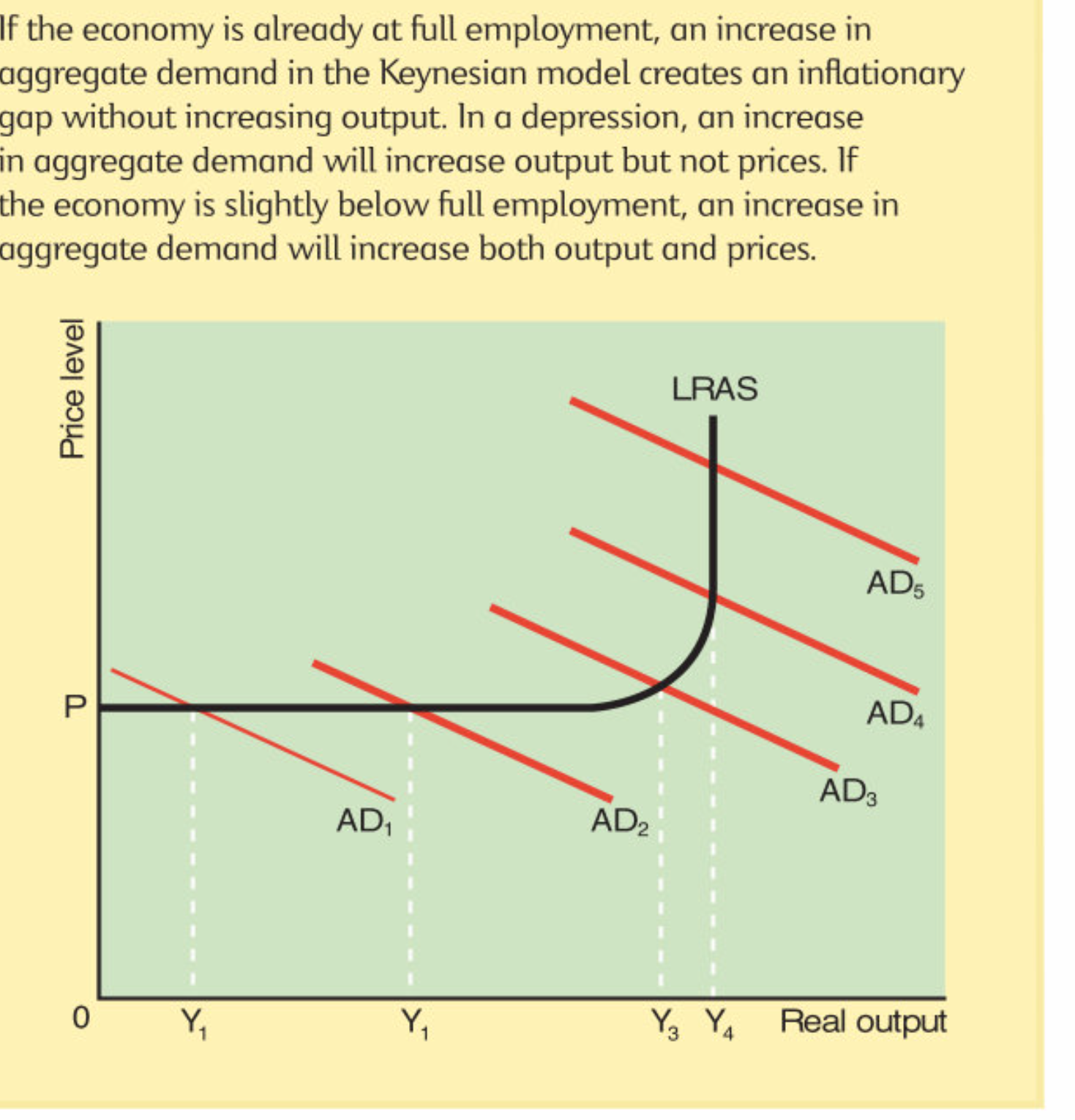
what do kenysians beleive about increase of AD durring a deep depression and why
increase equilibrum output but no incrase in price
because resources unused that is still avaliable
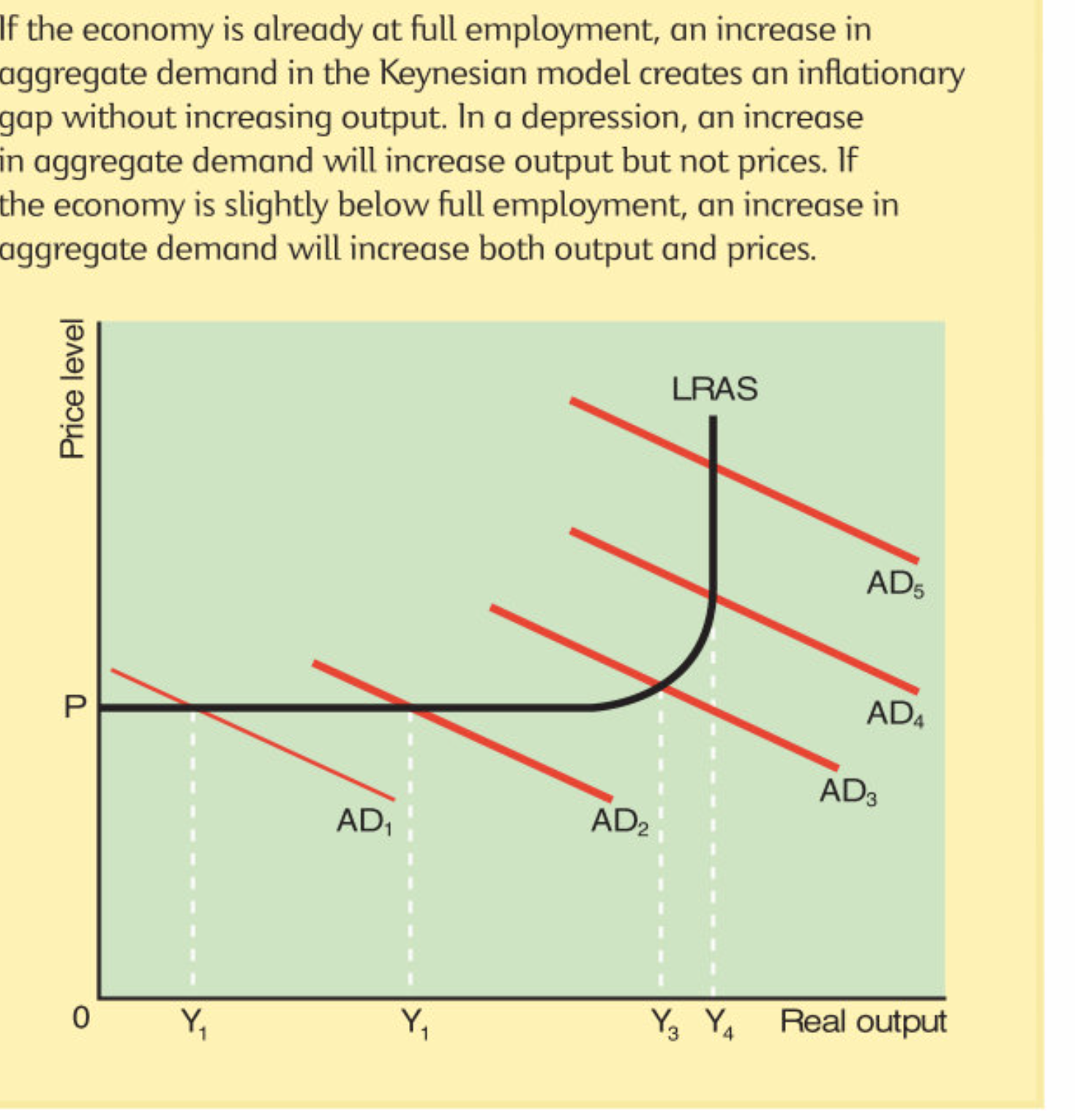
what do kenysians beleive about AD if little below full employment
it will both increase price and outptu
if LRAS incerase … increase
potential output
in claissical model what ahppens when there is an increase in LRAS, so they support
increase in output and decrease in price
supply side policy
what do kenysians beleive when