Biology Test Study Guide
 Call Kai
 Learn
 Practice Test
 Spaced Repetition
 Match
 Flashcards
 Knowt Play
1/19

There's no tags or description
Looks like no tags are added yet.
20 Terms
What is an exothermic reaction?
Releases more energy than it absorbs
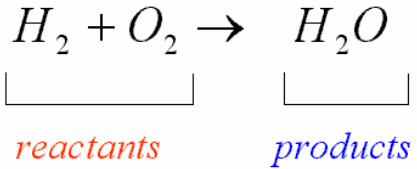
Which side of the arrow are reactants and products?
Reactants: left side. Products: right side.
What decreases the activation energy needed for a chemical reaction? What happens to the reaction if it is lowered?
A catalyst lowers the activation energy needed for a chemical reaction. The chemical reaction happens faster because less energy is needed for the reaction to occur.

What is happening in the second picture
The substrate is binding to the enzyme’s active site, forming an enzyme-substrate complex
What does the enzyme bind to
a substrate
What is the active site
specific area on an enzyme where the substrate attaches and the chemical reaction takes place
Example of a reaction that releases more energy than it absorbs
cellular respiration is an example of an exothermic reaction because breaking down glucose releases more energy than it absorbs
example of a reaction that absorbs more energy than it releases
photosynthesis is an example of an endothermic reaction because it absorbs more energy from sunlight than it releases
Draw an energy diagram representing an exothermic reaction. Label the parts of the diagram that show the reactant energy, the product energy and the activation energy. Do not include an enzyme

how do each of the 5 factors that we talked about affect the rate of chemical reactions? the five factors are temperature, pH, substrate concentration, catalysts, and competitive inhibitor
The five factors affect the rate of chemical reactions by changing how quickly a reaction occurs. Temperature increases the reaction rate by making particles move faster, but too much heat can denature enzymes. pH affects how well enzymes work, since each enzyme has an optimal pH. Increasing substrate concentration speeds up reactions until all enzyme active sites are occupied. Catalysts speed up reactions by lowering activation energy, while competitive inhibitors slow reactions by blocking the enzyme's active site and preventing substrates from binding.
What macromolecule does your body break down first? Which one does it never break down?
Your body breaks down carbohydrates first for quick energy. It does not break down nucleic acids for energy as a normal part of metabolism.
What does an ATP molecule do
ATP (adenosine triphosphate) is the main energy-carrying molecule in cells. It stores and releases energy that cells use to perform functions such as movement, growth, and transporting materials.
When would a 3rd phosphate be removed from ATP
A third phosphate is removed from ATP when a cell needs energy to perform activities such as muscle movement, active transport, or building molecules. This releases energy and turns ATP into ADP.
Describe what must come together in order for ATP to be made
ADP (adenosine diphosphate) must combine with an inorganic phosphate group (P) using energy to make ATP (adenosine triphosphate).
Where does the energy come from that is used to attach a 3rd phosphate to ADP
The energy comes from breaking down food molecules, especially glucose, during cellular respiration.
What macromolecule will your body break down first in order to get ATP, Second, Last, Never
Carbohydrates, lipids, proteins, and then nucleic acids
In the ATP-ADP cycle, what is being recycled over and over again?
The ADP molecule and phosphate group are recycled over and over again to make ATP, release energy, and repeat the cycle.
What is not being recycled
energy
Explain what happens when the 3rd phosphate is removed from the ATP.
When the third phosphate is removed from ATP, energy is released for the cell to use, and ATP becomes ADP (adenosine diphosphate) plus a phosphate group.
Draw bonds to connect the following picture in order to show an atp model. Label the 3 parts. Place a star on the bond that stores the most energy
