Electric fish
 Call Kai
 Learn
Learn Practice Test
 Spaced Repetition
 Match
Match Flashcards
 Knowt Play
1/18

There's no tags or description
Looks like no tags are added yet.
Name | Mastery | Learn | Test | Matching | Spaced | Call with Kai | Chat |
|---|
No analytics yet
Send a link to your students to track their progress
19 Terms
Unwelt
An organisms unique sensory world
Echolocation
High intensity sound wave (not always ultrasound) to analyze echo for the purpose of orientation
Electolocation
The capacity to perceive weak electric fields
Echolocation and electrolocation are types of
Active orientation mechanisms
Sensorimotor integration-simple
Sensory
Afferent neuron
CNS
Efferent neuron
Effector organ
Corollary discharge
From motor output to sensorimotor processing; subtracts the predictable component of sensory input (selfgenerated) from the overall sensory input received (external)
What is the importance of GCaMP?
Visualizes if a neuron was activated. In other words, it visualizes if there was calcium entry, indicating the release of neurotransmitters.
Chemical synapse
Where a chemical neurotransmitter is released
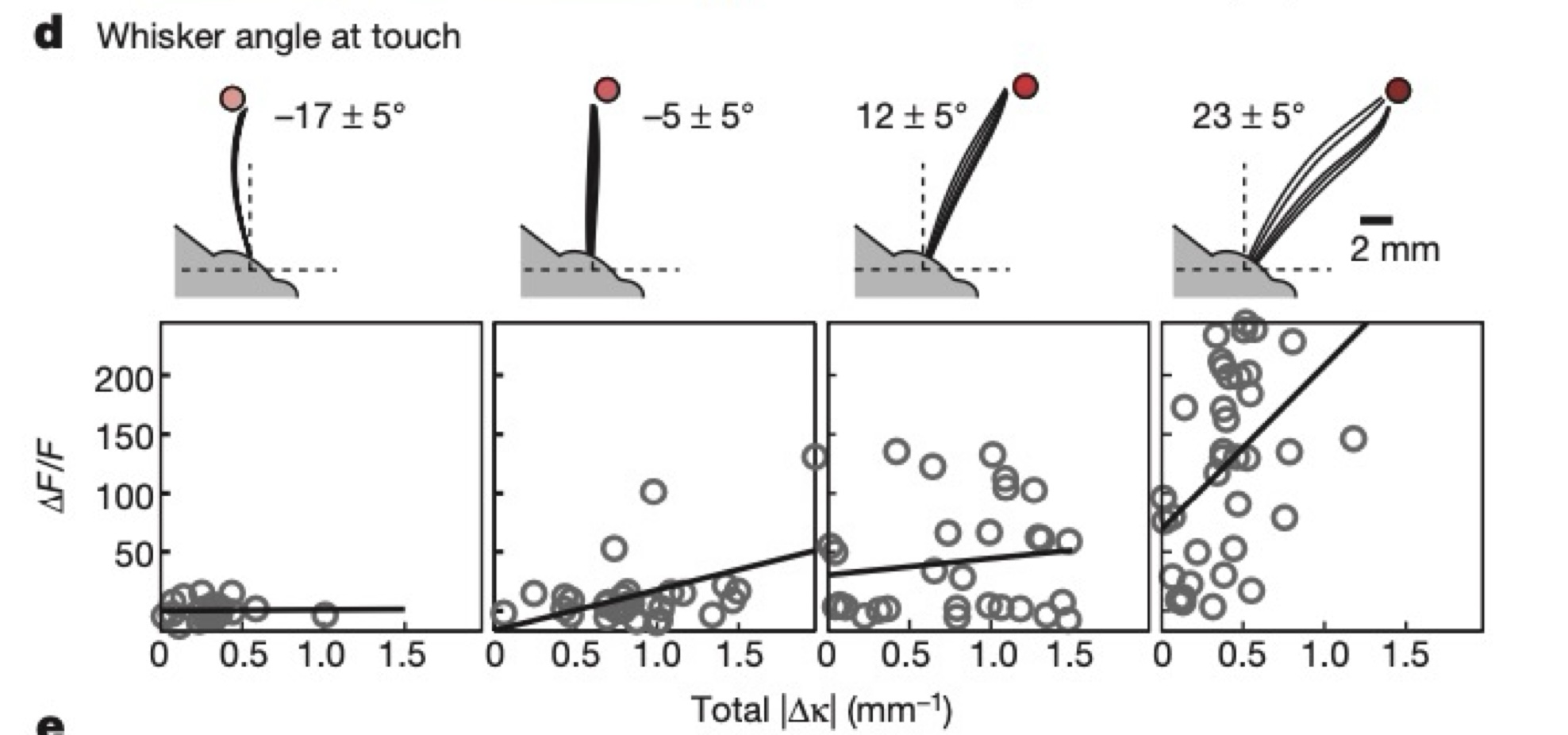
What does the mouse study tell us about neuron modulation?
The mouse study was conducted by teaching mice to tap something with their whiskers and they would be given water as a reward. Neuron activation was visualized using GcAMP. The whisker graphs showed that there is modulation of motor and sensory due to learning. If there wasn’t modulation, then the angles of movement of whisker would be the same for motor and sensory.
Strongly electric fish
Have their electric organs cover a large portion of their body
How do weakly electric fish locate food?
Their electric organ generated an oscillating electric field. A rock distorts field, reducing the density of the field across the body. A fish INCREASES local field density.
How does the jamming avoidance response work?
If the neighbor fish frequency is higher than the fish’s own frequency, then the “own” fish will lower its discharge frequency, while the higher frequency neighbor raises its even more.
How does the fish determine the sign of the frequency difference?
The fish compares its own frequency with the COMBINED frequency of both fishes.
Phase delay
If the combined frequency pits are happening after the “own” fish’s frequency, then the “own” fish will respond with a phase delay
Phase advance
If the combined frequency pits are happening before the “own” fish’s pits, then the “own” fish will respond with a phase advance
Phase influence on amplitude
Amplitude differs at point 0, where both fish’s waves equal the same frequency, AND the phase may differ from either side.
TU electroreceptor organ
Receptor is tuned in to alternating-current, or the current of both the “own” fish’s and the “mixed” current.
Phase and amplitude encoder are
Independently processed from the hindbrain to the midbrain which will follow either the decrease or increase frequency pathway