Lecture 6 - Synovial Joint Structures and Synovial Fluid
 Call Kai
 Learn
 Practice Test
 Spaced Repetition
 Match
 Flashcards
 Knowt Play
1/28

There's no tags or description
Looks like no tags are added yet.
29 Terms
Articular cartilage
Hyaline cartilage that covers the ends of the bone, for low friction movement, absorbs shock and distributes load

Joint (Synovial) Cavity
Fluid filled space b/w the bones, allowing free movement

Synovial fluid
Lubricates, nourishes, and cushions the joint
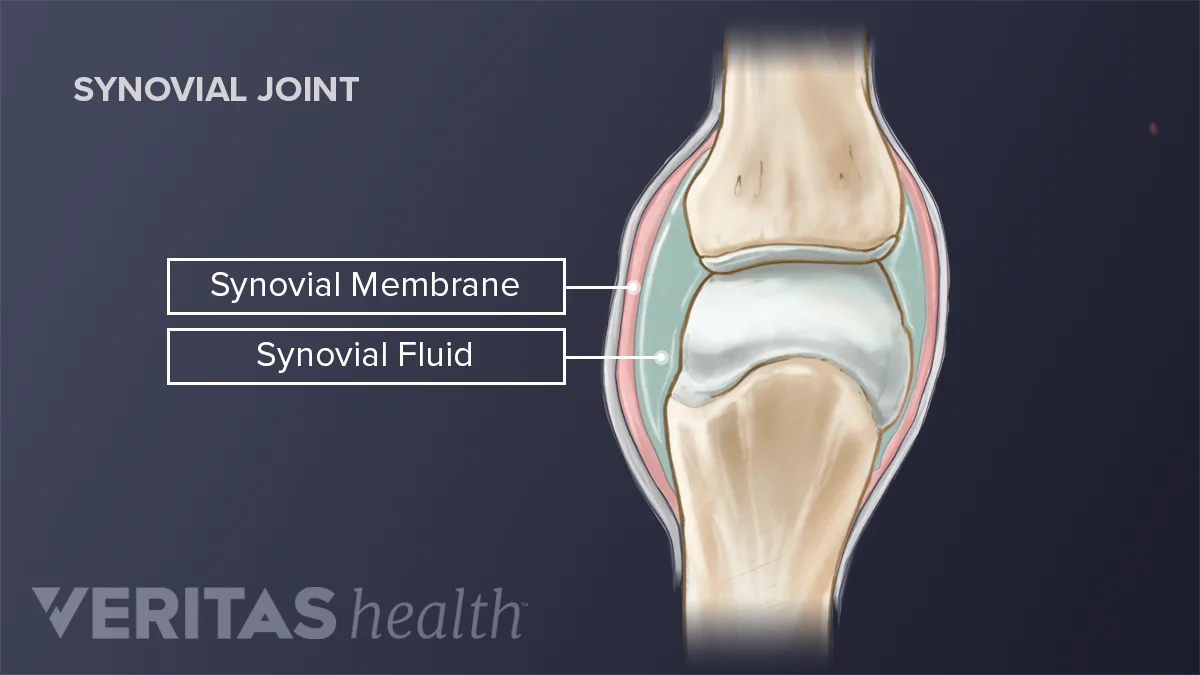
Synovial membrane
Specialized connective tissue layer that lines the inner surface of joint capsules, tendon sheaths, and bursae, generates the synovial fluid

What are the two layers of the synovial membrane
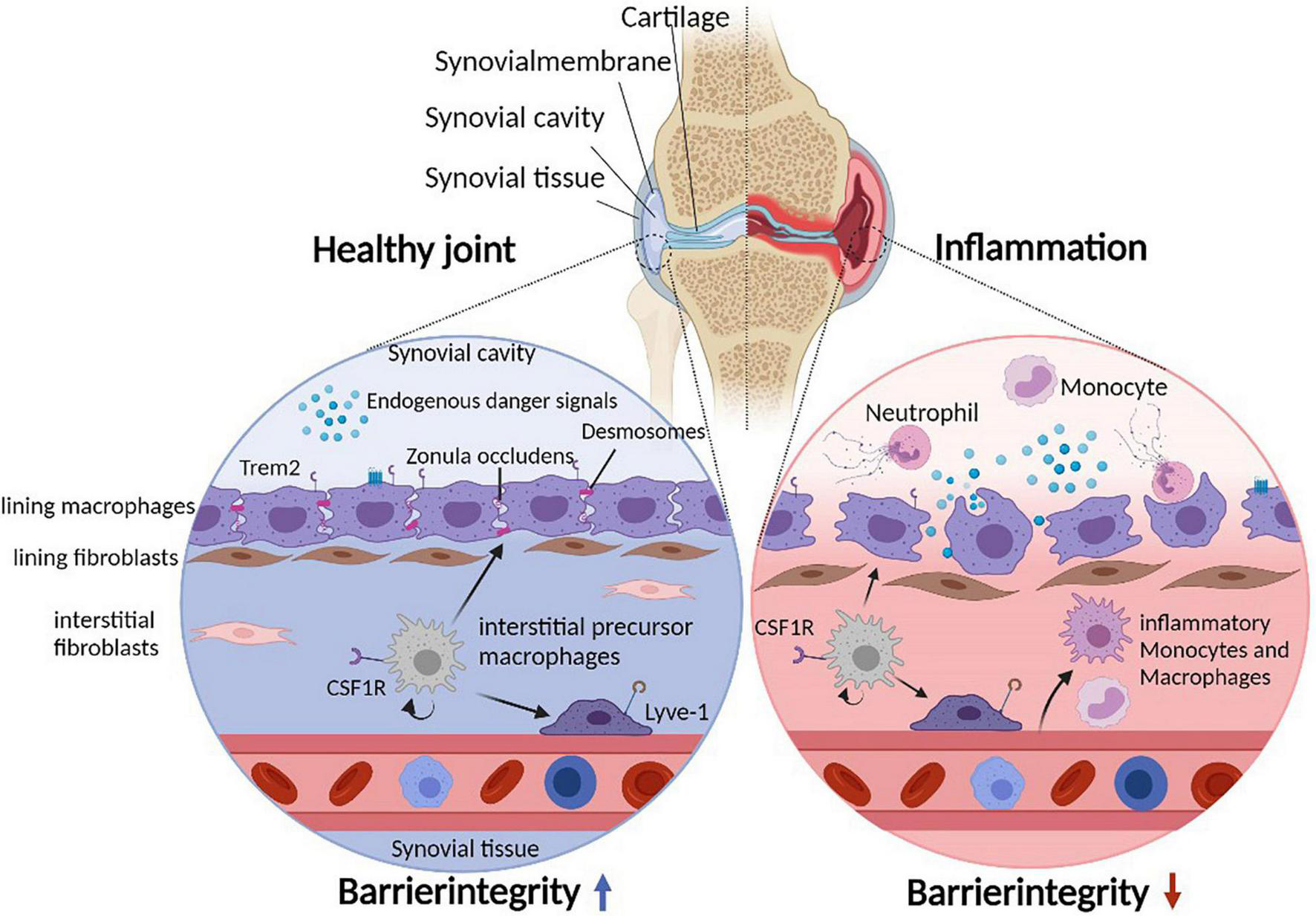
Intimal layer (inner layer facing the synovial cavity) aka functional layer
Subintimal Layer (facing the outside) aka the Supportive layer
Intimal layer includes what and functions
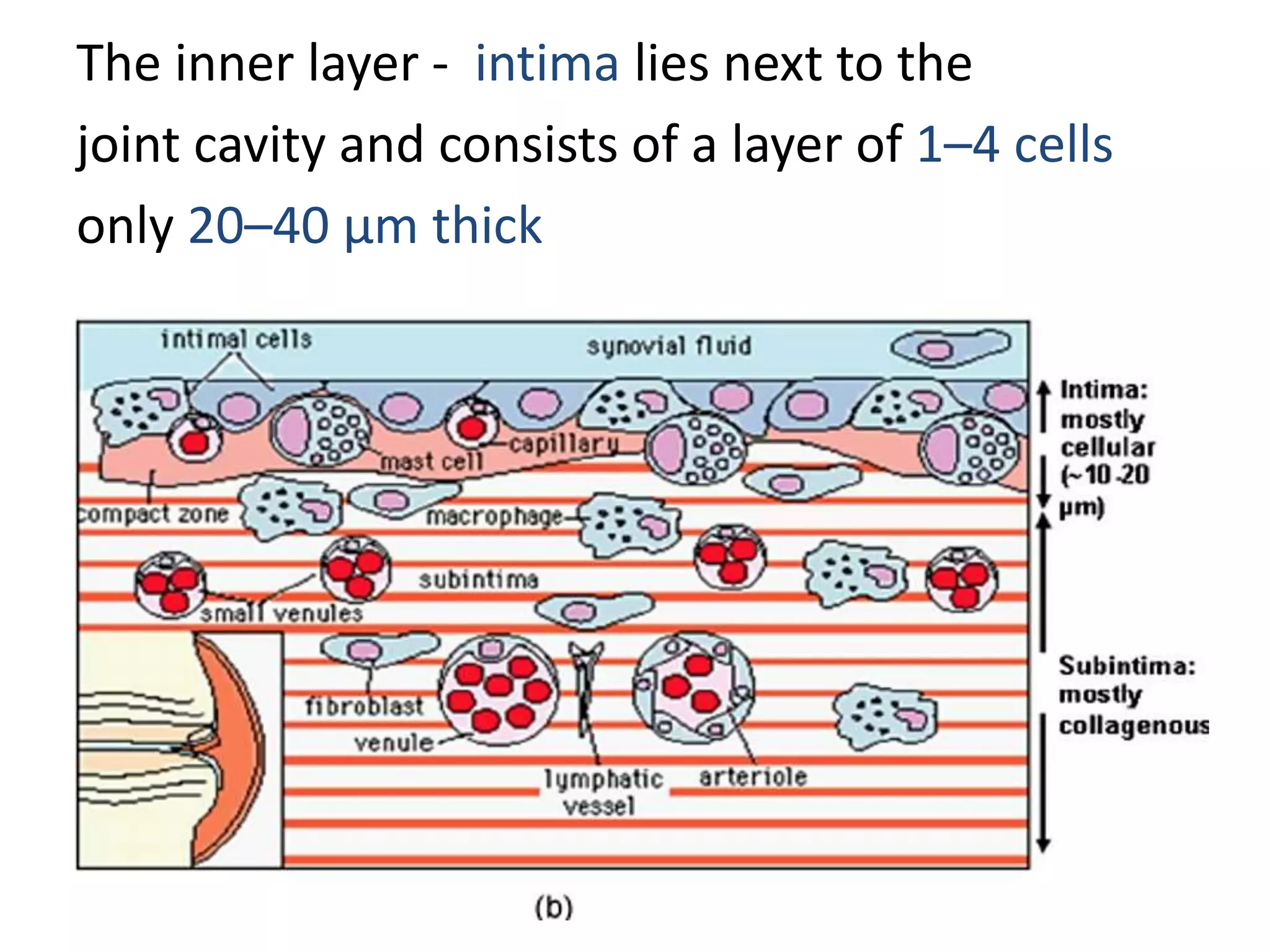
A layer of 1-4 layers loosely connected synoviocytes, not water proof
There are 2 types of synoviocytes:
Type A: Large macrophage that clear up debris and removes waste in the synovial fluid
Type B: specialized fibroblast that modify and complete synovial fluid, secrete into the synovial fluid
Subintimal layer includes what and functions
Has loose areolar (most common), fibrous or adipose tissue
Has capillary vessels that provide filtered plasma w oxygen + nutrients
Has lymphatic vessels that drain excess fluid +waste
Nerve ending that detect joint movement and pain

Joint capsule
Dense irregular CT that wraps around the joint, provides stability, and prevents excessive movement, continuous with the periosteum

Ligaments and types
Connects bones, provides stability and prevents dislocation
types: Intracapsular: inside the joint
extracapsular: outside the joint
Bursae
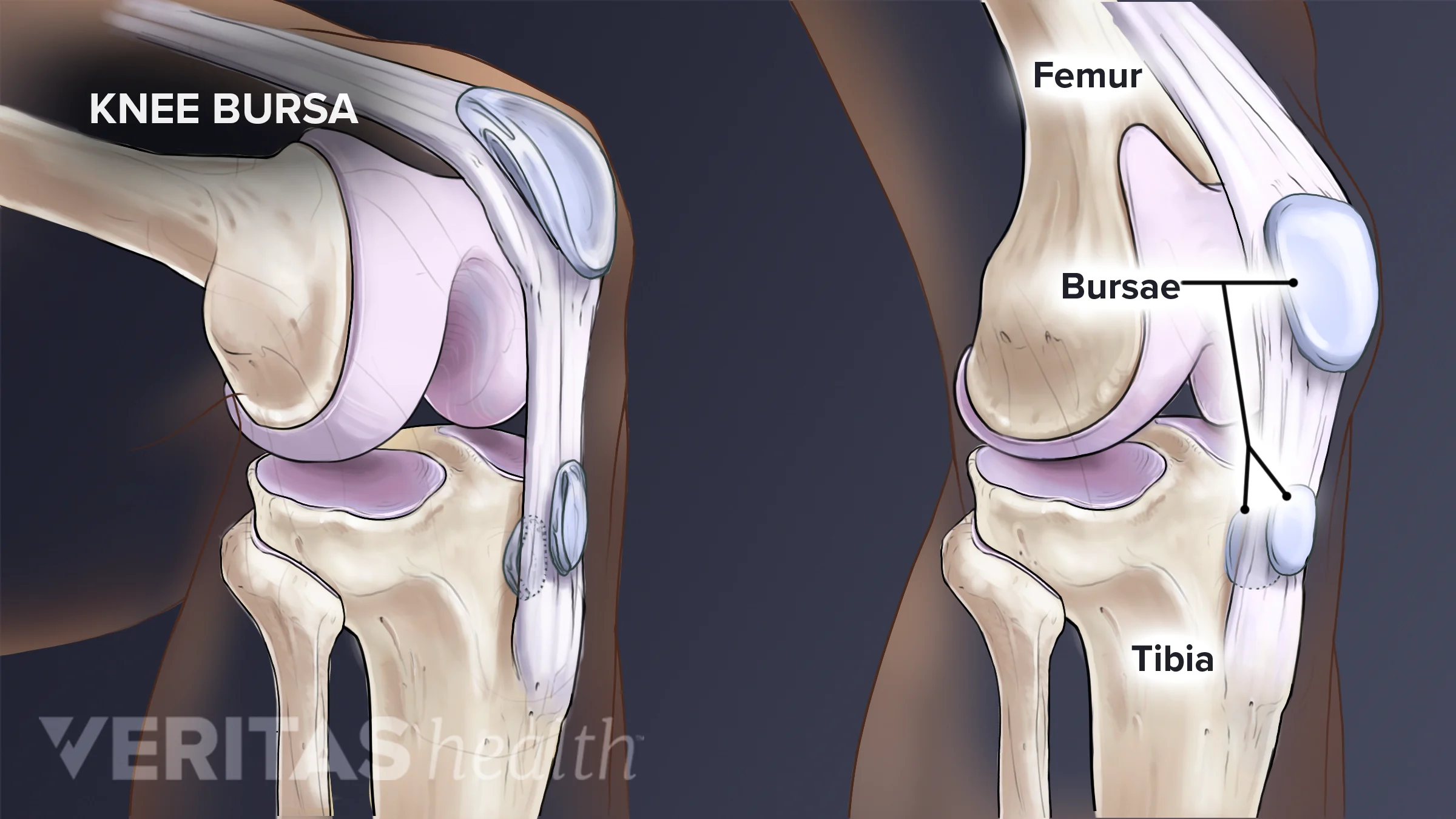
In SOME joints, fluid filled sacs to reduce friction, found in high friction areas like shoulder, knee
Menisci or articular disc
In SOME joints, b/w joints fibrocartilage structure to improve stability/absorb shock, found in knee and TMJ
what are the Innervated structures of the synovial joint
Synovial membrane, joint capsule, ligaments, bursae
Proprioceptor
Provides info about what STATE the joint is (bent, angle) to the brain to calculate the next movement
Nociceptor
Pain receptor that detects danger, pain, and prevents movement around that joint when in pain
Synovial Fluid Composition of 2 derived groups
Blood derived
Synoviocytes derived
What are the 2 components of synovial fluid derived from synoviocytes
Hyaluronic acid: completed by Type B synoviocytes, function is to provide lubrication and shock absorption
Lubricin: protein made sourced from synoviocytes and cartilage, function is to reduce friction on cartilage surfaces
What are the 5 blood derived components of synovial fluid
water, electrolytes, energy (glucose/O2), small plasma protein, and a few WBC
Water component of synovial fluid function
function is to be the solvent for nutrients and waste
derived from plasma
Electrolytes component of synovial fluid function
sourced from plasma, function is to maintain ionic envir and pH
Glucose/O2 component of synovial fluid function
sourced from plasma, function is to be energy source for chondrocytes
Small plasma protein component of synovial fluid function
ex: albumin/globulins
sourced from plasma, function is for immune surveillance and osmotic balance
WBC component of synovial fluid function
sourced from infiltration via capillaries, the function is to immune surveillance
What is the first step of synovial fluid production
Blood Plasma Filter: The body makes synovial fluid by filtering blood plasma through the subintimal blood vessels (which are fenestrated capillaries) in the joint membrane.
Excess synovial fluid or waste is removed via lymphatic vessels
What is the second step of synovial fluid production
Modification by Type B Synoviocytes: type B synoviocytes secrete hyaluronic acid, lubricin, and other glycoprotein which gives transforms the watery plasma to a viscous fluid, allowing it to be lubricating, shock absorbing, and reduce leakage
Circulation of Synovial Fluid in the Articular Cartilage Inlcudes
at rest (no external load)
high mechanical load
low mechanical load
What the synovial fluid does when there are no movements/ mechanical loads
The synovial fluid diffuses nutrients and oxygen to the chondrocytes at a slow rate
What the synovial fluid does when there are high movements/ high mechanical loads
The cartilage matrix deforms and recovers when load is reduced
High mechanical load forces synovial fluid out of the articular cartilage matrix and into the joint space which flushes out waste from cartilage into the joint cavity then into circulation
Spreads HA and lubricin over cartilage surface for friction reduction
Much factor way for substance exchange
What the synovial fluid does when there are low movements/ low mechanical loads
Suck the synovial fluid into the articular matrix and distributes nutrients from fluid to chondrocytes
What is movement like
Is like a pump that keeps the synovial fluid circulating which is necessary for cartilage health (since cartilage is avascular!)