FORY 3100 Lecture Midterm
 Call Kai
 Learn
Learn Practice Test
 Spaced Repetition
 Match
Match Flashcards
 Knowt Play
1/88

There's no tags or description
Looks like no tags are added yet.
Name | Mastery | Learn | Test | Matching | Spaced | Call with Kai | Chat |
|---|
No analytics yet
Send a link to your students to track their progress
89 Terms
the Ericaceae-Heath family
alternate leaves (rarely opposite or whorled), no stipule, capsule, berry, or drupe
dendrology
Study of the identification, nomenclature, classification, morphology, geographic range, phenology, and ecology of woody plants
taxonomy
identification, nomenclature, classification
silvics
morphology, geographic range, phenology, ecology
alternate leaf arrangement
one leaf per node

opposite leaf arrangement
two leaves per node

whorled leaf arrangement
three or more leaves per node

odd pinnately compound
odd number of leaflets (terminal leaf present)

even pinnately compound
even number of leaflets (no terminal leaf)
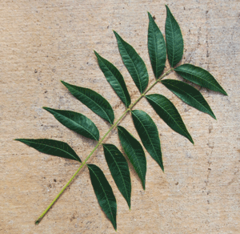
bipinnately compound
a compound leaf divided twice with leaflets attached to secondary rachises

palmately compound
leaves attached at common point

trifoliate compound
three leaves attached at common point
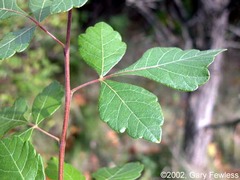
pinnately lobed
lobes alongside of an elongnated leaf with single clear midrib

palmately lobed
lobes radiating from the petiole or point of attachment of the blade
obligate wetland plants (OBL)
almost always in wetlands (>99% of the time)
facultative wetland plants (FACW)
often in wetlands (67-99% of the time)
facultative (FAC)
occur in wetlands 34-67% of the time
imperfect flower
only female or only male parts
actinomorphic flower
radially symmetrical-can be split any way and be symmetric
zygomorphic flower
bilaterally symmetrical- only one line of symmetry
dry indehiscent fruits
achene, samara, nuts/nutlet
achene
small, 1 seeded fruit

samara
winged, 1 seeded fruit

nut
hard-shelled dry fruit or seed

nutlet
a small nut

dry dehiscent fruits
legume, follicle, capsule
legume
pod-like, splits along 2 sutures

follicle
splits along 1 suture

capsule
splits along multiple sutures

fleshy fruits
pome, drupe, berry
pome
seeds within a papery wall
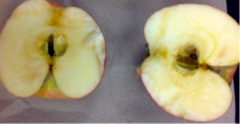
drupe
1 seeded fleshy fruit with seed enclosed in a stony wall

berry
seed in pulpy mass

Aceraceae- the Maple family
opposite leaves, double samara

Anacardiaceae- the Cashew family
leaves usually alternate, imperfect flowers, drupe or nutlike fruit

Annonaceae- the Custard-Apple family
alternate leaves, usually aromatic, berry or aggregate of berries with large seeds

Aquifoliaceae- the Holly family
alternate, typically evergreen leaves, small drupe with several stones (pyrenes)

Araliaceae- the Ginseng family
alternate leaves (rarely opposite or whorled), palmately or pinnately compound, berry, drupe, or schizocarp
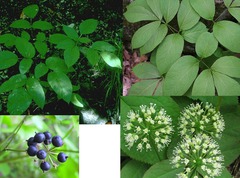
Betulaceae- the Birch family
alternate leaves, regular pinnate venation, small to medium sized 1-celled, 1-seeded nut (or nutlet) or samara, bark often quite distinctive

Bignoniaceae- the Trumpet-Creeper family
opposite or whorled leaves, capsule or rarely berrylike, seed usually winged

Caprifoliaceae- the Honeysuckle family
opposite leaves, commonly a drupe, typically hollow twigs
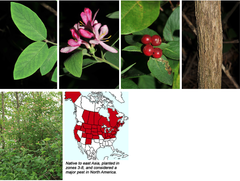
Cornaceae- the Dogwood family
alternate, deciduous leaves, usually entire, often with arcuate venation, drupe or berry
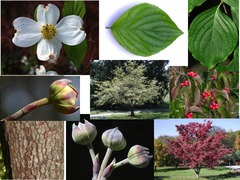
Ebenaceae- the Ebony family
alternate leaves, berry with large seeds often with calyx attached

Elaeagnaceae- the Oleaster family
alternate (rarely opposite or whorled) leaves, entire margins, achene surrounded by fleshy calyx tube (drupe like in appearance)

Ericaceae- the Heath family
alternate leaves, capsule, berry, or drupe

Euphoribiaceae- the Spurge family
typically have milky sap, fruit is typically a 3-parted capsule

Fabaceae- the Legume family
pinnately or bipinnately compound, many have thorns or spines, legume

Mimosaceae- the Mimosa subfamily
mostly bipinnately compound, legume, flowers often clustered in a fuzzy ball

Caesalpiniaceae- the Caesalpinia subfamily
pinnately or bipinnately compound, or simple, slightly to strongly zygomorphic, legume

Fagaceae- the Beech family
alternate, simple leaves, usually pinnately veined and short petioled, nut partially or wholly encased in a capsule (bur or cup)

Hamamelidaceae- the Witch-Hazel family
alternate, simple leaves, often with stellate hairs, 2-celled capsule, seeds winged or wingless

Hippocastanaceae- the Buckeye family
opposite, palmately compound leaves, typically 5-9 serrate leaflets, petiole long with no stipule, leathery capsule

Juglandaceae- the Walnut family
mostly alternate, pinnately compound leaves, no stipules, more or less aromatic, nut enclosed in semifleshy or woody, dehiscent or indehiscent husk
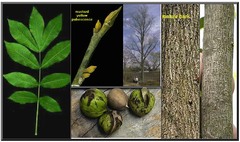
Lauraceae- the Laurel family
alternate, simple, usually aromatic, 1-seeded berry or drupe
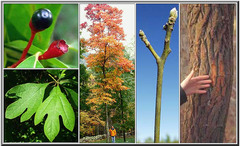
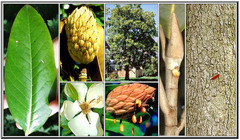
Magnoliaceae- the Magnolia family
alternate, simple, stipules enclosed in the bud, conspicuous stipule scars encircle the twig, cone-like aggregate of follicles or samaras
Meliaceae- the Mahogany family
alternate, simple, pinnately or bipinnately compound, leaflets often with inequilateral base, no stipule, capsule or drupe

Moraceae- the Mulberry family
alternate, simple, stipulate leaves, milky sap, a small drupe or achene, usually in multiples

Myricaceae- the Waxmyrtle family
alternate, simple, aromatic leaves with small black or yellow resin dots, small drupe often with waxy coating
Oleaceae- the Olive family
opposite (rarely alternate), simple, pinnately compound leaves, no stipules, samara or drupe

Paulowniaceae- the Paulownia family
opposite or whorled, simple or compound leaves, no stipules, capsule with seeds winged or angled

Platanaceae- the Sycamore or Planetree family
alternate, simple, palmately lobed leaves, 3-7 lobes, petioles enlarged at base and enclosing lateral bud, stipules leaf-like and very conspicuous, encircling twigs and often persisting, glosbose head or narrowly elongated achenes

Rosaceae- the Rose family
alternate (rarely opposite), simple or compound leaves, mostly stipulate, 5 white petals (sometimes pink), a lot of stamens, pome or drupe (occasionally follicle, achene, or capsule)

Rubiaceae- the Madder family
opposite or whorled, simple leaves, entire margins, stipules, berry, drupe, capsule, or schizocarp

Salicaceae- the Willow or Poplar family
propagation by cuttings is easy, alternate, simple leaves, stipulate, the petioles often glandular, 1-celled, 2-4 valved capsule containing numerous small seeds covered with long hair

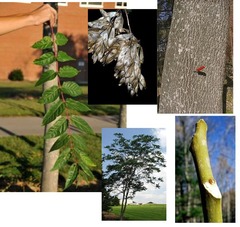
Simaroubaceae- the Quassia or Bitterwood family
alternate, pinnately compound or simple leaves, stipulate or stipulate, capsule, berry, drupe, or samara
Styracaceae- the Storax family
alternate, simple leaves, stellate hairs on the leaves are common, no stipules, dry or fleshy drupe

Symplocaceae- the Sweetleaf family
alternate or appearing sub-opposite, simple leaves, no stipules, an elliptical berry

Tiliaceae- the Linden family
alternate, simple, stipulate leaves, capsule, drupe, berry, or nutlike (nut hangs from a leaf-like bract)

Ulmaceae- the Elm family
alternate, simple leaves, regular pinnate venation, usually serrate margins, often inequilateral at the base, zig-zag twigs to varying degrees, pseudoterminal buds, samara

oaks
leaves alternate, simple, with pinnate venation, vary from lobed to entire, buds clustered at twig tip, imperfect flowers, acorns
white oaks
lobes not bristle tipped, acorns mature in 1 season, caps generally thick, inner cup glabrous, seed sweet, germinate in fall, bark light, loose or platy
red oaks
bristle tipped, acorns mature in 2 seasons, scales rarely thick, inner cup tomentose, seed bitter, bark is dark, often nearly black, smooth when young becoming rough, blocky, or deeply furrowed when mature, tight not platy
interspecific hybrid
cross between two related species
hybrid nomenclature
Populus detoides x Populus tremuloides
or
Populus x bernardii (Bernard poplar)
MADCapBuck with a Big Ruby and Sweet, Beautiful Princess
Maples, Ashes (and pricey and devilwood), Dogwoods, Caprifoliaceae (viburnums, elderberries, honeysuckles), Buckeyes, Bignoniaceae (S. catalpa), Rubiaceae (buttonbush), American beautyberry, Sweet shrub, Princess tree (paulownia)
crenate margin
rounded teeth on margin
serrate margin
toothed
acute
tips form an acute angle
acuminate
tip is acute and very tapered
thorn
modified branch
spine
modified stipule or leaf
prickle
modified bark
natural range
geographical area where species has been documented to occur, where conditions of climate and soil are suitable and available for species to grow (not fixed)
habitat
combination of environmental conditions (climate, soil, physiology, biota, disturbance)
indicator species
site-specific species that is indicative of a certain habitat
cosmopolitan species
can grow most anywhere
true terminal bud
lacks leaf scar
lateral buds
have leaf scar
pseudoterminal bud
has an aborted shoot tip and leaf scar, bud is usually angled to one side