Sociology Education - Theory, Sociology - Education
 Call Kai
 Learn
 Practice Test
 Spaced Repetition
 Match
 Flashcards
 Knowt Play
1/132

There's no tags or description
Looks like no tags are added yet.
133 Terms
Parsons functions
functionalism
1.universalistic and particularistic standards
2.focal socialising agency

durkheim functions
functionalism
1.skilled workforce
2. specialistic skills
3. shared norms and values

davis and moore functions
functionalism
1. sift and sort.
2. inequality is needed
3. better jobs need better rewards/pay

durkheim crits
1. fails to consider different cultures. not everyone has the same norms and values.

davis and moore crits
1. failing students rebel

new rights
1. government can't meet local needs
2. parents need more of a say
3. government unable to provide the best education for children
4. competition should be created between schools to encourage harder working/better teaching

new rights. crits
1. schools become exam focused leading pupils to become stressed.
2. less opportunities are available for the working class pupils.
3. schools become exclusive

chubb + moe
1. schools run less by government and more by parents
2. parents are able to shape the school
3. schools listen more to parents, as they are now their money providers
4. more parents = more money. better school = more parents attracted

althusser functions
marxism
1. state apparatus. ideological and repressive
2. reproduce and legitimise class system

bowls + gintis functions
marxism
1. stunts and distorted personal growth
2. obedient workforce

bourdieu functions
marxism
1. symbolic violence
2. limited social mobility
3. cultural capital. middle class values

willis functions
marxism
1. children do not always accept the system and create or join anti-school subcultures to rebel

bowls and gintis study
1. 237 high school students
2. rewards for obedient behaviour
3. reward personality traits that make submissive worker
3. obedient = higher grades
4. independence + creativity = lower grades

bowls + gintis crits
1. schools encourage pupils to raise hands and have an opinion or ask questions
2. this is the opposite off what society wants in workers

althusser crits
1. middle class do better than the working class
2. middle class teachers judge the working class pupils

myth of meritocracy
1. meritocracy doesn't exist
2. to many barriers in place stopping working class from achieving social mobility or meritocracy
3. poor are dumb theory
cultural capital
1. middle class experiences
2. teaching middle class norms and values

symbolic violence
1. limits social mobility
2. harms working class

legitimise
1. makes inequality in the education and class system look fair. (it's not)

educational achievement.

cultural deprivation
1. we acquire basic values from primary socialisation
2. working class parents fail to socialise children adequately so they become culturally deprived

intellectual development
1. development of thinking.
2. middle class parents tend to choose education toys for their children so they start school of with an advantage.
3. working class parents are often unable to afford educational toys so choose cheaper toys based only on entertainment.
4. this leads to working class pupils starting school of without the right skills needed to progress.
5. douglas found that working class students scored lower on intellectual tests than middle class children.

language
1. engleman and bereaver claim working class language is deficient and children fail to develop necessary language skills.
2. working class kids incapable of abstract thinking
3. bernstein identified two types of languages used by working class and middle class.

restricted code
1. used mainly by the working class
2. descriptive and un-gramatical
3. not analytic and short sentences
4. context bound. this is where the speaker assumes the listener shares the same experiences as them.

elaborated code
1. used mainly by middle class
2. analytic and grammatically correct long sentences.
3. context free. where the speaker does not assume the listener shared the same experiences as them.

language - continued
1. elaborated code gives middle class pupils an advantage.
2. elaborated code is used by teachers, exam papers and textbooks making it harder for working class who speak the restricted code.
3. early socialisation of the elaborated code means middle class students become fluent in it and are more likely to succeed.

parents attitude and values
1. douglas
2. hyman
3. sugerman
4. Feinstein

douglas
1. working class parents are less ambious and interested in childs education
2. as a result of this they are less likely to go to parents evening

hyman
1. working class create a self imposed barrier.
2. this is where they naturally give up and accept their failure as they see no point in trying.

sugerman
4 key characteristics
1. fatalism. where working class pupils accept the fate that the will fail.
2. collectivism. working class value being part of a group more than being independent.
3. immediate gratification. working class seek pleasure now rather than later.
4. present time orientated. working class focus on the present rather the future and so have no future goals

myth of cultural deprivation

Nell Keddie
1. cultural deprivation is victim blaming.
2. children can not be deprived off their own culture but working class children are culturally different.
3. they fail because the education system is middle class dominant

troyna and Williams
1. the problem is not the children's language but rather teachers attitude towards it.
2. teachers tend to label middle class language the highest and working class language as inadequate.

blackstone and mortimore
1. working class parents do not lack interest in child's education but rather does not have time to attend parents evening due to long working hours.
2. working class parents are put off by the middle class atmosphere schools give off.

difference in educational achievement.
social class
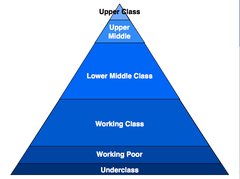
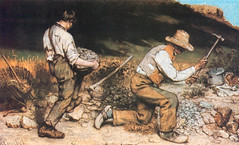
working class
1. unskilled, lower paid jobs. e.g. manual labour jobs
2. earn enough income to get by
middle class
1. skilled, higher paid jobs.
2. better holidays and privileges
3. better/higher education. e.g. more likely to attend university.
4. smaller families.

private education
1. pollard saw private education as a major way in which class privileges are transmitted from generation to generation
2. children attending private schools do better in exams than children attending state/free schools
material deprivation
1. lack of material necessities. e.g. home + income
2. poverty linked to under achievement
3. only 33% of children on free school meals gain 5 C-A* GCSEs. compared to 61% of children who are not on free school meals.
4. exclusion and truancy more likely in working class pupils or poor families
5. 90% of failing schools are located in deprived areas

housing
direct effects
1. overcrowding leads to lack of place to play or study. lack of sleep. harder to study due to noise.
2. temporary housing leads to children changing schools often and disruption to education as a result.

housing. continued
indirect effects
1. poor housing leads to greater risk of accidents occurring. cold or damp housing leads to health problems which further leads to absences from school.
2. health and welfare. Howard states that children from poor homes have lower intake of energy and vitamins, leading to weak immune systems. this means children are more likely to catch diseases or fall ill.
3. reasons for this could be that fresh fruit is less expensive than sugary foods. therefore poor parents are more likely to buy sugary snacks for children.
4. Wilkinson says that the lower the class the higher the chance of hyper-activity, anxiety or behavioral difficulties such as ADHD.

financial support and cost of education
1. although education its self is free, children from poorer families may lack equipment due to being expensive. they may also miss out on educational trips and experiences due to the cost of them being a burden on poor parents.
2. tanner et al said that the cost of uniform, books and other equipment needed is a financial burden on parents.
3. Flaherty put forward the argument that poorer children are often fearful of being bullied in school due to lack of fashionable cloths or the correct equipment. he found that 20% of children entitled to free school meals do not use then.

financial support continued
1. children from poorer families are often pressured into getting a part-time jobs. this means they have less free time to concentrate on school.
2. it may also contribute to increased levels of stress.
3. this helps to explain why poorer children leave school at the age of 16 rather than stay on and go to university. fear of debt results in less poor children applying for uni.

material deprivation evaluation
1. some poor children still succeed in education meaning material deprivation can not solely be to blame for under achievement.
2. the quality of the school is important as well as the child's family background.
3. cultural and religious factors may play a part on motivation or attitude regardless of poverty. some cultures value education more than others.

internal factors to underachievement
1. labelling
2. steaming
3. self-fulfilling prophecy

labelling
1. when a definition is attached to a pupil.
2. Becker done a internationalist study on labelling. he interviewed 60 high school teachers and found that the working class generally given negative labels as do not fit the 'ideal pupil' image. >>
3. ^^ middle class more likely to fit 'ideal pupil image' and therefore are labelled positively
4. evidence suggests that it occurs in both primary and secondary schools. pupils tend to be blinded to it during primary year.
5. further studies found that school counselors judge students on the basis of their social class and race.
6. Rist conducted a study on primary school teachers and found that pupil backgrounds were used to place them in separate groups.
6. fast learns labelled as 'tigers' and tended to be middle class. these pupils placed closer to teachers desk and receive more help and attention
7. middle class generally labelled as less able and placed on tables, at the back of classrooms, labelled as 'clowns'.
8. higher study sets receive higher status language which is more abstract and theoretical. lower sets receive lower status language which is descriptive and common sense. this reduces lower class students access to elaborates code further placing them at a disadvantage.

self fulfilling prophecy
1.a prediction that comes true simply by virtue of being made.
2. lowers performance as teachers label pupils negatively and treats them like an underachiever. leads student to internalise expectation which becomes part of their self concept and live up to the label given to them.
3. rosenthal told schools they had a new test designed to identify spurted that was in fact a standard IQ test.
- selected 20% of students at random and told teachers these were the future spurters.
- 47% of these students showed process a year later.
suggesting that when teachers believe a child is able they show motivation to help them achieve and demonstrate the impact of self fulfilling prophecy.

streaming
1. involved separating children into different groups called streams.
2. each group is taught separately based on ability.
3. negative effect on working class as teachers see them as less able and place them in lower streams.
4. it is hard for these working class students to then achieve the higher grades as they are entered for lower exam papers. e.g. foundation papers
5. middle class placed in higher streams so receive better level of education and have greater self-esteem and motivation to succeed.

pupil subcultures
1. group of pupils who share similar values and behaviour patterns.
2. emerge as a response to labels and streams
3. pro school subcultures have a positive attitude to school
4. anti school subcultures have a negative attitude towards school. they gain a status fro rebelling against school rules. which leads to education failure.
5. anti school subculture members tend to be in lower streams and blame school for low self esteem.

marketisation

Functionalist view of education:
education is seen as performing a beneficial role in society.
Marxist perspective on education:
examine the struggle between powerful and less powerful groups. The powerful group in society (the ruling class) use the education system to impose their own beliefs and values on the rest of society. Education is therefore seen as having a beneficial role only for certain groups.
the economic role of education:
Functionalists say that schools and colleges teach the skills and knowledge necessary for work in a modern & technical society (e.g. numeracy, literacy etc.). Vocational courses help to train young people for the world of work - prepares young people for their future occupational roles

Marxists criticize the economic role:
Education actually reinforces the class system. Children from less powerful groups learn the skills necessary for low-status jobs. Children from more powerful groups (rich) gain skills for high-status jobs
selective role for education:
Education seen as a *sieve*- grading people according to ability and place individuals in occupational roles best suited to their talents and abilities. It is *meritocratic* - provides equal opportunities in their school career, so those with better skills & talents with higher qualifications therefore have a higher pay and better status in society. This results in *social mobility*.
How can meritocracy lead to social mobility?
By having good qualifications and skills through the education system, students can progress to a higher position in society than they started from.
Marxists on the selective role:
Education is not equal for everyone - it is designed to benefit powerful groups. They claim that teachers and schools reject working class students and so under-perform. (does not offer equal chances to everybody so is not *meritocratic*.)
Socialization role in education:
education plays a role in teaching the norms and values of society. School is an agency of socialization so that young people learn a common culture, beliefs, expectation etc. The education system "knits" children from different backgrounds into a flexible whole.

Marxists say on the socialization role?
Education socializes individuals into accepting values of *more powerful groups*
E.g. stress placed on importance of hard work in schools prepares future workers to accept hard work in the workplace.

Political role in education:
The fact that Citizenship is a subject in schools and is an examined subject which can be taken as a GCSE or an A-level has been linked to the belief that it is important to create social cohesion in society. Education has a role in teaching the norms and values of British culture as well as helping individuals to identify themselves as part of that wider culture. This is sometimes called developing a sense of "Britishness". This may involve teaching students about the voting system and the legal system, or asking them to consider what it means to be "British". According to functionalists, people learn about society through education. In this way, they accept the political system and for example, are able to exercise their voting rights wisely at election time.
Marxists on the political role in education:
Only certain political opinions and ideas are tolerated in education - radical ideas are rejected or ridiculed. So, political ideas of more powerful groups come to be accepted by individuals.

Formal learning is the official curriculum (studying subjects and understanding punishments)
Informal learning is the *hidden curriculum*.
the "hidden curriculum":
The learning that takes place outside particular subjects or lessons *as part of general school or college life*. (e.g. behaving in a nice way). Students may learn such things without explicit teaching and without realizing they are learning them.This is not usually explicit (isn't taught directly by teachers). This is *informal teaching*.
How does the hidden curriculum prepare students in the future?
It reflects society's values so it prepares students for their place in society and their future work.
hierarchy shown in school:
Hierarchy is shown in the form of a pyramid with the layer at the top having the most power of all.In school, the head teacher is at the very top with the students at the bottom. Students may also see themselves in a hierarchy with the older students being at the top. Teachers may also see themselves in a hierarchy based on subjects considered most important.

competition shown in school:
Competition is encouraged within students. For example in exam results/ sports. Society is also based on competition e.g. with jobs, material possession,or status. Schools reflect the value that society places on competition and prepares students for their place in a competitive society.
social control shown in school:
The*hidden curriculum* of rules, regulations, obedience and respect for authority is one mechanism of social control that reflects those social controls operating in society at large (work).In effect, students learn to accept society's social controls while they're in the education system.
Social control (function of education)- what is formal and informal social control?
*Formal* - discipline of staff, punishments, school rules
*Informal* - learning and working with others, peer pressure.
Using these forms of control, people learn to conform to rules and authority in later life.

Gender role allocation in school:
*Job segregation begins at school*, so for example teachers expect girls to be less good at science than boys. This can discourage girls to enter a science-based career.
Each gender may learn that the playground is something that boys tend to dominate.e.g. with football games.This prepares girls for the idea that men dominate other aspects of the social world as adults.

Lack of satisfaction in school:
Much of the school day is taken up with boring and meaningless activities and students have little say in what they study in each subject or in the overall organization of the day.The same timetables being followed week in week out may lead to a sense of boredom and powerlessness. School prepares students for boring and meaningless jobs. *There is therefore a link between students experience of school and workers experience of their job.*

eduction before 1870's:
The system was very different to the way it is set up now. A person's access to education depends on their position in society. Church - run charity schools were available to the poor. The rich could afford private tutors or private schooling.
The 1870 education act:
Ensured that some basic education was available to all children from 5-11. It led to the idea that state taxation should be used for schooling.*this was the start of a link with the state and education*.
1870-1944: the education system was based on social class. Three types of schools were:
> elementary schools for working class up to 14 yrs.
> fee - paying grammar schools for middle classes (a limited number of scholarships for working class boys.
> expensive fee-paying public school for the upper class
the 1944 Butler Education Act:
After WW2, there was debate over what British society should be like. The talents of the nation weren't fully being used and that the education system *should be reformed* to allow individual talent to flourish. Britain also needed a better-educated workforce in order for its economy to be more competitive. ( educating a workforce to improve an economy has also influenced some changes in the education system in recent years.) This act aimed to give all students an equal chance to develop their talents of free, state-run education. 3 stages to this were...
> Primary - up to 11 yrs includes infant and junior stages.
> Secondary - 11-15 (school leaving age was raised to 16 in 1976)
> Further/higher - education beyond the school-leaving age.

Why was the *tripartite system* introduced?
In the secondary section, the aim was to introduce a meritocratic system where children would receive an education based on their own academic ability, rather than on the ability of their parents to pay.
What is the *tripartite system*?
Children's ability was tested at 11 (11+ exam). Based on these results children went to one of three types of school which was designed to meet a students needs.. The 11-plus still exists in some areas of the country and much of the private sector uses entry tests at 13 years (common Entry Exam).
The tripartite system:
Secondary modern - general education for less academic students. (75% of all students)
Secondary technical - practical education e.g. crafts and skills (5% of students)
Grammar school - Education for the more academic (20% of all students)

The start of the comprehensive system (1965):
Labour government had decided to ask Local Education Authorities (LEA's) to reorganize a secondary education so that all students regardless of academic ability attended the same type of school. This became known as a "comprehensive" school(and still exists today). This policy continued by the conservative government and by 1986, around 90% of secondary school students attended comprehensives.

The reason for the comprehensive system:
Comprehensive schools were introduced in response to the failings of the tripartite system. The tripartite system often reflected social class, backgrounds, with more middle class children in grammar schools. Comprehensives are based on the principle of one type of school for everyone.
Advantages of the comprehensive system:
> Social reasons: children of all abilities and from different social classes attend the same school and mix. Social barriers are broken down.
>Educational reasons: they cater for children of all abilities. NO entrance exam and no selection e.g. the 11-plus (no child is labelled as a failure) which is seen to be fairer to many. Comprehensives are said to provide students with more opportunity to achieve success according to their ability.
>economic reasons: Comprehensives are larger. This means that more subjects and facilities are available. They are seen as cheaper to fund and run.
>Geographical reasons: Each school has a "catchment area"-a particular area or neighbourhood from which students are drawn. This has established the principle of local schools enrolling local children of all abilities and providing with the same abilities.

Problems with the Comprehensive system:
*Comprehensives limit parental choice.* -this means that no matter how good or bad the nearest school's reputation in the area is, each student is expected to go to that school.
More academically able students are held back by the less able, especially in mixed-ability groups; teachers' attention and time might be torn between meeting the needs of the very bright as well as of the less able students, but some say that the understanding of the less able is helped by the presence of more able students in the class.
The education of bright working-class students may suffer if they go to the local comprehensive rather than the local grammar school.
Comprehensives *accept lower standards* - this criticism relates to social class because comprehensives contain a mixture of classes with a range of different values and attitudes, BUT as grammar schools were largely middle-class it would only reflect middle-class standards.

The Comprehensive system *does not* break down class barriers:
Comprehensives aren't really of mixed socials class because they are based on a local neighbourhood. e.g. inner-city comprehensives are usually working class while suburban ones are usually middle class.
Some say that most comprehensives aren't comprehensive at all because e.g. they stream or band students within the school according to ability. Critics say that streams reflect social class differences; in other words, the comprehensive system reproduces the old tripartite system but within a school.

Pre-school:
refers to the care and education of children under 5 and includes:
> Day nurseries which can be provided through the local authority or by voluntary or private means.
> Play groups which provides care and learning experiences mainly for 3-5 year olds.
> Nursery education which can be provided in nursery schools or in nursery classes attached to primary schools for children up to 5 years of age.

Primary education:
refers to infant and junior schools which takes any student from a particular area (*catchment area*) from 5 to 11. Most primary education is provided by the state (public sector) through the Local Authorities BUT some schools are private and so fees must be paid.
Secondary education:
refers to schools that take students from 11 to 16 but some may also provide sixth-form education up to 18. middle schools in some areas provide a bridge from primary to secondary education (so they overlap) taking children from 8-12,9-13 or 10-13. Most secondary education is provided by *the state* in comprehensive schools where there are no fees BUT some secondary education is provided by private, fee-paying schools, grammar schools and independent faith schools.
The independent sector:
Refers to schools that charge fees. Made up of:
>Private schools - all the schools that charge fees.
> Public schools - older and more famous independent secondary schools e.g. Eton, Harrow, Rugby etc.
These schools account for only *7%* of all schoolchildren But they are not subject to the same rules as state schools. For example, they don't have to teach the National Curriculum.
Critics say that because of such high tuition fees, independent schooling allows children of the rich to receive an education gives them certain advantages than state-educated children.
*ex-independent students made up 44.5% of places at Oxford in 2007 compared to 26.8% from state-sector comprehensives, sixth form centres and grammar schools.*
Further and higher education:
Refers to education outside schools beyond the compulsory age of 16. 16-18: Students can study a range of qualifications (like A-levels and Scottish highers) at sixth form colleges or further education colleges or even go on to skills training courses and apprenticeships. 18: students can then be qualified to go on to higher education and study at higher levels including universities.
Development in further education:
At 16, it must be decided whether to go on to remain in full0time education, go into apprenticeships or seek employment, with or without training.
In recent years, there has been a trend to remain in full-time education and the government is committed to raising the number of people in full-time education or training after 16. (*78% of 16 year olds were in full-time education - 2006*). The government are doing this because in order for Britain to remain competitive and prosperous in a global economy, I must need a highly-educated and well-trained workforce BUT the figures for Britain are still lower than other countries. One response was to raise the school-leaving age to 18 so that the receive some form of education and training.
All further and higher education colleges (sixth forms) are funded by the government. These colleges are separate businesses, so they are all in competition with each other for students so that they have more funding. The funding council monitor a college's performance with exam performance, recruitment etc. Supporters hope that these measures will result in improved quality on provision (providing) in this sector.

The advantages of independent schools:
They have lower teacher-student ratio than state schools; classes are therefore smaller and students receive more attention from teachers.
Better resources and facilities than in some state comprehensive schools.
Independent schools mostly have an academic culture (so having good results is common). Academic achievement is emphasized and exam results are normally good. Because of this, students are usually highly motivated and most go to university.
High parental input with fees, support, and expectations.
Advantages of state schools:
FREE - not based on the ability of parents having to pay fees of private schools. Critics say that its not morally right to have a private education system to which only the rich have access - this would reinforce inequalities in society based on wealth.
More socially mixed; independent schools are seen as elitist (more superior) and socially divisive (rich and poor are given separate opportunities.)
State schools can provide a route for *upward social mobility* for students from poorer families, but fee-paying schools aren't likely to do that for poorer families.
Students don't have to travel so far if they attend a local state school; private schools students have to travel relatively long distances or live far away from home at a boarding school.
Vocational education and training:
Governments have tried to place more emphasis on providing vocational (work-related) qualifications and training for students aged 14-18. Although this was *formed in the mid-1970's*, it is still sometimes known as "The new vocationalism". This reflects on how the education system has to provide skills and expertise needed by industry and the economy (good for the government). Also it has engaged a wide range of learners than in the past.
National Vocational Qualifications - work-based qualifications training students in specific jobs. Some GCSE's and A levels provide a broad introduction to sectors like Health and Social Care, Applied Business and Applied Science. There are now recent developments; *the Diplomas*. In 2008, there were % that were introduced with 12 to follow in subjects like Engineering, Hair and Beauty services, and Travel and Tourism.
2015 - it is intended that all students under the age of 18 are to be involved in full or part-time education or training at school, college or in employment.
Many say that these qualifications will lead to a more skilled, better qualified workforce allowing Britain to be more competitive BUT some see the vocational qualifications as being similar to the *tripartite system* to the students, because some believe students who aren't seen to be academic are considered failures and are therefore pushed into what some see as lower-status vocational training.
Alternative forms of educational provision:
There are alternatives to mainstream, formal (recognised) education for example home education (known as home schooling or home learning). This is when teaching children is involved at home rather than at school. Home schooling is carried out by wither parent or professional tutors. It's a legal option for people that want to provide a different learning environment from local schools.
Another alternative form of provision involves a way that a school is organized and the type of values that it teaches. E.g. A.S. Neill's' Summerhill school. This co-educational (for boys and girls) boarding school was set up in 1921 in Suffolk and has been seem by some as a model for progressive education (emphasises the individual needs of each child).
1988 Education Reform Act (conservative): Marketisation in education:
This refers to the idea that things like competition and consumer choice have been introduced into education. There has been a focus on parental choice and funding based on student numbers. If a parent wants to send their child to a secondary school, there is competition between other schools to have that student into their school.
The National Curriculum and testing:
The *National Curriculum was introduced in September 1989* in all state schools in England and Wales. All students 5-16 must study a number of core subjects (English, Maths, Science). Also a number of foundation subjects (like History and Geography) must be studied up until key stage 3.
In addition, students are tested formally by teachers on core subjects and are also given national tests at the end of key stages (ages 7 &11). Sixteen - Students are assessed by the GCSE's.
The aim for this is to measure a students' performance against national targets so that parents and schools can see how a child is performing at their age. If a student is achieving below the expected level or even or even below the national target, measures can then be taken to improve their performance.
The aim of the National Curriculum is to provide greater equality in education or everyone by ensuring that all students take the same subjects. E.g. Science was traditionally a boy's subject but it is now compulsory for all students up to GCSE level
Increased competition and choice:
1988 Act introduced the idea of choice and diversity in education which is linked to the idea of *marketization*. Parents should be able to choose the type of school they prefer for their children from a range of options. Because of this, schools now produce a prospectus, publish exam results and National Curriculum test results as well as comparisons between the school and national results. Increased parental choice has meant that schools are now having compete with each other for students (and the only way they can do that is by publishing how good they are!)
Local Management of School (LMS):
The governors of all state sector schools were given responsibility for managing their school budget and staff. The effects of this is the weakening role of the LA (labour authority), which traditionally had more control over budgets and staffing arrangements in schools.
City technology colleges (CTC's):
started in 1993 and designed to meet the increasing emphasis of developing the skills needed for industry and the economy. They are partly owned by the state and partly privately funded. hey offer a curriculum that specialises in technical, vocational and scientific education.
Grant - maintained schools (GMS's)
What this means is that any LA school can receive direct grants from the government rather than local budgets (also known as "opting out".) This has allowed schools to have almost total control over the management of its budgets, staffing decisions, priorities for spending etc (so independent). These schools also have the right to select only *some* students through entry exams (known as foundation schools.)
League tables:
made to provide information about the performance of schools. This allows parents to make comparisons between schools more easily. The aim for this was to create more competition between schools; people assume that this would lead to higher standards because of competition. Schools that seem successful in league tables tend to be over-subscribed with many parents wanting to send their children their (suggesting how people must love it). League tables take various forms, with some providing details of raw results only (actual grades), whereas others use a value-added measure. This allows parents to see how well the school does in improving a student's performance while they're at the school. For some schools, even though their raw results may be average, they can demonstrate that they've significantly improved the performance of students from when they first started at the school.
The forces of the market have been applied to education; in some cases it has led to improvements by some but for others it has created more inequality.
Ways to raise standards in education:
> Providing nursery places for all 3-4 year olds.
> Reducing class sizes in primary schools.
> National literacy and numeracy schemes.
> Being able to look at league tables as a measure of how well a child has progressed in school.
> Failing schools were placed in "special measures" (meaning under the acceptable standard).
> the "Beacon schools" (amazing schools) were to pass on their practice to other schools or colleges in local areas.