Myasthenia Gravis
 Note
 Call Kai
 Learn
 Practice Test
 Spaced Repetition
 Match
 Flashcards
 Knowt Play
1/18

There's no tags or description
Looks like no tags are added yet.
19 Terms
Myasthenia Gravis (MG)
An autoimmune disorder affecting the myoneural junction, characterized by muscle weakness.
Myoneural Junction
The synapse formed between a motor neuron and a muscle fiber, crucial for muscle contraction.
Antibodies
Proteins that can destroy or deform muscle surface receptors, preventing normal muscular reactions in MG.
Risk Factors
Conditions that may increase the likelihood of developing MG, including other autoimmune disorders and thymoma.
Thymoma
A rare, usually benign tumor arising from thymus tissue, associated with MG.
Clinical Manifestations
Symptoms of MG, including diplopia (double vision), ptosis (drooping of eyelid) , facial muscle weakness, and generalized weakness.
The complications of MG involve
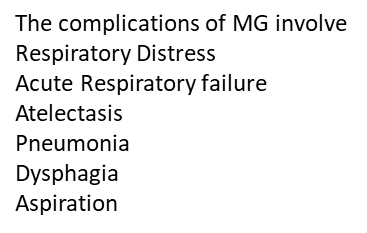
Respiratory distress, acute resp failure, atelectasis, pneumonia, dysphagia, aspiration,
Myasthenic Crisis
An exacerbation of MG symptoms requiring mechanical ventilation due to respiratory muscle weakness.
Cholinergic Crisis
Neuromuscular weakness and respiratory failure caused by an overdose of cholinesterase inhibitors.
Edrophonium (Tensilon) Test
A diagnostic test for MG that temporarily improves muscle strength, indicating the presence of the disorder.
Anticholinesterase Agents
Medications like pyridostigmine that enhance neuromuscular junction function by inhibiting acetylcholinesterase.
Corticosteroids/ Treatments for MG
Medications such as prednisone used in the treatment of MG to reduce inflammation and immune response. Corticosteroids such as Prednisone and Immunosuppressants such as Imuran, Cyclosporine (Sandimmune), mycophenolate (cellcept) are used in treatment of MG.

Plasmapheresis
A treatment option for MG that involves exchanging plasma to remove harmful antibodies.
Thymectomy/IVIG
Surgical removal of the thymus gland, which may help control MG symptoms. IVIG treatment requires close monitoring for any possible reactions. (IV Immunoglobin)

Nursing Assessment
Evaluation of MG severity, respiratory effort, muscle strength, and swallowing ability. Assessment for the severity of the symptoms, respiratory effort including rate and depth of respirations, oxygen saturation, ABGs and PFT

Myasthenic vs
Differentiating between exacerbation of MG symptoms and overdose of anticholinesterase drugs.
Nutritional Guidance
Recommendations for a balanced diet and modifications for patients with swallowing difficulties.
Medication Scheduling
Importance of timing medications like pyridostigmine to coincide with mealtime for optimal effect.
Community Resources
Support options available for MG patients, including associations and support groups.