יילוד בריא: ABO, RH, HDN
 Call Kai
 Learn
 Practice Test
 Spaced Repetition
 Match
 Flashcards
 Knowt Play
1/13

There's no tags or description
Looks like no tags are added yet.
14 Terms
ABO Incompatibility – Mechanism & Prognosis
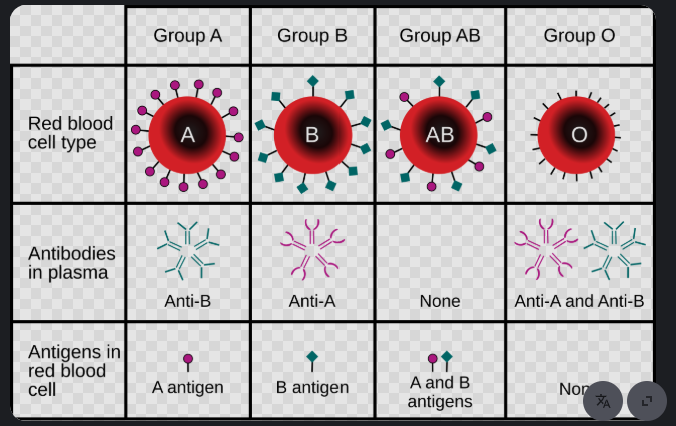
ABO incompatibility occurs when maternal antibodies react against the infant's RBC antigens, causing immune-mediated hemolysis.
Most commonly, a mother with blood group O has IgG anti-A or anti-B antibodies, which cross the placenta and bind to fetal RBCs in an infant with blood group A or B.
These antigen–antibody interactions can cause agglutination (clumping) and destruction of RBCs.
As RBCs are destroyed, hemoglobin is broken down, increasing the production of unconjugated bilirubin.
When bilirubin production exceeds the newborn liver's ability to conjugate and eliminate it, hyperbilirubinemia develops.
Jaundice within the first 24 hours suggests pathological hemolysis rather than physiological newborn jaundice.
ABO incompatibility may affect the first pregnancy, because the mother's antibodies may already exist. Unlike ABO incompatibility, Rh disease typically requires previous maternal sensitization.
Prognosis: ABO incompatibility generally causes less severe hemolysis than Rh disease, and outcomes are usually excellent with appropriate management. However, significant hyperbilirubinemia can still develop.
ABO Incompatibility – Diagnosis - Direct coombs Test
Maternal and neonatal blood typing: The most common incompatibility is a group O mother with a group A or B infant.
Direct Coombs Test (DAT): Detects antibodies attached to the newborn's RBCs. In ABO incompatibility, the test may be negative or weakly positive (false) even when hemolysis is present.
Serum bilirubin: Increasing levels, especially with jaundice during the first 24 hours, suggest pathological hemolysis.
Reticulocytosis: Increased production of immature RBCs as the bone marrow compensates for RBC destruction.
Note: Diagnosis considers the blood groups, clinical presentation and laboratory findings together.

ABO Incompatibility – Prevention
There is no real prevention except prevention of complications: identifying maternal–infant blood group incompatibility and recognizing early jaundice.
Close bilirubin monitoring and timely treatment reduce the risk of severe hyperbilirubinemia.
ABO Incompatibility – Treatment - phototherapy
Phototherapy is the primary treatment for hyperbilirubinemia caused by ABO incompatibility.
Phototherapy converts unconjugated bilirubin into forms that can be eliminated without normal hepatic conjugation.
Exchange transfusion is generally unnecessary because ABO incompatibility is usually less severe than Rh disease.
Exchange transfusion may be required if bilirubin reaches dangerously high levels despite intensive phototherapy.
Goal: Reduce bilirubin levels and prevent neurological complications.

Rh Incompatibility – Mechanism & Prognosis
The Rh blood group system is determined primarily by the D antigen on RBCs. Individuals with this antigen are Rh-positive (Rh+), while those without it are Rh-negative (Rh−).
Rh incompatibility occurs when an Rh-negative mother carries an Rh-positive fetus.
Small quantities of fetal Rh-positive blood may enter the maternal circulation during pregnancy or delivery.
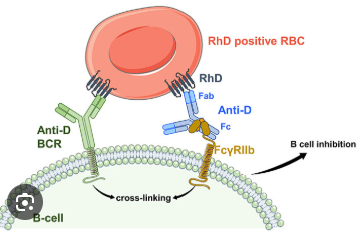
The mother's immune system recognizes the fetal D antigen as foreign, causing Rh sensitization (isoimmunization) and antibody formation.
The initial immune response involves IgM antibodies, which are too large to cross the placenta.
After sensitization, the mother produces IgG anti-D antibodies, which can cross the placenta.
In a subsequent Rh-positive pregnancy, maternal IgG antibodies cross the placenta, attach to fetal RBCs and cause hemolysis and fetal anemia.
The fetus compensates by increasing RBC production, but severe anemia can cause high-output heart failure and hydrops fetalis (generalized fetal edema and fluid accumulation).
Rh disease typically affects a second or later Rh-positive pregnancy, although the first pregnancy may be affected if maternal sensitization has already occurred.
Prognosis: Severe Rh disease may cause stillbirth, heart failure, hydrops fetalis, poor feeding and inadequate weight gain. Early diagnosis and treatment, particularly intrauterine transfusion, substantially improve survival. The lecturer reports survival rates exceeding 90% with appropriate management.

HDN – Clinical Manifestations (ABO & Rh) - Jaundice, hemolytic anemia, cardio, hydrops fetalis, hypoglycemia
Hyperbilirubinemia (jaundice): Hemolysis increases unconjugated bilirubin production beyond the immature liver's ability to eliminate it.
Early jaundice: Appearance within the first 24 hours is a warning sign of pathological hemolysis.
Hemolytic anemia: Destruction of RBCs reduces oxygen-carrying capacity and oxygen delivery to tissues.
Cardiovascular complications: Severe anemia increases cardiac workload as compensation and may cause heart failure
As pumping efficiency drops, blood backs up in the veins causing edema and ascites
Hydrops fetalis: When fluid accumulates in at least two fetal body compartments or tissues, it is termed hydrops fetalis.
Hypoglycemia: May occur in severely affected infants; When RBCs break down (hemolytic anemia) they release an antioxidant called glutathione. This antioxidant increases pancreatic insulin-producing cell activity, more uptake of glucose into cells.
Important: ABO disease typically causes milder hemolysis and jaundice, whereas severe fetal anemia, heart failure and hydrops fetalis are more characteristic of Rh disease.
Rh Incompatibility – Diagnosis
Indirect Coombs Test (maternal blood): Performed during pregnancy to identify circulating maternal antibodies capable of attacking fetal RBCs.
Direct Coombs Test (newborn blood): Detects antibodies already attached to the infant's RBCs, indicating immune-mediated hemolysis.
Genetic testing: May determine fetal Rh status and help assess the risk of incompatibility.
Amniocentesis: Mentioned by the lecturer as a possible method of obtaining fetal information, although it is not routinely required simply to determine Rh status.
Ultrasonography: Assesses fetal complications, including placental changes, amniotic fluid abnormalities and hydrops fetalis.
Important: If the fetus is confirmed Rh-negative, anti-D-mediated Rh incompatibility is not expected.

Rh Incompatibility – Prevention (Anti-D)
Anti-D immunoglobulin (Rh immune globulin) is administered to eligible Rh-negative mothers to prevent Rh sensitization.
Anti-D binds to Rh-positive fetal RBCs entering maternal circulation, allowing them to be cleared before the mother's immune system develops a lasting immune response.
It is administered intramuscularly at approximately 26–28 weeks according to the lecturer.
An additional dose is given within 72 hours after delivery of an Rh-positive infant.
Anti-D may also be required after pregnancy loss or other sensitizing events.
It is given to the mother, not the newborn, and is intended for women not already sensitized to the D antigen.
Once maternal anti-D sensitization has occurred, prophylactic Anti-D cannot reverse it.
Goal: Prevent the formation of maternal anti-D antibodies that could damage fetal RBCs in future pregnancies.
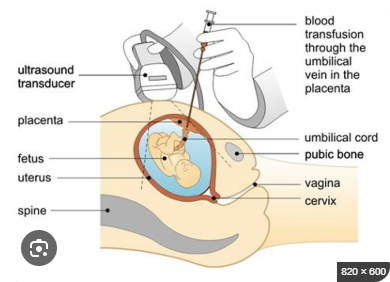
Rh Incompatibility – Treatment - Intrauterine Blood Transfusion (IUT) – Before Birth
Intravenous immunoglobulin (IVIG) is a broad pool of IgG antibodies from thousands of healthy donors used to block harmful anti-Rh antibodies and to treat severe fetal anemia caused by Rh isoimmunization.
Clarification: anti-D is given to an Rh-negative mother to prevent sensitization (often during a first pregnancy or sensitizing event), while intravenous immunoglobulin (IVIG) may be given to a sensitized mother during a subsequent pregnancy to help protect the fetus
Under ultrasound guidance, compatible RBCs, typically Rh-negative, are transfused directly into the fetal circulation through the umbilical vein.
Increases fetal hematocrit, restores oxygen-carrying capacity and reduces cardiac strain.
Vecuronium Bromide may be administered to temporarily immobilize the fetus during the procedure.
Transfusions may need to be repeated depending on the severity of anemia.
Phototherapy after birth for newborn HDN
Phototherapy reduces unconjugated bilirubin levels.
makes it easier for RBC breakdown to be excreted in urine

Rh Incompatibility – Treatment -Exchange Blood Transfusion – After Birth
Used for severe hyperbilirubinemia that reaches treatment thresholds despite intensive phototherapy or when urgent exchange is indicated.
Removes antibody-coated RBCs, reduces bilirubin, removes circulating maternal antibodies and helps correct anemia.
Small amounts of the infant's blood, generally 5–10 mL at a time, are withdrawn and replaced with compatible donor blood through an umbilical venous catheter.
A double-volume exchange uses approximately twice the newborn's circulating blood volume (estimated by the lecturer at 85 mL/kg), replacing most circulating RBCs.

HDN – Nursing Management RH & ABO
Early recognition: Identify jaundice, especially during the first 24 hours, and monitor for signs of hemolytic anemia.
Maternal history: Review maternal blood group, Rh status, known incompatibility, sensitization and Coombs results.
Assessment: Monitor jaundice, bilirubin levels, anemia and signs of cardiovascular or respiratory compromise.
Exchange transfusion preparation: Explain the procedure to the family, prepare the infant and maintain NPO during the procedure according to the lecturer's protocol.
IV support: Administer prescribed dextrose and electrolytes to maintain glucose and fluid balance.
Documentation: Record blood volume withdrawn and replaced, total exchange volume and timing.
Continuous monitoring: Assess heart rate, respiratory status, blood pressure, temperature, oxygenation, blood glucose and fluid balance.
Complications: Watch for tachycardia, bradycardia, respiratory distress, hemodynamic instability, temperature changes and transfusion reactions. If deterioration occurs, the procedure may need to be temporarily interrupted.
Family support: Provide education, explain the mechanism of blood incompatibility and reassure parents that it is not something they deliberately caused.
2023 – Moed Bet, Q4
What is important for the nurse to know regarding Hemolytic Disease of the Newborn?
There is a risk when an Rh-positive newborn is born to an Rh-negative mother.
2024 – Moed Aleph (Pisgah), Q4
What is important for the nurse to know regarding Hemolytic Disease of the Newborn?
There is a risk when an Rh-positive newborn is born to an Rh-negative mother.