A&P - Chapter 11: Fundamentals of the nervous system and nervous tissue
 Call Kai
 Learn
 Practice Test
 Spaced Repetition
 Match
 Flashcards
 Knowt Play
1/51

There's no tags or description
Looks like no tags are added yet.
52 Terms
Sensory Input / Afferent nerves
Sensory receptors gather information and carries it to the CNS
Integration
Processing and understanding of sensory input; creates sensations, memory, thoughts, and decisions
Motor Output / Efferent nerves
Activation of effector muscles or glands
Central Nervous System (CNS)
Consists of the brain and spinal cord
Integration and control center; interprets sensory input and dictates motor output
Peripheral Nervous System (PNS)
Communication!
Everything else outside of the brain and spinal cord
2 types: spinal nerves and cranial nerves
Somatic
Carries sensory information from the skin, muscles, and joints
Voluntary skeletal muscle
Visceral
Involves the internal organs
Autonomic
Controls involuntary actions, like heart rate, digestion, and breathing
Regulates cardiac muscle, smooth muscle, and glands
Sympathetic
“Fight or flight”
Prepares body for stress or emergencies
Parasympathetic
“Rest and digest”
Calms the body, slows heart rate, and aids in digestion
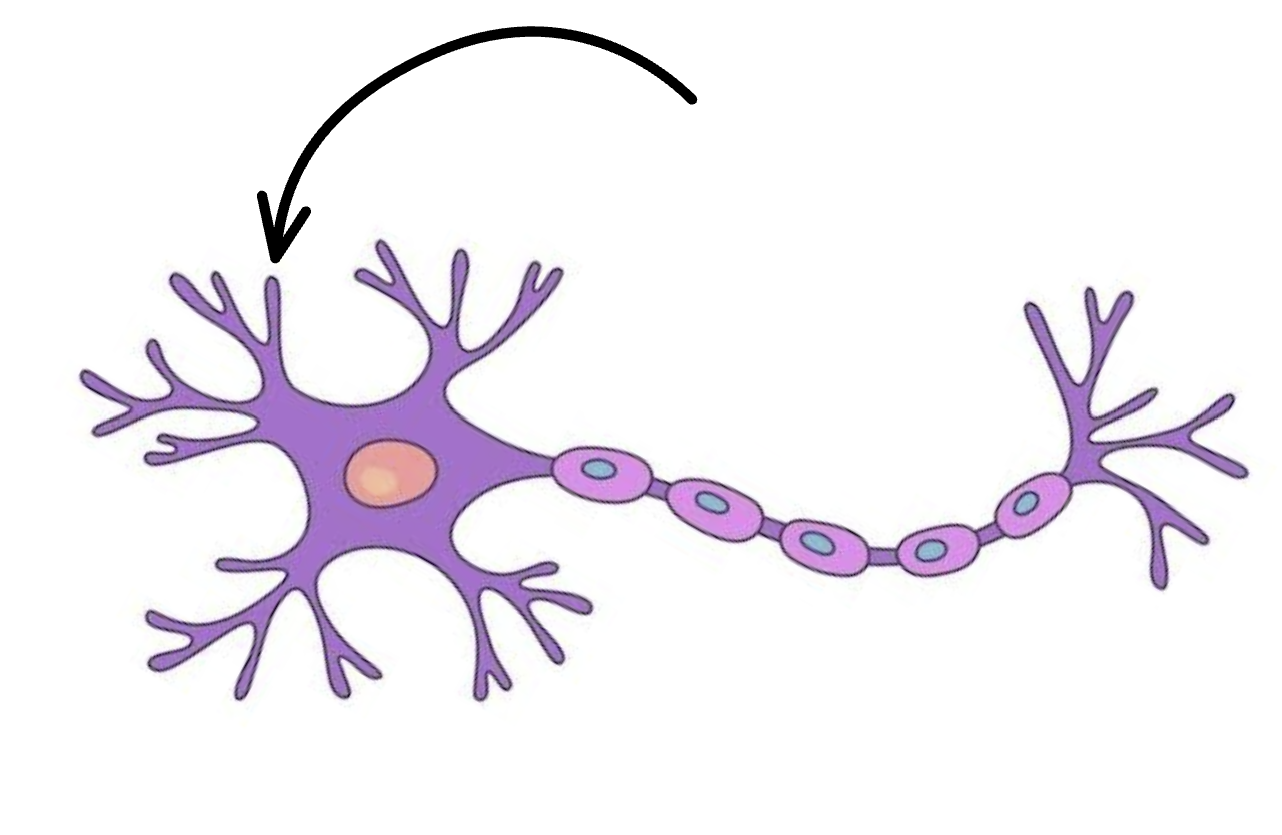
Dendrites
Receives messages and carries them toward the cell body

Cell body (soma)
Main part of the neuron
Maintains the cell
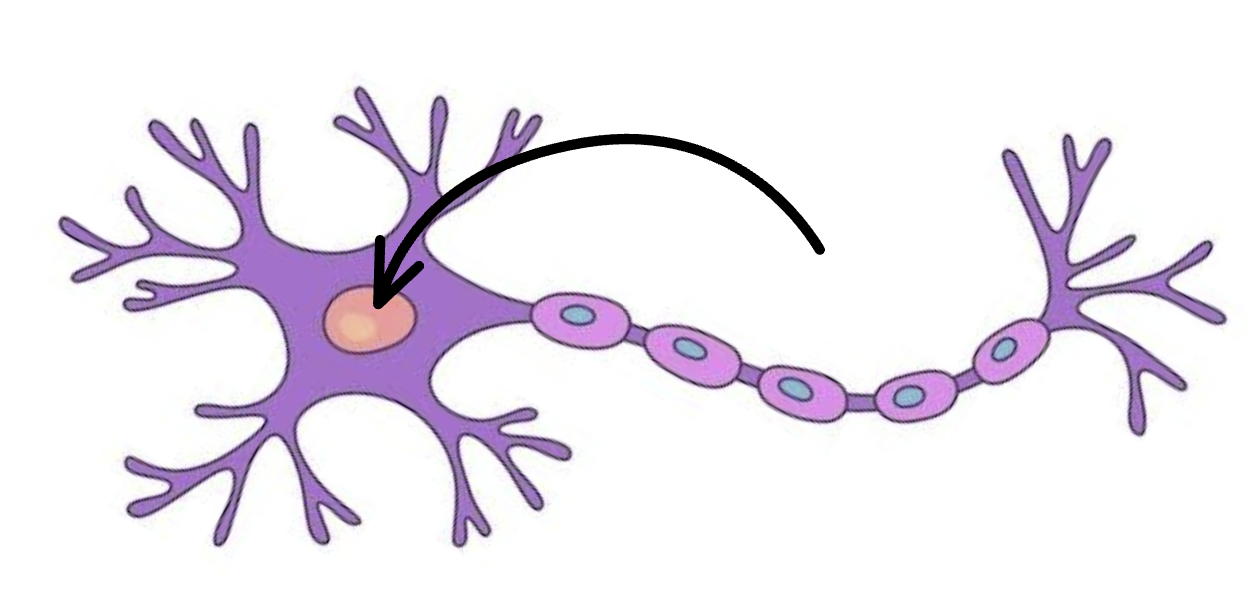
Nucleus
Controls the cell and contains DNA
Rough ER (Chromatophilic Substance)
Makes protein needed by the neuron

Axon
Carries nerve impulses away from the cell body

Axon hillock
Area where the nerve impulse begins
Triangular shaped
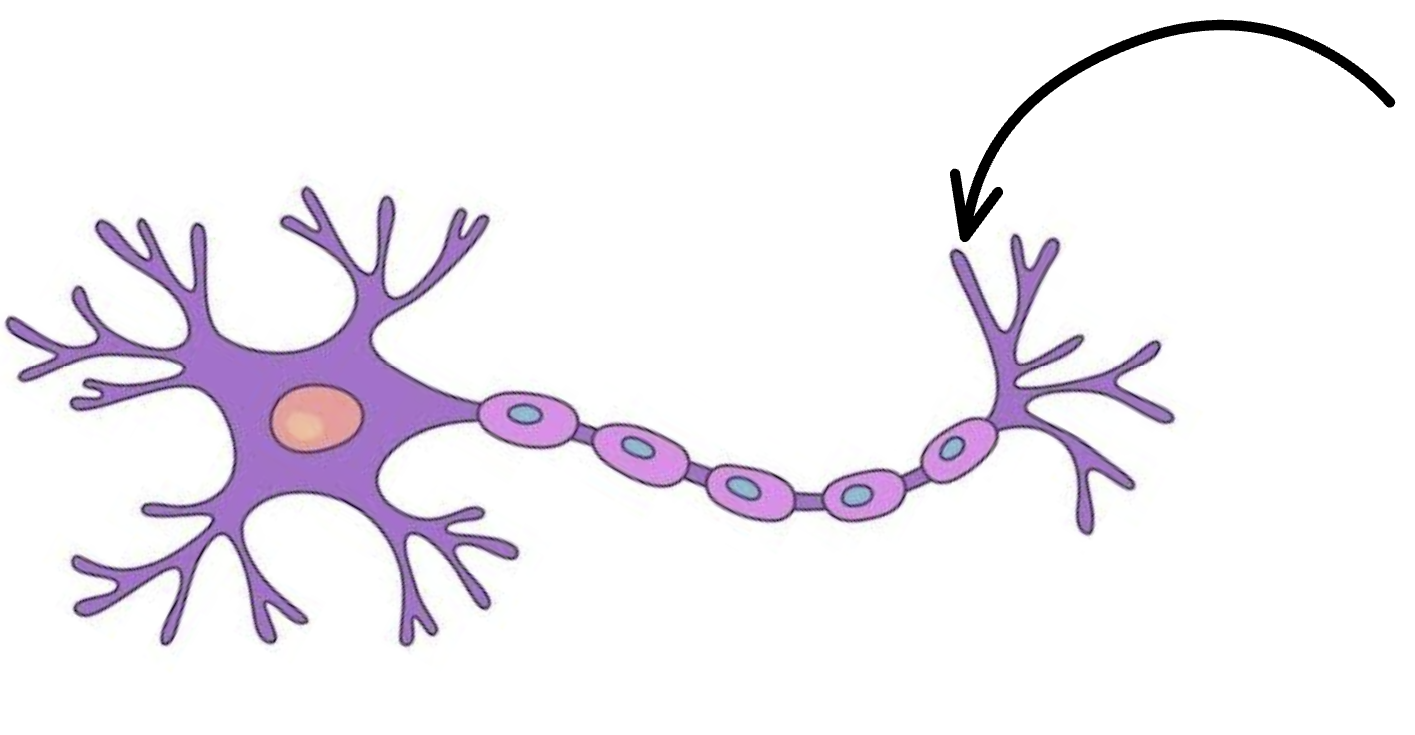
Axon terminal
Releases neurotransmitters to send messages to another cell

Axolemma
The cell membrane surrounding the axon
Plasma membrane of the axon
Transmits electrical signals
Longevity
Lasts a persons whole lifetime
Amitotic
Cannot divide
If damaged they cannot reproduce / re-grows
High metabolic rate
Requires constant supply of oxygen and glucose
Excitability / Conductivity
Can receive stimuli and transmit electrical nerve impulses
Anterograde movement
Movement of materials from the cell body through the axon to the axon terminal
Retrograde movement
Movement of materials from the axon terminal back to the cell body
Neuroglia
Surrounds and wraps delicate neurons
Supportive cell
6 Types of Neuroglia
CNS
Astrocytes
Support / protect neurons and help maintain blood-brain barrio
Microglia
Acts as an immune defense by removing germs, waste, and damaged cells
Epididymal cells
Lines the brains ventricles and help produce and circulate CSF
Oligodendrocytes
For myelin sheaths around axons in the CNS to speed up nerve impulses
PNS
Schwann cells
Surrounds the axon (similar to oligodendrocytes)
Satellite cells
Surrounds the entire neuron cell body
Gliomas
Tumors that develop from glial cells in the brain or spinal cord
Cell bodies
Collections of neuron cell bodies
Nuclei
Group of neuron cell bodies in CNS
Ganglia
Group of neuron cell bodies in the PNS
Tracts
Bundles of axons found in the CNS
Nerves
Bundles of axons found in the PNS
Myelination
Process of forming a myelin sheath
Myelin
Protein and lipid substance
Grey matter
Nonmyelinated axons of cell bodies
Neuron cell bodies and dendrite regions
White matter
Myelinated axons
Regions of the brain and spinal cord with dense collections of myelinated axons
Multiple sclerosis
A disease where the immune system attacks myelin sheaths in the CNS
Multipolar
One axon and many dendrites
Most common type of neuron
Bipolar
One axon and one dendrite
Found in special sense organs, such as the eyes and nose
Unipolar
One extension that splits into two branches
How is action potential generated
Step 1: Resting state
All gated Na+ and K+ channels are closed
Step 2: Depolarization
Na+ channels open
Step 3: Repolarization
Na+ channels are closed and K+ channels open, K+ exits the cell
Step 4: K+
K+ gates closed
Neurotransmitter
Chemical messenger released by neurons that carry signals to other cells
Example: Acetylcholine (ACh)
Synapse
The tiny space / connection where one neuron communicates with another cell
Chemical synapse
Use of neurotransmitters to send messages across the synaptic cleft
Electrical synapses
Uses direct electrical signals between cells through gap junctions
Presynaptic Neuron vs. Postsynaptic Neuron
Pre = sending a signal
Post = receiving a signal
Dopamine
“Feel good”
Amphetamines increase dopamine release
Some anti-depressants and cocaine block dopamine reuptake
Serotonin
Helps to regulate mood, sleep, and emotions
GABA
Main inhibitory neurotransmitters in the brain
Serial processing
Information travels along one pathway, one step at a time
Parallel processing
Information travels several pathways at one time
Steps of Reflex arc
Receptor → Sensory → Integrating → motor → effector
Receptor
Detects a stimulus, such as heat and pain
Sensory Neuron (input)
Carries the message from the receptor to the CNS
Integration Center
Processes information in the CNS, usually using interneurons
Motor Neuron (output)
Carries the response from the CNS to effector
Effector
A muscle or gland that performs the response