Anthro 1 Week 9
 Call Kai
 Learn
 Practice Test
 Spaced Repetition
 Match
 Flashcards
 Knowt Play
1/31

There's no tags or description
Looks like no tags are added yet.
32 Terms
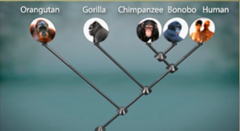
Hominoidea
All living apes

Lesser Apes (Hylobatidae)
gibbons and siamangs

Greater Apes (Hominidae)
orangutans, gorillas, chimpanzees, bonobos, and humans

Hominoidea geographic distribution
Tropical rainforests in Central & West Africa and Southeast Asia

Hominoid Anatomy
- skeletal adaptations for brachiation (arm-swinging locomotion)
- arms are longer and more muscular than legs, with short, stiff backs to minimize vertebral flexion and maximize swing control
- ulna has a shorter olecranon process at the elbow joint for arm extension, and the wrist joint has a reduced styloid process for wrist flexibility
- long clavicle to stabilize the shoulder joint and allow 360 rotation of the arm
- broad rib cage side-to-side and shallow front-to-back

Hominoid Bio Behavior
- most extended life history of all primates
- apes have prolonged infant dependency, mature slowly, and reproduce less frequently
- slow reproductive pace limits population recovery rates and is considered a primary driver of reduced taxonomic diversity in hominoids in tight family units

Gibbons
- inhabit SE Asian rainforests
- weigh 13 lbs, with wide coat color variation
- Males are typically black with white eyebrows, while females have paler buff coats, with even paler infants
- Minimal sexual dimorphism in body size; they live in monogamous adult pairs
- Mostly frugivores
- High-speed brachiation
- Maintain territorial boundaries through loud vocalizations
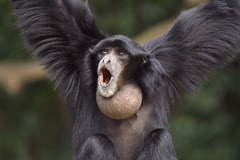
Siamangs
- Inhabit Southeast Asian rainforest
- Largest hylobatids with entirely black fur and large inflatable throat sacks
- Minimal sexual dimorphism in body size; live in monogamous adult pairs in tight family units
- folivores
brachiation
loud vocalization amplified with throat sacs

Orangutans (Pongo pygmaeus)
- Found in the forests of Borneo and Sumatra
- Share 97% DNA with humans
- Long coats and arms over 7 ft, and narrow prehensile hands and feet with opposable digits
- Almost completely arboreal
- Pronounced sexual dimorphism
- Dominant flanged males have large throat sacs, shaggy coats, and sagittal crests @ 20 yrs old
- Unflanged males resemble females and use alternative methods to avoid flanged aggression
- Solitary
- Frugivorous (fruit-eating) and eat 8.5k kcal daily
- Navigate canopies via quadramanos scrambling and quadrupedal fist walk on the ground
- Solitary; mother only raises infants
- slow life history with births every 6-9 yrs and raising young for 7-15 yrs
- Cognitive abilities include displaced referencing

Gorillas (Gorilla gorilla)
- inhabit forests across Central Africa (Uganda, Rwanda, and DRC)
- share up to 98% DNA with humans
- largest living primates
- enhanced sexual dimorphism: mature adult males weigh up to 400lb/180kg with a prominent sagittal crest, large canine teeth, and silver hair on backs and hips upon reaching 12 yrs old
- mostly folivorous diet, sometimes eat fruit
- quadrupedal knuckle-walking
- live in family groups with 1 dominant silverback and many females + offspring
- both males and females do infant care
- mature gorillas leave the family group to join another troop
- construct sleeping nests out of foliage each night
- communicate using distinct vocalizations
- can live up to 40 yrs in the wild

Chimpanzees (Pan troglodytes)
- inhabit Central and West Africa
- strictly bound to regions north of the Congo River
- share nearly 99% of DNA with humans
- Display moderate sexual dimorphism: stocky, muscular males that weigh 90-130lbs and are 20% larger than females, who weigh 70-100lbs
- broad faces with deep-set eyes, prominent brow ridge, long arms relative to short legs, no central forehead part, born with pinkish face that darkens
- frugivorous and omnivorous; fruit, hunted meat, termites, and nuts
- sophisticated tool use of sticks and rocks
- travel via quadrupedal knuckle walking
- male-dominant fission-fusion; communicates with the alpha male and hierarchy based on physical strength, allies, and aggressive displays

Bonobos (Pan paniscus)
- live in dense, resource-rich rainforests of the Congo Basin south of the Congo River
- share 99% of DNA with humans
- Diverged from chimps over 1 MYA
- leaner andmore elongated physical structure with longer legs, smaller heads, softer facial features, full lips, dark-skinned faces from birth, and center-parted hair on foreheads
- moderate sexual dimorphism: males weigh 80-110 lbs, and females weigh 60-100lbs
- mostly frugivorous diet
- Bonobos face minimal survival pressures and rarely hunt/utilize tools
- Quadrupedal knuckle walking but also adept at bipedal walking due to longer legs
- live in communities under matriarchal order
- dominant female builds strong and cooperative alliance
- remarkable group harmony and diffuse socialtension, stress, and potential conflict via frequent sexual bonding interactions
Evolutionary origin of sugar cravings
Ancient primate ancestors relied on sugar-rich ripe fruit for survival, as it contains higher sugar concentrations with dense caloric energy
- table sugar breaks down into glucose & fructose
- fructose activates metabolic pathways that signal the body to retain and store energy as fat

Critical genetic mutation 15MYA
Heightened fructose sensitivity to enable minimal sugar intake to be effective in converting into body fat reserves due to global cooling and starvation
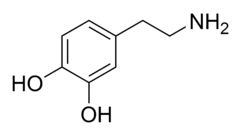
Sugar consumption triggers
The release of dopamine in the brain's reward center creates a euphoric sensation
Sugar predisposition
When food was unpredictable and unreliable, those predisposed to seek out sweet foods gained a survival advantage, allowing them to build fat reserves, survive famine, and pass on their genes
Modern mismatch of sugar cravings
Apart from wild honey, diets were no sweeter than a carrot, but modern tech has produced highly concentrated sugar in unlimited quantities, yet we still retain a biological need to hoard sugar and store fat to prevent starvation
Health consequences of mass sugar consumption
Average daily intake in the U.S. is 22 teaspoons/person which is 4x more than the max recommended by the WHO. This leads to chronic metabolic overload, obesity, type 2 diabetes, hypertension, and cardiovascular disease
Primate Behavior
1. Genetically controlled (instinctual)
2. Cultural (results from innovation, observation, copying)
Behavioral Ecology
what primatologists use to make sense of behaviors (similar to natural selection but applies to behavior)

Chimpanzee grooming
To stay clean. Instinctual, but variation in grooming behavior is cultural

Examples of chimpanzee culture
- In West Africa, crack nuts using stones
- Chimps on the Tanzanian coast lick rocks for minerals
- Ugandan chimps use sticks to get honey
Behavioral ecology of tool usage
Using tools is an instinctual/genetic behavior seen in some. But the way they use tools is cultural

Culture in monkeys
- Japanese macaques began washing dirt off sweet potatoes after one of them did it, and it spread
- Culture is mostly seen in Great Apes and rarely in other primates

Tool use
Use of an external object as a functional extension of the body to attain an immediate goal (often food)
- not known in strepsirrhines and tarsiers
- absent or rare in monkeys, except for capuchins
- absent in lesser apes
- all great ape species use tools and are the most freuent tool users of all primates

Chimpanzee Tool Use
- leaf sponge
- modifying sticks for termite fishing
- hunt with "spears"

Chimpanzee and stone tools
- use but don't modify, stone tools
- hammer and anvil to crack nuts
- throw stones as a sign of aggression
- dig for roots and tubers
Gorilla tool use
- stabilizing stick for foraging
- stick to test water depth
Orangutan tool use/culture
- leaves as napkins
- sticks for back scratchers
- branches to swat insects
- built shelter for rain or sun

Capuchin monkey tool use
- dig up roots and small animals to eat with stones (such as lizards)
- use hammer/anvil stone tools to crush nuts
Primate copying
Some can copy; others can't
- Baboons observe chimps using tools but have never attempted themselves
- Orangutans will copy humans
Evolution of Tool Using Behaviors
- Tool use is not known in strepsirrhines and tarsiers
NOT a primate characteristic
- Monkeys: capuchins are the most prolific tool users of the Old World and New World monkeys
- evolved independently in capuchins (homoplasy)
- Apes: all great ape species exhibit tool use and are the most frequent tool users
- evolved in the great ape ancestor (derived homology)