Peds Pharm/Pain
 Call Kai
 Learn
 Practice Test
 Spaced Repetition
 Match
 Flashcards
 Knowt Play
1/32

There's no tags or description
Looks like no tags are added yet.
33 Terms
pharmacokinetics
movement of drugs throughout the body via absorption, distribution, metabolism, and excretion
Pediatric absorption of drugs
oral, IM, SQ absorption is erratic and may be decreased, due to;
slow gastric emptying
increased intestinal motility
a proportionally larger small intestine surface area
higher gastric pH
decreased lipase and amylase
muscle mass, tone affects IMs
Topical absorption of medications is increased.
Pediatric distribution of drugs
Decrease fat, so young children require higher doses of lipid soluble meds
More water, so dilute more easily, so may need higher doses of water soluble meds
liver immaturity (altering first pass)
Pediatric metabolism of drugs
increased metabolic rate
Biotransformation affected by same ways as distribution.
Pediatric excretion of drugs
immaturity of the kidneys ;longer half-life, increases the potential for toxicity
Full hepatic and renal function not achieved until 6-12 months of age
Water is important for excretion of drugs (so if child is dehydrated, excretion may be decreased)
pediatric medications are usually dosed by which method?
mg/kg either mg/kg/day or mg/kg/dose
vastus lateralis
preferred site for IM injections in pediatrics
How to calculate safe dose range
example 10-20 mg/kg
wt= 30 kg
low dose = 10mg x 30kg= 300 mg
high dose = 20mg x 30kg = 600 mg
Safe dose range is anywhere from 300-600 mg
when administering ear drops to a child less then 3, pull the pinna ___________ and ___________________.
down and back
when administering ear drops to a child who is 4 years old, pull the pinna ___________ and ___________________.
up and back
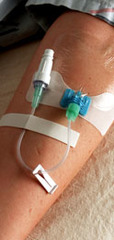
saline lock
an intravenous catheter inserted into a vein and left in place for the intermittent administration of medication through its port or as an open line for emergency situations and intermittently flushed with normal saline solution to maintain patency
FLACC scale
face, legs, activity, cry, consolability

FACES pain scale
For verbal children over 3-4 years old

Chronic pain
pain that continues past the expected point of healing for injured tissue. It provides no protective function. It may be continuous or intermittent, with and without periods of exacerbation or remission. It often interferes with sleep and performance of activities of daily living. It can result in loss of appetite and depression and impairs a person's ability to function.
T/F Newborns do not feel pain
False. Newborns feel pain
T/F preschoolers always tell the truth about feelings of pain
False. Many times preschoolers will deny pain because they fear getting an injection of pain medication.
Oucher pain scale
Children 3-12 years of age with culturally specific photographs showing different levels of pain and discomfort

T/F When teaching patient/families non-pharmacologic pain management, the RN should avoid using terms such as "hurt" or "pain" that suggest or cause the child to expect pain.
Use descriptive terms like "pushing," "pulling," "pinching," or "heat."
TRUE
Name 2 nonopioid analgesics.
acetaminophen and nonsteroidal anti-inflammatory drugs (NSAIDs) such as ibuprofen, ketorolac, naproxen,
Aspirin
should not be used in infants or children for analgesic or antipyretic purposes because of the high risk of Reye syndrome.
Acetaminophen
A relatively safe medication and it does not have the same GI or antiplatelet effects of NSAIDs therefore it is useful in children with cancer, with bleeding or clotting disorders or children on anticoagulants. Acetaminophen toxicity and resulting hepatotoxicity can occur with misuse and overdosing.
Opioid analgesics
typically used for moderate to severe pain;morphine, fentanyl, meperidine, hydromorphone, oxycodone, and hydrocodone
Dilaudid), oxycodone (OxyContin), Methadone
Naloxone (Narcan)
Opioid antagonist
Used to treat opioid overdose
Patient-controlled analgesia (PCA)
Drug delivery system that allows patients to self-administer analgesic medications on demand.
Buzzy Bee
Small soft, vibrating bee applied to opposite side of body where needle is being placed. The device tricks CNS into not feeling pain by using vibration to disrupt pain receptors.
non pharmacologic interventions for infants
Containment:
Positioning and blanket rolls that provide a "nest" . Enhances security. Decreases stress. Reduces crying and Heart Rate after heel punctures.
Nonnutritive sucking:
Pacifier. Reduces behavioral, physiologic and hormonal responses to pain from procedures such as heel punctures, venipuncture and immunization injections.
Concentrated sucrose with or without nonnutritive sucking has a calming and pain relieving effect for invasive procedure.
Kangaroo holding:
Skin-to-skin
coanalgesics or adjuvant analgesics
Used alone or with opioids to control pain symptoms and opioid side effects
To enhance analgesics, not substitute for analgesics
Anxiolitics, sedatives, amnesics
Diazepam (Valium) and midazolam (Versed)
Tricyclic antidepressants and antiepileptics for neuropathic pain
Stool softeners and laxatives for constipation
Antiemetics for nausea and vomiting
Diphenhydramine for itching
Steroids for inflammation and bone pain
Dextroamphetamine and caffeine for possible increased pain and sedation
EMLA cream
anesthetic cream
ATC (Around the clock/ regularly scheduled)
scheduled pain medication, given regularly and not waiting until the patient is in pain before giving. If pain is suspected (surgery) this is the preferred method.
Side effects of opioid analgesics
Respiratory depression
Constipation
Pruritus
Nausea, vomiting
Sedation
Tolerance
Physical dependence
Cultural barriers to pain medication
Inadequate assessment of pain
Concern about side effects and tolerance of analgesics
Reluctance to report pain
Reluctance to take pain medications
Lack of adherence to treatment plan
For non-English speaking children and adolescents you can use body outline diagram of the Adolescent Pediatric Pain Tool (APPT). Child can mark an x or color in area that hurts.
Steps to apply EMLA cream
Explain the procedure
apply the cream 60 minutes before procedure
Place a thick layer of the cream on the skin at the intended site of the procedure
Do not rub the cream in
Cover the site with a transparent dressing
Instruct the child not to touch the dressing
Before procedure remove the dressing and wipe the cream from the skin.
Verify that sensation is absent by lightly tapping
Prepare the child for the procedure.
After the procedure, assess pain
epidural analgesia
a catheter is inserted in the epidural space and fentanyl or morphine, diffuses into the cerebrospinal fluid and crosses the dura mater to the spinal cord. The drugs can be administered as bolus injections (a one-time bolus or on an intermittent schedule), a continuous infusion, or PCA. Usually an opioid, such as morphine, fentanyl, or hydromorphone, is given in conjunction with a long-acting local anesthetic such as bupivacaine.
Typically used postoperatively, providing analgesia to the lower body for approximately 12 to 14 hours. The small amount of medication used with this type of analgesia causes less sedation, thereby allowing the child to participate more actively in postoperative care activities.