Forest, Pond, Riparian TEST
 Call Kai
 Learn
Learn Practice Test
 Spaced Repetition
 Match
Match Flashcards
 Knowt Play
1/116

There's no tags or description
Looks like no tags are added yet.
Name | Mastery | Learn | Test | Matching | Spaced | Call with Kai | Chat |
|---|
No analytics yet
Send a link to your students to track their progress
117 Terms
White (Narrowleaf) Meadowsweet - Spiraea latifolia - Simple coarsely toothed leaves - Flower head is pyramid-shaped, white flowers, look almost fuzzy from a distance - -

Mountain Maple - roughly serrated and deeply veined - Moist, open woodlands -

Striped (Moose) Maple - Bark has distinct white stripes on younger trees - Leaves can get extremely large

Red Maple - Red = rough - New leaves, twigs, and flowers all red-tinged - Famous worldwide for sap - Found in moist valleys, riparian areas, and wetlands -

Sugar Maple - Typical Canada maple leaf, smooth edges, deep notches between lobes - Petiole base shows clear sap (Norway is milky) - Sugar maple sap is the sweetest of all the maples - Upland maple, growing best on well-drained sites

Wild (False) Sarsaparilla - 3-5 leaflets on erect petiole (almost no stem to be seen) - Flowers barely extend past leaves, if at all - Rhizomes were traditionally used to flavor root beer or tea, berries used to make wine or flavor beer -

Whorled Wood Aster - Oclemena acuminata - Woodland aster with elliptical toothed leaves and delicate white flowers that bloom in fall - Actually alternate
-

Paper (White) Birch - Betula papyrifera - White bark that peels in sheets best ID - Many edible and medicinal uses, as well as an important commercial and fuelwood - -

Yellow Birch - Yellowish tinged bark comes off in thinner strips than White birch - Many edible and medicinal uses, as well as an important commercial and fuelwood - Twigs taste and smell like wintergreen -

Red Elderberry -Only shrub (along with Common elderberry) with opposite pinnate leaves. Twigs have red pith. - conical heads of flowers/fruit - One of the earliest shrubs to ripen in the fall - Stems, bark, leaves and roots toxic to humans

Northern Wild Raisin (Smooth Witherod) - Shrub with lance-shaped leaves, umbrella-shaped white flowers - Leaves become shiny green as season persists and a distinct whitish midrib is evident - Fruits individually so will see green, white, pink and purple fruit all in one cluster in the fall - If not eaten by birds, fruits shrivel like raisins

Twinflower - Woodland vine with paired, rounded leaves - Pair of pink, bell-shaped flowers in late spring, early summer

Alternate-leaved Dogwood - Cornus alternifolia - Leaves strongly veined, curving out towards tip of the leaf (arranged alternately) - Twigs smooth and reddish or purple (yellowish when dead), lateral branches spread horizontally - Likes well-drained forests -

Bunchberry - This small herb forms mats in the forest - Leaves whorled at top of the plant, strongly veined - Fruits are edible in small quantities -

Eastern White Cedar - Overlapping scale-like foliage resembles fan shape on the branch - Grows in variety of conditions, from swamps to old pastures. Wet to somewhat dry soil. -

Bracken Fern - Most common Canadian fern - large colonies, dry woods, waste places, fields - Leaves (fronds) triangular and branched into three blades - Known carcinogen in plant means it should not be consumed -

Ostrich Fern - Matteuccia struthiopteris - Large fern that comes up in a clump from a black knot-like rhizome - Best known for fiddleheads in early spring, which are the fronds unfolding - Streambanks and wet areas -

Christmas Fern - Less common in PEI but commonly found in NS, NB - Dark green, satiny colouring & "thumbs" at base of pinnae make this fern unmistakable - -

Sensitive Fern - Onoclea sensibilis - Wavy, Fertile frond rolls tightly and persists through the winter - Grows in wet areas

Woodland Horsetail - Similar to Field horsetail but sheaths are reddish instead of black - Branches longer and wispier than Field Horsetail - Fertile stalks unbranched

Creeping Snowberry - Gaultheria hispidula - Trailing plant with small elliptical leaves, pointed at the tip - Snow white berries may be hard to find but taste like mint (small quantities recommended) - -

Eastern Teaberry - Upright plant with 3 leathery leaves that droop slightly - Crushed leaves smell and taste like mint. Many culinary & medicinal properties. -

Trailing Arbutus (Mayflower) - Trailing vine with rusty hairs, dark green rounded leaves, fragrant flowers in early spring - Sensitive to disturbance - NS's provincial flower -

American Beech - Leaf veins go straight towards edge of leaf, with a sharp tooth at the end - Beech bark disease, or canker, an insect-fungus

English Oak - Quercus robur - Leaves have rounded lobes - Exotic, planted as an ornamental - -

Northern Red Oak - Sharp pointed lobes, acorn has a cap that looks like a beret - Leaves often persist into winter - Many edible, medical commercial uses for this wood -

Indian Cucumber Root - Two layers of whorled leaves on stem - Yellowish-green flowers that produce purple berries - both on stems that curve below the first layer of leaves - Tubers are edible raw or cooked and taste like cucumber -

Nodding Trillium - Trillium cernuum - Wider leaves than Painted trillium and flower is on stalk that curves below the leaves - Not edible but many medicinal uses - -

Painted Trillium - Trillium undulatum - Three wide leaves which taper towards to the end - Not edible but many medicinal uses - -

Wild Lily-of-the-valley - Two heart-shaped clasping leaves - White flowers on stalk turn into pale red speckled fruits - Traditionally used to treat headaches and sore throats -

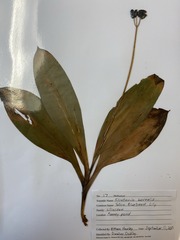
Yellow Bluebead Lily - Two or more wide elliptical smooth and glossy leaves - Yellow flowers turn into a blue berry that is mildly toxic, therefore inedible -
Round branched Tree Club-moss - Prickly to the touch, especially on lower stem - Leaves packed in six rows around stem - Prefers mixed or deciduous forests, with sandy soils -

Stiff or Interrupted Club-moss - Trailing plant with prickly, erect stems and stiff, prickly leaves - Strobili single and stalkless - Sandy or rocky soils -

Running Club-moss or Running Ground-pine - Horizontal runners along ground, with simple stems shooting up, then branching - Usually in sandy soils - Strobili usually in groups, on a simple stalk -

Indian Pipe -- White, waxy plant with small alternate leaves and a single nodding flower at the end - Dried specimens turn black - Depends on mycorrhizal fungi and parasitizing other plants for its nutrients -

Black Ash - Opposite leaves, pinnate, compound (7-11 leaflets), & sessile leaflets. Bark is yellowish and smooth - Grows in wet areas - rare in PEI - Black buds

White Ash - Opposite leaves, pinnate, compound (5-9 leaflets), more rounded than those of Black ash - Leaflets have clear stalks - Moist hardwood forests - Most valuable timber of all the ashes - Rough bumpy stem

Pink (Stemless) Lady's Slipper -Two leaves at base, large elliptical and almost opposite - Grows in acidic soils on dry sites - pouch flower

Beechdrops - Only species in North America in this genus, it is a parasitic plant on beech trees only - Branched stems with a few alternate leaves, flowers extending 2/3 down the plant - Brown stem with thin purple lines -

Interrupted Fern - Easily identified with the fertile fronds "interrupting" the non-fertile fronds halfway down the stipe - Found on moist but well-drained sites - -

Cinnamon Fern - Osmunda cinnamomea - Fertile fronds cinnamon coloured, fiddleheads with whitish hairs turning brown - Rusty, wooly hairs at the base of pinnae, where it meets the rachis - Found more in poorly drained wet areas -

Common Wood Sorrel - Leaves in 3 heart-shaped leaflets, white flowers with purple veins - Leaves contain oxalic acid (binds calcium, poisonous in large doses) -

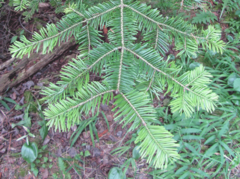
Balsam Fir Needles are flattened and extend horizontally dont roll- Resinous blisters common on bark- Christmas
Black Spruce - Densely packed needles, softer than other spruces, bark has a blackish tinge - Female cones are the shortest of any of the spruces - Traditionally used to make evergreen teas or spruce beer -

Red Spruce - Bark is rough, scaly and reddish - Needles arranged around stem, angling upwards and branches often curve upwards at the ends - Traditionally used to make evergreen teas or spruce beer -

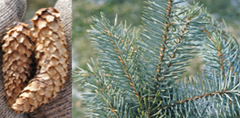
White Spruce - Four-sided or rounded needle that rolls between the fingers - Needles emit a "cat-like urine" smell when crushed - Grows in old fields, disturbed areas, coastal (krummholz = "wind-stunted vegetation") -
Eastern Hemlock - Needles arranged similarly to Balsam fir but shorter with two white lines underneath - Likes slopes and ravines - Many traditional uses, including tanning. Mostly used for construction today. -

Eastern White Pine - Long soft needles in bundles of 5 with the longest cones of any pine in our area - Many traditional uses, most often used today as timber. -

Jack Pine - Bark is brown-grey and scaly - Needles are short, grow in pairs, and diverge - Female cones, at the tips of branches, curve in to hug the branch

Red Pine - Long, stiff needles in bundles of 2 - Bark is scaly and distinctly red, tree maintains round shape as it matures - Grows on sandy or rocky soils -
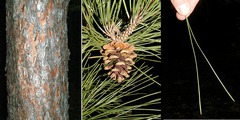
Scotch Pine - Pinus sylvestris - Needles similar size to Jack pine but they do not diverge, they twist - Bark is yellowish - Exotic -

Tamarack (Eastern Larch) - Needles bluish-green, soft, arranged in clusters on branch - Only native deciduous conifer in our area - Grows well on poorly drained sites -

Common Haircap Moss -- Considered a bryophyte - Dark green to brownish moss - Grows in most any moist habitat - Four-sided reproductive capsule with disc at end shoots up above the moss in summer

Northern Starflower - Leaves generally in a whorl at the top of a short stem - White flower(s) in the shape of a star -

(Threeleaf) Goldthread - Small plant with leathery basal leaves, three-lobed with sharp, pointed teeth - Rhizomes are golden in colour - Plant has anti-inflammatory, antibacterial, astringent, and mildly sedative properties -

Trembling Aspen - bark pale green to silvery gray - Sucker to form large patches, often in wet areas - clones itself -

Large-toothed Aspen - Populus grandidentata - Leaves larger than those of Trembling aspen, with sharp teeth - Common in recently burned, disturbed sites or dry woodlands - -

Canada Yew (Ground Hemlock) - Taxus canadensis - Spreading shrub with sharp, flat needles - Female cones produce a berry-like fruit instead of a cone, which is edible HOWEVER seed and heads of flowers/fruit - Harvested for anti-cancer drugs -

New York Fern - Small, light green football Grows in clumps, can be colony-forming - - -

Evergreen Wood Fern - First pinnule next to stipe that faces down is SHORTER than the one next to it Only wood fern that has a hairy stipe & rachis -

Spinulose Wood Fern - Lower pinnule next to stipe is LONGER than the one next to it - Grows in a cluster, as with other wood ferns - Likes wetter habitat than evergreen

Mountain Wood Fern - Orphan -

Liverworts (leafy) - large clumps on boggy soils, at the base of trees and on forest soil - Resembles a Y because of forked branching - Bazzania

Broad-leaved Arrowhead - Basal lobes on the leaves are usually spreading down, giving leaf an arrow shape - Entire rhizome is edible -

Wild Calla - Marshy areas, bogs and swamps - Leaves smooth-edged, heart-shaped & flower a single white spathe with spadix within - All parts of plant are poisonous -

Nodding Beggarticks - Bidens cernua - Lance-shaped leaves with teeth on margins - Sunny yellow flower heads are often "nodding" - -

Spotted Joe-Pye-Weed - Leaves in whorls of 4-5, stem somewhat purple and spotted - Composite pink flowers clustered at the top of the stem, which can be over 1m high - look fluffy -

Common Winterberry - Elliptical leaves with blunt teeth, widest at tip - Flowers grow in leaf axils and fruit is a bright red berry that persists through the winter -

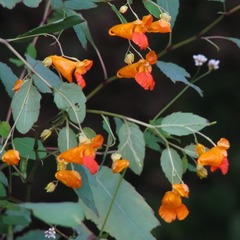
Spotted Jewelweed - Distinctive flowers, orange with red-brown spots. Seed pods explode. -
Green (Downy, Mountain) Alder - Prefers drier sites than Speckled. Leaves elliptical, finely toothed, with paired veins < 10 - Underside of leaves shiny green with fine hairs. New buds NOT stalked. - Medicinal uses include treatment of insect bites & poison ivy. Also used as a dye. -

Speckled Alder - Alder of wet areas. Leaves ovate to round, double-toothed edge, with paired veins > 10 - New buds stalked - has linticles for breathing -

Watercress - Spreading, tangled mass of shoots - Slow-moving waters and pools - Edible raw or cooked with a peppery flavour -

Black (Common) Elderberry - Sambucus canadensis - Only shrub (along with Red elderberry) with opposite pinnate leaves. Twigs have white pith. - Purple-black fruit, produced in flat-topped clusters, is used in jams, jellies, preserves, pies, and some wines - toothed -

Bulrush - Tall species, conspicuous in shallow ponds and around salt marshes - Easily distinguished with as many as 8 bristles around the fruit (achene) - Culinary and medicinal uses, as well as used for making baskets and mats - round stalk

Common Woolly Bulrush - Small spikes with conspicuous bristles gives a woolly appearance - Grows in wet meadows and swamps - Culinary and medicinal uses, as well as used for making baskets and mats - round stalk

Sedge - Sedges have edges - in cross-section stems are triangular - In wet areas and poorly drained soils - Flowers arranged on spikes -

Water Horsetail - Grows in dense colonies, in shallow water (rhizomatous) - "Leaves" are very small, black-tipped scales at joints of stem - As with other Equisetaceae, historically used for scouring (high silica content) -

Siberian Water Milfoil - Myriophyllum sibiricum - Thread-like leaves are arranged in whorls - Found in brackish or alkaline water - -

Harlequin Blue Flag - Leaves long and narrow, in a fan-like arrangement up the stem - Six petals on the flowers, 3 largest called 'falls' and droop, other 3 erect - Poisonous - seeds disperse by dropping and floating down river

Rush - Very common wetland plants with hollow stems - Inflorescence often appears to be on the side of the stem rather than the tip - -\

Turion Duckweed - Minute aquatic plant, found floating in or on water - Aren't differentiated into stems and leaves - flattened portion known as a thallus -

Purple Loosestrife - Tall spikes of pinkish-purple flowers in summer and into early fall - Highly invasive plant of wetlands and wet areas -

Bog Buckbean - Grows in shallow water. Flowers early, star-shaped, white or pink petals with long hairs. - Rhizomatous, forms mats with leaves held 10-30cm above the water - Leaves are trifoliate, hairless, smooth -

Water Smartweed - Pinkish stems and a deep pink flower cluster at the tip - Found on borders of ponds and cattail marshes, in muddy areas - Tearthumb -

Clasping-leaved Pondweed - No stalk, leaves are "clasped" around the stem alternately - Flowers June-September, olive-green and small on short stalk, curving up just above the water's surface -

Creeping Buttercup - Ranunculus repens - Deeply divided leaves, coarsely toothed and covered with stiff hairs - Bright yellow flowers in axils of leaves, rounded petals often overlap - All buttercups are poisonous to varying degrees, if ingested -

Tall Meadow-rue - One of the tallest wildflowers, at up to 1.5m high - Compound leaves with shallow, terminal lobes, white flowers - Very common summer plant in marshes, meadows, ditches and wet areas -

Yellow Marsh Marigold - Caltha palustris - Leaves rounded and deeply notched at the base, stem is hollow - Common in wet woods or ditches, yellow flower stands out in early June - -

Willow -- Shrub or small tree with narrow elliptical leaves (lots of hybridization) - Contains salicin (related to aspirin) and has been used for centuries to treat pain and inflammation - -

Broad-fruited (Giant) Burreed - Sparganium eurycarpum - Largest burred species in area, reaches up to 1m tall - Fruit is conspicuous - round and spiked in appearance - -

Narrow-leaved Burreed - Elongated burred plant with long, floating leaves - Fruit is round and spiked in appearance - -

Broad-leaved Cattail - Wide leaves, no space between the staminate (male) and pistillate (female) spikes - Pistillate spike looks like sausage - Edible and medicinal uses, as well as used for stuffing bedding, diapers, mattresses, pillows, life jackets, etc. -

Narrow-leaved Cattail - T Leaves 3-7mm wide, staminate and pistillate spikes have a separation of at least 5mm - Pistillate spike looks like hot dog - Edible and medicinal uses, as well as used for stuffing bedding, diapers, mattresses, pillows, life jackets. -

Stinging Nettle - Tall plants that can be found in disturbed areas and riparian zones - Leaves are ovate, opposite, with burning, stinging hairs on upper and lower surfaces - Minute and green, wiry-looking trails of flowers produced in axils of leaves -

Sweet Gale -Low shrub with red-brown stem, alternate spoon-shaped leaves with teeth at the tips - Leaves fragrant when bruised - Found along edges of streams, stillwaters, and other damp habitats -

Fragrant Water-lily - Round leaves with purple-red undersides & sharp angle at notch/base of leaf - Veins radiating from the petiole, white flower (sometimes pinkish) - Rhizomatous, forms mats -

White Turtlehead - Non-branching, square, tall stems - Grows in ditches and wet areas - Individual flowers appear two-lipped, with hairs on bottom inside -

Common Reed - Largest grass, up to 2m, with many spikelets - Common on the upper borders of saltmarshes - Grows in large colonies -

Pondweed - Aquatic plants growing mainly in freshwater streams and ponds - Alternate leaves, either partially or fully submerged, depending on species - Much hybridization - definite identification often impossible -

Liverwort - Circular structures (gemmae) shaped like cups are characteristic of this genus - Reproductive capsule is black on a translucent stalk - No stems or leaves, only thallus
