PSIO 201 Lab - Unit II
 Call Kai
 Learn
Learn Practice Test
 Spaced Repetition
 Match
Match Flashcards
 Knowt Play
1/209

Earn XP
Name | Mastery | Learn | Test | Matching | Spaced | Call with Kai | Chat |
|---|
No analytics yet
Send a link to your students to track their progress
210 Terms
two divisions of skeletal system
axial and appendicular
axial skeletal system consists of
skull, spinal cord, and thoracic cage
appendicular skeletal system consists of
lower and upper appendages contained in pectoral and pelvic girdles
meatus or canal
bony passageway

sinus
cavity within a bone
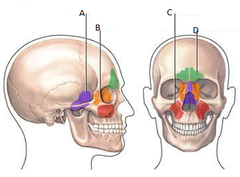
foramen
round or oval hole or opening

process
a bony projection
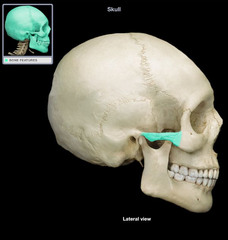
fissure
slit-like opening
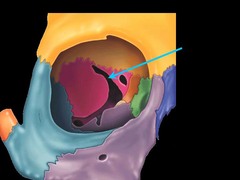
groove
narrow channel

Tuberosity
elevated projection, with roughened surface

condyle
rounded projection

head
rounded expansion, connected to a narrow neck

tubercle
rounded projection or process

trochlea
pulley shaped articular process

epicondyle
elevated area, above a condyle

Trochanter
large, blunt, irregular surface (on femur only)

facet
smooth flat surface
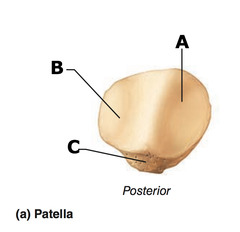
crest
prominent narrow ridge

fossa
shallow depression

line
narrow ridge, less prominent than a crest

spine
slender, pointed projection

ramus
arm-like projection

cervical vertebrae
C1-C7

Atlas (C1)
First cervical vertebra, supports the skull.

Axis (C2)
second cervical vertebrae. Allows the head to shake "no"

thoracic vertebrae
T1-T12 (articulates with the ribs)

lumbar vertebrae
L1-L5 lower back

sacral/sacrum vertebrae
5 fused vertebrae, anchors bones of pelvic girdle

Coccyx
four vertebrae fused together to form the tailbone

vertebral body

pedicle

transverse process

lamina

spinous process

vertebral arch

vertebral foramen

superior articular process

inferior articular process

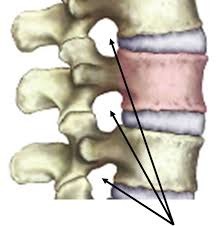
intervertebral foramen
Opening for spinal nerves between vertebrae.
odontoid process (dens)
process of the axis which passes through the vertebral foramen of the atlas

costal facets or demifacets
On lateral side of body and on sides of transverse processes

elongated spinous process (thoracic spine)

sacral canal

Base of sacrum
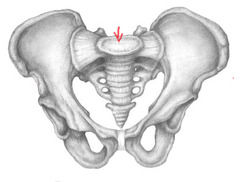
anterior sacral foramina

superior articular facet
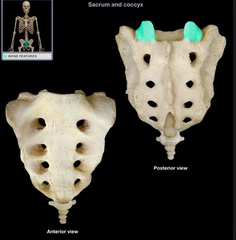
apex of sacrum
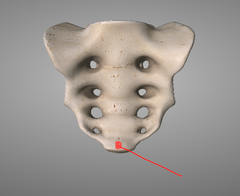
posterior sacral foramina

median sacral crest
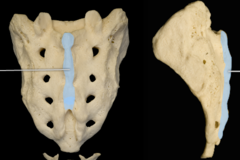
sacral hiatus

manubrium

jugular notch

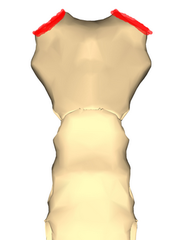
clavicular notches
body of sternum

costal notches of sternum

sternal angle

xiphoid process

head of rib

tubercle of rib

body or shaft of rib

ribs 1-7 called
true ribs
ribs 8-12 called
false ribs
ribs 8-10 called
vertebrochondral ribs
ribs 11-12 called
false ribs
each rib articulates with ...
facets or demifacets on vertebrae.
thoracic vertebrae that start with "1" have .... ...... for rib articulation
full facets
rest of vertebrae 2-9 have
demifacets
frontal bone

supraorbital foramen
Opening above the eye socket for nerve and vessels.

parietal bones
Bones that form the sides and top of the cranium.

occipital bone
back of head

occipital condyle
connects to the superior articular facets of atlas vertebrae

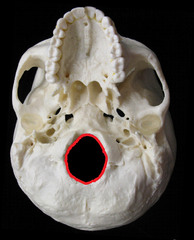
foramen magnum of occipital bone
opening through which spinal cord connects to lower brain
external occipital protuberance
bump on back of head

temporal bone
bone that forms parts of the side of the skull and floor of the cranial activity. There is a right and left temporal bone.

external auditory meatus of temporal bone
tube-like opening for the ear canal

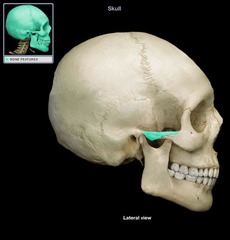
zygomatic process of temporal bone
articulates with the temporal process of zygomatic bone to form zygomatic arch
styloid process of temporal bone
attachment for muscles and ligaments of tongue and neck

mastoid process of temporal bone
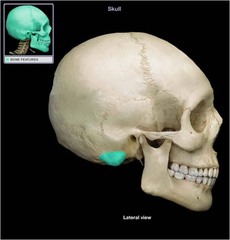
mandibular fossa of temporal bone
articulates with the mandible

ethmoid bone
forms part of the posterior portion of the nose, the orbit, and the floor of the cranium
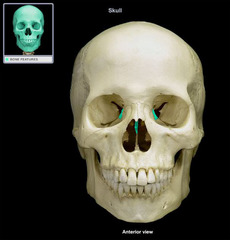
crista galli of ethmoid bone
projection for attachment of membranes covering brain

Cribform plate of ethmoid bone
forms the roof of the nasal cavity

olfactory foramina of ethmoid bone
holes in cribriform plate

perpendicular plate of ethmoid bone
forms superior part of nasal septum
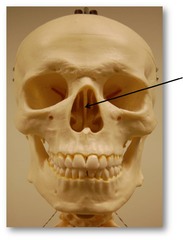
middle nasal conchae of ethmoid bone
scroll-like projections on each lateral wall of nasal cavity

superior nasal conchae of ethmoid bone
most superior flap of the nose

sphenoid bone
forms part of the base of the skull and unites cranial and facial bones

sella turcica of sphenoid bone
houses the pituitary gland

greater wings of sphenoid bone
form anterior and lateral floor of cranial cavity

lesser wings of sphenoid bone
thin ridge of bone superior to greater wings from superior view

optic canal of sphenoid bone
passage way for optic nerve
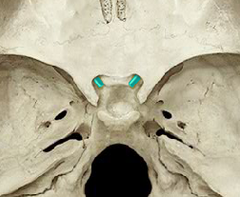
maxillae
the two fused bones forming the upper jaw
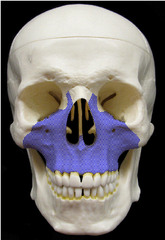
alveoli of maxillae
tooth sockets

palatine process of maxilla
roof of the mouth

Mandible
lower jaw

body of mandible
horizontal portion of the mandible

rami of mandible
posterior branches, one on either side of the body of mandible

condylar processes of mandible
rounded processes on rami that articulate with temporal bone at the mandibular fossa to form the TMJ

coronoid process of mandible
projections of rami anterior to condylar processes
