lab practical 2
 Call Kai
 Learn
 Practice Test
 Spaced Repetition
 Match
 Flashcards
 Knowt Play
1/281

There's no tags or description
Looks like no tags are added yet.
282 Terms
epimysium
surrounds entire skeletal muscle
- dense irregular connective tissue

perimysium (perimeter)
- areolar connective tissue surrounding a fascicle
- separates muscle cells/fibers into bundles

fascicle
bundle of muscle fibers

endomysium (inside)
- areolar connective tissue surrounding each separate muscle cell/fiber
- carry blood vessels/sources
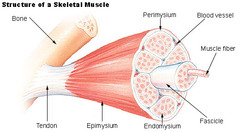
muscle fiber/cell
each cell stretches the length of muscle, surrounded by a plasma membrane and a layer of connective tissue called endomysium
- bundles of myofibrils
- composed of several myofibrils wrapped together by a sarcolema and sarcoplasm

myofibril
long, filamentous organelles found within muscle fibers/cells that has a banded appearance
- propagate muscle contraction

myofilaments
filaments of myofibrils that are constructed from proteins and are responsible for muscle contraction
- actin (thin)
- myosin (thick)

agonist or prime mover
primary responsible for producing a particular movement
- the muscle that does most of the work during a movement
antagonist
a muscle that has the opposite function to another muscle
- works in the opposite direction during a movement and stabilizes the other muscle
- keeps body in stable position
synergist
muscle that aids a prime mover in a movement and helps prevent rotation
origin of a muscle
muscle end attached to the bone that stabilizes the movement and does not move when the muscle contracts
insertion of a muscle
muscle end attached to the bone that drives the movement and moves when the muscle contracts
flexion
bending a joint by decreasing the angle

extension
straightening of a joint by increasing the angle

hyperextension
extension beyond anatomical position

dorsiflexion
bending of the foot or the toes upward
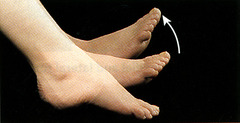
plantar flexion
bends the foot downward toward the ground at the ankle

abduction
movement away from the midline of the body

adduction
movement toward the midline of the body

rotation
movement where bone rotates on its long axis/fixed point
circumduction
the circular movement at the far end of a limb

supination
movement that turns the palm up

pronation
turning the palm downward

elevation
raising a body part

depression
lowering a body part

protraction
moving a body part forward and parallel to the ground

retraction
moving a body part backward and parallel to the ground

orbicularis oculi
closes eyelids
- used in blinking, winking, and squinting

frontalis (frontal belly)
raise eyebrow; moves scalp and wrinkles forehead

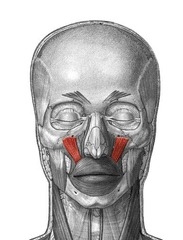
zygomaticus major
raises lateral corners of mouth upward (smiling muscle)

zygomaticus minor
retracts and elevates upper lip

temporalis
elevates and retracts mandible (closes jaw)

orbicularis oris
closes and protrudes lips; kissing muscle

risorius
draws corner of mouth laterally (grimace)

risorius laterally

levator labii superioris
elevates upper lip
buccinator
compresses cheek (sucks them in); holds food between teeth during chewing

masseter
elevates mandible (closes jaw)

external and internal intercostals
expands and lowers the ribs during breathing

external and internal obliques
flex and rotate vertebral column, compress abdomen
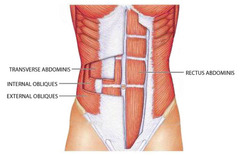
transversus abdominus
compresses abdominal cavity

rectus abdominus
flexes vertebral column and compresses abdomen; commonly known as the "six pack"
- responsible for movement in the abdominal cavity

serratus anterior
protracts scapula; assists in upward rotation of scapula
- spread almost all the way down the ribs

diaphragm
large, flat muscle at the bottom of the chest cavity that regulates breathing

pectoralis major
adduction and internal rotation of the humerus; inwards movement of the arms
- origin: clavicle and sternum
- insertion: humerus
- antagonist: latissimus dorsi and deltoid

pectoralis minor
protracts and depresses scapula
- origin: ribs 3-5
- insertion: scapula
- antagonist: trapezius

platysma
- draws down the lower lip and angles of the mouth
- tenses skin of the neck
- helps depress mandible

sternocleidomastoid
flexes and laterally rotates the head
- origin: sternum and clavicle
- insertion: temporal bone

levator scapulae
elevates scapula
- origin: cervical vertebrae
- insertion: scapula

scalenes
elevates first two ribs; postural muscles that maintain position of the neck and cervical track
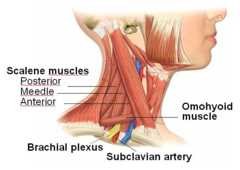
scalenes peeled back
- anterior, posterior, and medial

erector spinae group
extends vertebral column
- spinalis, longissimus, iliocostalis

spinalus
extends vertebral column
- origin: upper vertebrae
- insertion: lower vertebrae

longissimus
extends vertebral column
- origin: upper vertebrae
- insertion: lower vertebrae

iliocostalus
extends vertebral column
- origin: iliac crest
- insertion: vertebrae

quadratus lumborum
flexes the spine laterally

rhomboid major
retracts the scapula
- origin: vertebrae
- insertion: scapula
- antagonist: serratus anterior

rhomboid minor
retracts the scapula
- origin: vertebrae
- insertion: scapula
- antagonist: serratus anterior

splenius capitis
extends and rotates head
- origin: vertebrae
- insertion: temporal bone

trapezius
elevates, depresses, retracts, and rotates the scapula; rotates the arm
- origin: vertebrae
- insertion: scapula
- antagonist: lower trapezius
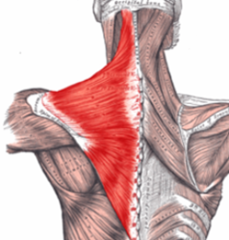
latissimus dorsi
extends, adducts, and medially rotates the arm; draws the shoulder downward and backward
- origin: vertebrae
- insertion: humerus
- antagonist: deltoids

deltoid
abducts arm at shoulder
- origin: clavicle and scapula
- insertion: humerus
- antagonist: latissimus dorsi and pectoralis major

supraspinatus
abduction of shoulder
- origin: scapula
- insertion: humerus

infraspinatus
lateral rotation at shoulder
- origin: scapula
- insertion: humerus

subscapularis
medially rotates arm, stabilizes shoulder joint

teres major
medial rotation of shoulder joint
- origin: scapula
- insertion: humerus

teres minor
lateral rotation of shoulder joint
- origin: scapula
- insertion: humerus

biceps brachii short head
flexes and supinates forearm
- origin: scapula
- insertion: radius
- antagonist: triceps brachii

biceps brachii long head
flexes and supinates forearm
- origin: scapula
- insertion: radius
- antagonist: triceps brachii

brachialis
flexes forearm at elbow
- origin: humerus
- insertion: ulna
- antagonist: triceps brachii

brachioradialis
flexes forearm at elbow
- origin: humerus
- insertion: radius

triceps brachii
extends forearm at elbow joint
- origin: scapula and humerus
- insertion: ulna
- antagonist: biceps brachii and brachialis

anterior forearm
muscles that flex the hand at the wrist

posterior forearm
muscles that extend the hand at the wrist

supinator (posterior)
supination of forearm
- origin: humerus and proximal ulna
- insertion: proximal end of radius

pronator teres
pronation of forearm
- origin: humerus
- insertion: radius

palmaris longus
flexes the wrist
- origin: humerus
- insertion: metacarpals

flexor carpi radialis
flexes the wrist
- origin: humerus
- insertion: metacarpals

flexor carpi ulnaris
flexes the wrist
- origin: humerus
- insertion: metacarpals

another view of flexor carpi radialis and ulnaris

extensor carpi radialis longus (posterior)
extends the wrist
- origin: humerus
- insertion: metacarpals

extensor carpi ulnaris (posterior)
extends the wrist
- origin: humerus
- insertion: metacarpals

flexor digitorum (anterior)
flexes wrist and digits
- origin: ulna
- insertion: metacarpals

extensor digitorum (posterior)
extends wrists and digits
- origin: humerus
- insertion: metacarpals

anconeus (posterior)
extension of elbow
- origin: humerus
- insertion: ulna

gluteus maximus
extends thigh at hip
- origin: ilium, sacrum and coccyx
- insertion: femur

gluteus medius
abducts and medially rotates thigh; steadies pelvis
- origin: ilium
- insertion: femur

another view of gluteus medius

tensor fasciae latae
abducts and medially rotates thigh
- origin: ilium
- insertion: iliotibial tract
- antagonist: gluteus maximus (all gluteal muscles/hip abducting muscles)
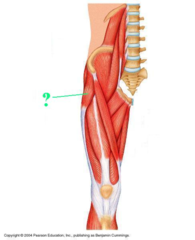
adductor muscles
adduct and flex thigh at the hip

adductor brevis
adducts and flexes thigh at hip
- origin: pubic bone
- insertion: femur
- antagonist: gluteus maximus (all gluteal muscles/hip abducting muscles)

another view of adductor brevis

adductor magnus
adducts and flexes thigh at hip
- origin: pubic bone
- insertion: femur
- antagonist: gluteus maximus (all gluteal muscles/hip abducting muscles)

another view of adductor magnus

adductor longus
adducts and flexes thigh at hip
- origin: pubic bone
- insertion: femur
- antagonist: gluteus maximus (all gluteal muscles/hip abducting muscles)

another view of adductor longus

gracilis
adducts and flexes thigh at hip
- origin: pubic
- insertion: femur
- antagonist: gluteus maximus and adductor magnus

pectineus
adducts and flexes thigh at hip
- origin: pubic bone
- insertions: femur
- antagonist: gluteus maximus

another view of pectineus

iliacus
flexes thigh at hip
- origin: ilium
- insertion femur
- antagonist: gluteus maximus and hamstrings
