Chapter 3 - Elasticities
 Call Kai
 Learn
 Practice Test
 Spaced Repetition
 Match
 Flashcards
 Knowt Play
1/18

There's no tags or description
Looks like no tags are added yet.
19 Terms
Elastic Demand
Consumers are very responsive to price changes
ex.
Restaurant meals – If prices increase, people may eat at home instead.
Designer clothing – If prices increase, consumers may buy cheaper brands.
Inelastic Demand
Consumers are NOT very responsive to price changes.
ex.
Gasoline – People still need fuel to commute.
Insulin – People who need it cannot easily stop purchasing it.
Price Elasticity of Demand (PED)
A measure of the responsiveness of the quantity demanded of a good to changes in its price.
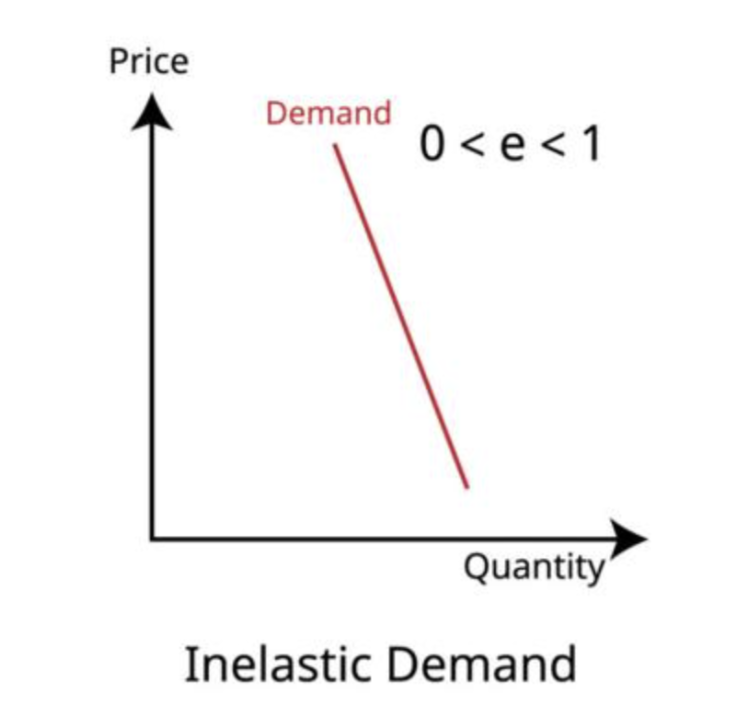
PED < 1
Demand is Price Inelastic %ΔQ < %ΔP
PED > 1
Demand is price elastic %ΔQ > %ΔP
PED = 1
Demand is unit elastic %ΔQ = %ΔP
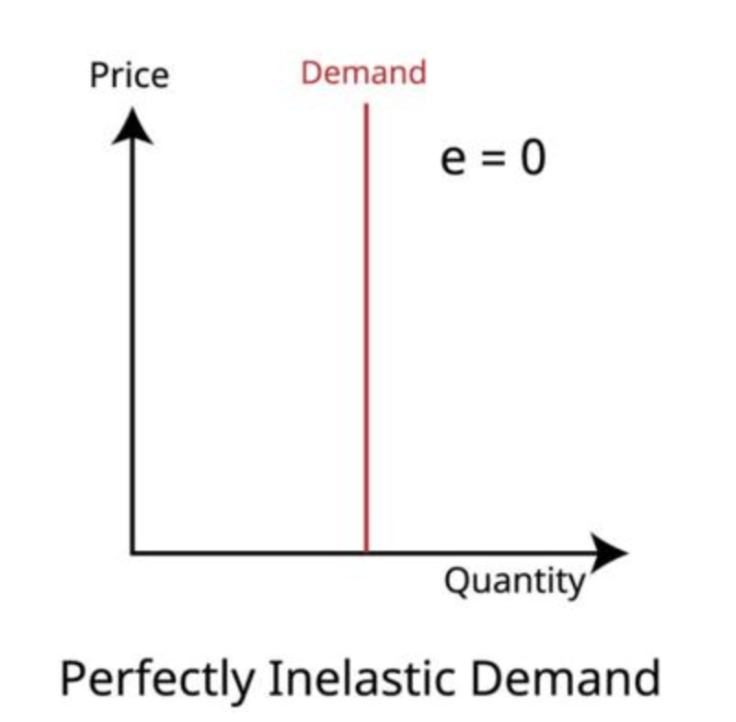
PED = 0
Demand is perfectly inelastic
ex. Boats
PED = ∞
Demand is Perfectly Elastic
Ex. Agricultural Commodity
Graph for Perfectly Inelastic
Graph for Perfectly Elastic

Graph for Inelastic
Graph for Elastic

Graph for Unit Elastic

What are the Determinants of PED
Number of Closeness of Substitutes
Length of Time
Proportion of Income
Necessities vs Luxuries
Number of Closeness of Subs
The more substitutes a product has, the more elastic its demand.
Consumers can easily switch to another product if the price increases.
The fewer substitutes available, the more inelastic demand.
Example:
Coca-Cola has many substitutes (Pepsi, Sprite, etc.) → Elastic.
A specific life-saving medication may have very few substitutes → Inelastic.
Length of Time
The longer consumers have to adjust to a price change, the more elastic demand becomes.
In the short run, consumers may not have enough time to find alternatives.
In the long run, consumers can find substitutes and change their habits.
Example:
Gas prices increase today. People may still need to drive to work → Inelastic in the short run.
Over time, people may buy electric cars or use public transportation → More elastic in the long run.
Necessities vs Luxuries
Necessities tend to have inelastic demand because consumers need them regardless of price.
Luxuries tend to have elastic demand because consumers can live without them.
Example:
Basic groceries and essential medicine → Inelastic.
Designer handbags and expensive jewelry → Elastic.
Proportion of Income
The larger the proportion of income spent on a product, the more elastic its demand.
Consumers are more sensitive to price increases when a product takes up a large portion of their budget.
Products that take up a small proportion of income tend to be more inelastic.
Example:
A car takes up a large portion of someone's income → More elastic.
A pencil takes up a very small portion of someone's income → More inelastic.