L98: Small Animal Upper Respiratory Conditions and Lower Airway pt. 1
 Call Kai
 Learn
 Practice Test
 Spaced Repetition
 Match
 Flashcards
 Knowt Play
1/61

There's no tags or description
Looks like no tags are added yet.
62 Terms
What diagnostic test is considered the most valuable in assessing laryngeal disease in all species? What diagnostic test is considered the most valuable in assessing laryngeal disease in all species?
laryngoscopy
what are signs of pharyngeal disease?
stertor
reverse sneezing
gagging
retching
dysphagia
airway obstruction
what are signs of laryngeal disease?
respiratory distress
stridor
change in vocalization
dysphagia or gagging
if coughing indicates aspiration pneumonia
what exacerbates distress on respiratory system?
exercise
excitement
temperature
what is the common laryngeal disease in dogs and cats?
laryngeal paralysis
what are the common pharyngeal diseases in dogs and cats?
brachycephalic airway syndrome
elongated soft palate
nasopharyngeal polyp
lymphoma in cats
what diagnostic test is a real time radiograph?
fluroscopy
what can fluroscopy be used to diagnose/
dynamic tracheal collapse
placement of stents
what do the aryntenoid cartilage do when on inspiration?
arytenoid cartilage move outward
what is laryngeal paralysis (Lar Par)?
failure of arytenoid cartilage to abduct during inspiration
what animals do we see larygneal paralysis in?
older large breed dogs
goldens and labs
what are the clinical signs of laryngeal paralysis?
stridor
change in bark
coughing after eating or drinking
larygneal paralysis is an…
emergency
how do we diagnose laryngeal paralysis?
laryngoscopy
what do you always need to have ready when doing an exam on an animal with suspected laryngeal paralysis?
IV catheter and ET tube (this is potential emergency!)

A 3 year old golden comes into the clinic after the owner noticed a change in the dog’s bark. You also notice the dog has a stridor. You decide to grab your laryngoscope to examine the dog and see the following. What is your diagnosis?
laryngeal paralysis
why do you need to do thoracic radiographs in an animal with laryngeal paralysis?
right middle lung lobe most commonly affected by aspiration pneumonia
what is the treatment for laryngeal paralysis?
weight loss
avoid heat
avoid collars
short and tapering glucocorticoids
rest
what is the treatment for laryngeal paralysis that is idiopathic and the animal is in respiratory distress?
arytenoid laterizations (“tie back”) surgery
what are the potential complications with tie back surgery for laryngeal paralysis?
perioperative mortality
aspiration pneumonia
polyneuropathies will progress
what is the MST for animals that had tie back surgery for laryngeal paralysis?
5 years
what is the prognosis for laryngeal paralysis?
fair to good
what can animals with laryngeal paralysis NOT do whether they have had surgery or not?
NO SWIMMING
what contributes to brachycephalic airway syndrome?
stenotic nares
elongated soft palate
everted laryngeal saccules
what breed with brachycephalic airway syndrome may also have hypoplastic trachea?
english bulldogs
what are the clinical signs of brachycephalic airway syndrome?
loud breathing
stertor or stridor
increased inspiratory effort
gagging
cyanosis or syncope
what are the secondary effects of brachycephalic airway syndrome?
laryngeal edema
everted saccules
laryngeal collapse
acid reflux
hiatal hernia
what is used to diagnose brachycephalic airway syndrome?
breed
clinical signs
physical and laryngeal exams
thoracic radiographs
what is the treatment for brachycephalic airway syndrome?
increase air flow (surgical repair)
weight management
what salvage procedure might you do for a laryngeal collapse?
tracheostomy
what tumor type is more common for the larynx?
local tumors more common
what local tumors can be present in the larynx?
thyroid carcinoma
what structures are part of the lower airway?
trachea
bronchi
bronchioles
alveoli
interstitium
vasculature
what are you considering if you hear quiet bronchovesicular sounds on your auscultation?
shallow inspiration
obesity
atelectasis
pleural effusion
pneumothorax
thoracic mass
what are you considering if you hear harsh bronchovesicular sounds on your auscultation?
hyperpnea
pneumonia
pulmonary edema
turbulence of airflow
referred upper airway sounds
what are you considering if you hear wheezes on your auscultation?
asthma
airway secretions
airway obstruction
severe bronchitis
what are you considering if you hear crackles on your auscultation with a cranioventral alveolar pattern?
bacterial pneumonia
aspiration pneumonia
hemorrhage
what are you considering if you hear crackles on your auscultation with a caudodorsal alveolar pattern?
noncardiogenic edema
mycotic pneumonia
protozoal pneumonia
hemorrhage
what is the most common clinical sign associated with a lower airway issue?
cough
what are you thinking if you hear a goose honk cough?
tracheal collapse
what are you thinking if you hear a hoarking cough?
kennel cough
what are you thinking if you hear a harsh and paroxysmal cough?
bronchitis
what are you thinking if you hear a soft cough?
pneumonia
pulmonary edema
what causes cranioventral alveolar patterns?
pneumonia
hemorrhage
neoplasia
lung lobe torsion
what causes caudodorsal to diffuse alveolar patterns?
cardiogenic pulmonary edema
non-cardiogenic edema
what causes peri-hilar alveolar patterns?
CHF
what causes unilateral/mediastinal shift alveolar patterns?
atectasis
airway obstruction
what causes patchy, focal, or mutlifocal alveolar patterns?
contusions
hemorrhage
neoplasia
heartworm disease
thromboembolisms
what parasite can infect the trachea and bronchi?
Oslerus osleri
what agents are involved with canine infectious tracheobronchitis/kennel cough?
canine adenovirus
parainfluenza virus
canine respiratory coronavirus
bordatella bronchiseptica
how long does kennel cough last?
2 weeks
what are the signs of kennel cough?
non-productive cough
cough exacerbated by exercise, excitement
sudden onset
what is important to understand about kennel cough?
not a systemic illness animal just coughing
An owner calls you about their dog with kennel cough. The dog started to develop signs of systemic illness. What is the more likely pathogen causing this?
canine influenza
what is the treatment for kennel cough?
rest
± cough suppressants (not if productive cough and only at night)
what can lead to collapsing trachea?
progressive weakening of cartilage
redundant tracheal membrane
what type of cough will an animal with a collapsed trachea have?
inducible goose honk cough
what animal do we usually see collapsing trachea in?
middle aged toy and miniature breed dogs
what are the progressive diagnostics we do for a dog with think has tracheal collapse?
thoracic and cervical neck radiographs
fluroscopy
endoscopy
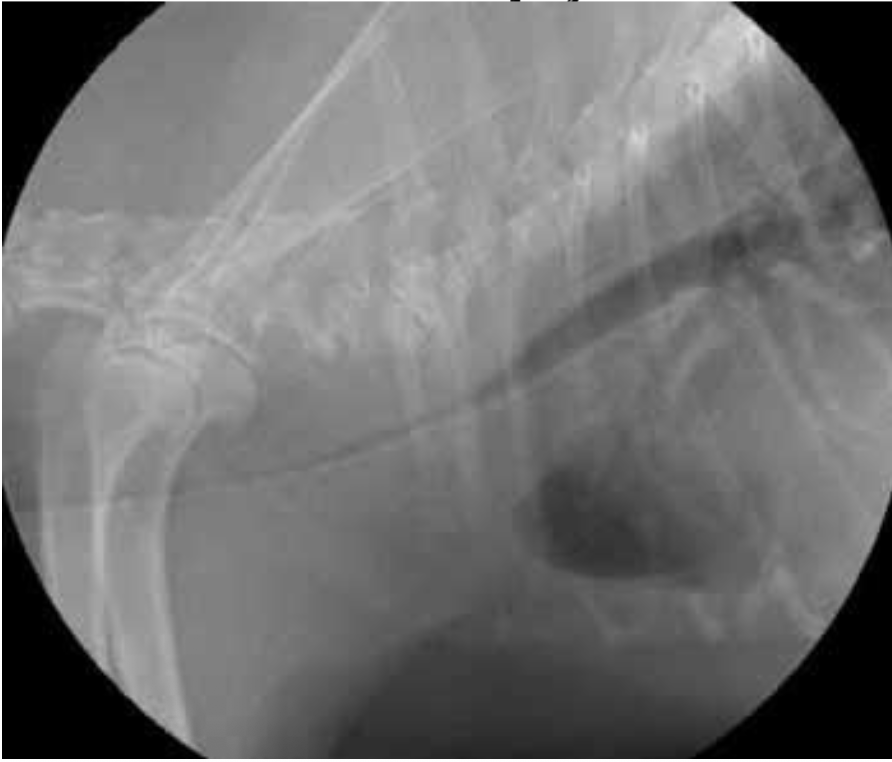
what is shown in the image?
tracheal collapse
what is the treatment for laryngeal collapse?
cough suppressants
weight loss
harnesss
avoid overheating
surgical stents if not managed medically
what airway diseases have a bronchial pattern?
canine chronic bronchitis
feline asthma
allergic bronchitis
kennel cough
bacterial and mycoplasma infection
parasites