Section 4: Lipids
 Call Kai
 Learn
Learn Practice Test
 Spaced Repetition
 Match
Match Flashcards
 Knowt Play
1/76

There's no tags or description
Looks like no tags are added yet.
Name | Mastery | Learn | Test | Matching | Spaced | Call with Kai | Chat |
|---|
No analytics yet
Send a link to your students to track their progress
77 Terms
What are the functions of lipids
Storage of energy for the body (as adipose tissue)
Structural function
Cell membrane
Brain structure lipids
Signalling
Hormone function
Mediators of ETC
Gene expression
Pro/anti inflammatory mediators
Fat-soluble vitamins (A, D, E, K)
Describe the properties of lipids
Lipophilic
Soluble in organic solvents
Work well with other lipids
Hydrophobic
Insoluble in water
Minimize contact with water
List the classes of lipids
Simple lipids
Fatty Acids
Tri-, di-, monoacylglycerols
Compound Lipids
Phospholipids
Glycolipids
Derived Lipids
Sterols, steroids
Describe the characteristics of fatty acids and how they affect the physical property of fats
Simplest of all lipids
Source of energy:
most calories of dietary fat come from fatty acids
Chain length
Long-chain fatty acids: 14-24 carbons (>12 carbons)
Medium chain: 6-12 carbons (human milk, dairy)
Short-chain fatty acids: 2, 3, 4 carbons (bacteria)
Natural fats are usually have an even number of carbons
Most of the edible oils are 16 or 18 carbons
What are the 3 types of FAs
Saturated Fatty Acids (SFA):
No double bonds, all carbons have 4 bonds
Monounsaturated Fatty Acids (MUFA):
One double bond
Polyunsaturated Fatty Acids (PUFA):
Multiple double bonds (2-6)
Increased bends and conformational change

Explain melting point in FAs
Higher melting point (bonds are stronger)
longer chain (more bonds)
not many double bonds (more linear, more stable)
Lower melting point (bonds are weaker)
smaller chain (less bonds)
many double bonds (more kinks, less stable)
Explain the differences in of double bonds in FAs
cis double bonds
unsaturated fast
arms in the same direction
trans double bonds
most trans fats are from industrial processing
some are from bacterial hydrogenation of PUFA by ruminants
not as bad since it’s from natural sources
arms in opposite direction
Explain FA nomenclature for biochemists and nutritionists
#C : where double bond Δ
from the carboxylic end
#C : where double bond
from the methyl end
omega 3 fats or omega 6 fats
Give examples of dietary sources for the individual fatty acids
Saturated Fatty Acids (SFA):
Coconut oil
Animal and plant fats
peanuts
Monounsaturated Fatty Acids (MUFA):
Plants, nuts, marine
Olive oil
Polyunsaturated Fatty Acids (PUFA):
Corn, sunflower, peanut oil
Linseed, soybean oil
Fish oil
Which FA is an essential FA and which type of FA is it?
linoleic acid + α-linoleic acid
these are unsaturated FAs (has double bonds)
needs these fats to make longer chain PUFAs
Omega-3 FAs (ALA, EPA, DHA) have been associated with what?
improved cardiovascular, metabolic, and cognitive health in childhood and adulthood but no consistent evidence across populations
Explain neutral FAs
simple lipids → Mono-, di-, triacylglycerols
one, two, three FAs esterified to glycerol
can be a combination of saturated and unsaturated FAs in a chain
make up 95% of dietary fats
Explain the sn positions
glycerol + 3 FAs = triacylglycerol
attached by an ester bond
sn-1 is the first carbon position (top)
sn-2 middle carbon
sn-3 on the third carbon (bottom)

Draw the path of the components of membrane lipids

Explain the biological role of phospholipids
Structural support in cell and organelle membranes
Phospholipids have two fatty acids (hydrophobic tail) and a hydrophilic end
Help with fluidity
Physiologically active compounds
e.g., release of arachidonate from phosphatidylcholine and phosphatidylinositol for formation of eicosanoids
Participation in immune function:
phosphatidylinositol anchors surface antigens
Second messenger in cell signalling
hormonal (insulin) stimulation; messenger triggers activation of enzymes and hormonal responses
What are the different types of phospholipids that are major components of mammalian cell membranes
glycero-phospholipid structure
glycerol + phosphate + 2 FAs + compound
Choline - phosphatidylcholine (most common)
Ethanolamine - phospatidyl-ethanolamine
Serine - phosphatidylserine
Inositol - phosphatidylinositol
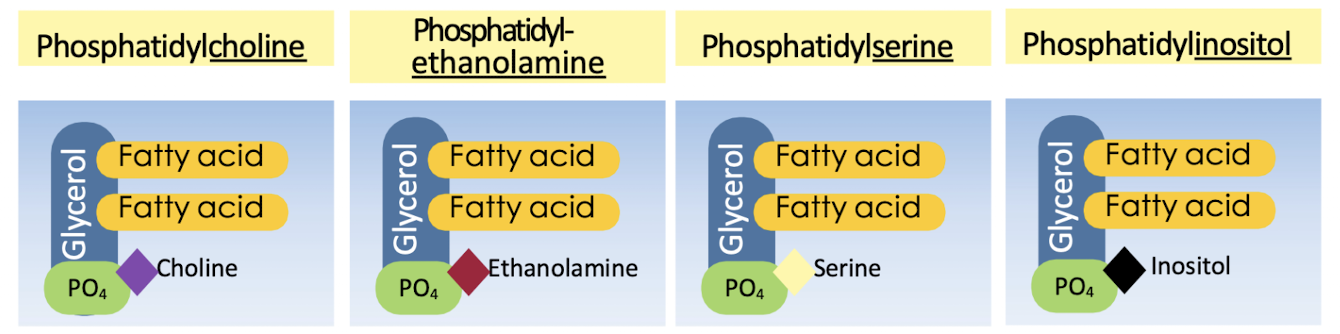
Explain sphingolipids made from phospholipids and glycolipids
phospholipid:
sphingomyelin structure
sphingosine + phosphate + FA + compound
choline
ethanolamine
glycolipid:
cerebroside = sphingosine + FA + GLU/GALAC
ganglioside = sphingosine + FA + oligo. + sialic acid
What is the role of sphingomyelin?
myelin sheaths in the nervous system
What is the role of cerebroside and ganglioside?
structural role in medullary sheathes of nerves and brain tissue
Where do sterols occur?
only in animal
meats, egg yolk, dairy products
sterols + phospholipids = 5% of dietary fat
sterols are versatile → precursor for bile acids, steroid hormones, and vitamin D
Which organs digest fats?
mouth
stomach
small intestine
Explain fat digestion in the mouth
teeth use mechanical separation of nutrients to increase SA
serous glands release lingual lipase (gets activated in the stomach)
Explain fat digestion in the stomach
Most digestion is in the stomach
Activate lingual lipase released from the mouth
Release gastric lipase (chief cells)
both enzymes are stable in low pH
they digest TAGs (prefer SCFA and MCFA) and prefer the cleave the FA at the sn-3 position
digest 10-30% of TAGs
secretion of both lipases occur continuously but can be stimulated by
neural factors (sympathetic nervous system)
dietary factors (high fat)
mechanical (sucking/swallowing)
fats are emulsified to increase SA
undigested lipids delay gastric emptying → high satiety
enterogastrone released by duodenal mucosa may reduce gastric motility
mix bolus by smooth muscles
shear forces by pyloric sphincter
Explain fat digestion in the stomach for infants
pancreatic function is not fully developed
gastric and lingual lipases enter fat globules without emulsifiers
short and medium CFA are in the sn-3 position for better digestion for the infant
Explain fat digestion in the small intestine
more emulsification by shear forces
release CCK from intestinal cells
stimulate pancreas + gallbladder to..
secrete bile acids, pancreatic enzymes, bicarbonate
What is fat emulsification?
bile acids form an exterior surface covering lipid droplets
prevents lipids from grouping together
What is bile acid and where is it made?
amphipathic molecules made from cholesterol in the liver
cholic acid / chenodeoxycholic acid = bile acid
75% → glycocholic acid / glycochenodeozycholic acid = conjugated bile acid + glycine
25% → taurocholic acid / taurochenodeoxycholic acid = conjugated bile acid + taurine
conjugation with glycine or taurine for…
better ionization
improved ability to form micelles
What’s the difference between bile acid and bile salts?
bile acid:
original steroid compound
produced by the liver from cholesterol
bile salts:
active, water-soluble
bile acid + amino acid
used to make micelles in fat digestion
Explain emulsification of bile acids
fat droplet is attached to the conjugated bile acid on the hydrophobic end while the hydrophilic side of the conjugated bile acid is facing outwards
Name examples of emulsifiers
complex polysaccharides
phospholipids
What are the pancreatic enzymes secreted in fat digestion
pancreatic lipase
Need colipase and calcium ions and bile salts to work
Hydrolyzes sn-1 first then sn-3 bonds
If gastric/lingual lipase already took the sn-1 bond, then pancreatic lipase will take off sn-3
cholesterol esterase
Hydrolysis of cholesterol esters → cholesterol + FA
phospholipase A2
Hydrolysis of sn-2 FA from lecithin → lysolecithin + FA
At the end of fat digestion, what are you left with?
mixed micelles (5 nm diameter) ready for absorption
monoacylglycerols
free FAs
free cholesterol
cholesterol esters
lysophospholipids
fat-soluble vitamins
bile salts (stabilize micelles)
Explain fat absorption
FAs < 12 C are bound to albumin → portal vein
Longer FAs, MAGs, LPL (lysophospholipid) move to the endoplasmic reticulum
At the ER, Acyl-CoA synthetase binds FAs and coenzyme-A (uses one ATP) and now they are ready for binding facilitated by FATP
FA-CoA molecules are re-esterified by
acyltransferase
MG + 2 FA-CoA = TAG
LPL + 1 FA-CoA = PL
acyl-coA:cholesterol acyltransferase 2 (ACAT2)
C + 1 FA-CoA = cholesteryl ester
How much of TAG and cholesterols consumed are absorbed?
95% TAG
40-50% cholesterol
How do lipids get into circulation when it is hydrophobic? Via what
lipid transport from…
intestine to different tissues (in fed state)
endogenous formation/storage to different tissues
What is a chylomicron and explain its structure
in intestinal cells, esterified lipids are packed for transport into chylomicrons
exterior (hydrophilic): phospholipids + cholesterol + apolipoproteins
interior (hydrophobic): TAGs, cholesterol esters
tags are the most abundant in the diet so it’s the most abundant in chylomicrons
What is the function of chylomicrons?
to deliver dietary lipids to muscle and adipose tissue
the liver should not be taking the chylomicrons
Explain the pathway of chylomicrons when they leave the intestinal cell
chylomicrons leave intestinal cell via exocytosis → lacteal → lymphatic circulation → blood circulation
When is the peak level of lipid plasma? How long does it take to rebalance?
peak level: 0.5 - 3 hours in fed state
rebalance in 5-6 hours
can recirculate for 14 hours
How are chylomicrons delivering fats to tissues that’s not the liver?
chylomicrons stay in the blood vessels (intravasular hydrolysis)
chylomicrons are catalyzed by lipoprotein lipase which is activated by apoC-2 on the chylomicron surface
LPL cleaves TAGs → MAGs + 2 FAs to enter cell
over time circulation of lipoprotein lipase diminish chylomicrons of TAGs
chylomicron remnants is what is left over and accepted by the liver (left over 20% fats)
Explain the role of insulin and glucagon in terms of lipoprotein lipase
insulin increase lipoprotein lipases in skeletal muscle and adipose tissue to encourage fat uptake
glucagon increase lipoprotein lipase in muscle without affecting adipose tissue
What happens after the chylomicron remnant is sent to the liver?
lipids are consumed or repacked as very low density lipoprotein and sent into circulation
What does VLDL contain?
endogenous lipids
free FAs from the adipose tissue
shorter FAs from the portal vein
TAG formation in ER
Explain the function of VLDL
transport and delivery of endogenous lipids to peripheral tissues via lipoprotein lipase
Explain the differences of chylomicrons and VLDLs
chylomicron:
ApoC 1-3, E
ApoB-48
Transport to muscle and adipose tissue
Lipids used for oxidation and storage
Energy storage for muscle
VLDL:
ApoB-100
ApoC 1-3, E
Transport to adipose tissue
Lipids used to form TAGs
Leftover lipids are stored in adipose tissue
When lipids get absorbed, the size and composition of lipoproteins change. What do the Apo proteins do in response?
Apo proteins change based on the current state and purpose
What is the function of apolipoproteins (apo)?
to stabilize lipoproteins in aqueous environment
to be recognized by specific receptors
stimulate certain enzymatic reactions
What i s
Explain what a low density lipoprotein is and its function
function: cholesterol transport
IDL reduced to LDL
cholesterol makes up 50%
cholesterol is taken up by cells from LDL by a receptor mediated process
cellular receptors recognize apoB-100 on LDL
1. LDL contacts with receptor
2. enter cell and connect with lysosome
LDL uptake inhibits HMG CoA reductase
LDL uptake receptor synthesis
3. cholesterol is used or transported to golgi aparatus for storage
ACAT converts cholesterol to cholesterol esters
Explain what a high density lipoprotein is and its function
function: reverse cholesterol transport (good cholesterol)
collect excess cholesterol → transport to liver → used or eliminated
carries 20% of plasma cholesterol, has a lot of phospholipid
apoA1 is the major lipoprotein in HDL
activates lecithin cholesterol acyltransferase (LCAT) which forms cholesterol esters
CE migrate ot the core of HDL
transport to liver
use/excretion of cholesterol via bile acid formation in the liver
Explain why LDL is bad
LDL transports cholesterol to cells
if LDL is not taken up by the cells, it keeps circulating in the blood
the longer LDL circulates in the blood, the more likely it’ll oxidize
uptake by macrophage
foam cell formation
fatty plaques
artheroclerosis
Explain the steps of development of atherosclerosis
oxidized LDL in blood vessels
taken up by macrophages
monocytes phagocytose LDL creating foam cells
fatty plaques form
narrowing blood vessels
How can you test lipid profile?
blood test at fasting state
measure plasma or serum
look for total cholesterol: LDL cholesterol, HDL cholesterol, TAGs
healthy adults ≥ 40 test every 5 years
higher risk test once a year
Explain the personal causes of dyslipidemia
genetic predisposition
reduced expression or binding capacity of LDL-receptors
reduced cholesterol uptake
lifestyle factors/chronic disease
intake > expenditure
stress
overweight/obesity
insulin resistance
diabetes
What is the desired ration of LDL:HDL to reduce risk of artherosclerosis
↓ LDL: ↑ HDL
overall ↓ ratio is better
What are the diet causes of dyslipidemia?
Quality of dietary fat / composition of fatty acids
2. Dietary cholesterol (in some cases): role of plant sterols
3. Fiber intake
4. Source of protein (animal versus plant protein)
5. Coffee consumption
6. Lifestyle factors including exercise (another course)
Explain alternatives in SFAs. Explain good sources that don’t increase LDL
lower LDL → lower palmitic acid sources for carbs or stearic acid
SFA in dairy don’t increase LDL
Cheese intake lowers LDL compared to butter intake of equal fat content H
Explain how FA composition impact clearance of LDL
impacts apoB100 interaction with receptors
more SFAs in LDL makes a stiffer LDL which is less moudable
less apoB100 and LDL-receptor interactions
LDL doesn’t interact with receptors and continues to circulate in the blood
List and explain other sources of better quality fats
monounsaturated fatty acids (MUFAs): nuts, dairy, olive oil
lower LDL, increase HDL
polyunsaturated fatty acids (PUFAs)
reduce TAGs
reduce blood clotting
reduce release of inflamatory cytokines involved in plaque formation
omega 6 FA
omega 3 FA
Explain another quality of fat that isn’t good
Trans fatty acids
have greater hypercholesterolemic effect compared to SFAs
increase [LDL]
no change in [HDL]
Explain how dietary cholesterol cause dyslipidemia
may or may not impact plasma cholesterol levels
depends on
chronic intake of low dietary cholesterol
responder or not
70% people can adjust changes in dietary cholesterol levels
20-30% are hyper-responsive to dietary cholesterol
they can’t regulated endogenous cholesterol so their plasma cholesterol level changes
Explain how fibre intake cause dyslipidemia
fiber intake lead to redcued plasma cholesterol
insoluble fibers speed up movements in GI + soluble fibers reduce mixing of chyme with digestive enzymes (gels - ‘physical barrier’).
Both effects lead to increase bile/cholesterol excretion;
Bile composition changes
liver gets LDL from blood for new bile production, which inhibits HMG CoA reductase enzyme required for cholesterol synthesis
Production of short chain fatty acids by colonic fermentation of soluble fibers → inhibits cholesterol + fatty acid synthesis
Replacement of high-fat foods
Explain how protein sources cause dyslipidemia
animal derived protein has hypercholesterolemic effect
higher SFA content
plant derived protein has hypocholesterolemic effect
plant sterols are rich in fiber
but engineered meat may not be as healthy
Explain how coffee consumption cause dyslipidemia
brewed coffee has cafestol which is a stimulator of LDL
there are different cafestol levels in different prepared coffees
unfiltered and pressed coffee have high levels of cafestol
Explain how humans can endogenously make SFAs and MUFAs
acetyl-CoA is used to make FAs
can elongate to become long carbon SFAs
SFAs can become desaturated and become MUFAs
What is the ideal omega-6:omega-3 FA ration?
1:1
but our diet has more omega-6 than 3s
Why do we need omega-6 FAs?
converstion of ALA to EPA and DHA (Omega3) depend on omega-6 FA
What are the benefits of omega6 and omega3 PUFAs?
anti-inflammatory…
prostaglandins
leukotrienes
resolvins
Explain the pathway of lipid (with glucose) absorption in the liver
glucose-6-p can go through….
replenish glycogen stores
α-glycerol-3-phosphate → form DAGs and TAGs
HMP shunt → NADPH for FA synthesis
form acetyl-CoA to form malonyl CoA for endogenous synthesis of FAs
Explain the fates of cholesterol and cholesterol esters from chylomicron remnants that are taken up by the liver
convert to bile salts and secret in the bile
be incorporated into VLDL and released into blood
Explain the fates of FAs in the liver
go into TAG pool
be incorporated into VLDL and released into blood
Explain the role of insulin in lipid metabolism
insulin stimulates lipoprotein lipase in adipocytes
LPL hydrolyzes TAGs in chylomicrons and VLDL
free FAs are taken up in adipocytes → re-esterified to TAGs for storage
insulin inhibits hormone-sensitive lipase in adipocytes preventing hydrolysis of stored TAGs going into the FA pool
remove lipids in blood, store in adipose tissue
Explain the pathway of lipid (with glucose) absorption in adipose
glucose-6-p can go through….
α-glycerol-3-phosphate → form DAGs and TAGs
HMP shunt → NADPH for FA synthesis
form acetyl-CoA to form malonyl CoA for endogenous synthesis of FAs
Explain the fates of FAs and lipids in the adipose
FAs: FA pool
lipids: into storage
How much of an adipocyte is fat?
85% of adipocyte is fat
Explain what happens in the post-absorptive and fasting state in the adipose tissue
glucagon and epinephrin are released
activate hormone-sensitive lipase
hydrolyze TAGs → FAs + glycerol
release FAs bound to albumin into blood
release glycerol to the blood for gluconeogenesis in the liver
Explains what happens in the post-absorptive state in the liver
hungry so you need energy…
TAG formation
free FAs released from adipose tissue + bound to albumin
they get taken up by peripheral tissues
form TAGs in the liver
incorporate TAGs into VLDL in the liver
FA oxidation in the mitochondria (energy for liver)
form acetyl-CoA via β-oxidation
acetyl-coA enter TCA cycle
ATP synthesis
Excess acetyl-CoA / ketogenesis
acetyl-Coa → acetoacetate → β-hydroxybutyrate and Acetone
ketone bodies are energy precursors for the liver