Lec 5: Fluid/Electrolyte Balance
 Call Kai
 Learn
Learn Practice Test
 Spaced Repetition
 Match
Match Flashcards
 Knowt Play
1/66

There's no tags or description
Looks like no tags are added yet.
Name | Mastery | Learn | Test | Matching | Spaced | Call with Kai | Chat |
|---|
No analytics yet
Send a link to your students to track their progress
67 Terms
Fluid and Electrolyte Balance – Definition
process of regulating the extracellular fluid volume, body fluid osmolality, and plasma concentrations of electrolytes
dependent on communication and interaction between several body systems
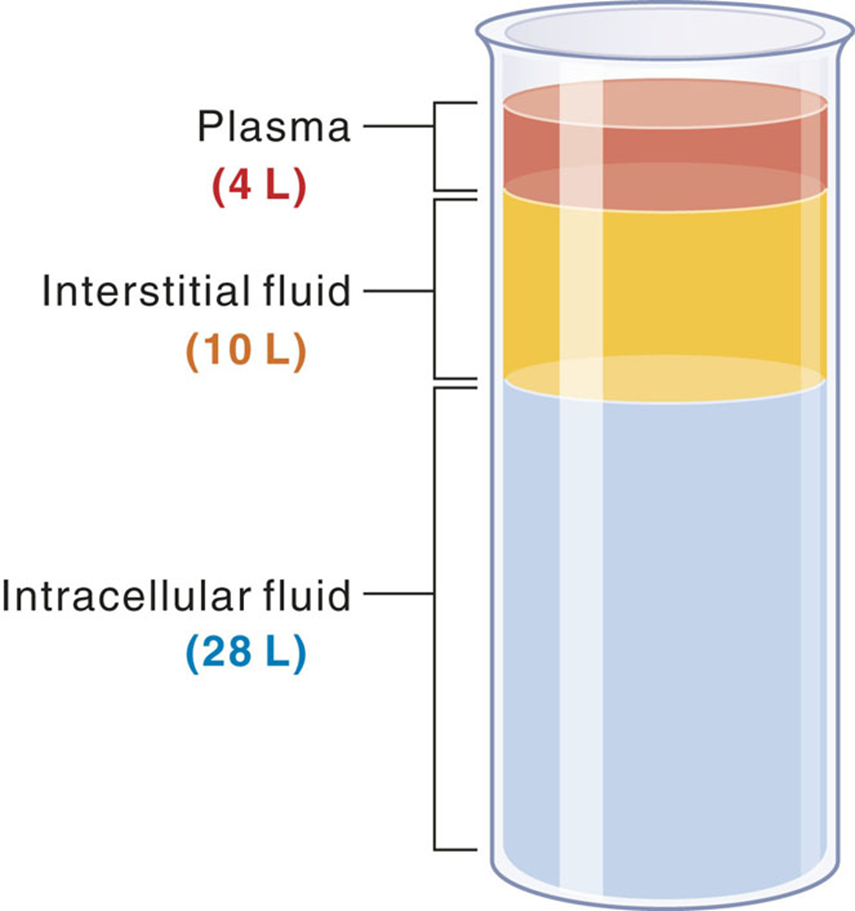
how much fluid is in the adult body
60% of body
varies with age, gender and body fat
intracellular fluid
extracellular fluid
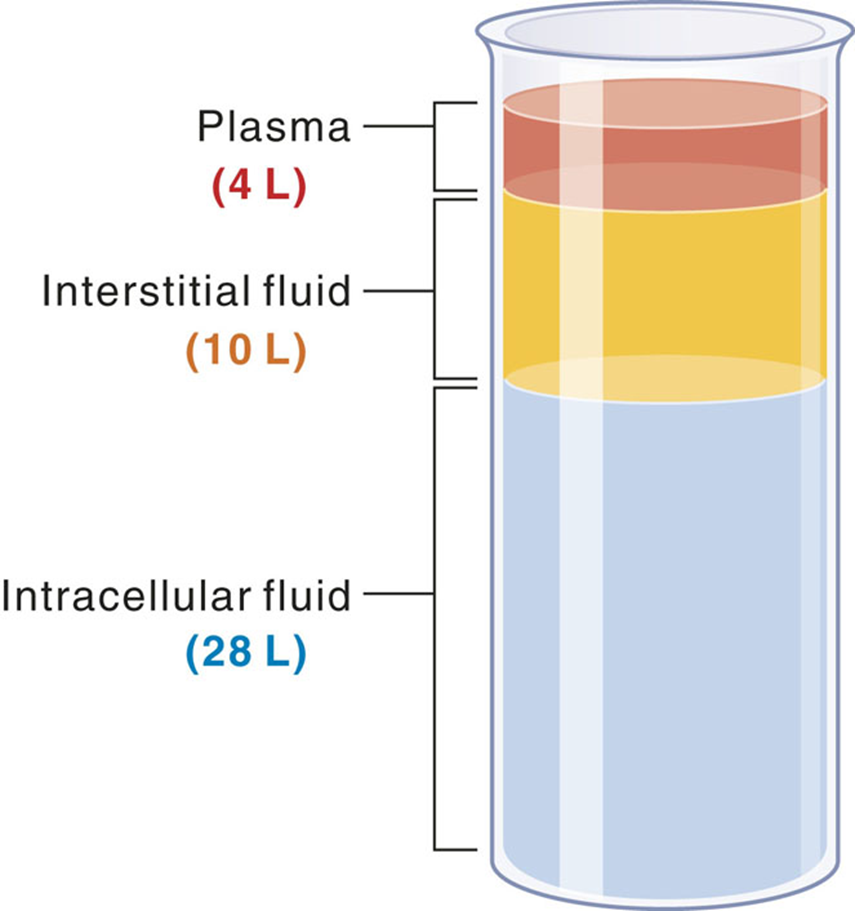
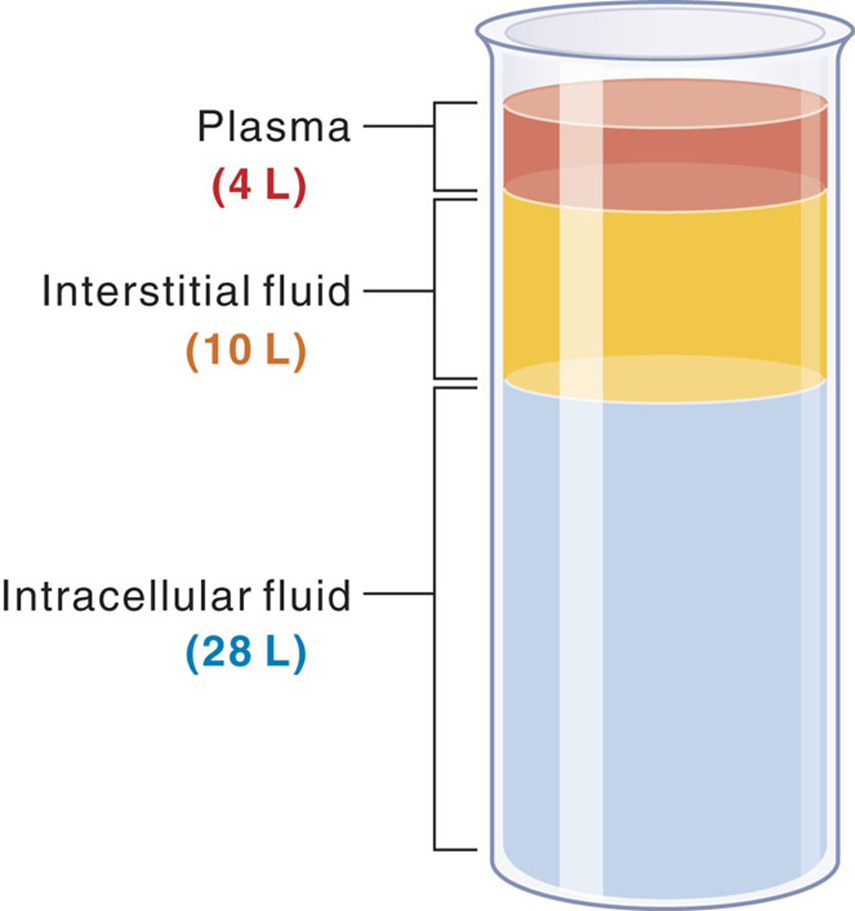
what are the diff types of extracellular fluid
intravascular
interstitial
transcellular
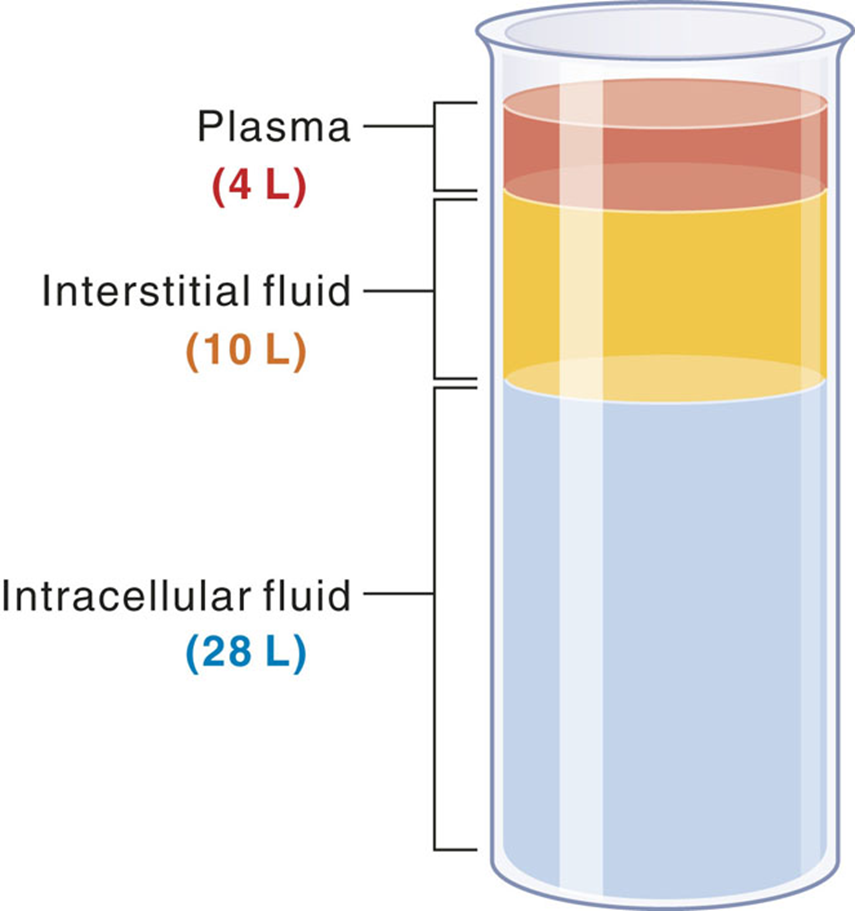
third spacing def
loss of ECF into a space that does not contribute to equilibrium
electrolytes def
active chemicals that carry positive (cations) and negative (anions) electrical charges
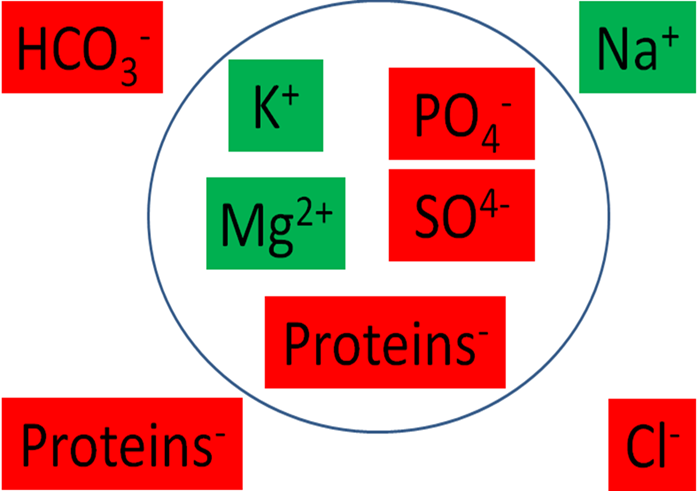
what are the major cations and their location
sodium = extra
potassium = intra
calcium
magnesium = intra
hydrogen ions
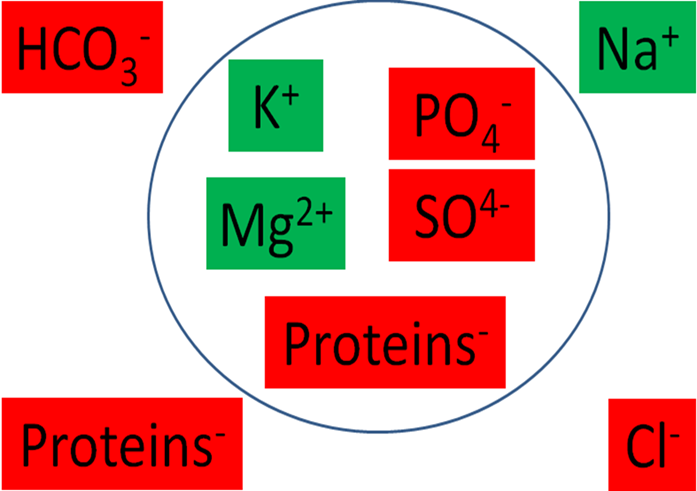
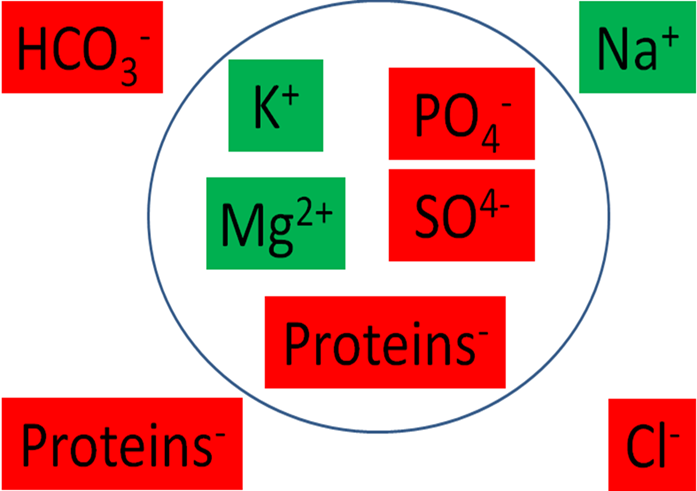
what are the major anions and their location
chloride = extra
bicarbonate = extra
phosphate = intra
sulfate = intra
proteinate ions
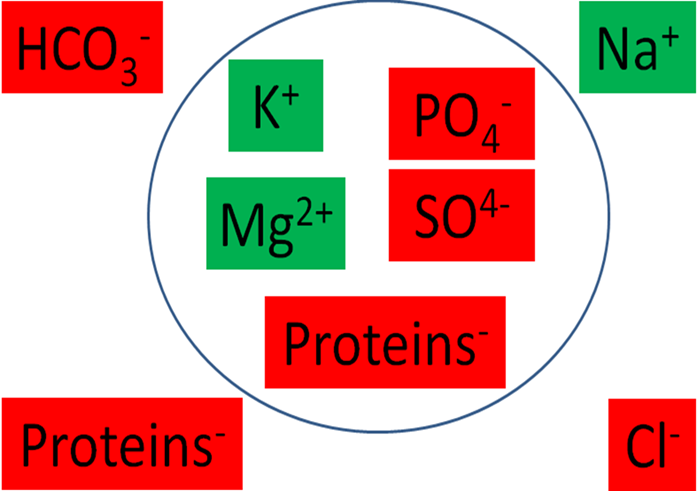
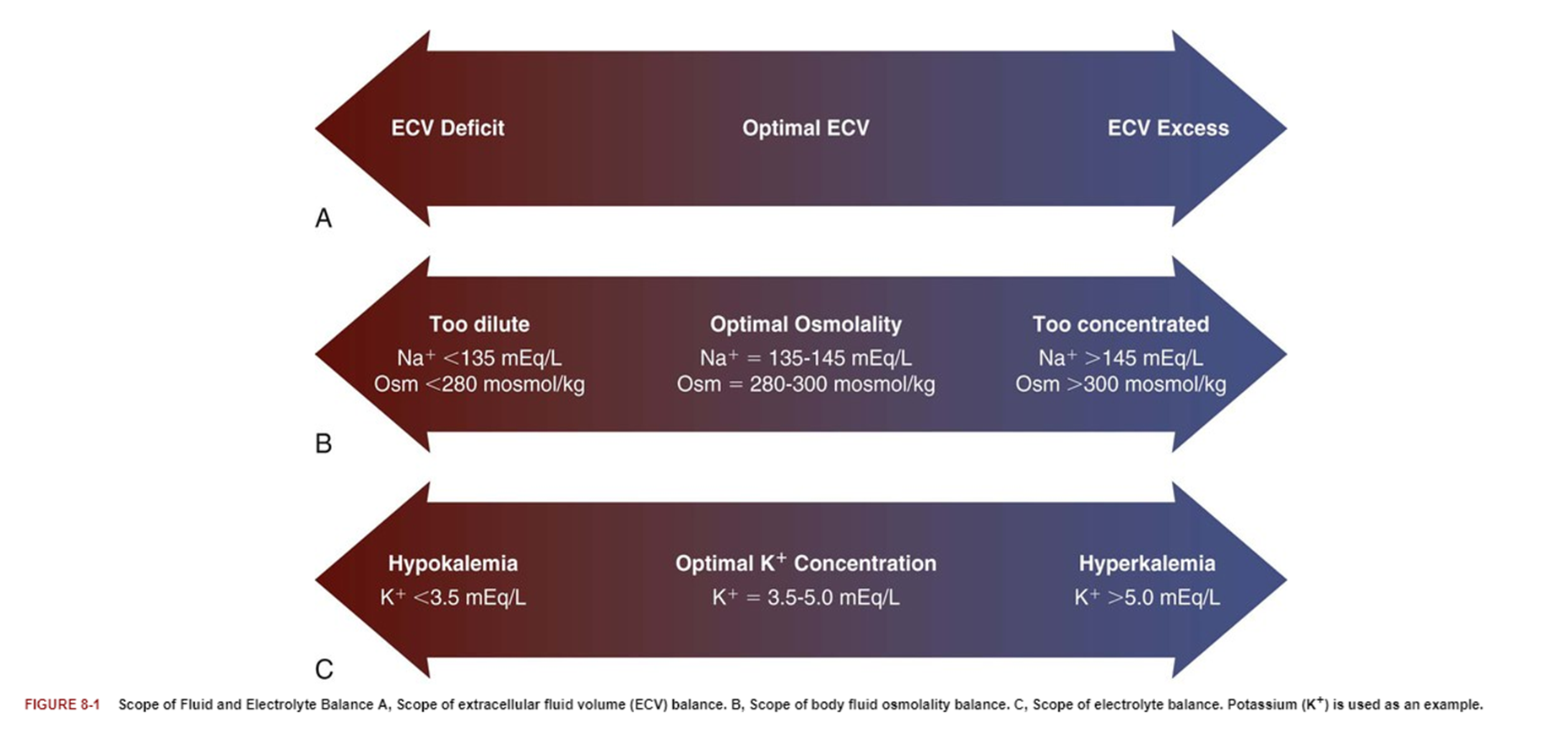
what is the optimal and outer ranges of Na osmolality
optimal= 135-145 mEq/L
osm = 280-300
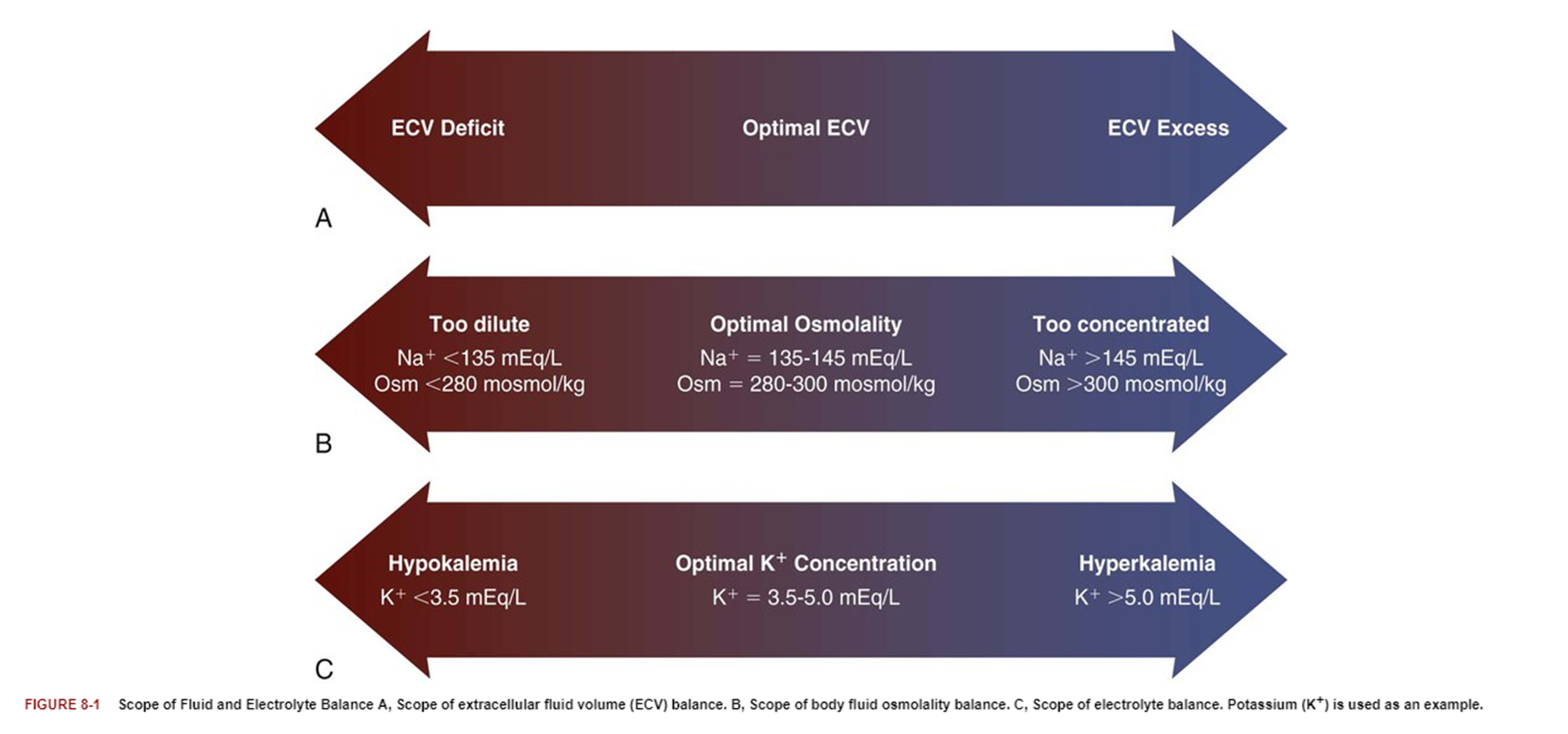
![<p>what is the optimal and outer ranges of potassium [ ]</p>](https://knowt-user-attachments.s3.amazonaws.com/fd903adb-8712-48eb-8bca-4f36452a2513.png)
what is the optimal and outer ranges of potassium [ ]
hypokalemia= <3.5 mEq/L
optimal= 3.5-5 mEq/L
hyperkalemia = >5 mEq/L
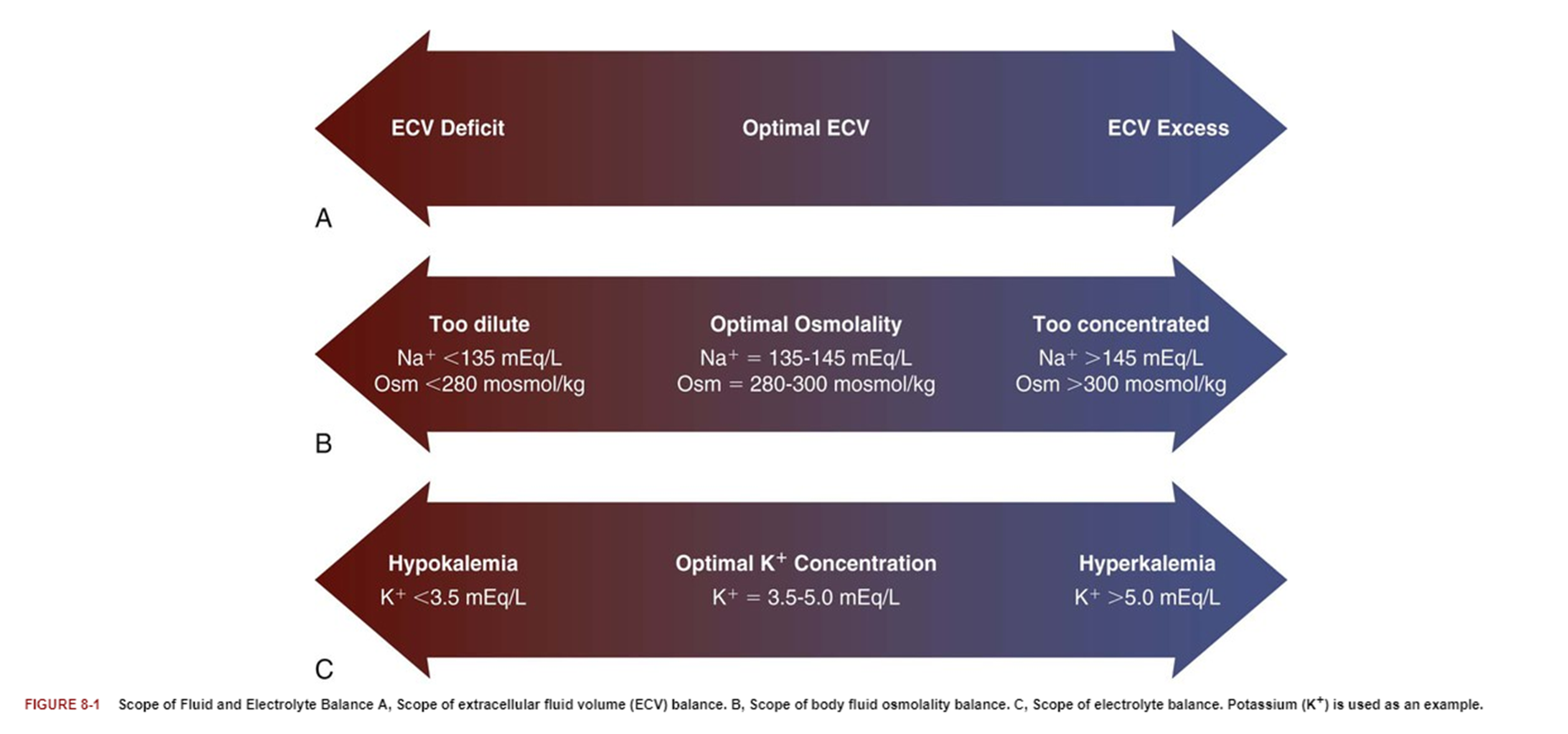
what does Movement of fluid through capillary walls depends on:
hydrostatic pressure=pressure exerted on the walls of blood vessels
osmotic pressure=pressure exerted by the protein in the plasma
what does the direction of fluid movement depend on
the differences of hydrostatic and osmotic pressures
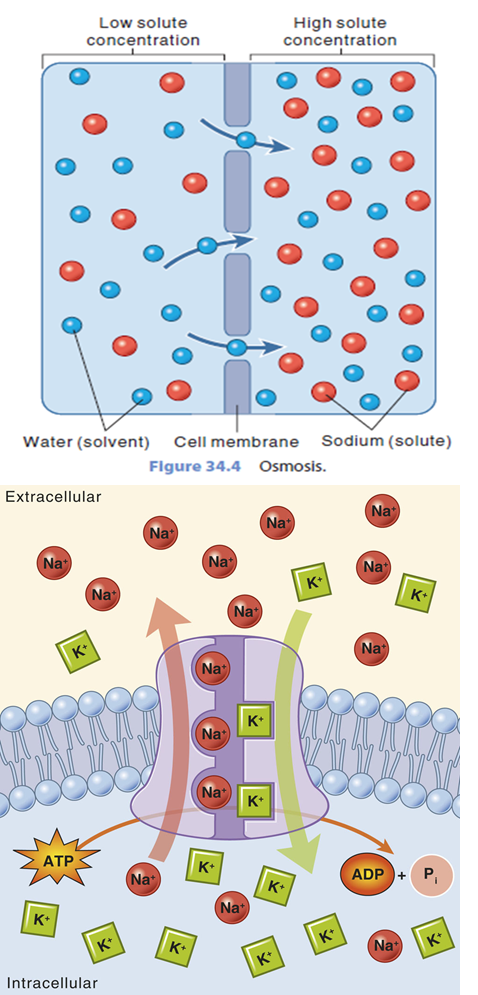
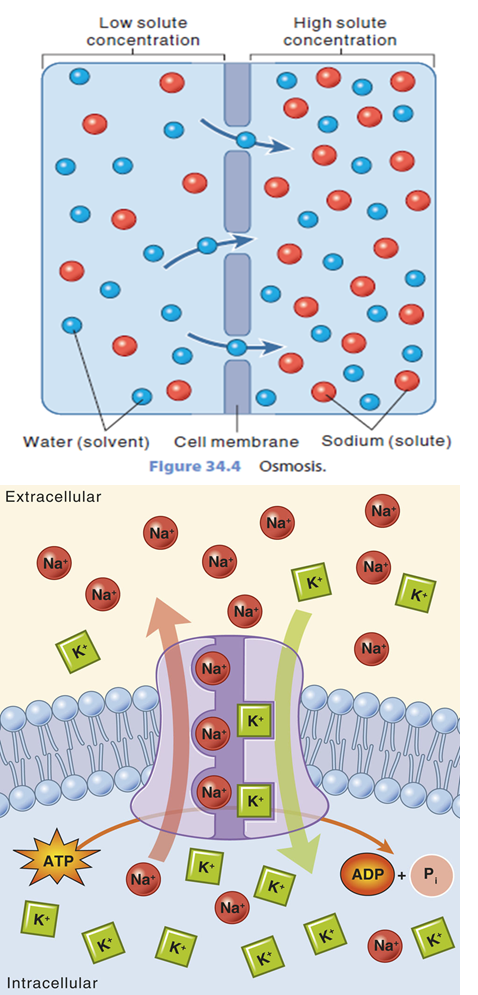
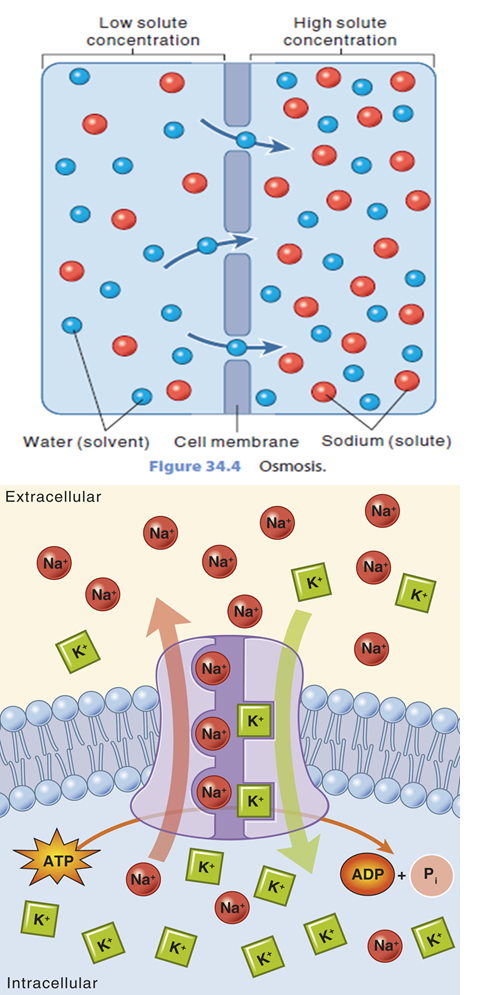
diffusion def and what it relies on
movement of substances from high to low [ ]
relies on pressure gradient
![<p>movement of substances from high to low [ ]</p><ul><li><p>relies on pressure gradient</p></li></ul><p></p>](https://knowt-user-attachments.s3.amazonaws.com/5c61cf48-5df7-4e0d-9b21-0024f1ab6e1c.png)
what does active transport use as energy source
adenosine triphosphate (ATP)
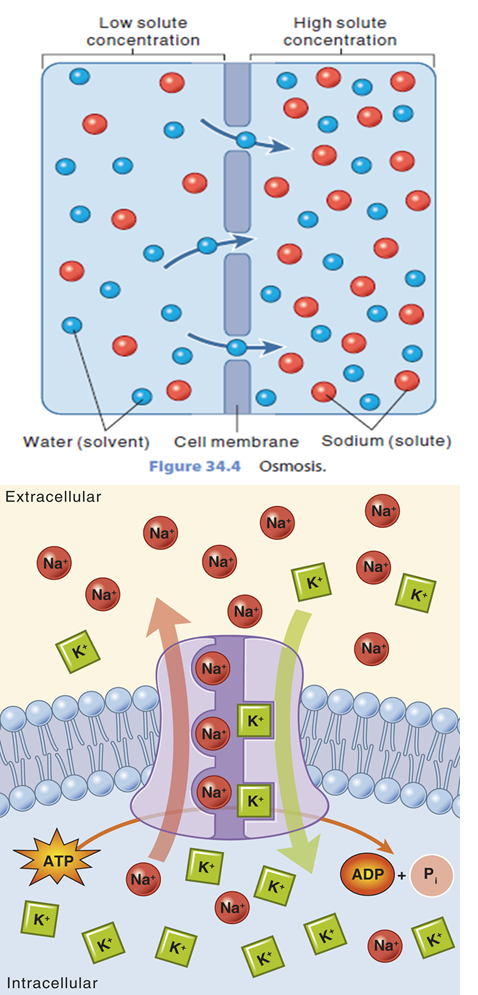
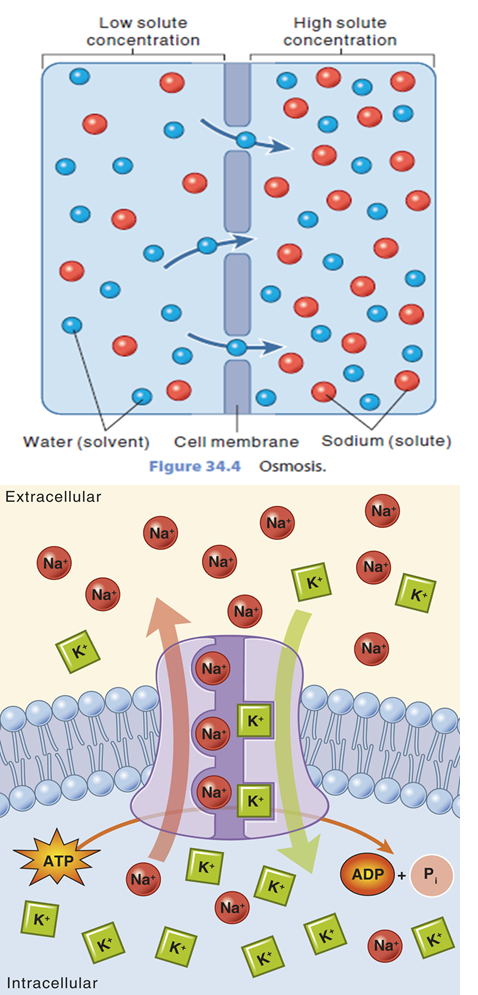
what does osmosis use
solutes, colloids, crystalloids create pressure
osmotic pressures = pulls fluid in
hydrostatic pressure = pushes fluid out
what are the elements of Fluid and Electrolyte Balance
intake and absorption
distribution (compartmental distribution of body fluids and electrolytes)
output (elimination)
osmolarity def
concentration of all solutes (particles) in a given weight of water
what is the human osmolarity level
275–300 mosm/kg
what does low osmolality indicate
dilution
Na+ concentration relatively low
RBCs = relatively decreased due to hemodilution, low hematocrit
what does high osmolality indicate
dehydration
Na+ concentration relatively high
RBCs = relative increased due to hemo-concentration, high hematocrit
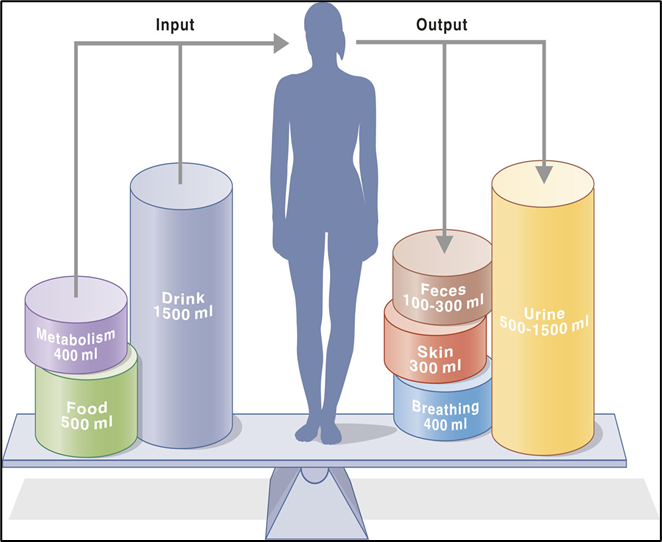
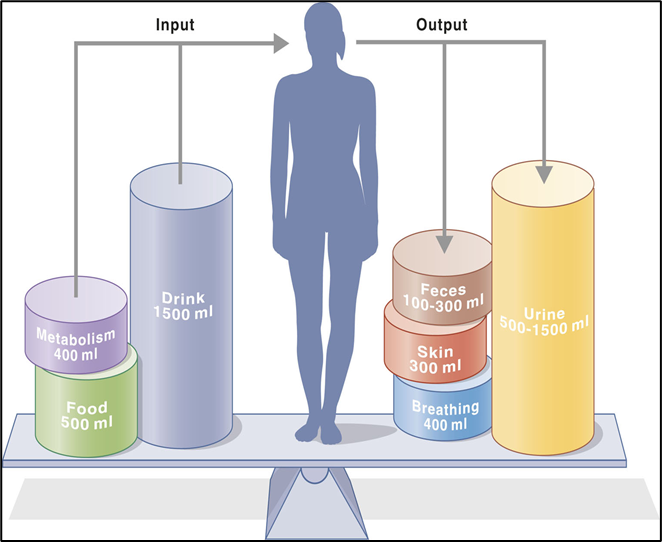
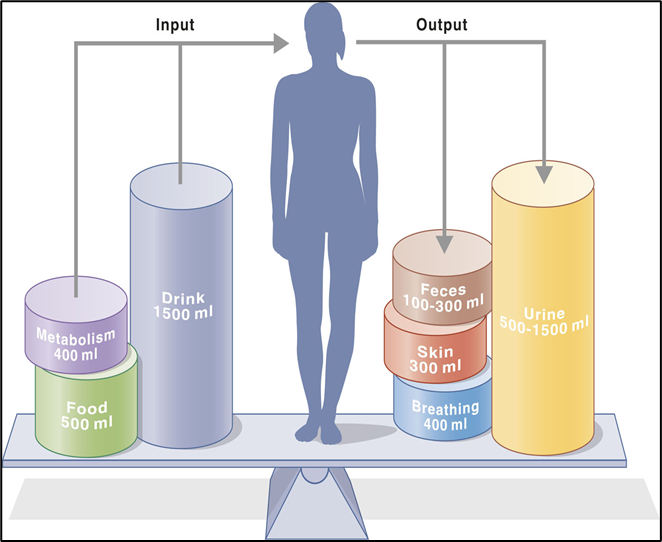
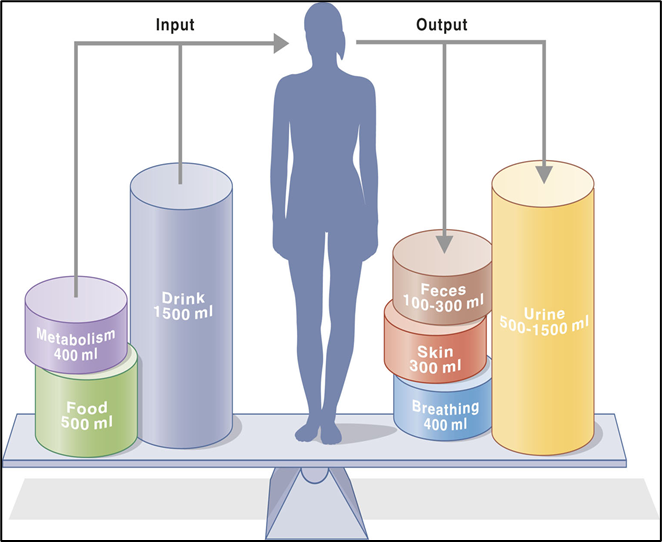
sensible vs insensible water loss
sensible = losses you can see ex urine
insensible= cant see ex evaporation
what hormones along with the kidney’s help with water retention
arginine vasopressin (AVP)
renin-angiotensin-aldosterone system (RAAS)
atrial natriuretic peptide (ANP) = excretes water if excess
brain natriuretic peptide (BNP) = release excess from ventricles
aldosterone
antidiuretic hormone (ADH)
creatinine and BUN lab values are useful
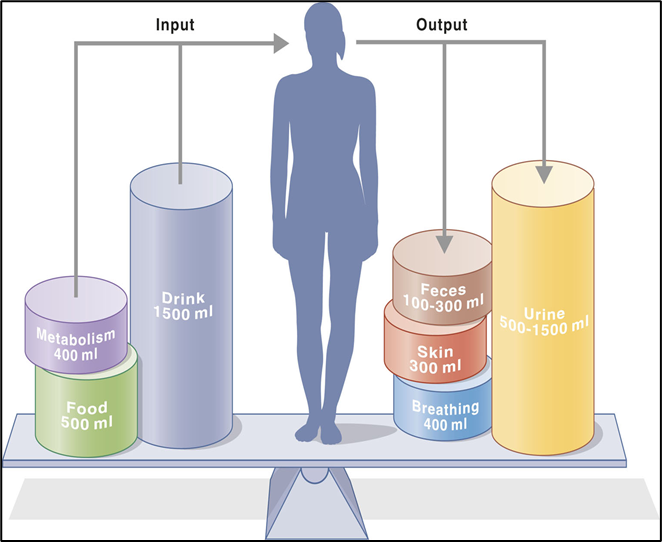
aldosterone fx
regulates renal excretion of Na+ and water through renin-angiotensin-aldosterone system
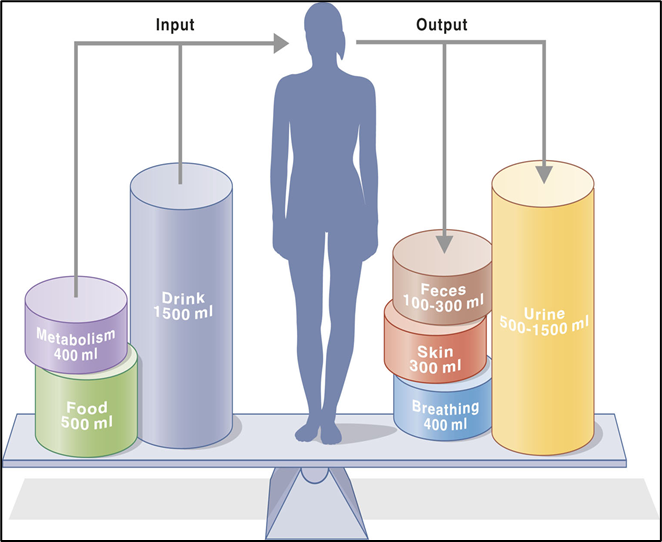
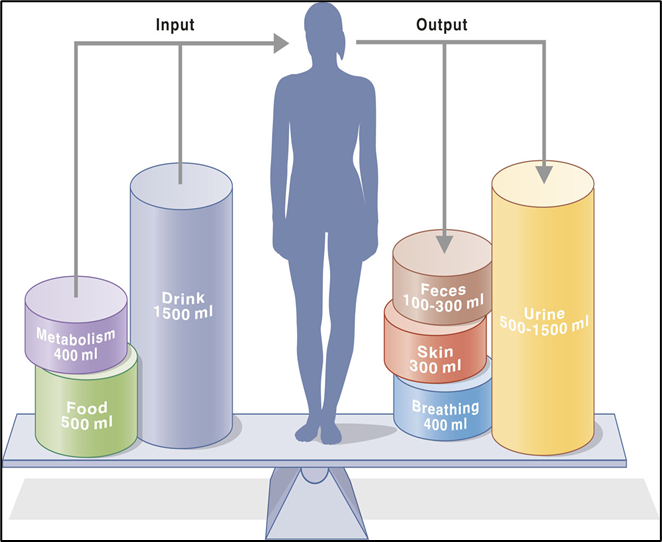
antidiuretic hormone (ADH) fx
regulates excretion of water (but not Na+) in kidneys
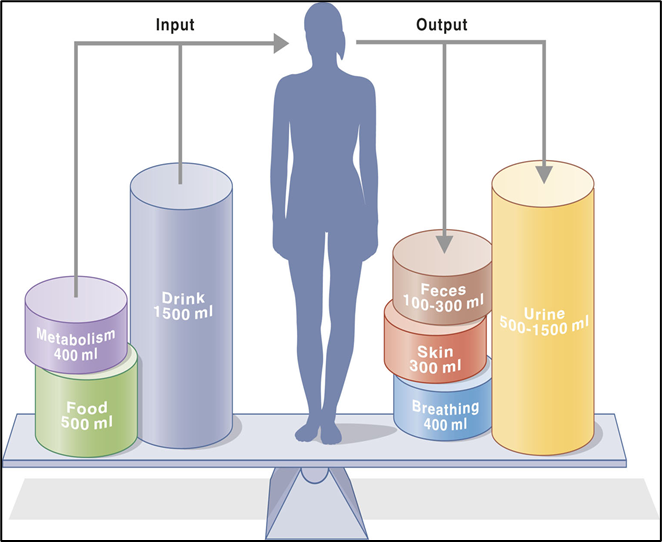
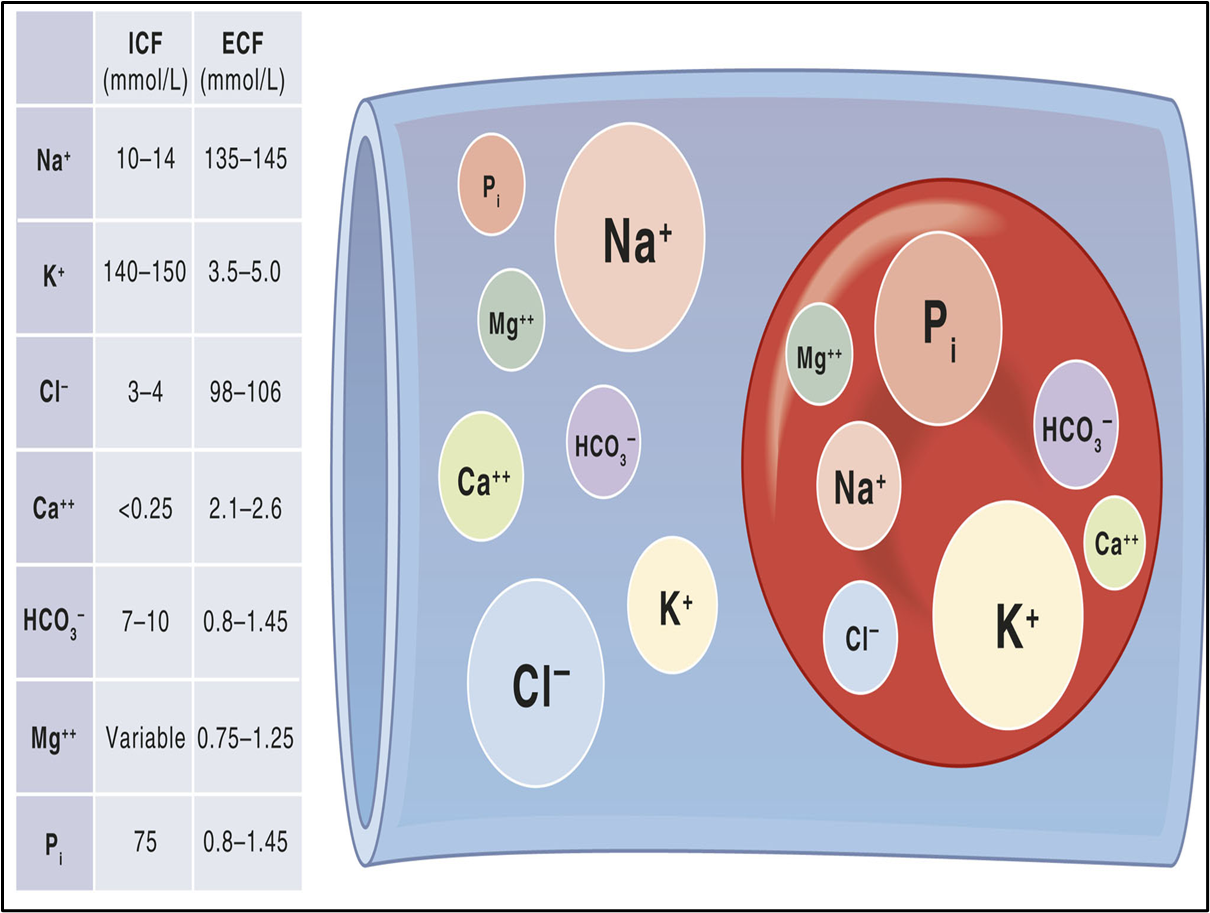
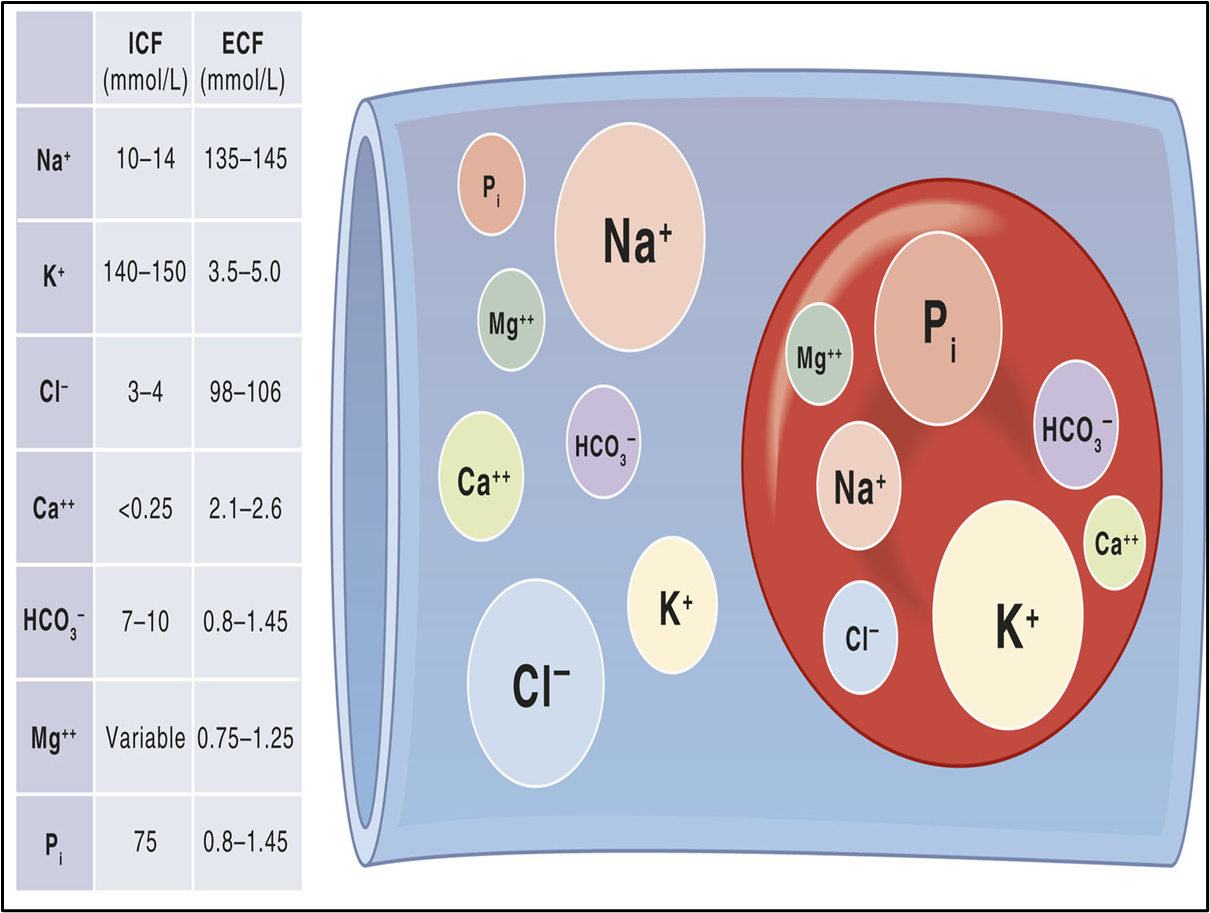
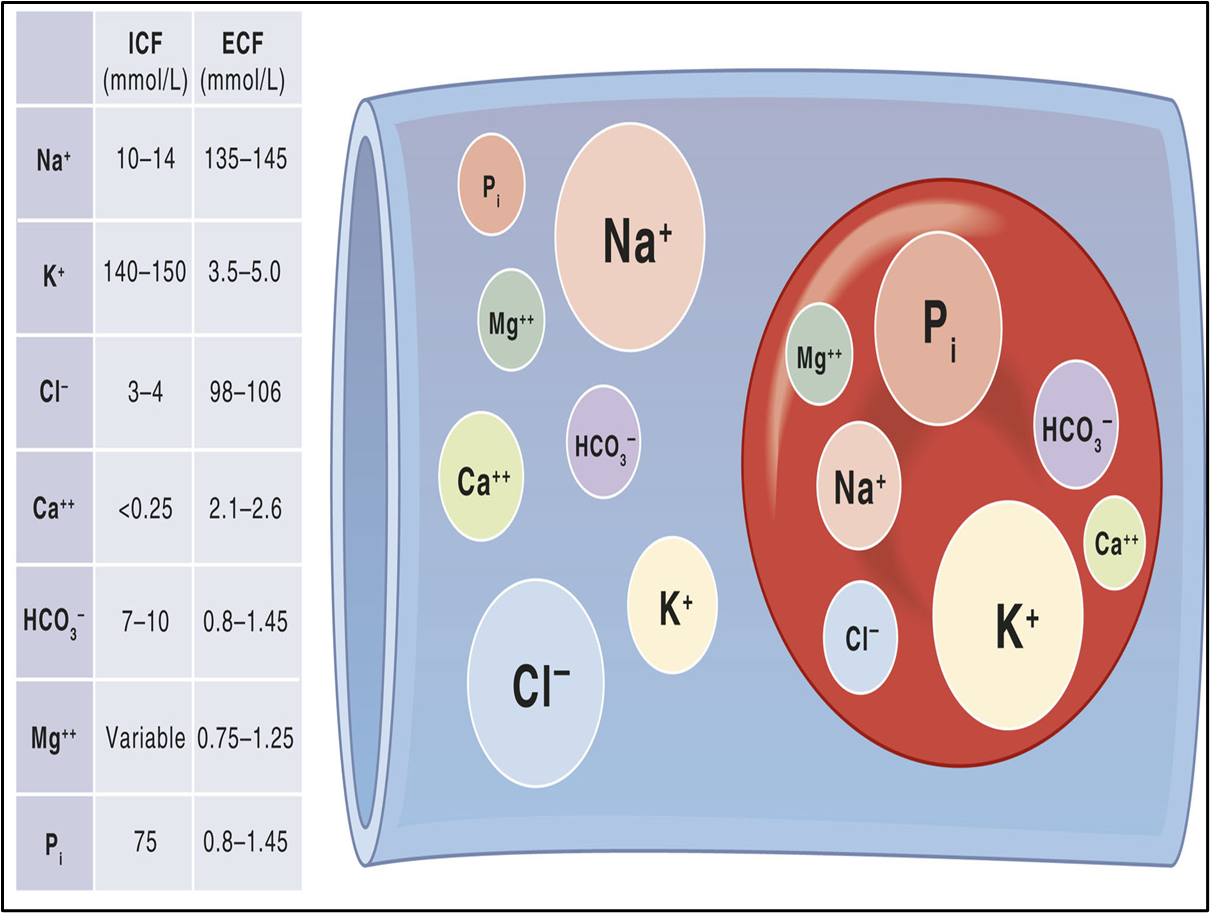
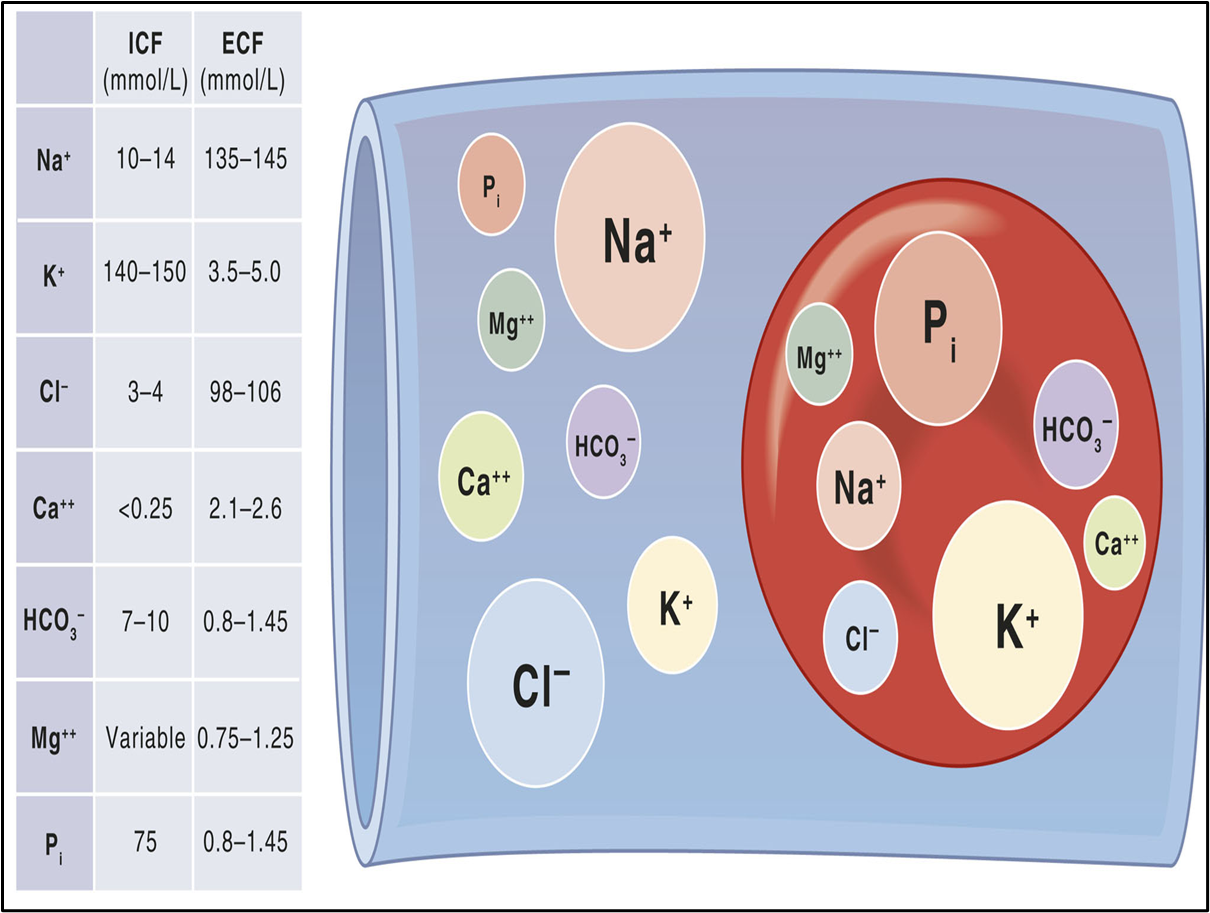
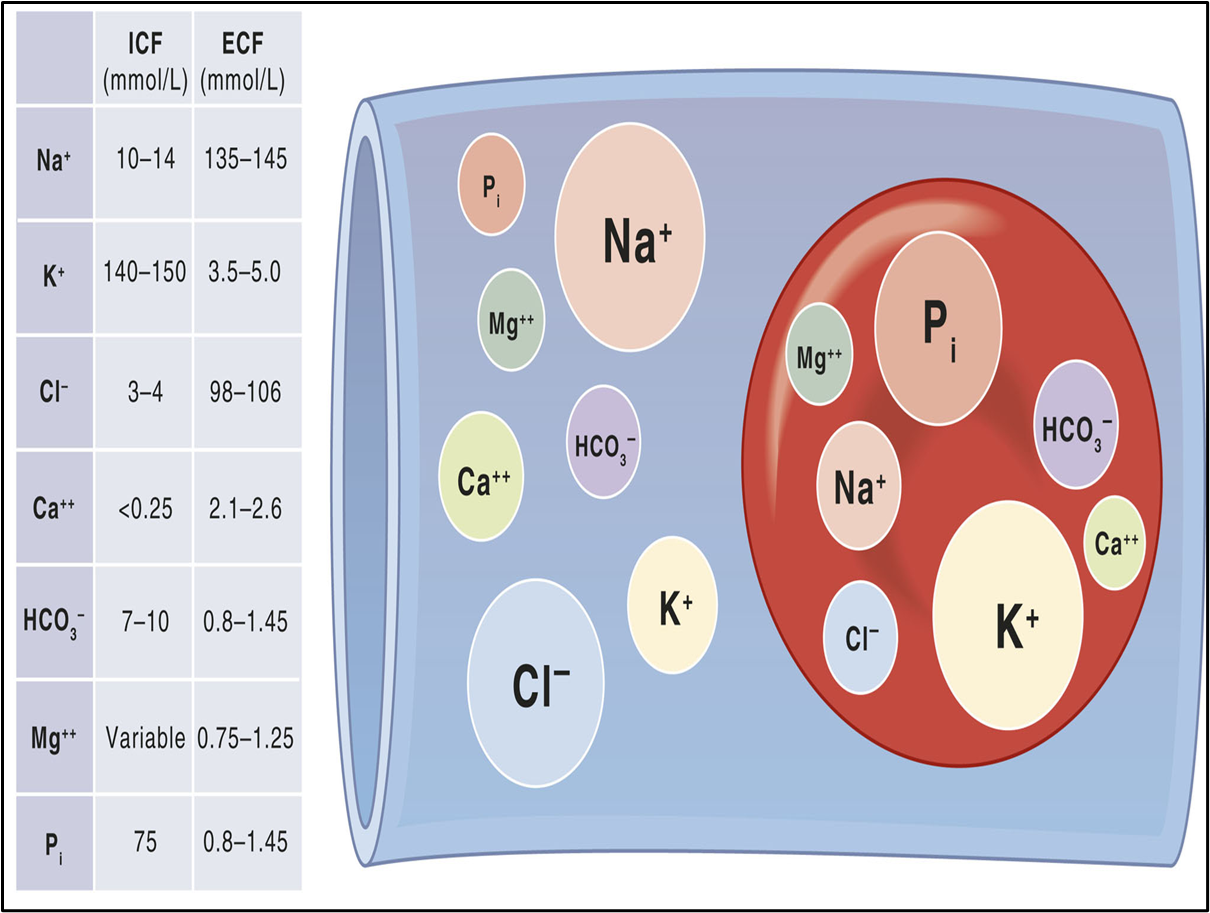
electrolytes pic
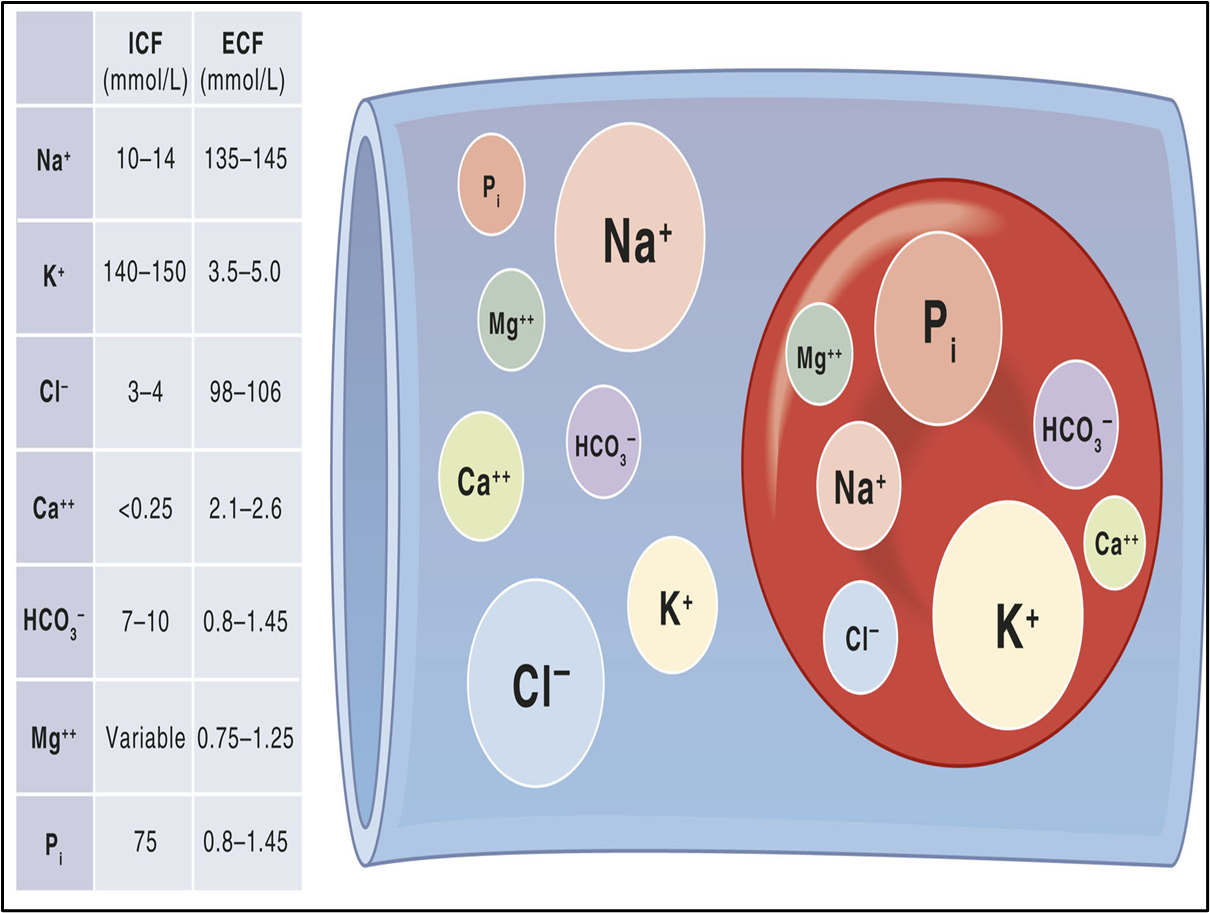
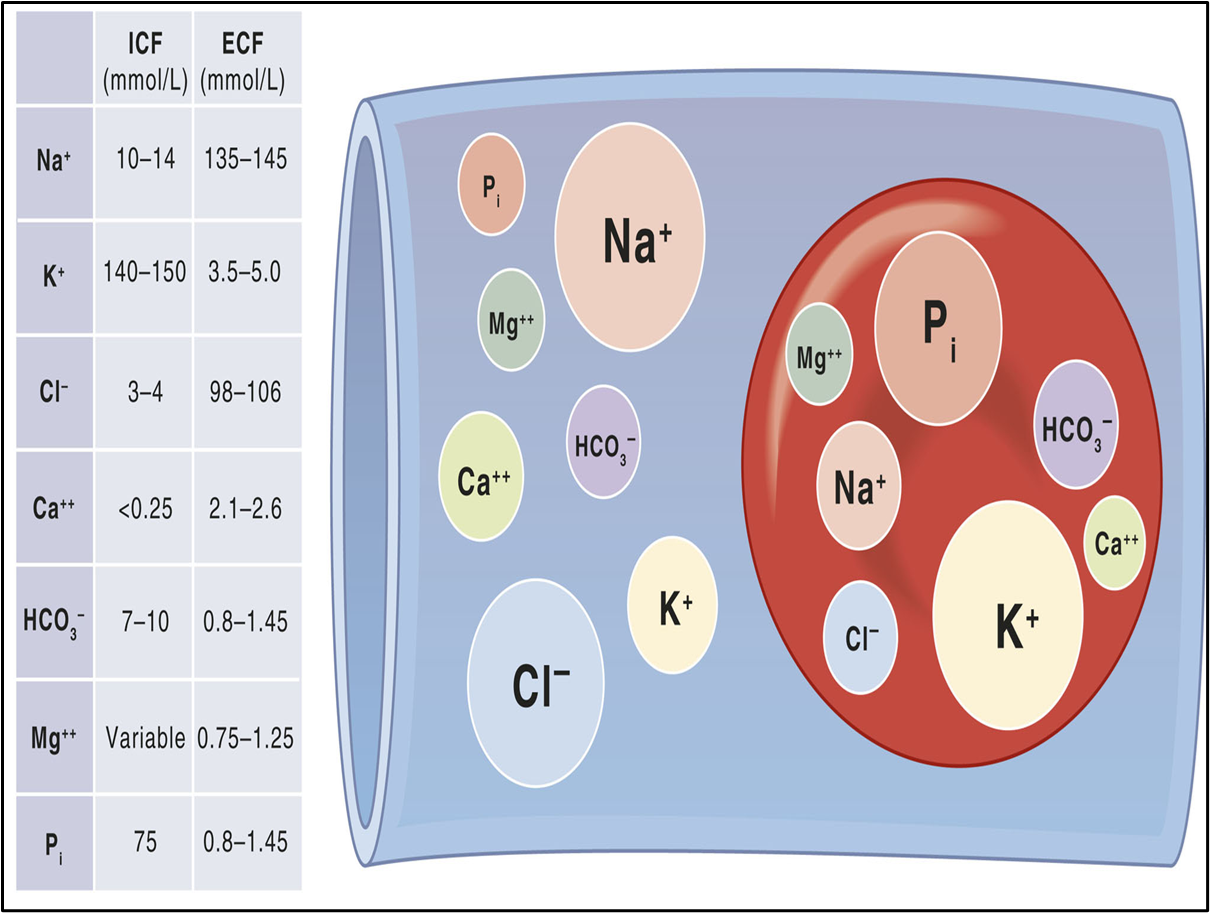
Phosphate characteristics/fx (PO4)
0.8-1.45 mmol/L
major intracellular anion
plays role in muscle contraction, acid base balance, RBC functioning, formation of ATP
low levels=decreased energy levels
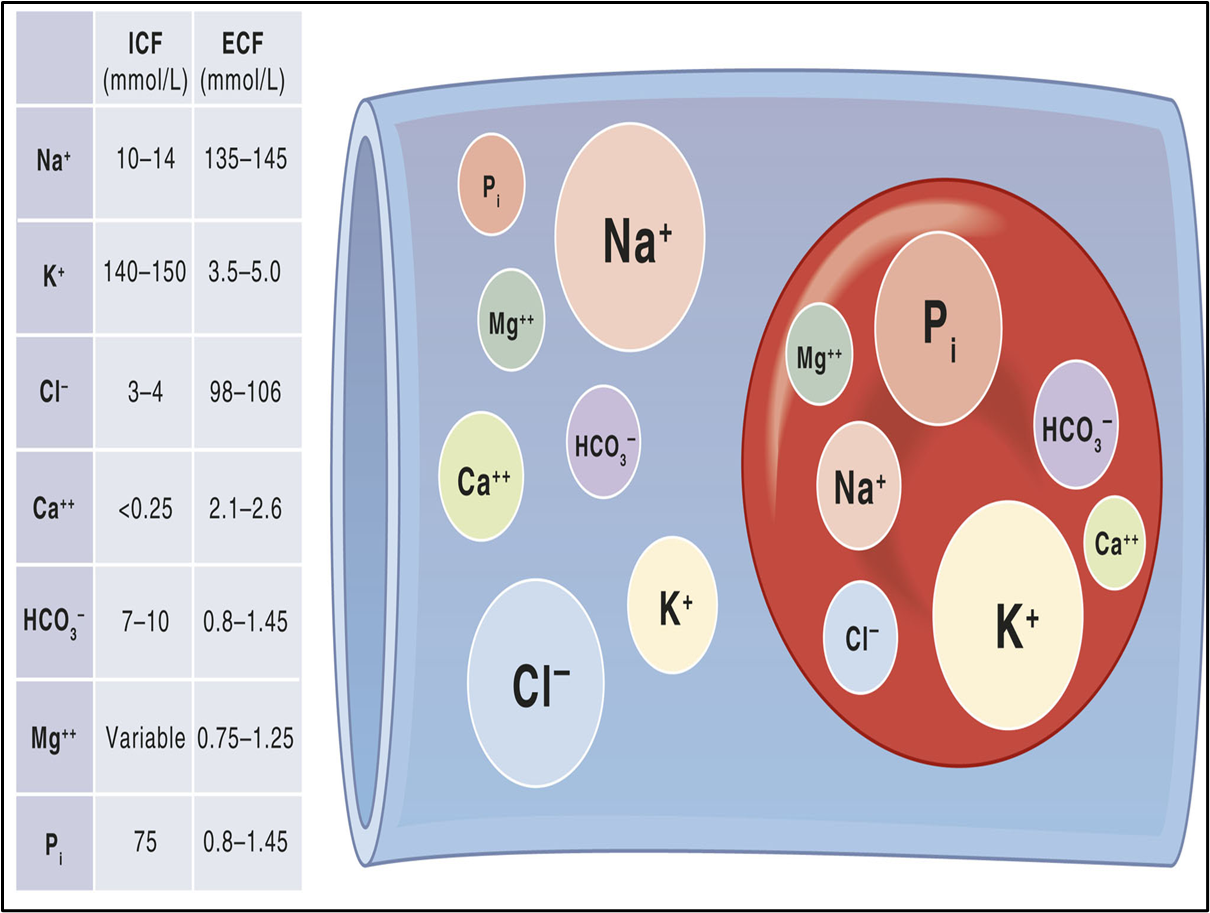
Hyperphosphatemia cause (high phosphate)
causes=increased intake, renal failure
signs=tetany/hyperreflexia, N/V
may need phosphate binders/Ca supplementation if excessively high and symptomatic
Hypophosphatemia (low phosphate) causes
lack of intake and refeeding syndrome (depleted intracellular stores = glucose load = insulin shifting phosphorus intracellular)
signs=muscle weakness, paresthesia, overall low energy
supplementation IV/PO required
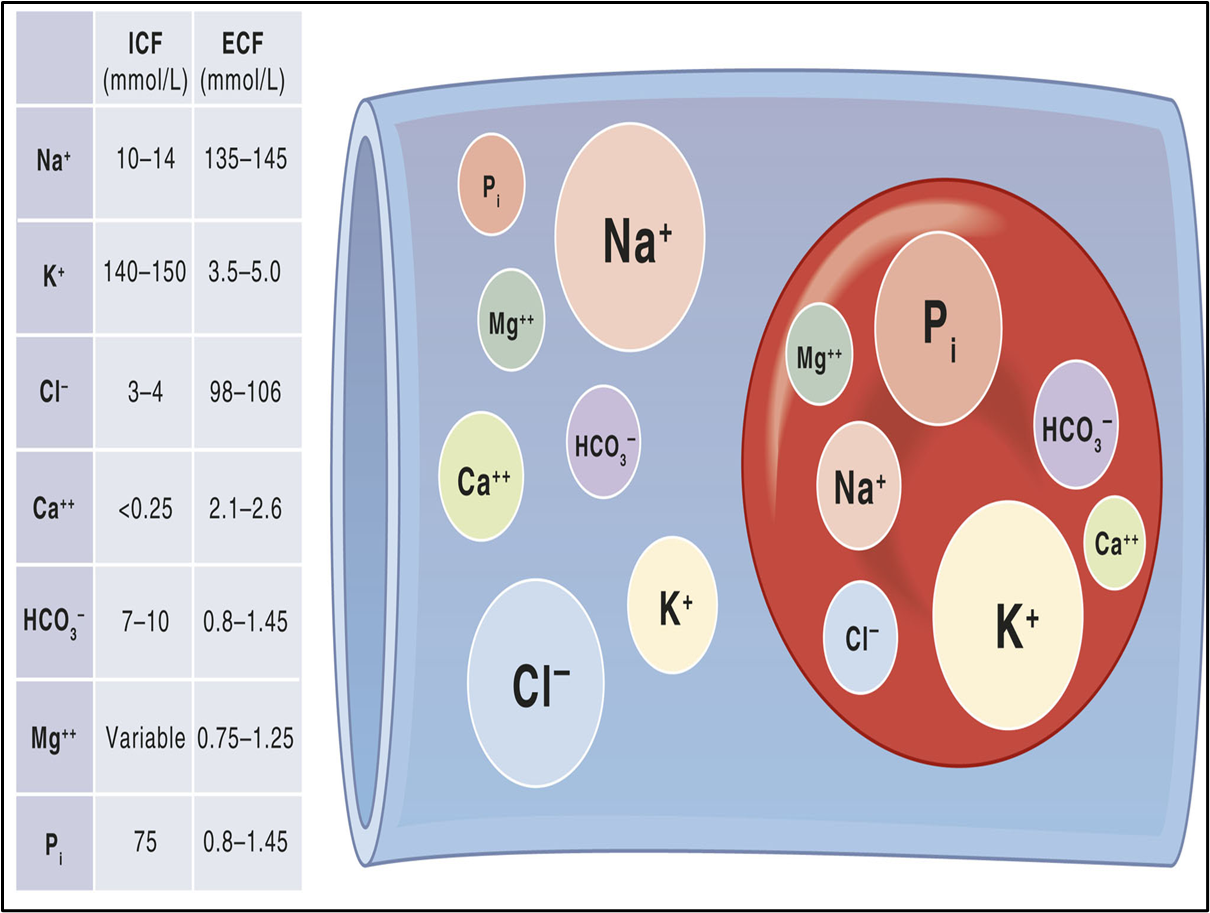
calcium characteristics
2.2-2.6 mmol/L
99% of Ca in body contained in bone
remaining Ca is either bound to albumin or ionized
ionized form is also important to measure (1.1-1.3 mmol/L) because it plays a role in muscle contraction (including cardiac) and coagulation
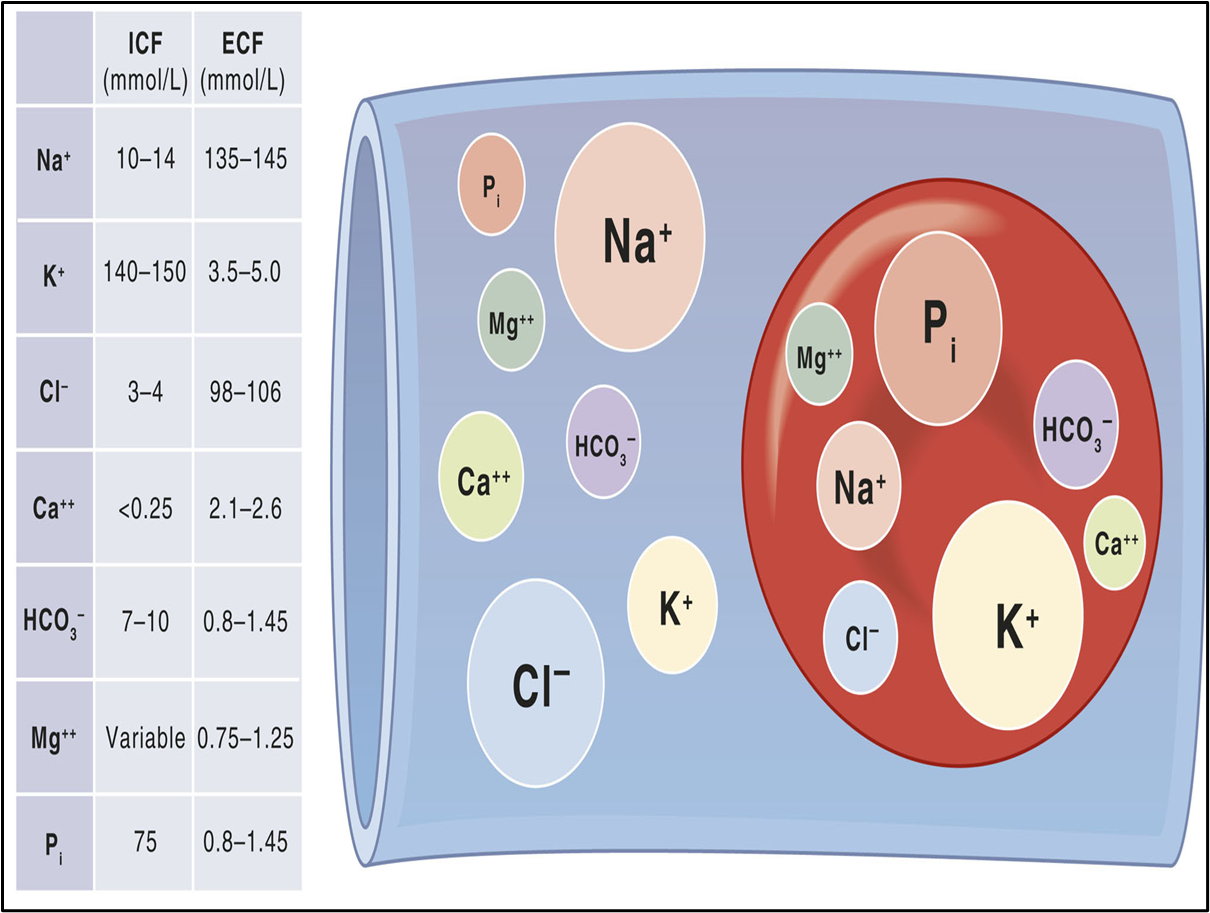
Hypercalcemia (high Ca) causes and signs
increased intake and thyroid malignancy (increased PTH), signs:
flaccidity or lack of tone in muscle tissues (including cardiac, leading to dysrhythmias and/or cardiac arrest if significant)
N/V
CNS changes
what is the tx for hypercalcemia
acute IV dilution with NS and excretion with IV lasix
long term=treat malignancy
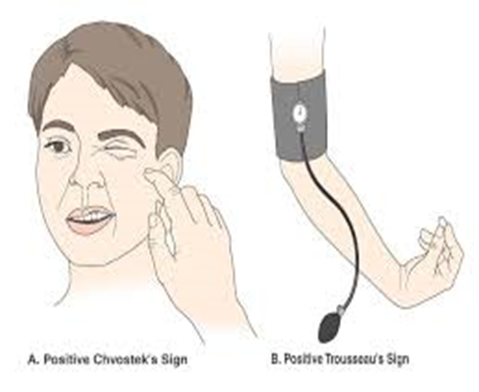
Hypocalcemia causes and signs
lack of intake, lack of weight bearing activity, hypothyroid dysfunction, signs:
seizures
tetany
spasms
cognitive dysfunction
dysrhythmias/hypotension if profound
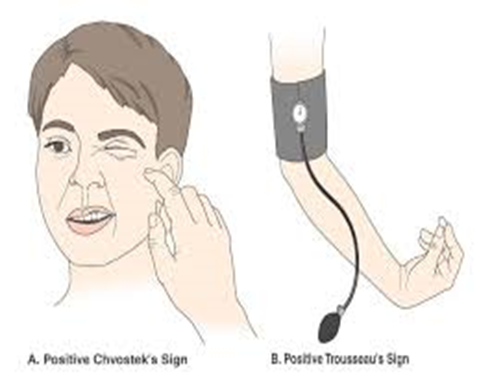
what is the tx for hypocalcemia
IV calcium if severe
PO if asymptomatic
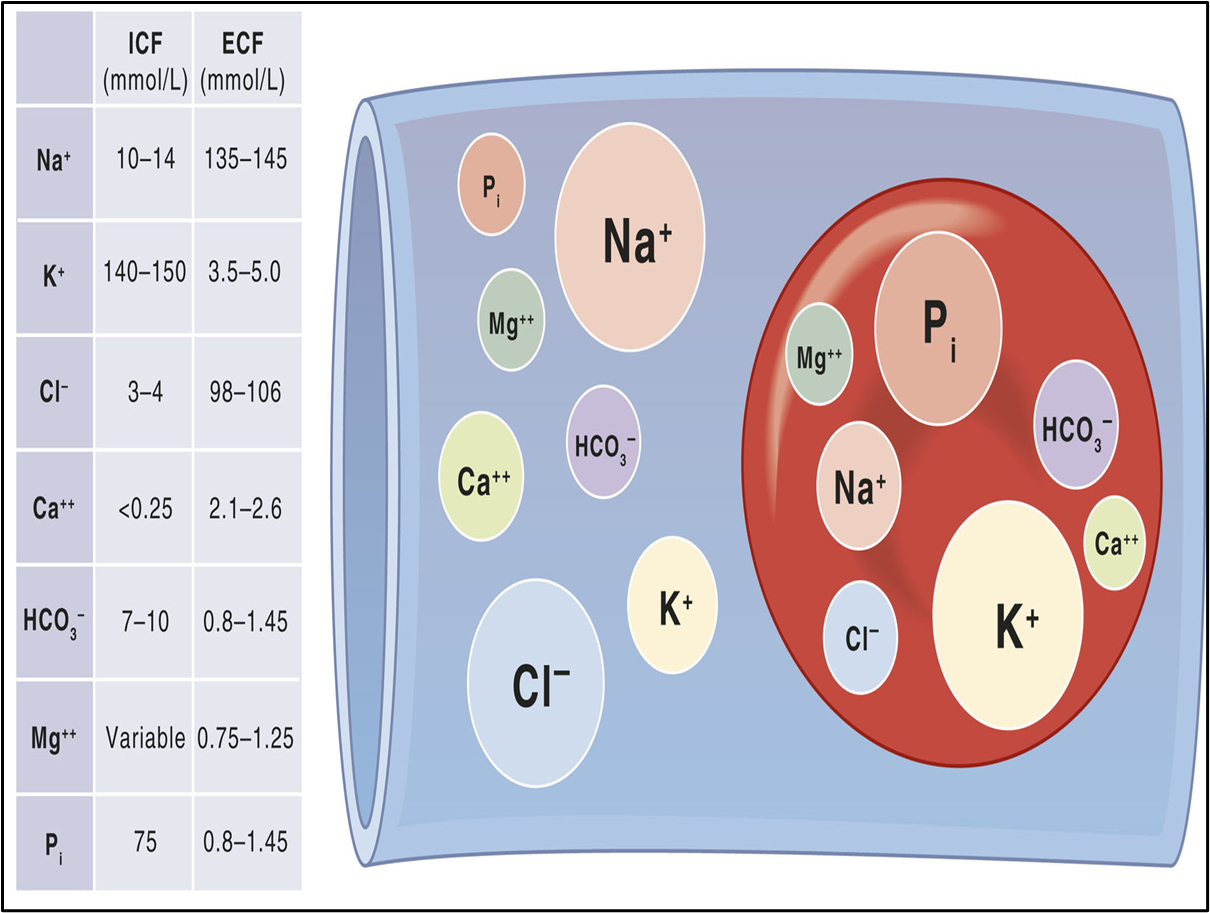
magnesium characteristics
0.72-0.93 mmol/L
2nd most abundant intracellular cation next to potassium
big role in regulating neuromuscular activity and cardiac contractility
exerts its effect on the CVS through peripheral vasodilation=decreased BP/CO
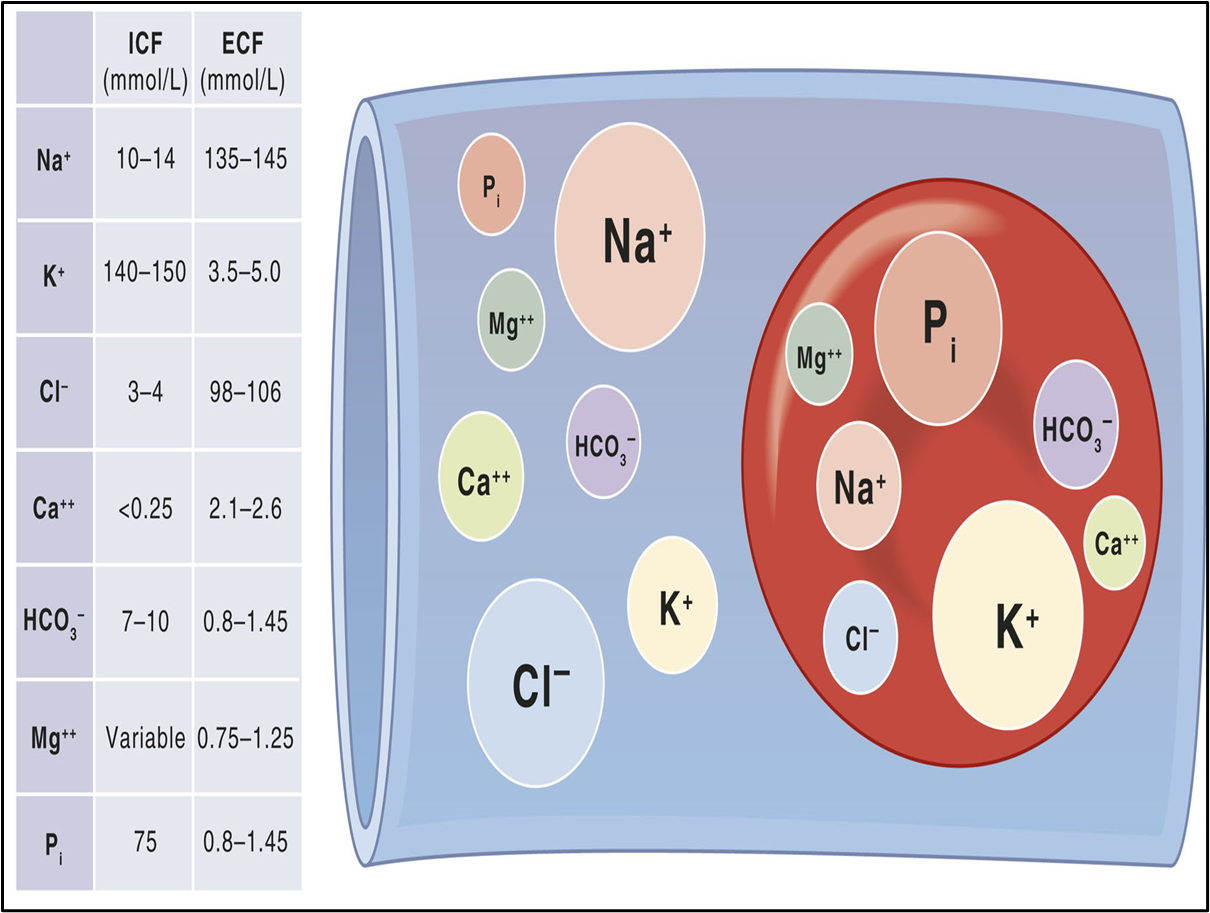
Hypermagnesemia causes and signs
increased intake and renal failure, signs:
muscles too relaxed
weakness
hypotension
decreased deep tendon reflexes (DTRs)
may require dialysis if excessively high/symptomatic
Hypomagnesemia causes and signs
lack of intake as in chronic alcoholism, GI/renal losses and changes in Mg distribution (ex burns)
tachycardia
neuromuscular irritability
tremors
increased DTRs
seizures
hypomagnesemia tx
IV or PO supplementation
can exacerbate or predispose arrhythmias such as atrial fibrillation
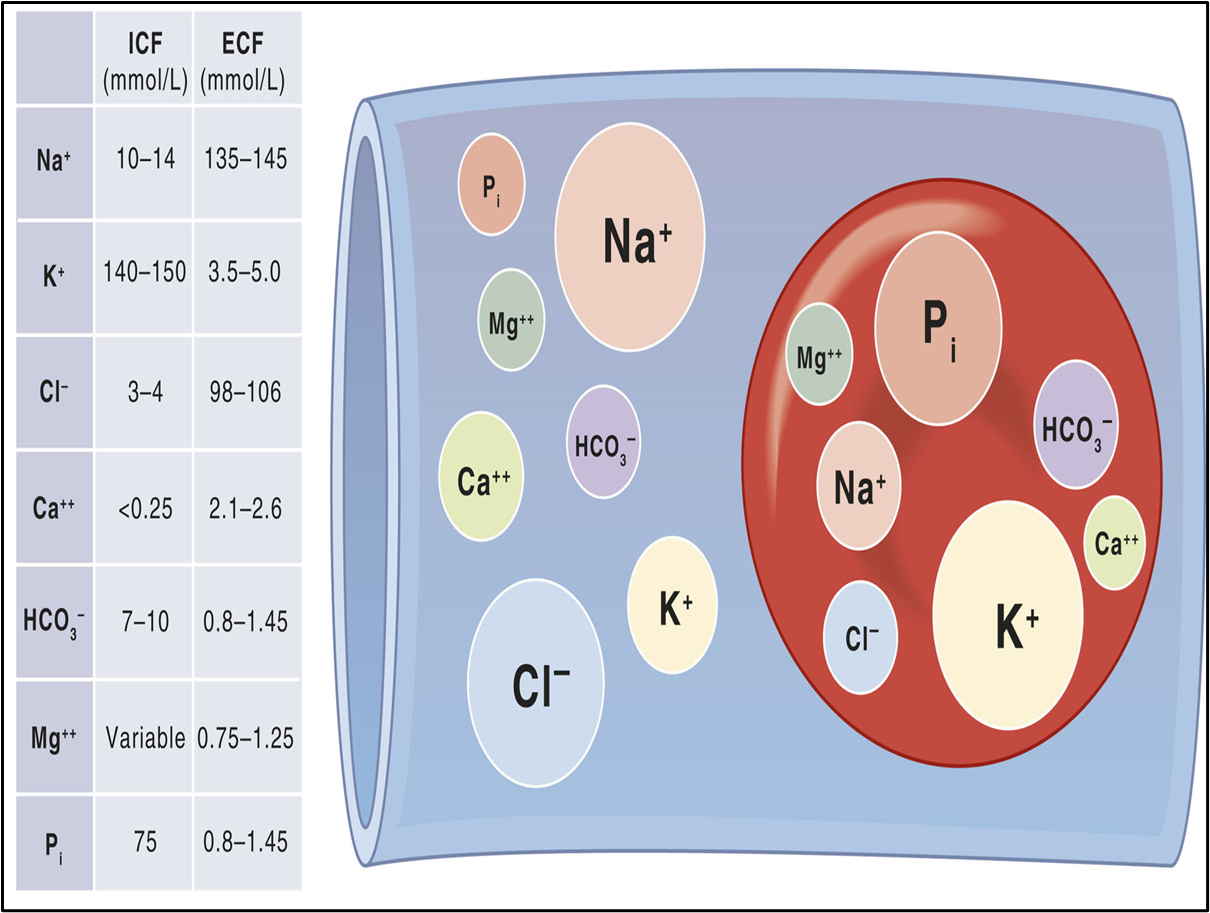
sodium characteristics
135-145 mmol/L
most abundant electrolyte in the ECF, primary regulator of ECF volume
helps establish electrochemical state necessary for muscle contraction and the transmission of nerve impulses
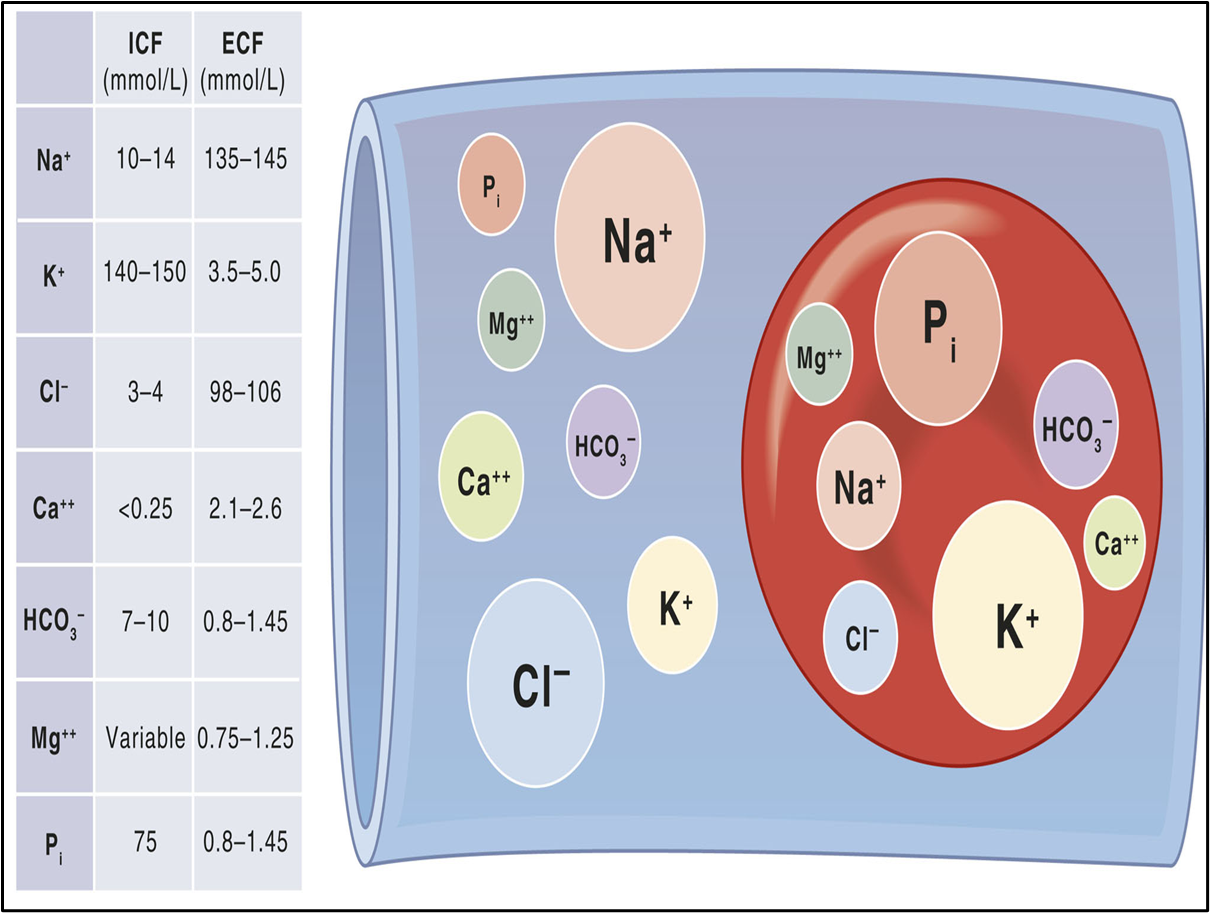
what happens when you increase or decrease Na
increase = increase in ECF volume
decrease = decreased ECF volume
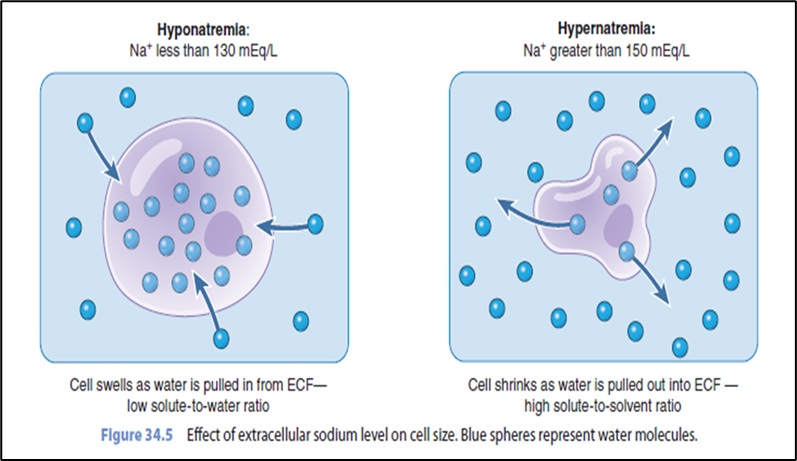
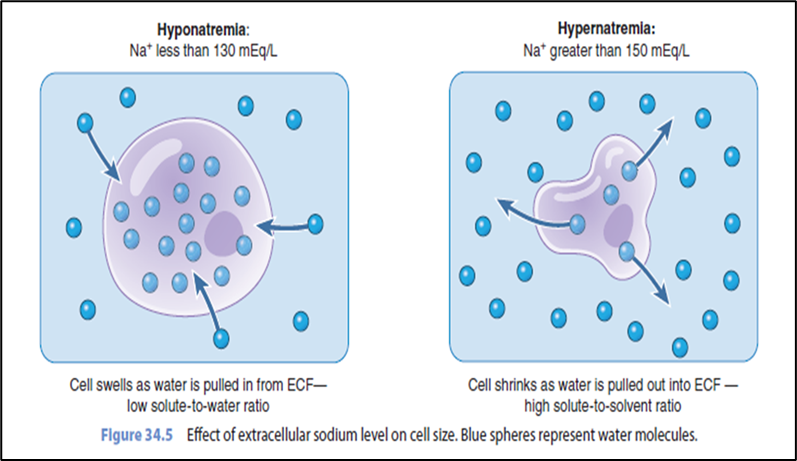
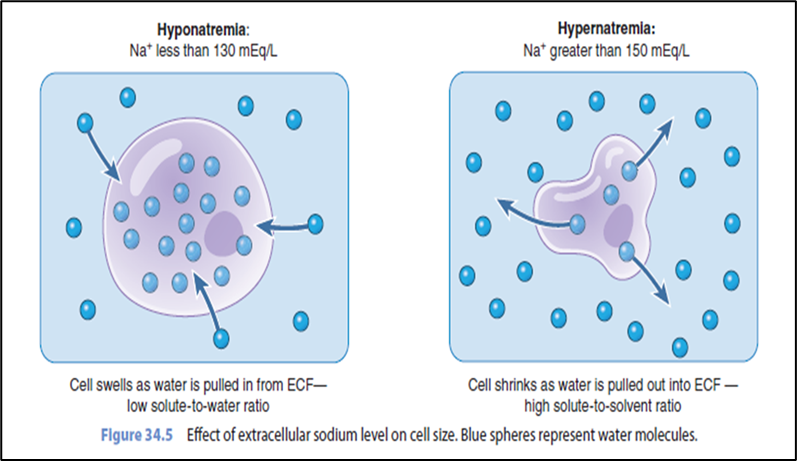
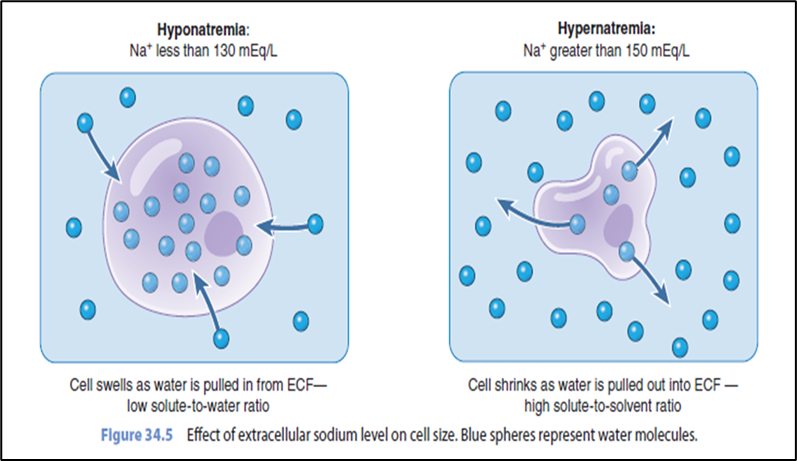
Hypernatremia causes
lack of fluids or excessive Na intake
ex dehydration, DI, diarrhea, heatstroke, salt and water consumption
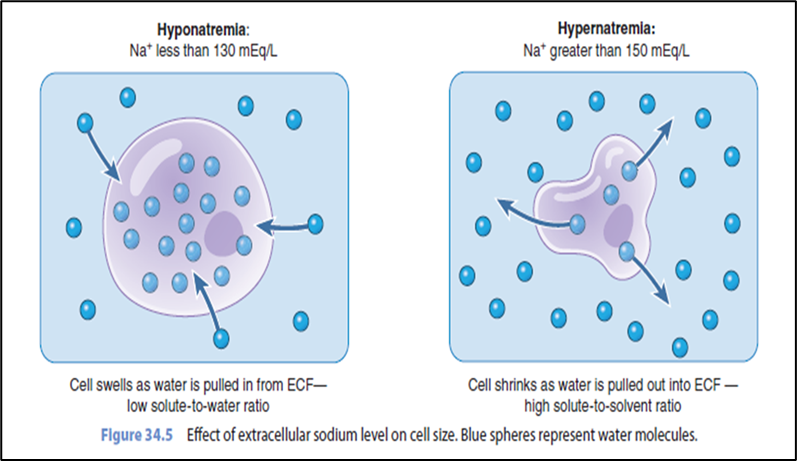
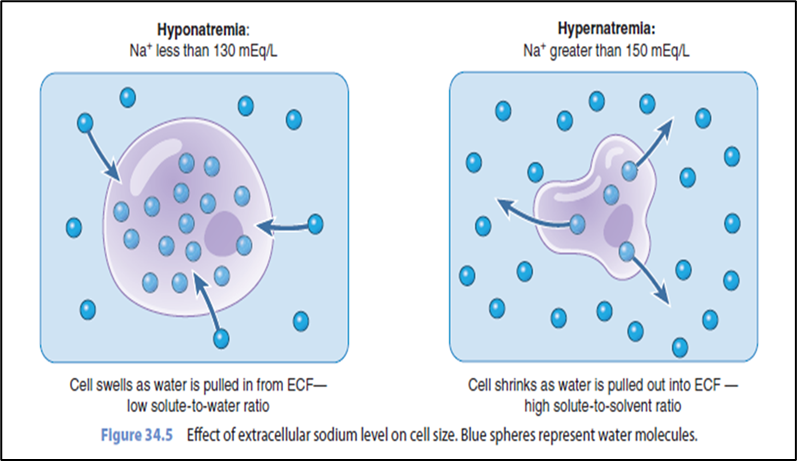
hypernatremia signs and tx
restlessness
hallucinations
seizures
muscle twitching
thirst
dry mucous membranes
tx=administering D5W to dilute serum
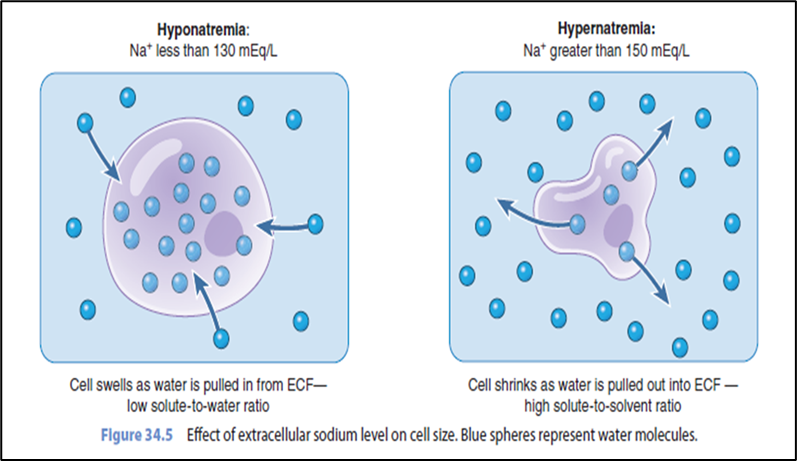
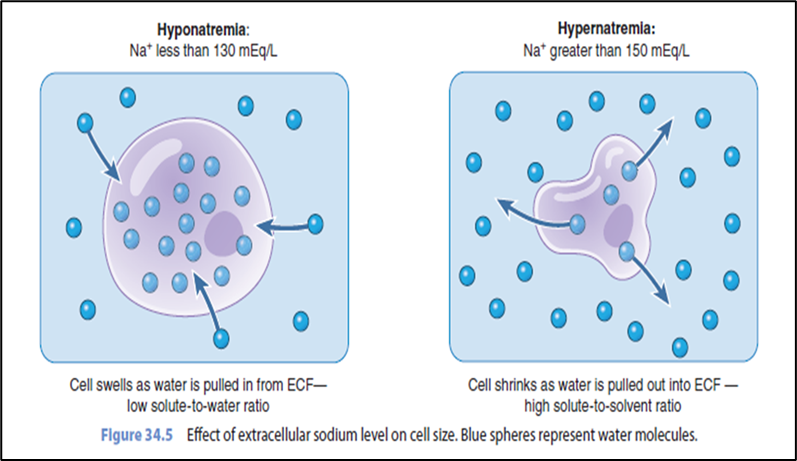
Hyponatremia causes
anything that causes Na loss or dilution
ex water intoxication, SIADH, diuretics, renal disease
hyponatremia signs and tx
confusion
seizures
muscle twitching
N/V
fatigue
if severe, tx is more complex and requires tight monitoring
critical hyponatremia level and tx
<120 mmol/L, needs to be corrected slowly and Na levels checked at least q4h
3% hypertonic saline infusion or bolus
salt pills (less commonly used and harder to predict effect)
increase level no faster than 12 mmol/L in 24 hrs
fluid restriction or restricting diuretics
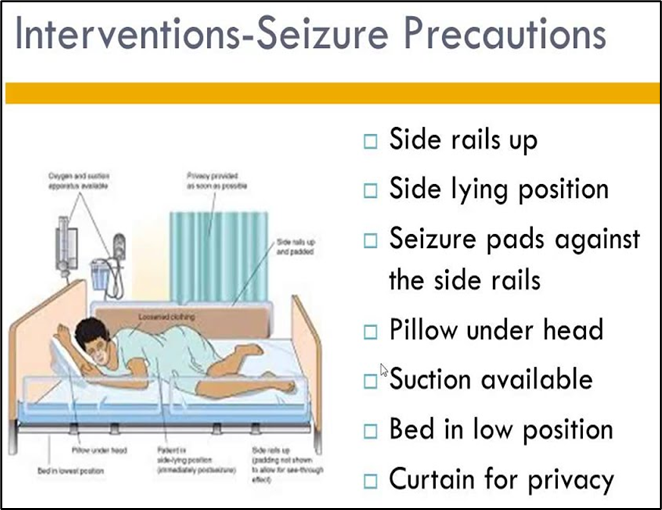
Why is it so important to correct critically low sodium slowly?
may cause osmotic demyelination=permanent brain damage
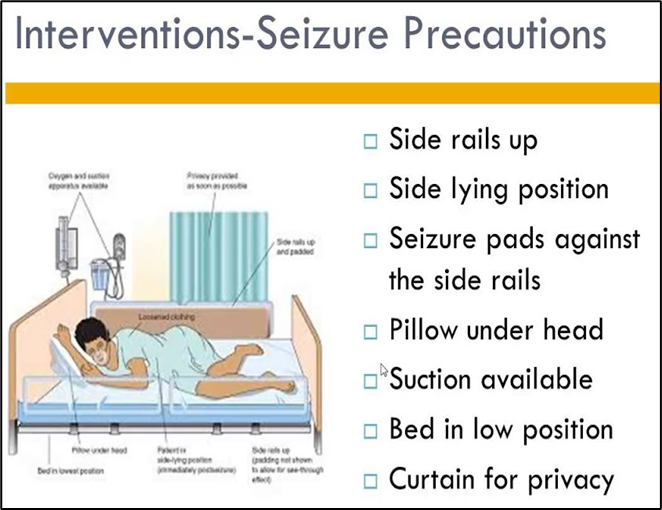
for severe hyponatremia, seizure precautions may be needed
potassium characteristics/fx
3.5-5 mmol/L
95% of K in the body is intracellular
most abundant (+) electrolyte inside cells with a normal [ ] of approx 150 mEQ/L
promotes skeletal muscle fx
maintains nerve impulse conduction in the heart
Hyperkalemia: causes
decreased excretion, high K intake, extracellular shifts
the more severe condition that requires immediate attention
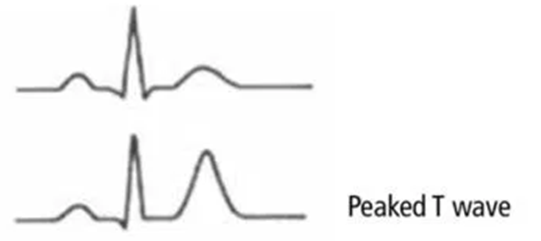
hyperkalemia signs
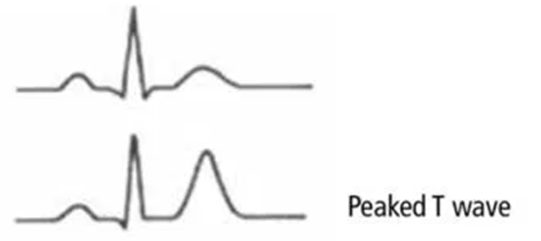
tall peaked T waves
muscle twitching/cramps (early)
weakness/paralysis (late)
Hypokalemia causes and signs
GI/renal loss, intracellular shifts and poor intake
muscle weakness/spasm
numbness/tingling
fatigue
bradycardia
lightheadedness
flat T wave
what is the tx focus for hyperkalemia
correct serious cardiac conduction abnormalities=calcium chloride
drive K into cell=insulin IV followed by dextrose IV
eliminate K from the body=lasix and kayexalate, dialysis
what is the tx focus for hypokalemia
bananas, melons, raw spinach
switch to K sparing diuretics
oral supplements (K-Dur)
IV supplements delivered with IV pump
be aware of safety and scope of practice especially if giving potassium IV via secondary line (IV piggyback)
what are the 2 products that are signs of liver failure
ammonia
albumin 35-50 g/L
ammonia levels and characteristics
0-35 umol/L
converted by liver into urea to be excreted by the kidneys
liver failure=increase in toxic levels of ammonia, decrease in blood urea nitrogen (BUN) = hepatic encephalopathy
neurological changes can be subtle to more apparent cognitive changes
what are the other liver lab tests that can be done
GGT (gamma glutamyl transpeptidase)
ALP (alkaline phosphatase)
both may elevate in a person with liver disease
what are some alterations in fluid balance
hypovolemia = not enough circulating fluids
dehydration
third spacing
hypervolemia
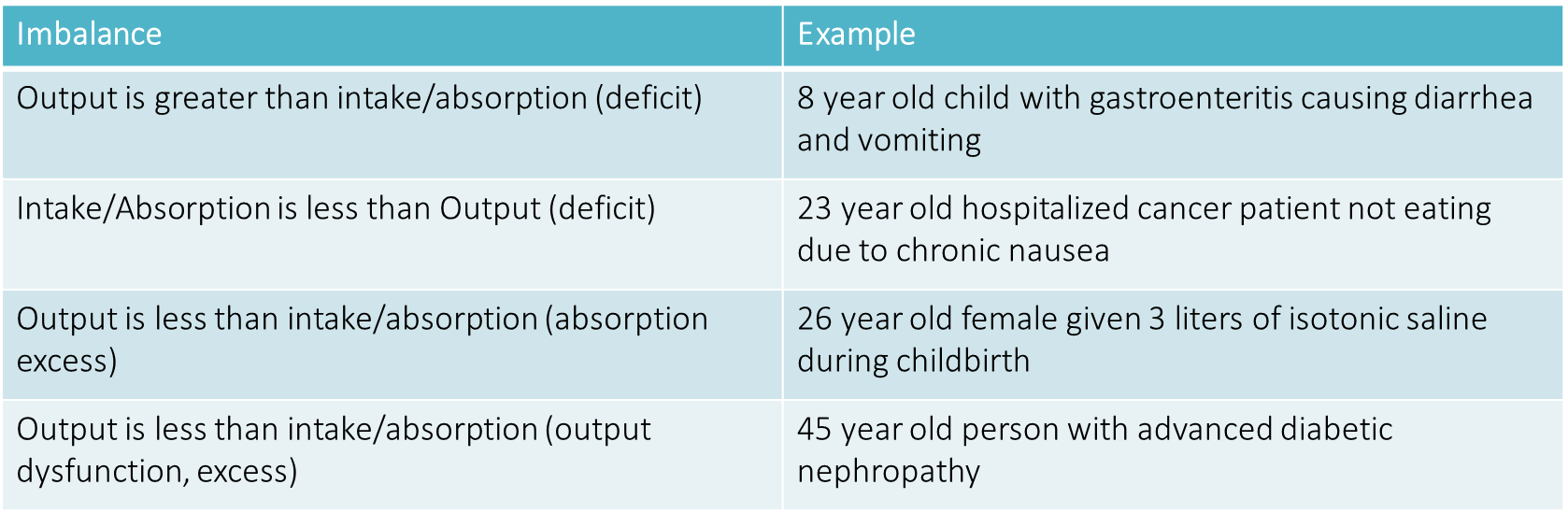
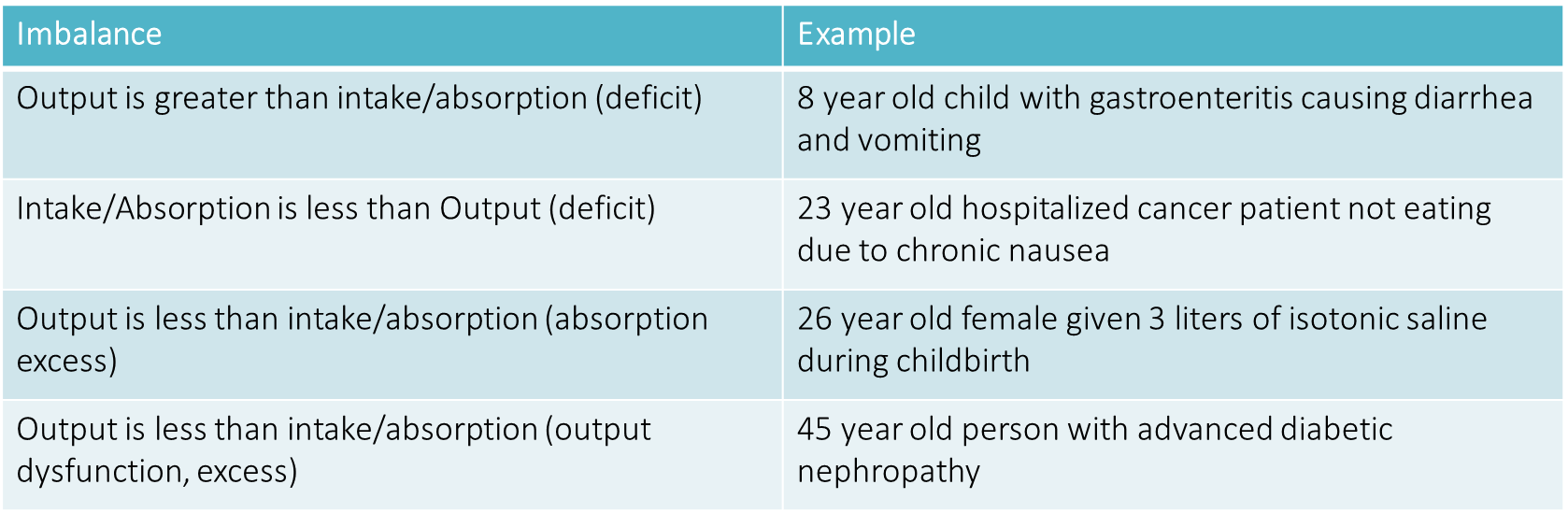
Causes of Fluid/Electrolyte Imbalance.
N&V, dehydration, surgery/trauma, burns, bleeding, liver/kidney problems
regulated by GI, endocrine, vascular, renal
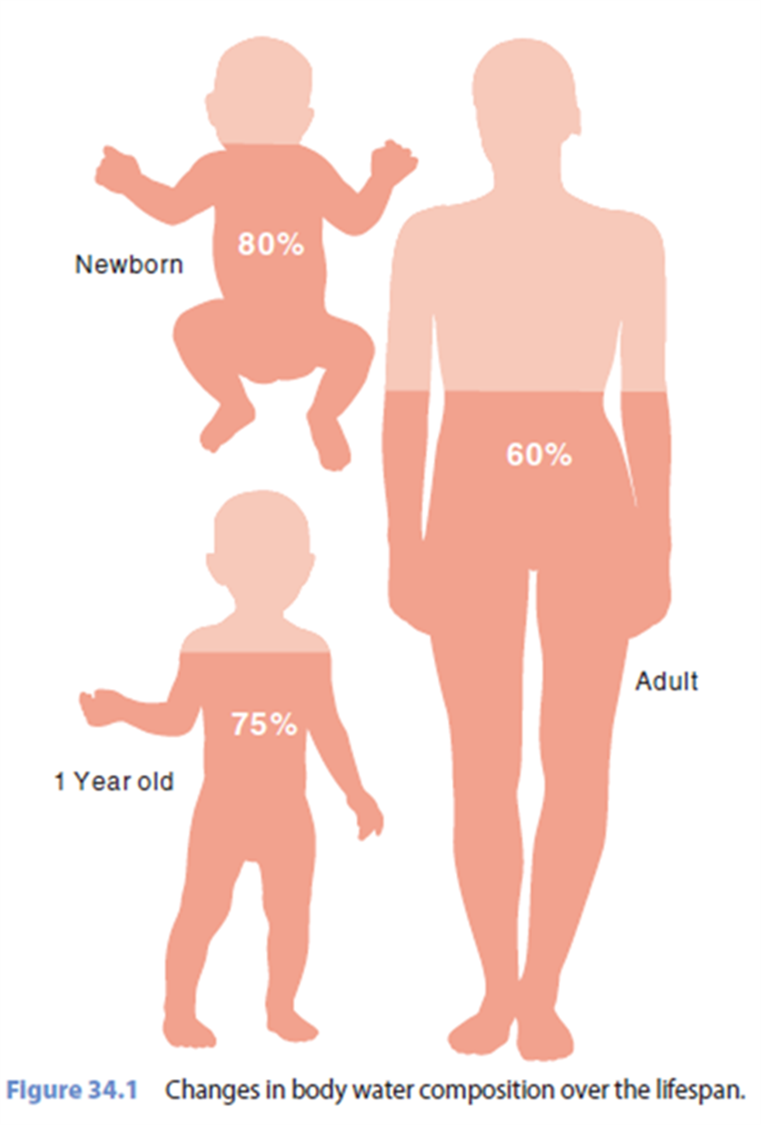
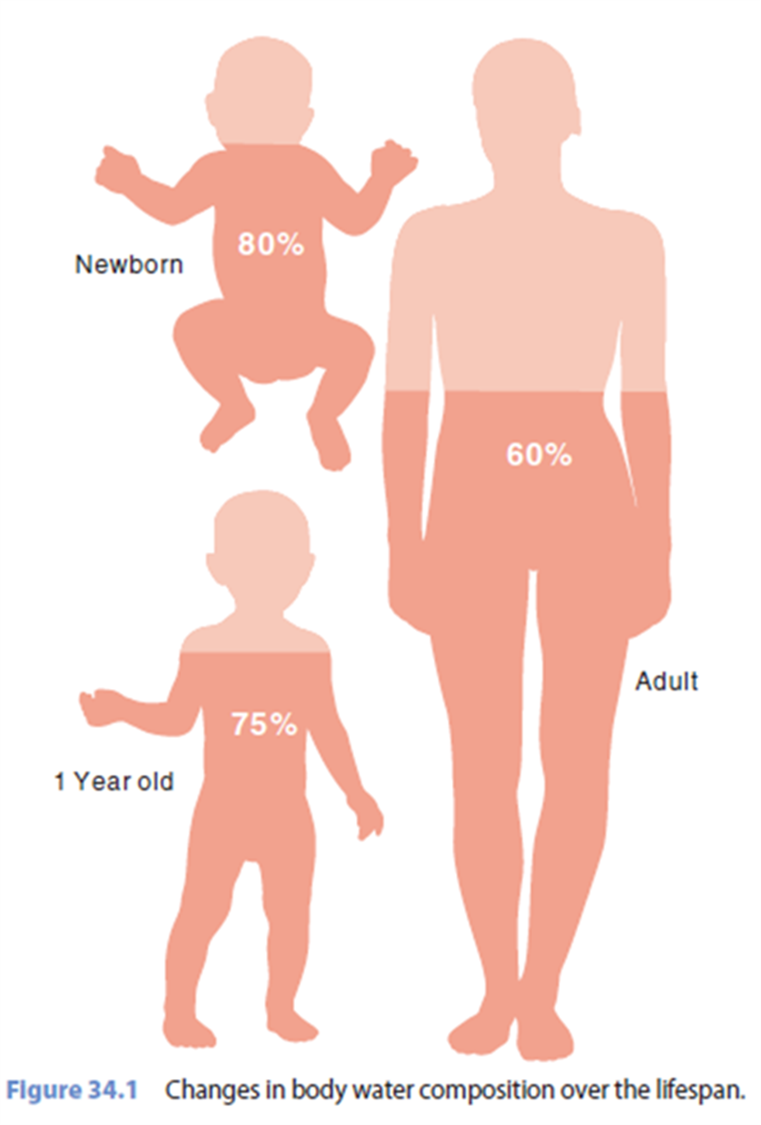
what populations are at risk of fluid/electrolyte imbalance
infants = dehydrate fast
children
some people with mental health issues ex eating disorders
older adults
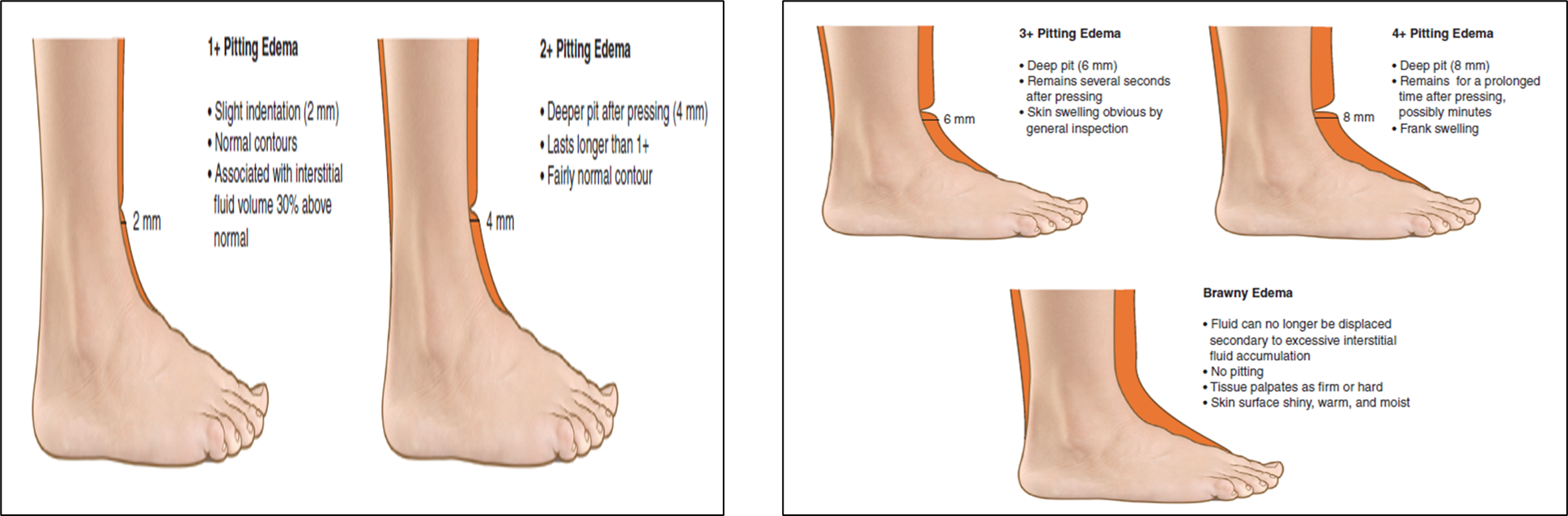
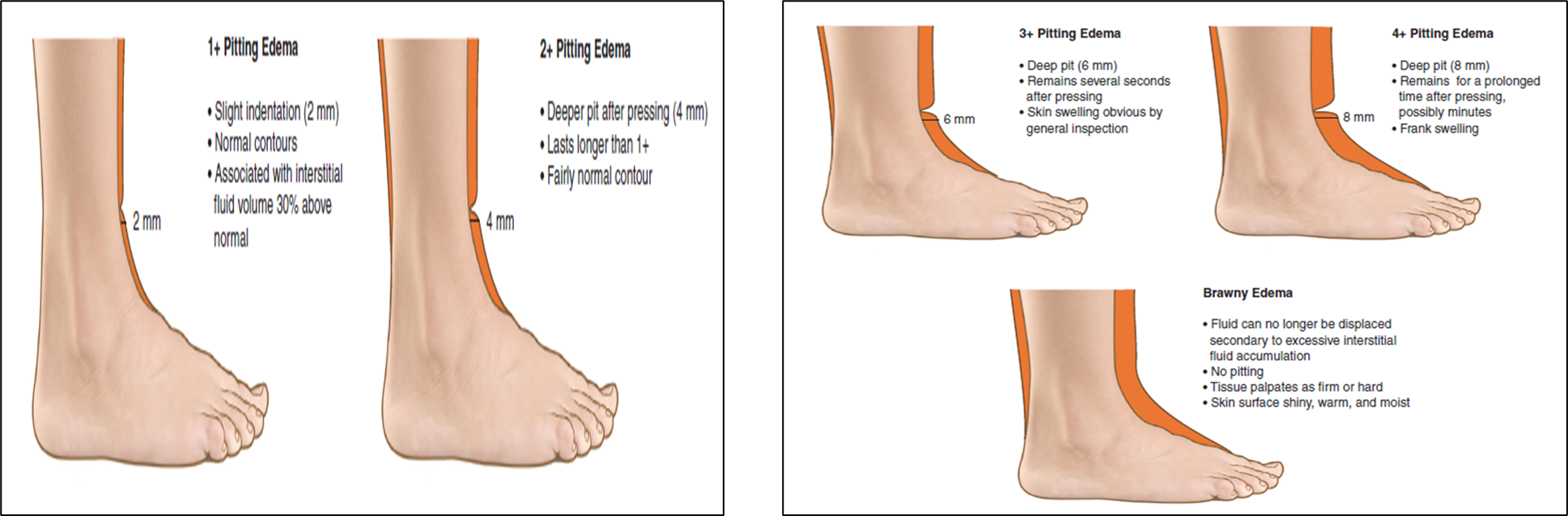
edema scale pic
Fluid Volume Deficit: Nursing Management/what we can do
take I&O and daily weights
assess for breath sounds, edema, and other symptoms
monitor responses to meds such as diuretics
promote adherence to fluid restrictions and pt teaching related to sodium/fluid restrictions
monitor and avoid sources of excessive Na, include meds
promote rest
oral hygiene
provide skin care and positioning or turning
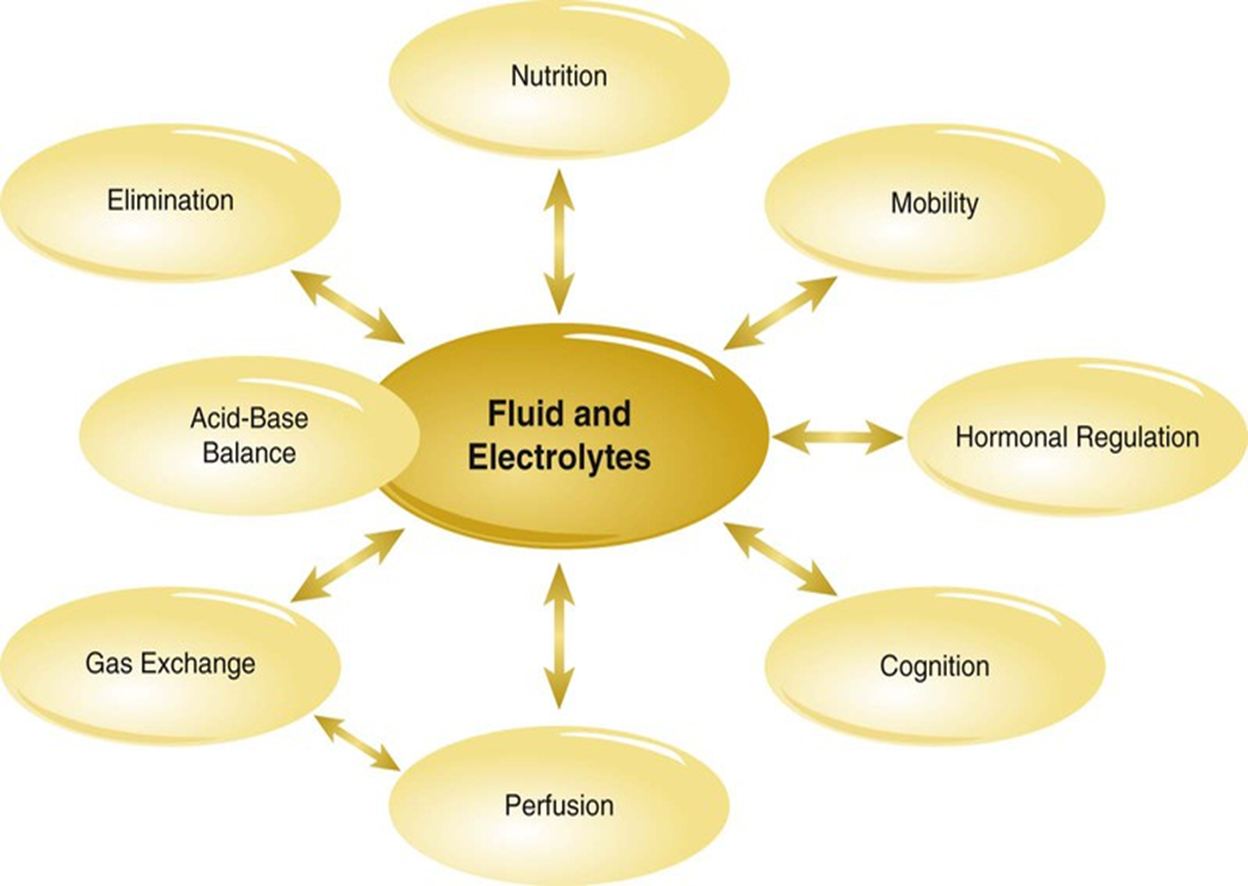
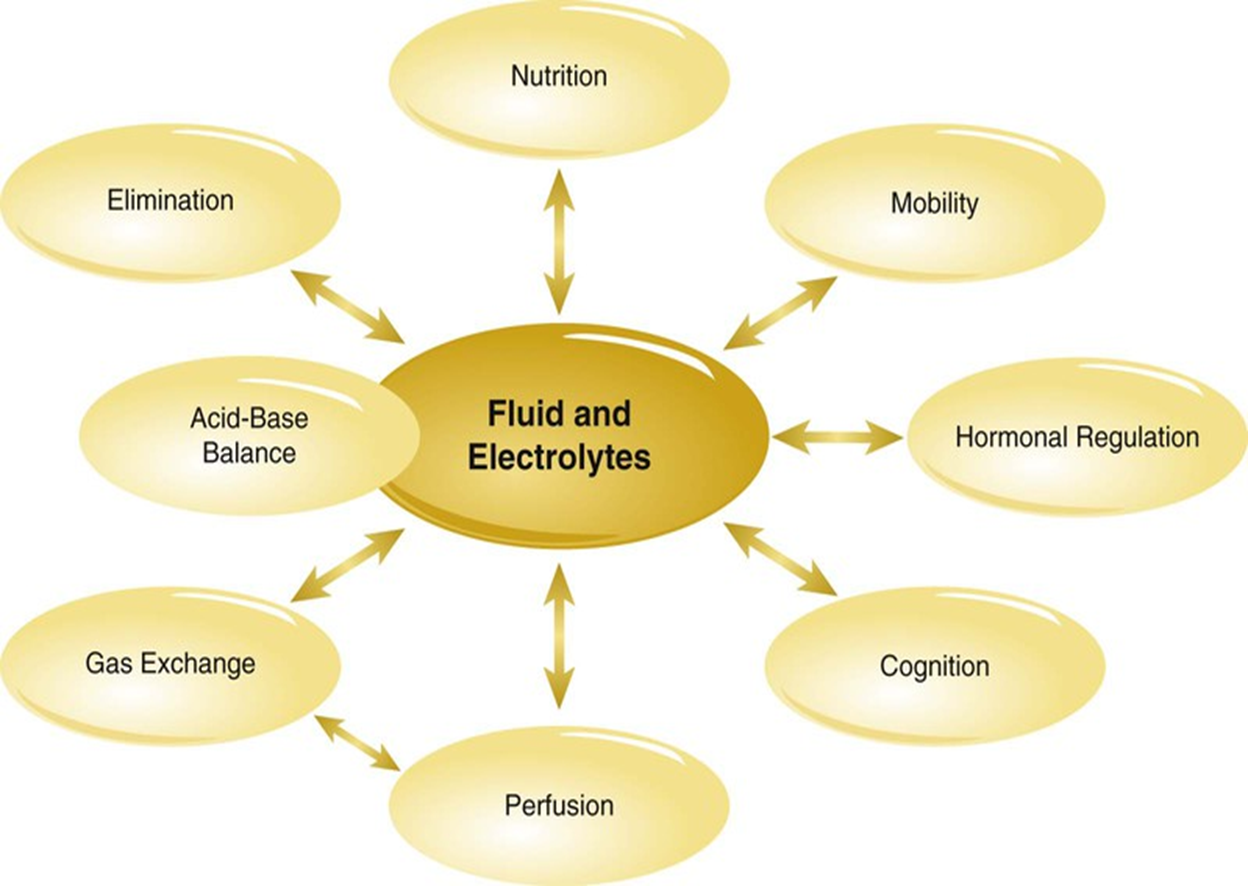
interrelated concepts pic
0.9% NaCl characteristics/uses
expands intravascular volume
hypovolemia
dehydration
fluid replacement
hypotension
compatible with blood product
lactated ringers characteristics/uses
replaces fluid and electrolytes
fluid resuscitation
dehydration
GI losses
perioperative fluid replacement
0.45% Nacl characteristics/uses
provides free water and some Na
hypernatremia
cellular dehydration when appropriate
D5W charateristics/uses
provides free water + 170 kcal/L
free water replacement
prevention/tx of some hypernatremia situations
D5 ½ NS charateristics/uses
provides water, glucose, nacl
maintenance fluid
3% NaCl charateristics/uses
pulls water into intravascular space
severe symptomatic hyponatremia
cerebral edema in specific situations
what are Signs and symptoms of a fluid volume deficit
thirst, dry mouth, dry mucous membranes
poor skin turgor
decreased urine output, concentrated urine
dark urine
tachycardia
hypotension or orthostatic hypotension
weakness, dizziness, fatigue
increased hematocrit
increased BUN
weight loss
what are Signs and symptoms of a fluid volume excess
peripheral or dependent edema
rapid weight gain
increased BP
bounding pulse
JVD
crackles
dyspnea/orthopnea
increased work of breathing
decreased o2 sat
possible pulmonary edema