Bio Exam 3
 Call Kai
 Learn
 Practice Test
 Spaced Repetition
 Match
 Flashcards
 Knowt Play
1/321

There's no tags or description
Looks like no tags are added yet.
322 Terms
Metabolism
The totality of all chemical and physical reactions carried out by an organism to transform matter and energy.

calvin cycle
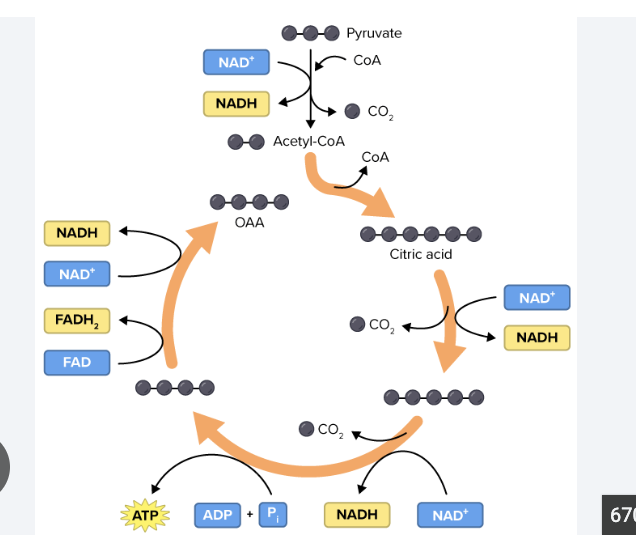
citric acid cycle

ETC and ATP synthase in photosynthesis

ETC and ATP synthase in cellular respiration

mitochandria

chloroplast

exergonic vs endergonic reactions

Gibs free energy diagram labled
With regard to the endosymbiont theory, which of the 3 chloroplast membranes correlates with the original prokaryotic cell membrane?
Inner Membrane: Derived from the plasma membrane of the ancient photosynthetic cyanobacterium that was engulfed.
Catabolism (Catabolic pathways)
Metabolic pathways that break down complex molecules into simpler subunits, releasing energy.
Anabolism (Anabolic pathways)
Metabolic pathways that synthesize complex molecules from simpler precursors, requiring energy.
Hydrolysis in metabolism
A chemical reaction that breaks covalent bonds by adding a molecule of water.
Dehydration synthesis (Condensation)
A chemical reaction that forms covalent bonds by removing a molecule of water.
Energy classification: Phototroph
An organism that captures energy from sunlight.
Energy classification: Chemotroph
An organism that acquires energy from chemical compounds.
Carbon classification: Autotroph
An organism that fixes inorganic CO2 into organic molecules
Carbon classification: Heterotroph
An organism that obtains carbon by consuming preformed organic compounds
Photoautotroph
An organism that uses sunlight for energy and inorganic CO2 for carbon (e.g., plants and cyanobacteria).
Photoheterotroph
An organism that uses sunlight for energy and organic compounds for carbon (e.g., purple nonsulfur bacteria).
Chemoautotroph
An organism that obtains energy from inorganic chemicals and carbon from inorganic CO2.
Chemoheterotroph
An organism that obtains both energy and carbon from organic compounds (e.g., animals and fungi).
Kinetic energy (KE)
Energy of motion, including molecular motion, heat, light, and mechanical movement.
Potential energy (PE)
Stored energy dependent on an object's position, physical state, or chemical structure.
Chemical energy
Potential energy stored in the chemical structure and bonds of molecules.
Electrochemical gradient energy
Potential energy stored in the concentration and electrical differences of ions across a biological membrane.
First Law of Thermodynamics
Energy cannot be created or destroyed, only transferred or transformed.
First Law biological significance
Cells cannot generate energy from nothing
Second Law of Thermodynamics
Every energy transfer or transformation increases the total entropy of the universe.
Entropy (S)
A thermodynamic measure of molecular disorder, randomness, or energy dispersal.
Cellular order vs. Second Law
Cells maintain internal organization by releasing heat and waste into their surroundings, increasing universal entropy.
Gibbs free energy (G)
The portion of a biological system's energy available to perform work at constant temperature and pressure.
Gibbs free energy equation
ΔG = ΔH - TΔS.
ΔG in Gibbs equation
Change in free energy between products and reactants (G products minus G reactants).
ΔH in Gibbs equation
Change in enthalpy (heat content) of a reaction at constant pressure.
T in Gibbs equation
Absolute temperature measured in Kelvin.
ΔS in Gibbs equation
Change in entropy, representing energy dispersal and molecular disorder.
Exergonic reaction
A spontaneous reaction that releases net free energy (ΔG < 0).
Endergonic reaction
A nonspontaneous reaction requiring an input of net free energy (ΔG > 0).
Thermodynamic spontaneity
An energetically favorable reaction that can occur without continuous outside energy input.
Energetic coupling
Pairing an exergonic reaction with an endergonic reaction so the combined net ΔG is negative.
Energetic coupling requirement
The free energy released must exceed the free energy consumed (ΔG net < 0).
Determining whether two reactions can be coupled
Add their ΔG values
ATP full name
Adenosine triphosphate.
Three components of ATP
Adenine, ribose (a five-carbon sugar), and three phosphate groups.
Phosphoanhydride bonds
Covalent bonds linking adjacent phosphate groups in ATP.
Why ATP hydrolysis is favorable
ATP hydrolysis produces more stable, lower-free-energy products
ATP biological role
A short-term energy intermediary that drives cellular work and is continuously regenerated.
Long-term animal energy storage
Glycogen in the liver and muscles and triglycerides in adipose tissue.
Long-term plant energy storage
Starch (amylose and amylopectin) stored inside plastids.
Activation energy (Ea)
The minimum initial energy required to initiate a chemical reaction.
Transition state
The unstable, highest-energy point in a reaction where old bonds break and new bonds form
Enzyme definition
A biological catalyst, usually a protein, that accelerates a reaction without being consumed.
How enzymes lower activation energy
By binding substrates and stabilizing the transition state.
Enzyme effect on ΔG
Enzymes do not change the overall ΔG of a reaction.
Enzyme effect on equilibrium
Enzymes do not change the equilibrium position
Active site
The specific region of an enzyme where substrates bind and catalysis occurs.
Enzyme-substrate complex
The temporary complex formed when a substrate binds to an enzyme's active site.
Induced fit
A conformational change in an enzyme upon substrate binding that improves the fit around the substrate.
Enzyme specificity
Determined by the active site's three-dimensional shape and chemical properties of its amino acid R-groups.
Enzyme mechanism: Alignment
The active site positions substrates in the correct orientation for reacting groups to collide.
Enzyme mechanism: Bond strain
Induced fit stretches or distorts bonds toward transition-state geometry.
Enzyme mechanism: Chemical environment
Catalytic amino acid R-groups create favorable acidic, basic, or hydrophobic conditions.
Enzyme state after catalysis
The enzyme is regenerated, remains functional, and can catalyze another reaction.
Enzyme denaturation
Unfolding and loss of native protein structure that destroys or reduces catalytic activity.
Causes of enzyme denaturation
Extreme temperatures, significant pH changes, and certain high salt concentrations.
Structure intact during denaturation
Primary structure, the amino acid sequence held together by peptide bonds, generally remains intact.
Enzyme affinity
The strength of the binding interaction between an enzyme's active site and its substrate. A higher enzyme affinity indicates a stronger attraction.
Competitive inhibitor
A molecule that competes with the substrate by binding directly to the active site.
Overcoming competitive inhibition
Increasing substrate concentration can outcompete the inhibitor.
Noncompetitive inhibitor
An inhibitor that binds away from the active site and reduces enzyme activity without competing for substrate binding.
Overcoming noncompetitive inhibition
Increasing substrate concentration cannot overcome pure noncompetitive inhibition.
Allosteric regulation
Regulation of enzyme activity through effector binding at a site separate from the active site.
Allosteric activator
A molecule that binds an allosteric site and stabilizes the enzyme's active conformation.
Allosteric inhibitor
A molecule that binds an allosteric site and stabilizes the enzyme's less-active conformation.
Feedback inhibition (Negative feedback)
The end product of a metabolic pathway binds to an earlier enzyme, reducing its own production.
Biological purpose of feedback inhibition
Prevents waste of chemical precursors and ATP when enough end product exists.
Protein kinase
An enzyme that transfers a phosphate group from ATP to a target protein (phosphorylation).
Protein phosphatase
An enzyme that removes a phosphate group from a target protein through hydrolysis (dephosphorylation).
Phosphorylation
The addition of a phosphate group to a molecule, often using ATP.
Dephosphorylation
The removal of a phosphate group, commonly through hydrolysis.
Coenzyme
A nonprotein organic cofactor that assists an enzyme by transferring electrons or chemical groups.
Cellular respiration primary goal
To break down organic fuel molecules such as glucose and harvest their energy to produce ATP.
Balanced equation of cellular respiration
C6H12O6 + 6 O2 -> 6 CO2 + 6 H2O + 32 (or 38 for professor) ATP
Four stages of cellular respiration
Glycolysis 2. Pyruvate oxidation (linking step) 3. Citric acid cycle 4. Oxidative phosphorylation.
Oxidation
Loss of electrons, often accompanied by loss of hydrogen.
Reduction
Gain of electrons, often accompanied by gain of hydrogen.
Molecule oxidized in cellular respiration
Glucose is oxidized to CO2.
Molecule reduced in cellular respiration
Oxygen is reduced to H2O.
Redox reaction
A reaction involving electron transfer in which one substance is oxidized and another is reduced.
Substrate-level phosphorylation
Direct enzymatic transfer of a phosphate group from an organic substrate to ADP to produce ATP.
Stages using substrate-level phosphorylation
Glycolysis and the citric acid cycle (the formation of succinate)
Oxidative phosphorylation
ATP synthesis powered by chemiosmosis using the proton gradient established by the ETC.
Stage using oxidative phosphorylation
Stage 4 of cellular respiration.
ATP yield per NADH (professor's convention)
3 ATP.
ATP yield per FADH2 (professor's convention)
2 ATP
ATP yield from glycolysis per glucose
2 net ATP.
ATP yield from citric acid cycle per glucose
2 ATP (or GTP).
ATP yield from oxidative phosphorylation (professor's convention)
34 ATP using 10 NADH and 2 FADH2.