Additional Treatment Considerations
 Call Kai
 Learn
Learn Practice Test
 Spaced Repetition
 Match
Match Flashcards
 Knowt Play
1/20

There's no tags or description
Looks like no tags are added yet.
Name | Mastery | Learn | Test | Matching | Spaced | Call with Kai | Chat |
|---|
No analytics yet
Send a link to your students to track their progress
21 Terms
NZ Context
Māori understandings of communication conveyed through ancestral sayings
interrelationship of natural, spiritual and human worlds
communication from the environment
spiritual involvement of language
communication situated within interpersonal relationships and social dynamics
not only oral communication (non-verbal)
Multilingual speakers
Regularly use 2 or more languages in daily life
often different levels of proficiency and exposure of languages
>40% of world’s population
positive benefits of being bi/multilingual far outweigh any misperceived disadvantages
Bilingual children are more likely to be misidentified as
having a language deficit
being a child who stutters
no evidence that bilingualism is a risk factor for developing stuttering
Cultural differences to be aware of in clinical practice
hierarchy/talking to other gender
expecting conversational interactions between parents and children
interruptions in conversation (can be seen as active involvemenet)
beliefs in cause of stuttering (spiritual, caused by parents etc)
Speakers of which languages can Monolingual English assessment guidelines be used for?
non-English monolingual speakers of Dutch, French, German etc, but not other languages such as Spanish
Can SLT’s identifying stutters in languages they don’t understand?
Yes, including identification of severity in bilinguals
BUT caution needed as can also identify non-stuttering children as CSW
What may bilingual children present with?
Typical and stuttered disfluencies exceeding conventional monolingual thresholds - but may not be considered stuttering in their language
How do you differentiate language-related disfluencies from stuttering?
Observe:
Affective features
presence of tension
struggle
awareness etc of disfluencies
Cognitive features
self-concept of speaking difficulty (attitude towards communication)
If bilinguals stutter they may have?
similar amounts of stuttering in both languages
more stuttering in 1 language
inconsistent findings on why this is - grammatical complexity? linguistic uncertainty?
Linguistic uncertainty
A speaker whose linguistic knowledge is comprised of more than one language will have higher linguistic uncertainty.
Stuttering assessment
Important to get comprehensive idea of client’s language history, function and proficiency during case study
Check norms and cultural considerations for each test
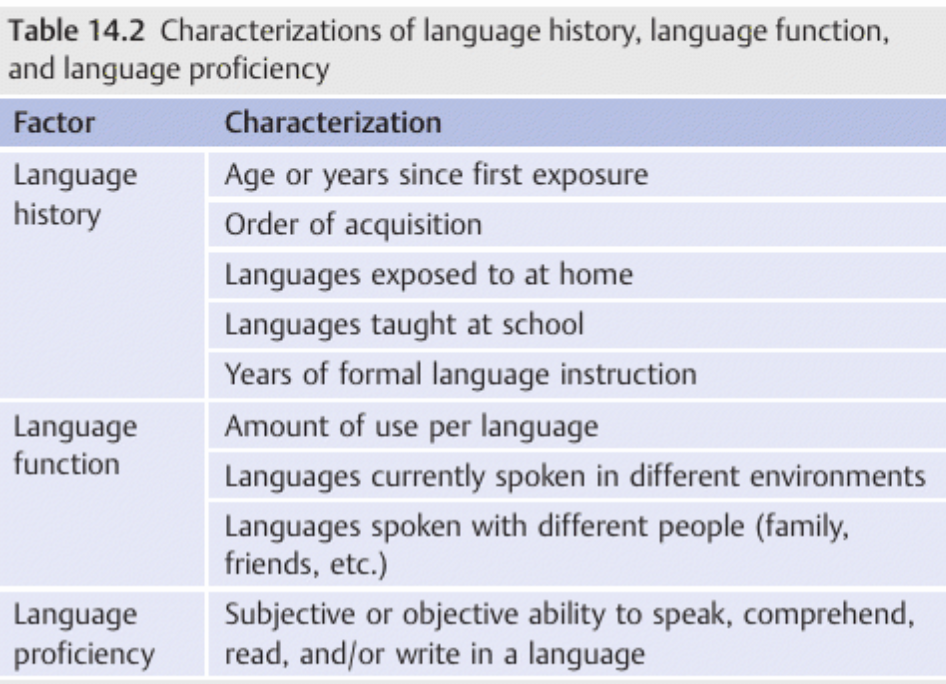
Formal stuttering assessment
complete OASES in different languages as impact of stuttering can vary depending on language and culture
SSI-4 can be used if considering only those speech disfluencies produced with atypical timing and tension that are clearly indicative of stuttering
KiddyCAT - complete in each language the child speaks, as you learn more about the child's cultures, you will become better at determining how their responses may be influenced by their culture, independently of stuttering
Informal stuttering assessment
Need to combine formal and inform ax of stuttering to minimise cultural biases
Greater cognitive demand placed on bilingual speakers as they navigate more than 1 language
obtaining narrative and conversational samples in each of the languages the person speaks during the assessment process is an important step.
by focusing less on the overall frequency and more on the types of disfluencies and especially the manner in which they are produced, the clinician can make a more accurate diagnosis.
Assessment of non-verbal behaviour
cultural differences in making eye contact is critical to consider
lack of eye contact could be misinterpreted as a secondary behaviour
essential that the clinician familiarizes themselves with what is considered appropriate in that person's culture in order to determine whether the individual’s eye contact is related to stuttering or to cultural influences.
Stuttering treatment
Most tx developed for monolingual speakers
Treat all languages as much as possible (levels of stuttering may not been the same across languages)
Use interpreter if needed
Transfer between languages possible
Resistance may be shown due to cultural differences e.g use of eye contact, speaking rapidly may be valued, nature of parental participation)
take time to discuss rationale for approach
sometimes intervention needs to be modified
Concomitant difficulties
language impairment observed more frequently in CWS than in general population
CWS can have co-occurring articulation/phonological difficulties and executive functioning difficulties
Treatment principles
Important to always consider impact from one domain to another
e.g. increased language demand can negatively impact child’s ability to maintain fluency
e.g. practicing speech sounds can lead to over-articulation and hard contacts
Treatment approaches
Sequential
Concurrent
Cyclic
Sequential treatment
Address 1 difficulty before the other
select the most significant area to target first
move onto next difficulty when 1st one has been completed (target achieved)
potential for untargeted areas to worsen or never get addressed (if stop treatment due to other factors)
Concurrent treatment
Work on multiple areas more or less in parallel
may include combinations of direct and indirect treatment
different portions of tx session address different difficulties
1 activity can address goals in multiple areas
need to monitor effect of treating 1 area on other areas that require support
Cyclic treatment
Concurrent treatment, with set period of time to spend on goals in long-term plan
differs from sequential which is based on predetermined level of accuracy vs time