Pentose Phosphate Pathway
 Call Kai
 Learn
 Practice Test
 Spaced Repetition
 Match
 Flashcards
 Knowt Play
1/11

There's no tags or description
Looks like no tags are added yet.
12 Terms
Pentose Phosphate Pathway key molecules
NADH
NADPH
NADH
reducing equivalents from catabolism carried to ETC
Excess of NAD+ couples to carbon biomolecule oxidations as an e- acceptor
NADPH
electron donor during synthesis
used in reductive biosynthesis and driving force for anabolism
detoxification of reactive oxygen species
Excess of NADPH generally couples to carbon biomolecule reductions and an electron donor
Purpose of PP Pathway
production of NADPH
maintain a reductive cellular environment and protect cells from oxidative damage
Oxidative Phase
Regulation with higher NADPH, so the enzyme activity goes down
purpose to reduce NADP+
redox reaction
2 other oxidations to produce ribulose-5-phosphate
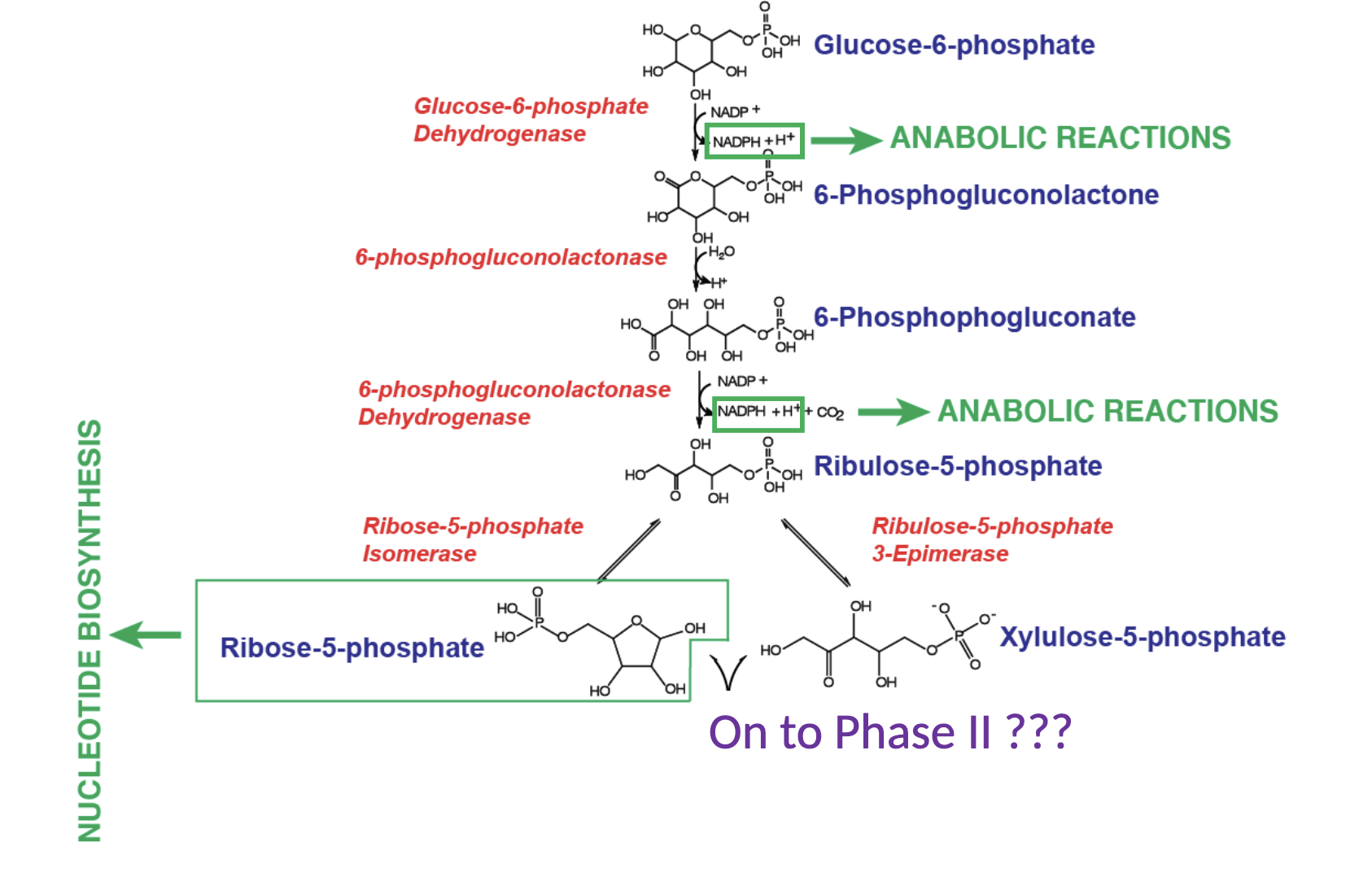
Oxidative products
Ribose-5-P
2 NADPH
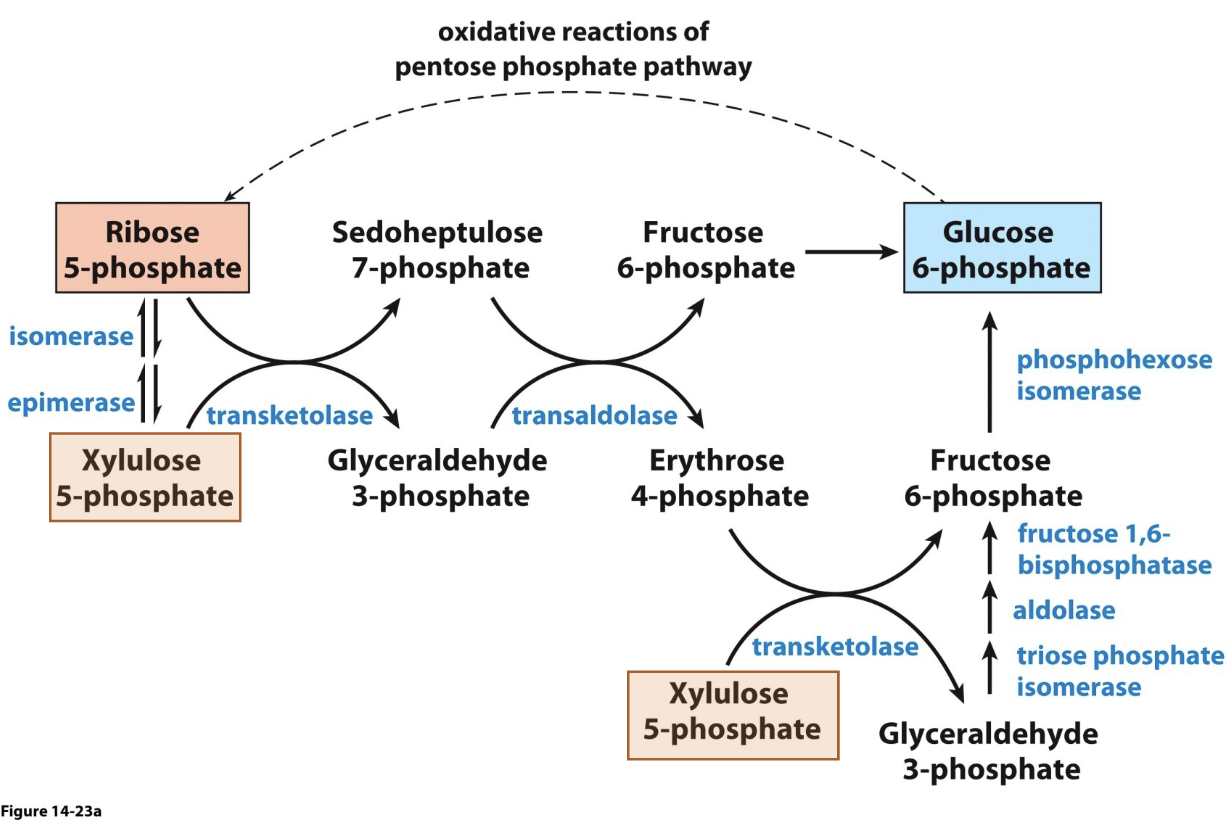
Purpose of non-oxidative stage
when NADPH is needed more than ribose
Turn ribose back into G6P for oxidative PPP
non-oxidative stage
highly reversible → determined by what is available and what is needed
can do the reverse reaction without NADPH production
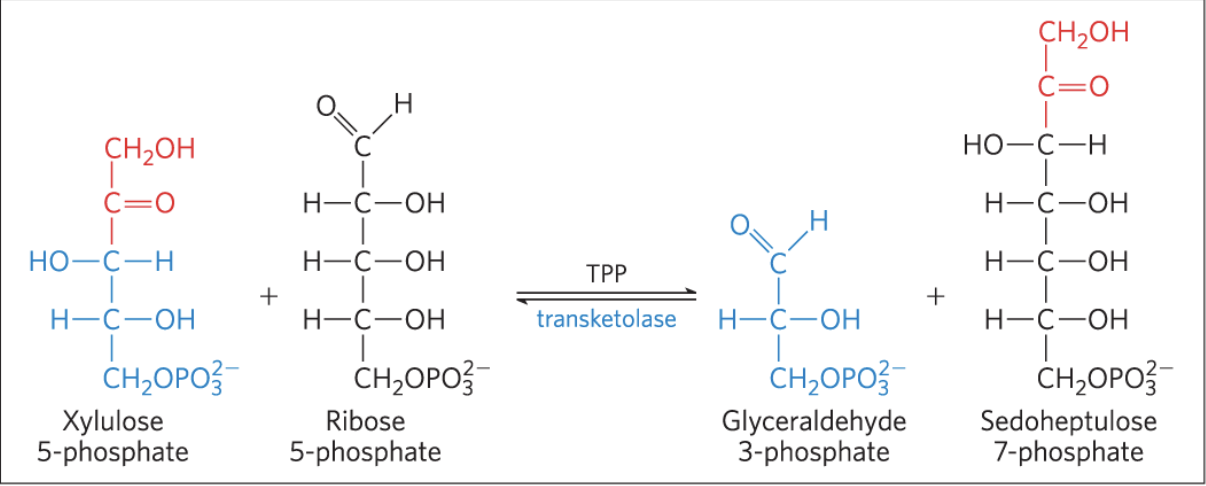
Transketolase
Transfer of a 2 carbon fragment from a ketose to an aldose
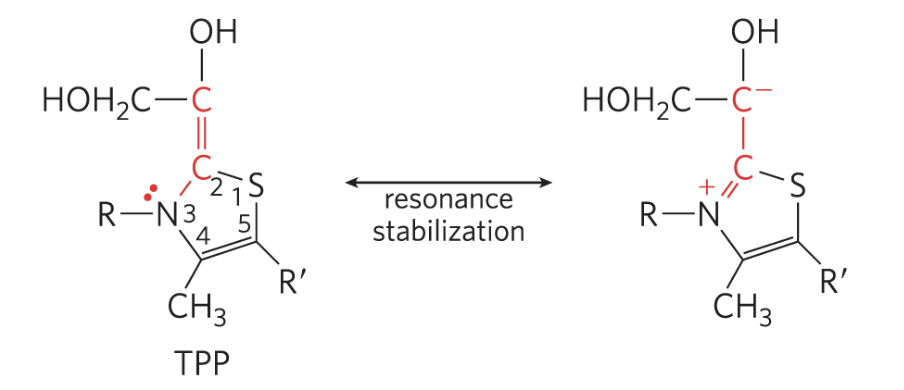
required TPP
Transaldolase
Catalyzes condensation between a three-carbon unit and an aldehyde
ketose donor to aldose acceptor

Transketolase stabilization
use the thiazolium ring in TPP to stabilize the carbanion with resonance
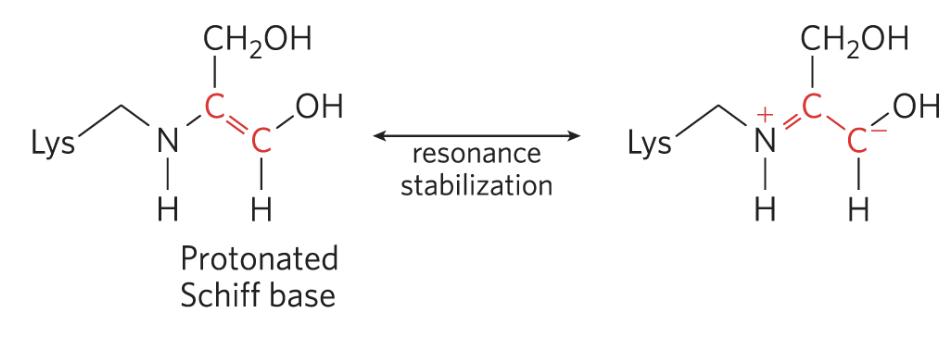
Transaldolase stabilization
stabilized by a Schiff base into resonance for carbanion