L108: focal to multifocal alopecia
 Call Kai
 Learn
 Practice Test
 Spaced Repetition
 Match
 Flashcards
 Knowt Play
1/183

There's no tags or description
Looks like no tags are added yet.
184 Terms
what are the inflammatory causes of alopecia?
self-induced
sequalae of folliculitis
immune-mediated disease
what are the non-inflammatory causes of alopecia?
disturbances of hair growth
hair cycle abnormalities
follicular dysplasia
post scarring
genetics
how does inflammatory alopecia distribute on the body?
appears focal to multifocal
how does non-inflammatory alopecia distribute on the body?
geographic to generalized
what are the differential diagnoses for inflammatory alopecia?
pyoderma
dermatophytosis
demodicosis
what is pyoderma in dogs?
bacterial infection of the skin secondary to underlying primary cause
what is pyoderma classified by?
depth of the infection in the skin
what is the most common primary cause that can lead to pyoderma in dogs?
allergies
what are the types of pyoderma based on depth of infection?
surface
superficial
deep
what is the depth of surface pyodermas?
upper layers of epidermis
what is the depth of superficial pyodermas?
epidermis and hair follicle
what is the depth of deep pyodermas?
dermis ± subcutaneous tissue
what are the clinical presentations of surface pyoderma?
pyotraumatic dermatitis
intertrigo
bacterial overgrowth syndrome
where do we typically see pyotraumatic dermatitis in the dog?
cheek
neck
thighs
rump
what are some clinical signs we may see in a dog with surface pyoderma?
erythema
exudate
matted hair
exudate
pruritis
what is the timing for a dog getting pyotraumatic dermatitis?
rapid onset
what are the clinical signs with intertrigo?
erythema
exudate
malodor in skin folds
what areas is it common to see intertrigo in dogs?
face
lip
vulva
tail folds
what breeds is it common to see intertrigo?
breeds with prominent skin folds
what clinical signs are seen with bacterial overgrowth syndrome?
erythema
exudate
lichenification
hyperpigmentation
where is it common to see bacterial overgrowth syndrome?
ventral abdomen
interdigital
pinnae
what is unique about the cytology for bacterial overgrowth syndrome?
bacteria without inflammation
what is the diagnostic approach for surface pyodermas?
clinical assessment
cytology
what will you see on cytology for a dog with pytotraumatic dermatitis and intertrigo?
cocci often with neutrophils
what will you see on cytology for a dog with bacterial overgrowth?
large number of bacteria with few or no neutrophils
why is a bacterial culture not needed necessarily for surface pyodermas?
topical treatment is always the treatment of choice
what is the preferred treatment for surface pyodermas?
chlorhexidine 2-4%
A 2 year old MN bulldog comes to the clinic for surface pyoderma. You prescribed topical antiseptic, but the patient is still pruritic. What is an additional treatment you can prescribe to the patient for its pruritis?
topical glucocorticoids
short course of systemic gluccocorticoids at anti-inflammatory dose for 5-7 days
what is the long term management for surface pyoderma?
address underlying cause
maintenance therapy of antiseptic topical therapy
what is important to understand about superficial pyoderma?
almost always secondary to a primary cause
what is the most common opportunistic pathogen for superficial pyoderma?
staphylococcus pseudintermdius
what are the clinical presentations of superficial pyoderma?
superficial bacterial folliculitis
exfoliative superficial pyoderma
impetigo
mucocutaneous pyoderma
what is the most common form of superficial bacterial folliculitis?
superficial bacterial folliculitis
what are the clinical signs of superficial bacterial folliculitis?
follicular papules
pustules
epidermal collarettes
“moth eaten” focal alopecia
what are the predilection sites for superficial bacterial follicultis?
ventral abdomen
medial thighs
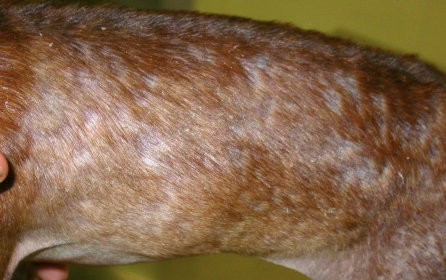
what condition is shown in the image?
superficial bacterial folliculitis

what condition is shown in the image?
superficial bacterial folliculitis
what are the clinical signs of exfoliative superficial pyoderma?
large expansive epidermal collarettes with erythmea rim
target lesion appearance
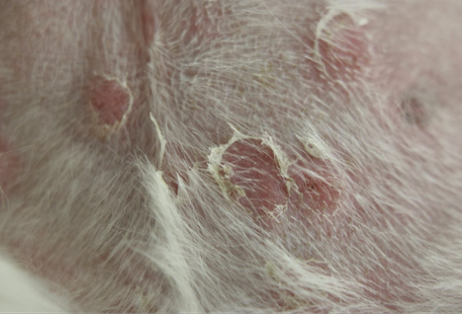
what skin condition is shown in the image?
exfoliative superficial pyoderma

what skin condition is shown in the image?
exfoliative superficial pyoderma
what are the clinical signs of impetigo in puppies?
non-follicular pustules at the inguinal or axillary areas
what are the clinical sign of impetigo in immunocompromised adult dogs?
bullous impetigo

A 6 month old puppy comes to the clinic after an owner notices some skin issues. You do a physical exam and see the following lesion in the photo? What is your differential diagnosis?
impetigo; lesion is a non-follicular pustule

what is shown in the image?
bullous impetigo before a rupture

A 5 year old GSD comes to the clinic after the owner notices some skin issue along the mouth. You do a physical exam and see the following image. What is your differential diagnosis?
mucocutaneous pyoderma
what are the clinical signs of mucocutaneous pyoderma?
erythema, erosions, crusts at mucocutaneous junctions
what is the diagnostic approach for superficial pyoderma?
clinical assessment
cytology
bacterial culture and susceptibility (if doing systemic antibiotics)
rule out other follicular diseases
what other follicular diseases do you need to rule out for superficial pyoderma?
demodicosis
dermatophytosis
pemphigus foliaceus
what diagnostic tests do you use for demodicosis?
deep skin scarping
trichogram
what diagnostic test do you use for dermatophytosis?
wood’s lamp
fungal culture/PCR
what diagnostic test do you use for pemphigus foliaceus?
look for acantholytic keratinocytes
what is the treatment options for superficial pyoderma?
topical antimicrobial therapy
anti-inflammatory therapy
systemic antimicrobial therapy
what is the treatment of choice for superficial pyoderma?
topical antimicrobial therapy for 2-3 weeks until resolution
what is the only time we use systemic antimicrobial therapy for superficial pyoderma?
if topical therapy fails or is not feasible
what are the first-choice drugs for systemic antimicrobial therapy for superficial pyoderma?
cephalexin
clindamycin
amoxicillin-clavulanate (clavamox)
how long do you use systemic antimicrobial therapy for superficial pyoderma?
two week course with recheck before stopping therapy → can be stopped once primary lesions resolved
what are the clinical presentations for generalized deep bacterial pyoderma?
deep bacterial folliculitis/furunculosis
post grooming furunculosis
what are the clinical presentations for localized deep bacterial pyoderma?
acral lick dermatitis
interdigital furunculosis
pressure point/callus pyoderma
chin pyoderma
what clinical signs can be seen with generalized deep bacterial pyoderma?
hemorrhagic bullae
thick crusts
draining tracts
nodules
ulcers
scarring
varying degrees of pruritis
what regions can be affected with generalized deep bacterial pyoderma?
glabrous regions
interdigital spaces
chins
pressure points
what dog breed is predisposed to generalized deep bacterial folliculitis?
german sheperds
why may short-coated dogs get generalized deep bacterial folliculitis?
high friction areas create potential for skin injury and infection
what other clinical signs may be seen with general deep bacterial pyoderma?
fever
lethargy
lymphadenopathy
often painful
RISK OF SEPSIS
what is the most common agent for generalized deep bacterial pyoderma?
staphylococcus spp.
what other bacteria can cause deep infection for generalized deep bacterial pyoderma?
pseudomonas spp

what skin condition is shown in the image?
deep bacterial pyoderma
what breed is it more common to see post grooming furunculosis?
short-haired breed with stiff bristle hair
what happens with post grooming furunculosis?
mechanical rupture of hair follicles after brushing or bathing
when do lesions start to appear with post grooming furunculosis?
24-48 hours after bathing or grooming but can go unnoticed for several days
how do dogs with post grooming furunculosis often present clinically?
present to the ER for fever, anorexia, lethargy, and back pain
what common organisms can cause infection with post groom furunculosis?
pseudomonas
staphylococcus
proteus
serratia
where can we se acral lick dermatitis/furunculosis?
left carpal most common place
where can pressure point/callus pyoderma for local deep bacterial pyoderma present?
elbows
lateral hind leg/tarsus
shoulder
temporal
what patients do we see chin pyoderma in?
young dogs
short haired breeds

what skin condition is shown in the image?
acral lick dermatitis

what skin condition is shown in the image?
interdigital furunculosis
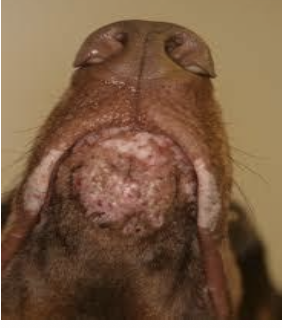
what skin condition is shown in the image?
chin pyoderma
what is the diagnostic approach for deep pyoderma?
clinical assessment
cytology
bacterial culture
rule out other follicular diseases
what are the treatment options for deep bacterial pyoderma?
systemic antimicrobial therapy
adjunctive topical and anti-inflammatory therapy
pain management
identification and management of underlying causes
what is systemic antimicrobial therapy based on?
culture and susceptibility results
always indicated with widespread lesions
what is the timeline for systemic antibiotics for deep bacterial pyoderma?
initial 3 week course with re-examination
continue until infection resolves (about 6 weeks)
what adjunctive topical and anti-inflammatory therapy will be prescribed for deep bacterial pyoderma?
antiseptics and PBM
glucocorticoids at anti-inflammatory dosing
what pain management can you give when indicated in cases of deep bacterial pyoderma?
gabapentin
topical anesthetics (lidocaine spray, EMLA cream)
what underlying causes can lead to deep bacterial pyoderma?
demodicosis
allergies
endocrinopathies
foreign bodies

You perform the following cytology from the pustule on the abdomen of a dog. You see numerous cocci in clusters, many with neutrophils. What is your interpretation?
superficial bacterial furunculosis

You perform the following cytology from an interdigital lesion on a dog. You see a moderate number of rod-shaped bacteria and a few cocci, with neutrophils showing nuclear streaming. What is your interpretation?

You perform the following cytology from erythematous skin on the ventral abdomen of a dog. You see a large number of cocci with minimal inflammatory cells. What condition might this represent?
surface pyoderma
where can cats develop bacterial overgrowth?
areas of skin that are traumatized (ulcerated or excoriated) → overgrooming or scratching
what is important to remember about cats and topical therapy?
often less tolerant of topical therapy
what is methicillin-resistant staphylococcus pseudintermedius (MRSP)?
Staphylococcus pseudintermedius organism that has developed resistance to ALL beta-lactam antibiotics
what is MRSP the consequence of?
Consequence of acquiring the mecA gene that produces PBP2a (penicillin-binding protein)
what are MRSP resistant to on susceptibility testing?
Oxacillin
Methicillin
all beta lactams → penicillins, cephalosporins, and carbapenems
what are the reserved antibiotics for treatment of MRSP?
rifampin
chloramphenicol
amikacin
gentamin
what must we do if we prescribe any of the reserved antibiotics for the treatment of MRSP?
blood work due to high risk of side effects
MRSP is NOT the same as…
MRSA
what is impractical and impossible with MRSP? what do we do instead?
decolonization
normal hygiene practices recommended instead
Is MRSP more virulent that MSSP?
NO! just more challenging to treat due to limited antibiotic options
what is the most common species of dermatophyte in dogs and cats?
microsporum canis
Bailey is a 4-year-old SF golden retriever presenting to the clinic with papules, pustules, and epidermal collarettes on her ventral abdomen and medial thighs. The owner mentions that she has moderate pruritis and a history of seasonal allergies. You decide to perform a cytology and see numerous cocci, many with neutrophils. You also decide to perform a bacterial culture and the results show heavy growth of staphylococcus pseudintermedius. What is the diagnosis and what will your treatment of choice be?
diagnosis: superficial bacterial folliculitis
treatment: chlorhexidine and cytopoint
what is dermatophytosis?
superficial fungal infection of keratinized structures (hair shafts and stratum corneum)