Chapter 21 - Lymphatic System
 Call Kai
 Learn
 Practice Test
 Spaced Repetition
 Match
 Flashcards
 Knowt Play
1/7

There's no tags or description
Looks like no tags are added yet.
8 Terms
Describe the pathway of lymph through the lymphatic system
The lymphatic vessels collect excess tissue fluid and blood proteins and return them to the blood stream
The path is: lymph capillaries → collecting lymphatic vessels and lymph nodes → lymph trunks → lymph ducts → veins of the neck
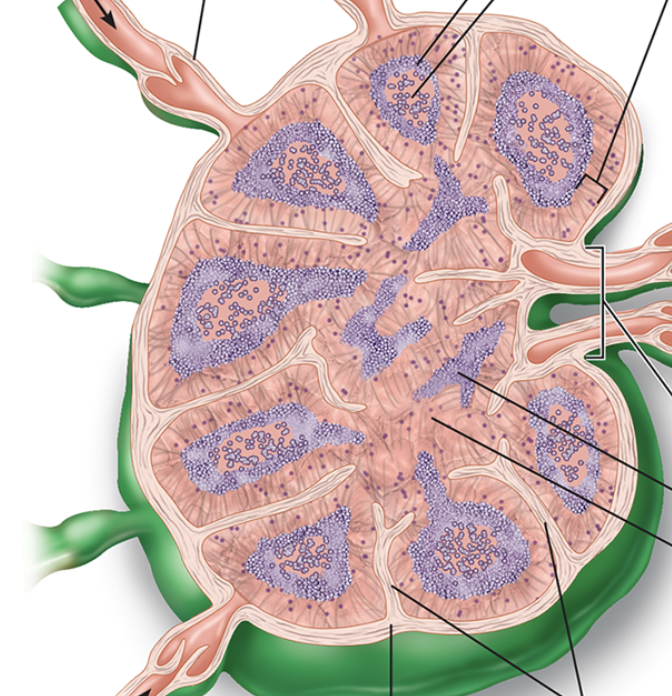
Describe lymph nodes and draw one. How does lymph flow through it?
Lymph nodes cleanse the lymph of pathogens. Lymph enters through the afferent lymphatic vessels and exits through the efferent lymphatic vessels.

How are the lymphatic and immune systems interconnected?
The immune system includes lymphoid tissue (which has immune functions) and lymphoid organs. Key cells of immune system called lymphocytes and will travel through the lymph.
Describe the thymus
Thymus: lies in superior thorax and inferior neck. Site where immature lymphocytes develop into T cells
Describe the spleen
Spleen: lies in superior quadrant of abdominal cavity posterior to stomach. Removes bloodborne antigens and removes/destroys aged or defective blood cells.
Describe the tonsils
Tonsils: four groups arranged in a ring to remove pathogens. Helps trap bacteria and provide lasting immunity.
Describe the aggregated lymph nodules
Aggregated lymphoid nodules: located in distal part of small intestine. Also called Peyer’s patches. Fights invading bacteria and provide lasting memory.
Describe the appendix
Appendix: a tubular offshoot of cecum. Fights invading bacteria and provide lasting memory. Not entirely sure of the function. Also thought to store reserves of gut bacteria.