Nasogastric & Nasoenteric Tubes
 Call Kai
 Learn
 Practice Test
 Spaced Repetition
 Match
 Flashcards
 Knowt Play
1/16

There's no tags or description
Looks like no tags are added yet.
17 Terms
Nasogastric (NG) & Nasoenteric (NE) Tubes
specialized tube that is advanced from the nasal cavity to the stomach (NG) or to the small bowel (NE)
Functions
feeding
decompression (suction)
radiographic examination
enteroclysis (single or dual contrast)
Nasogastric (NG) Tubes
Single Lumen Tubes
Dobbhoff
can be advanced to the duodenum (C-curve) (NE)
feeding tube only
Levin
advanced to the stomach only (NG)
feeding or suction
Double Lumen Tube
Salem-Sump (radio-opaque)
used for decompression of the stomach
one lumen connected to suction, the second to flush

Nasoenteric (NE) Tubes
Functions
feeding
decompression (suction)
radiographic examination
enteroclysis (single or dual contrast)
Typically One of 3 Types
Cantor (single lumen)
Harris (single lumen)
Miller-Abbott (double lumen)
1st drainage
2nd balloon

Specialty Catheters
provide access to the circulatory system
Catheters & Access Lines
Non-Tunneled
from skin entry site directly into the point of cannulation
shorter catheter inserted directly into the subclavian or jugular vein at bedside
short-term, prone to infection & dislodging
Tunneled
tunnel is made first through tissue and then the catheter is inserted & advanced
long catheters inserted into peripheral vein & advanced to the SVC or IVC
long (several months-year) or short term

Short-Term External Catheters
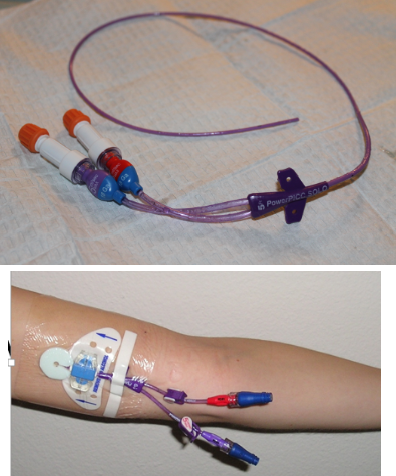
Peripherally Inserted Central Catheter (PICC Line)
inserted into vein in antecubital fossa
advanced to SVC
administers medications & draws blood
Long-Term External Catheters
Central Venous Catheter (CVC or Central Line)
can be single, double, or triple lumen
vein access at the arm, neck, shoulder, or groin
advanced to the SVC

Long-Term Infusion Ports - Venous Access Ports
Venous Port (aka: portacath, infusaport, mediport, hickman)
venous catheter and titanium port surgically placed under skin of upper chest
administers medications, chemotherapy, blood transfusions, or blood sampling
utilizes a special needle
Swan-Ganz Catheter
measures cardiac output, right heart pressures, and indirectly measures left heart pressures
diagnoses right and left ventricular failure & monitor medications, stress & exercise on heart functions
inserted at patient’s bedside in ICU
inserted through subclavian, internal or external jugular, or femoral vein
advanced into the right atrium

X-Ray to Visualize Line Placement
CXR for catheter placement should be over penetrated
overpenetration for the lungs gives a better visualization of the line placement while being superimposed with the heart & spine
Chest Tubes/Water-Sealed Drainage
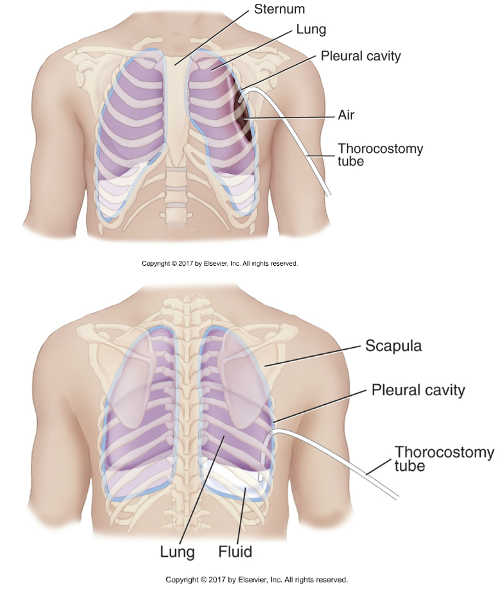
remoes fluid or air from pleural space
position of tube to remove air: anterior & superior (where air accumulates)
position of tube to remove fluid: posterior & inferior (fluid drops)
Chest Tube Radiography
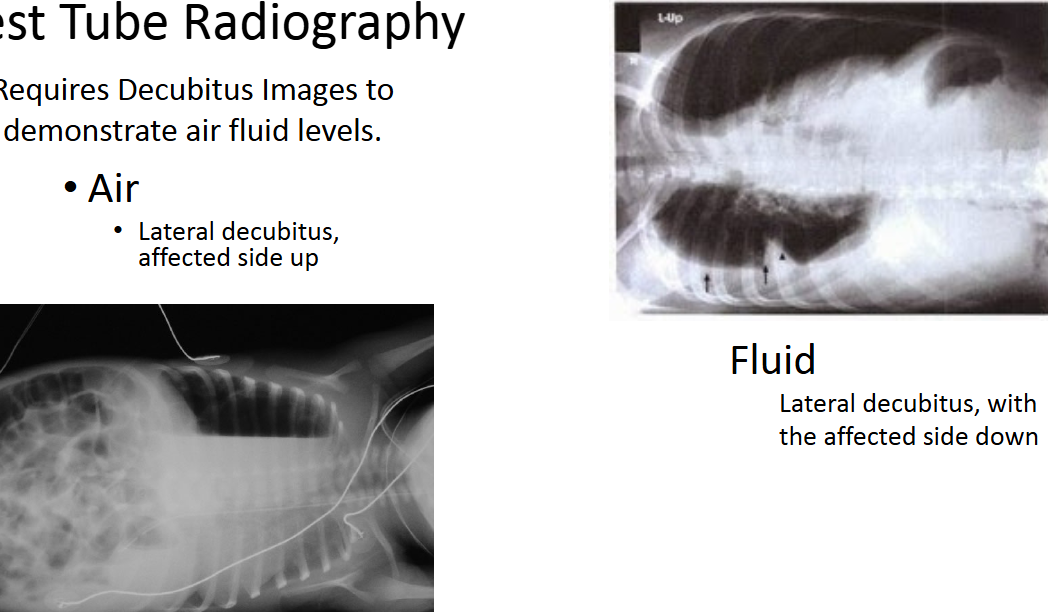
requires decubitus images to demonstrate air/fluid levels
air: affected side up
fluid: affected side down
Care of Chest Tube Patient
keep tubing straight
drainage unit must remain below patient’s chest
chest tubes may not be easily seen under bed covers
wear gloves to protect patient and yourself (can leak)
if tube accidentally dislodges, apply heavy sterile dressing to area immediately
Tissue Drains
purpose: remove fluide post-surgery; to speed healing
Types
Penrose
Jackson-Pratt
Hemovac
Patient Care: don’t disturb or dislodge drain
Penrose Drain
used for wound drainage
soft rubber tube
sutured in place
drains into surgical dressing

Jackson-Pratt & Hemovac Drain
used to drain large quantities of fluid
uses a collapsible bulb or canister to maintains low constant vacuum pressure
drainage held in bulb
Jackson-Pratt often used after mastectomy
Hemovac often placed after hip surgery

Pacemaker
electromechanical device that monitors & maintains a constant heart rhythm
external pacemakers are temporary
internal pacemakers are long term