Unit 3 Religion
 Call Kai
 Learn
 Practice Test
 Spaced Repetition
 Match
 Flashcards
 Knowt Play
1/62

There's no tags or description
Looks like no tags are added yet.
63 Terms

Religion
A cultural system of beliefs, practices, ethics, and worldviews that connects people to the sacred, spiritual, divine, or supernatural

Islam
Monotheistic religion based on the Quran and the teachings of Muhammad.

Christianity
Monotheistic religion based on the Bible and the teachings of Jesus. Universal religion.

Hinduism
Complicated - not necessarily one religion, but rather an umbrella term for a range of Indian religious and spiritual traditions that are unified by adherence to Dharma. Ethnic religion.
Buddhism
Religion and hilosophy based on teachings attributed to the Buddha. Universal religion.
Judaism
Monotheistic religion that comprises the collective spiritual, cultural, and legal traditions of the Jewish people. Ethnic religion.

Monotheism
The belief in only one deity (or God)

Polytheism
The belief in only multiple deities (or Gods)

God
A deity within theistic belief systems which is believed to be the ultimate cause of all things in existence
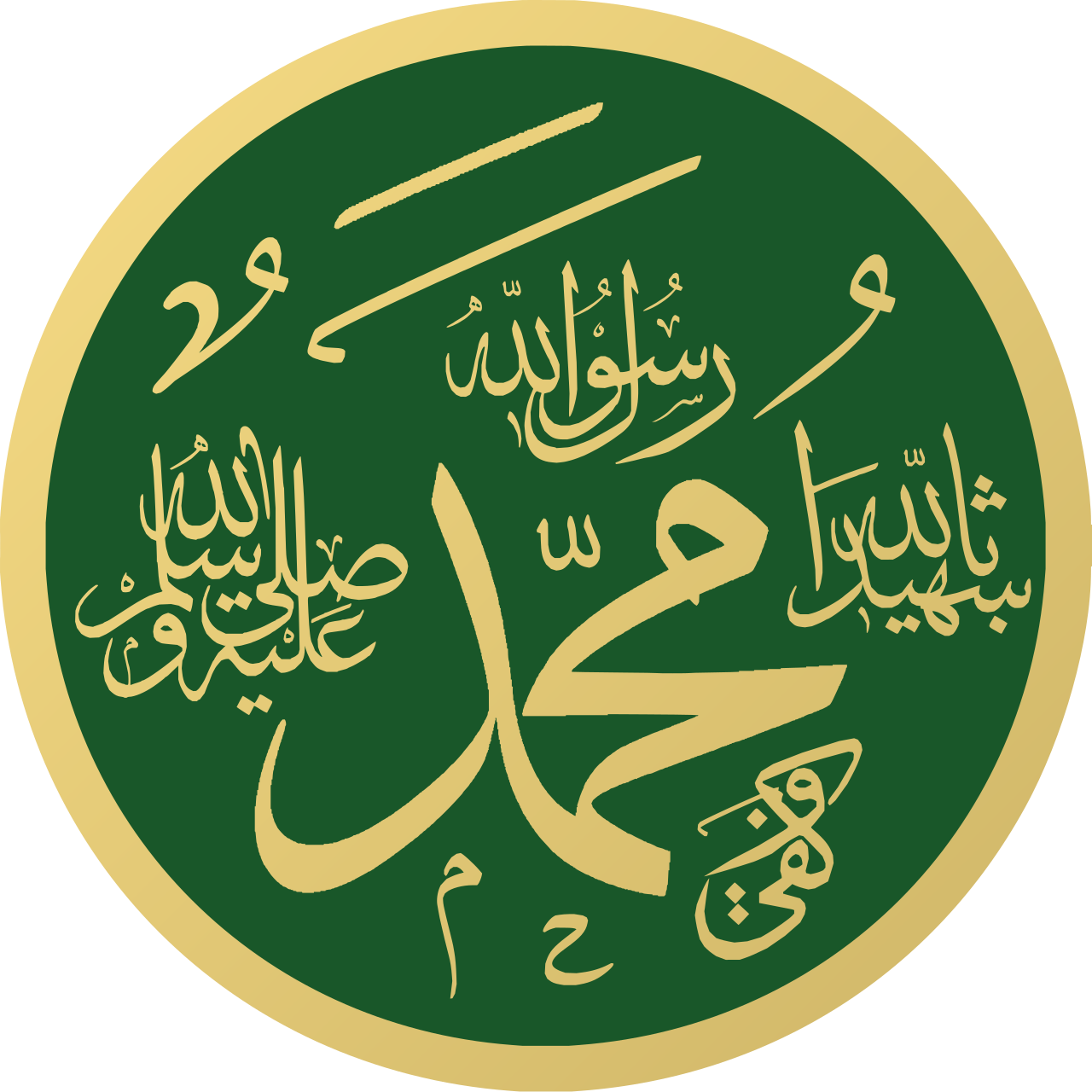
Muhammad
An Arab religious, political, and military leader who founded Islam. Muslims regard him as God's final prophet, the Seal of the Prophets, who received divine revelations that became the Quran.

Jesus
Jewish prophet, central figure of Christianity, incarnation of God the Son

Ka’aba
A stone building at the center of Islam's most important mosque and holiest site,
Allah
Arabic word for God, used primarily in Islam to refer to the one and only God.

Qur’an
The central religious text of Islam. Muslims believe it to be the literal word of God (Allāh), revealed orally to the Prophet Muhammad by the angel Gabriel over roughly 23 years, beginning in 610 CE and ending with Muhammad's death in 632 CE
Caliph
The political and religious leader of the Muslim community (ummah) and head of an Islamic state known as a caliphate

Mosque
A place of worship for Muslims. Muslims gather for five daily prayers and a larger congregational prayer (Jummah) on Friday afternoons.
Shariah
The Arabic term for Islamic religious guidance and law, originating from a root meaning a "path to water" or way of life. It covers moral values, personal worship (ibadah), social and commercial dealings (muʿamalat), family matters, and legal rulings.
Sunni vs Shia Islam
Sunni and Shia Islam are the two major branches of Islam, divided primarily over who should lead the Muslim community after Prophet Muhammad died in 632 CE.
Sunnis view early caliphs (such as Abu Bakr) as elected or chosen community leaders and rely on scholars and legal schools (madhhabs) to interpret Islamic law. Shias emphasize the Imamate, holding that Ali and his designated descendants (Imams) held special spiritual guidance and authority.
Sunnis chose elected community leaders (starting with Abu Bakr), while Shias chose Prophet Muhammad’s bloodline (starting with his cousin and son-in-law, Ali).
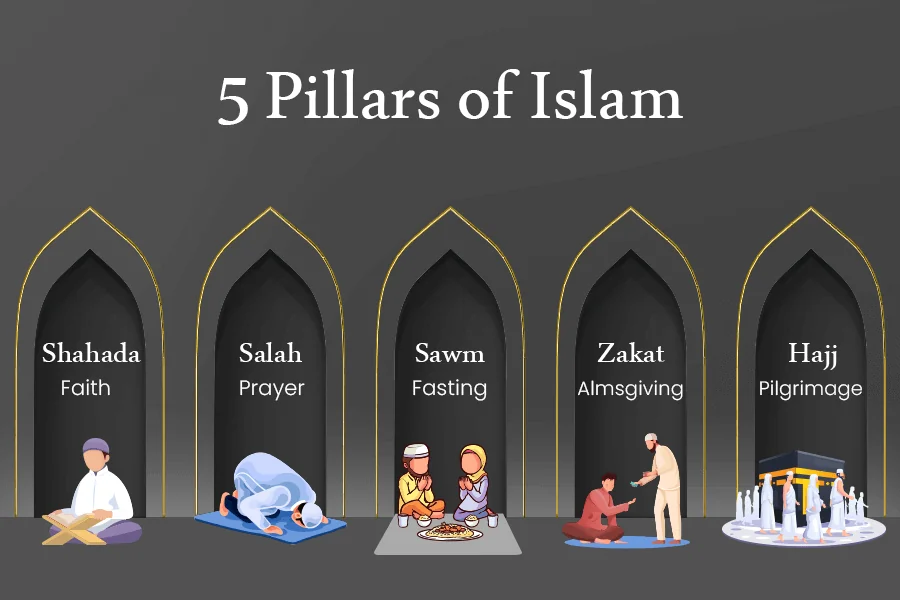
Five pillars of Islam
Shahada (faith in one God and Muhammad), Salat (five daily prayers), Zakat (charity), Sawm (Ramadan fasting), and Hajj (Mecca pilgrimage). Rather than separating worship from everyday routines, these core duties build discipline, connect a believer with God, and support community well-being.
Islam facts
Islam centers on strict monotheism (Tawhid)—worshiping one God, Allah—alongside belief in angels, revealed scriptures (culminating in the Quran as God's final word), earlier prophets like Adam, Abraham, Moses, and Jesus, the Day of Judgment, and divine decree. Religiously, Muslims view Muhammad as the final prophet ("Seal of the Prophets") who received revelations via the angel Gabriel and whose teachings and actions (hadith) guide faithful living alongside the Five Pillars. Historically, Muhammad was born around 570 CE in Mecca, began preaching around 610 CE after his first revelation, migrated to Medina in 622 CE (Hijra), unified much of Arabia under Islam, and died in Medina in 632 CE as a religious, political, and community leader.
Relationship between Islam, Judaism, and Christianity
Muslims view Islam, Judaism, and Christianity as closely connected monotheistic faiths that worship the same One God—the God of Abraham—and share a common heritage of prophethood and moral values. In Islamic teaching, Jews and Christians are honored as "People of the Book" (Ahl al-Kitab) because they received earlier divine scriptures from God.

Old Testament
The first major section of the Christian Bible and corresponds closely to the Hebrew Bible (Tanakh), recounting creation, ancient Israel's history, law, poetry, and prophecy.

New Testament
The New Testament is the second major division of the Christian Bible, consisting of 27 books originally written in Koine Greek in the first century CE. It centers on the life, teachings, death, and resurrection of Jesus of Nazareth, as well as the origins and growth of the early Christian church.
4 Gospels (Matthew, Mark, Luke, John), 1 History, and 21 Epistles
Messiah
In Christianity, the Messiah is Jesus of Nazareth, who is also called the Christ (from the Greek Christos, translating the Hebrew Mashiach, meaning "anointed one"). Christians believe Jesus is the promised savior and Son of God who fulfills Old Testament messianic prophecies through his life, death, resurrection, and future return.
Sermon on the Mount
A major collection of teachings delivered by Jesus of Nazareth in Matthew 5–7. It is the first of five teaching discourses in the Gospel of Matthew and is closely parallel to the shorter "Sermon on the Plain" in Luke 6.

Crucifixion
Jesus was crucified in Roman-occupied Judaea around AD 30–33 primarily on the political charge of sedition—specifically claiming to be "King of the Jews"—following trials before Jewish religious authorities and Roman governor Pontius Pilate, while Christians also understand his death as a purposeful sacrifice for human sin.
The Gospels
Matthew, Mark, Luke, and John—are first-century CE texts in the New Testament that recount the life, teachings, miracles, death, and resurrection of Jesus. Drawing on earlier oral traditions and written in Greek, they serve both as theological narratives and proclamations of "good news" that Jesus is the promised Messiah and Son of God. In Christianity, they form the foundational record of Jesus's ministry and identity. Christians read them to shape their faith, guide discipleship, and anchor core beliefs about salvation and God's kingdom.
What are Christian religious views about Jesus and who he was
Christians view Jesus Christ as the central figure of the faith, the promised Messiah ("anointed one"), and the Son of God who became human to reconcile humanity with God. Most Christian traditions hold that He is both fully divine and fully human
What do we know about Jesus as a historical figure? What were the details of his life?
Most historians agree that Jesus of Nazareth was a first-century Jewish preacher and healer who led a movement in Galilee and Judea before being executed by crucifixion under Roman prefect Pontius Pilate. Evidence for his existence and basic biography comes from New Testament texts—especially the Gospels and the letters of Paul—alongside non-Christian writers like first-century historian Josephus and Roman historian Tacitus. Historically established details of his life indicate he was raised in a Jewish family, had siblings (including a brother named James), was baptized by John the Baptist, taught and healed in rural Israel, gathered disciples including a core group of twelve, and clashed with authorities over the Jerusalem Temple. While accounts of his birth, miracles, and resurrection are central to Christian faith and theological tradition, historians treat many specific narrative details—such as his exact birth date or miraculous claims—as shaped by later religious beliefs rather than straightforward historical records
What is the relationship between Judaism and Christianity? Consider both the aspects and history of Judaism that Christianity accepts as true as well as the relationships between religious texts.
Christianity emerged from Second Temple Judaism and accepts key aspects of Jewish history and faith—including monotheism, creation, God's covenants with Abraham and Moses, the Hebrew prophets, and the Jewish identity of Jesus and his earliest followers. Regarding religious texts, Christians incorporate the Hebrew Bible (Tanakh) as the Old Testament alongside the New Testament, reading it as fulfilled or mediated through Jesus, whereas Judaism recognizes only the Hebrew Bible (alongside oral tradition and the Talmud) and rejects Jesus as the Messiah and the authority of the New Testament.
Events, issues and ideas that made Christianity a separate religion from Judaism.
Christianity split from Judaism gradually during the first and second centuries CE due to key theological differences, the inclusion of non-Jews, and major historical upheavals. The separation began with the central Christian belief that Jesus of Nazareth was the divine Messiah whose death and resurrection brought salvation, an idea rejected by mainstream Judaism. As apostles like Paul welcomed non-Jewish Gentiles into the movement without requiring them to follow traditional Jewish laws—such as circumcision and dietary restrictions—the communities grew culturally and religiously distinct. Finally, the Roman destruction of the Second Temple in Jerusalem in 70 CE, combined with Christians refusing to join subsequent Jewish revolts against Rome, severed their remaining shared institutions and cemented Christianity as an independent religion.
What did Jesus preach? Views on who was blessed, violence, wealth.
Jesus’s core message centered on the arrival of the Kingdom of God—a radical reversal of worldly values driven by love, mercy, and justice. Across the New Testament Gospels, his teachings consistently challenged social hierarchies, calling followers to care for the marginalized, reject retaliation, and prioritize spiritual devotion over material accumulation.
Ten Commandments (Judaism)
A set of foundational religious and moral precepts traditionally believed to have been revealed by God to Moses on Mount Sinai and inscribed on two stone tablets
I am the Lord your God, who brought you out of the land of Egypt, out of the house of bondage.
You shall have no other gods besides Me (and no graven images/idols).
You shall not take the name of the Lord your God in vain.
Remember (in Exodus) / Observe (in Deuteronomy) the Sabbath day to keep it holy.
Honor your father and your mother.
You shall not murder.
You shall not commit adultery.
You shall not steal.
You shall not bear false witness against your neighbor.
You shall not covet anything that belongs to your neighbor.
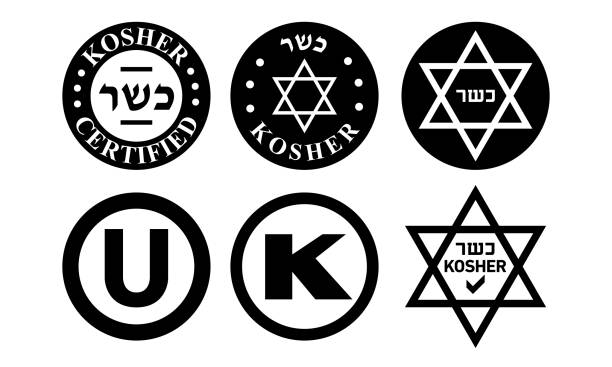
Kosher law (Kashrut)
A set of Jewish dietary rules that governs which foods are permitted and how they must be prepared.
Covenant
A covenant is a special, unbreakable promise between God and people. In Judaism, God made a big promise with the Jewish people, like at Mount Sinai, to care for them as they follow God's rules and traditions every day. In Christianity, people believe God made a "new" promise through Jesus, where Jesus takes care of our mistakes and offers God's forgiveness and love to everyone who trusts in him.
Diaspora
A population of people scattered across multiple regions outside their ancestral or geographic homeland who maintain cultural, religious, emotional, or political ties to their place of origin
Ethnic vs Universal religions
A universal religion (such as Christianity, Islam, or Buddhism) claims universal truth meant for all of humanity and actively seeks converts through missionary work, allowing it to spread globally across different cultures. In contrast, an ethnic religion (such as Hinduism, Judaism, or Shinto) is deeply tied to the specific ancestry, culture, and geography of one group of people, meaning membership is usually acquired by birth and the faith rarely seeks outside converts.

Sabbath (Shabbat)
A weekly day of rest, reflection, and worship observed in Abrahamic traditions, rooted in the seventh day of creation and the Ten Commandments.

Omnipotent, omniscient, omnipresent
All-powerful, all-knowing, all-present.
Basic details of major stories in Jewish Bible (Genesis, Noah and the Ark, Abraham, and Moses and Exodus). What do these stories tell us about key values, ideas, concepts, in Judaism?
Beginning in Genesis, the Creation story asserts monotheism and the inherent dignity of all humans made in God's image, while Noah and the Ark illustrates divine justice tempered by mercy through a universal covenant preserving life after a catastrophic flood. The narrative then narrows to Abraham, who models radical faith and hospitality by leaving his homeland to establish a sacred covenant with God, promising him descendants and a homeland in exchange for ethical devotion. Finally, Moses and the Exodus recounts the liberation of the Israelites from Egyptian slavery and the receiving of the Torah at Mount Sinai, cementing freedom, social justice, communal responsibility, and adherence to divine law as the defining obligations of Jewish life.
Nature of God in Jewish tradition
In Jewish tradition, God is understood as a single, indivisible, incorporeal creator who transcends the physical world while remaining active in history and human life.
Brahman
Brahman is the big, invisible "everything" in Hinduism, like a giant ocean that holds every wave, drop, star, tree, and person. Instead of being a person in the sky with a face or body, Brahman is the energy and reality that makes everything exist.
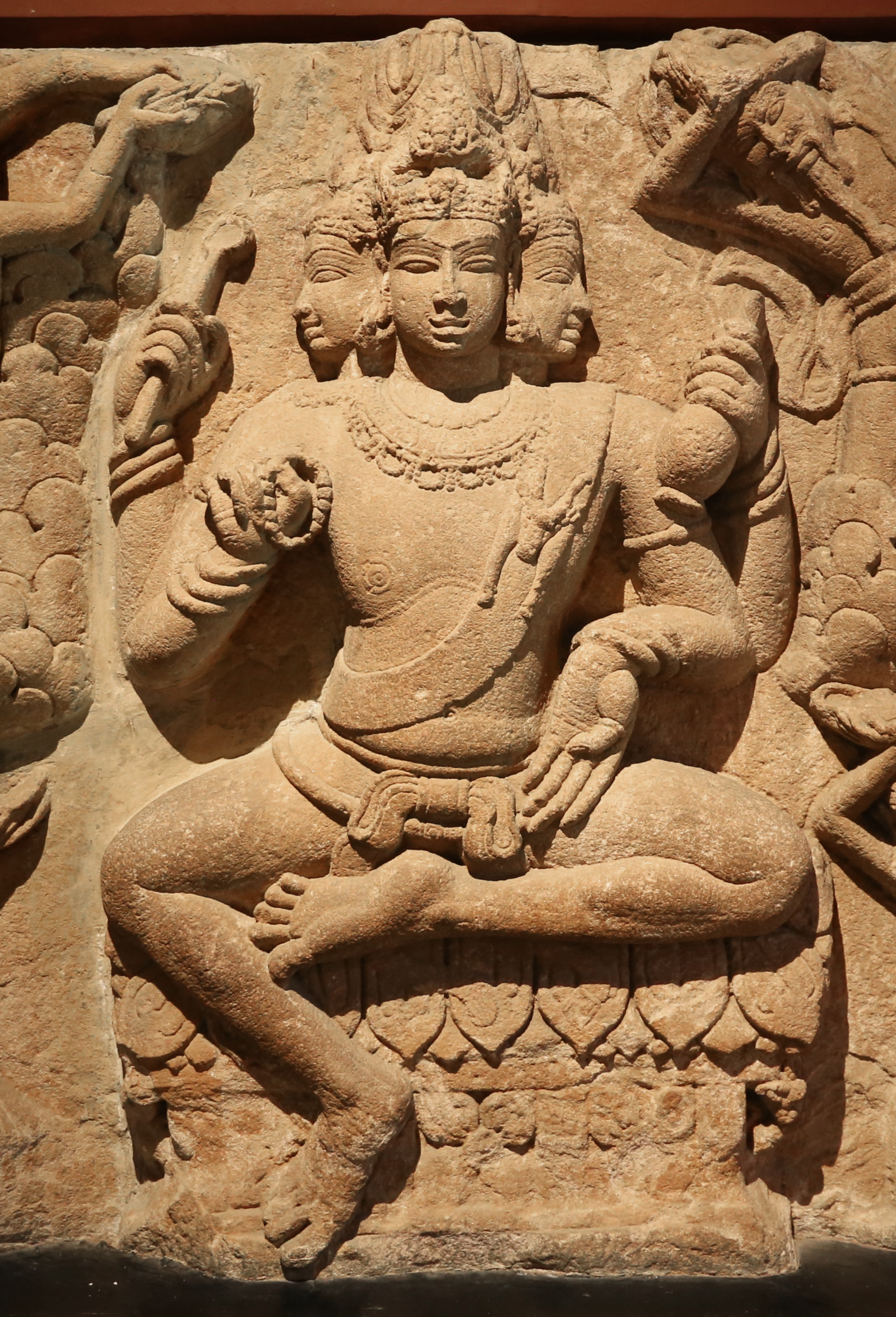
Brahma (The Creator)
Hindu god of creation, knowledge, and the Vedas

Vishnu (The Preserver)
Sustains and protects cosmic order (Dharma).
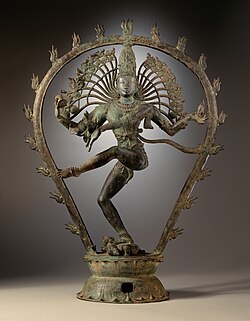
Shiva (The Destroyer)
Shiva is a major Hindu god who helps clear away old things so brand-new things can grow.
Caste
Long ago in ancient India, people started grouping society into different roles and jobs, which grew into what people call the caste system. Four main groups called varnas.
Aryans
A long time ago in ancient India and Iran, the word Aryan meant "noble" or "honorable" and described people who shared a language and way of life, not a race.
Dharma
Cosmic order, righteousness, moral duty, or spiritual teaching. Dharma is like the right way to do your part so everything around you stays fair, kind, and in order.
Karma
An ancient Indian philosophical and religious concept of cause and effect in which a person's intentions and actions influence their future.
Moksha
Liberation or release from Samsara, the cycle of death and rebirth.
Samsara
The ongoing cycle of birth, life, death, and rebirth
Reincarnation
The cycle of birth, death, and rebirth (samsara) in which an eternal soul (atman or jiva) moves from one body to another until it achieves liberation (moksha)
Good life in Hinduism
A good life in Hinduism balances four core goals: fulfilling moral duty (dharma), earning ethical prosperity (artha), enjoying wholesome pleasures (kama), and ultimately achieving spiritual liberation (moksha) from rebirth
What is the Hindu concept of God? Is Hinduism monotheistic or Polytheistic?
Many Hindus view Brahman as one supreme reality or God, with various deities acting as manifestations, forms, or aspects of that one divine source. It cannot be classified as either.
What do Hindus believe people must do to achieve Moksha? Include things about the Sayings of Sri Ramakrishna.
Overcoming ignorance and worldly attachments, fulfilling dharma (duty/righteousness), and realizing their true spiritual nature or union with the divine (Brahman).
Enlightenment/Nirvana
In Buddhism, enlightenment (bodhi) is awakening to the true nature of reality, while nirvana (nibbana) is the resulting state of liberation and peace from extinguishing greed, hatred, and delusion

The Buddha
A wandering religious teacher who lived in modern day Nepal and founded Buddhism. Real name Siddartha Gautama. Buddha was his title after enlightenment.
The Four Passing Sights
An old person, a sick person, a dead person, and a beggar monk
The “Middle Path”
Finding a calm, balanced way to live instead of swinging all the way to one extreme or the other
The Four Noble Truths
The Four Noble Truths are four big lessons from Buddhism that help us understand why we get upset and how to feel better: First Truth (Dukkha/Suffering): everyone feels sad, frustrated, or uncomfortable sometimes, like when your ice cream falls on the ground; Second Truth (Samudaya/Cause of Suffering): we feel bad because we want things to stay the same or we crave things we do not have, like wanting a new toy right now; Third Truth (Nirodha/Cessation of Suffering): we can stop feeling so bad by letting go of those greedy wants and accepting things as they are; Fourth Truth (Magga/The Path): there is a simple path of good habits—like being kind, telling the truth, and paying attention—that helps us feel peaceful and happy every day.
Eightfold Path
The Noble Eightfold Path is the Buddha's fourth Noble Truth and a practical guide to ending suffering (dukkha) and reaching awakening (nirvana). It represents a "middle way" between sensual indulgence and severe asceticism. It’s basically putting the Middle Path into practical use.
Parable of the Arrow
A story in which a man struck by a poisoned arrow refuses treatment until he learns irrelevant details about the shooter and weapon, risking death while delaying urgent care. This is important, since in Buddhism you want to focus on ending suffering, and dwelling on unanswerable questions wastes time and delays liberation.
Buddhist concept of suffering and the role that this concept plays in the core religious beliefs
In Buddhism, suffering (called dukkha) is the big, bumpy feeling we get when things don't go our way or when fun things come to an end, like when your favorite ice cream cone falls on the ground or a fun playdate has to stop. Buddhists believe that this happens to everyone because everything in the world is always changing, and we often get sad or grumpy when we try to hold onto things forever instead of letting them go. Understanding this bumpy feeling is the very first step in Buddhism's main plan—called the Four Noble Truths—because once you realize why you feel sad, you can learn how to stop clinging so tightly, be kind to yourself and others, and find a calm, super-happy peace inside that never goes away.