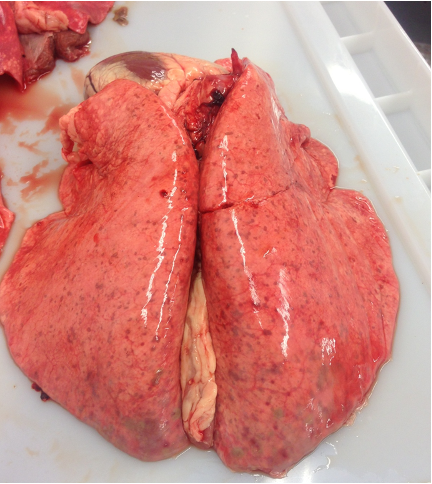
Red meat inspection
 Call Kai
 Learn
 Practice Test
 Spaced Repetition
 Match
 Flashcards
 Knowt Play
1/15

There's no tags or description
Looks like no tags are added yet.
16 Terms
What are the basic techniques that the PMI is based on?
Visual
Palpation
Incision
Smell
In what cases are carcasses split before PMI?
Domestic solipeds (horses / donkeys etc) & bovines > 8 months
Swine > 5 weeks
Not lambs, but sheep > 12 months (removal or spinal cord/SRM)
In what cases is just visual inspection carried out by default?
Pigs and bovines <8 months
What is the priority scale of how the actions will differ based on OV findings of diseases
Zoonotic if ingested
Zoonotic risk but not by consumption
Systemic processes
No zoonotic risk
Animal disease spread
Meat quality
Aesthetics
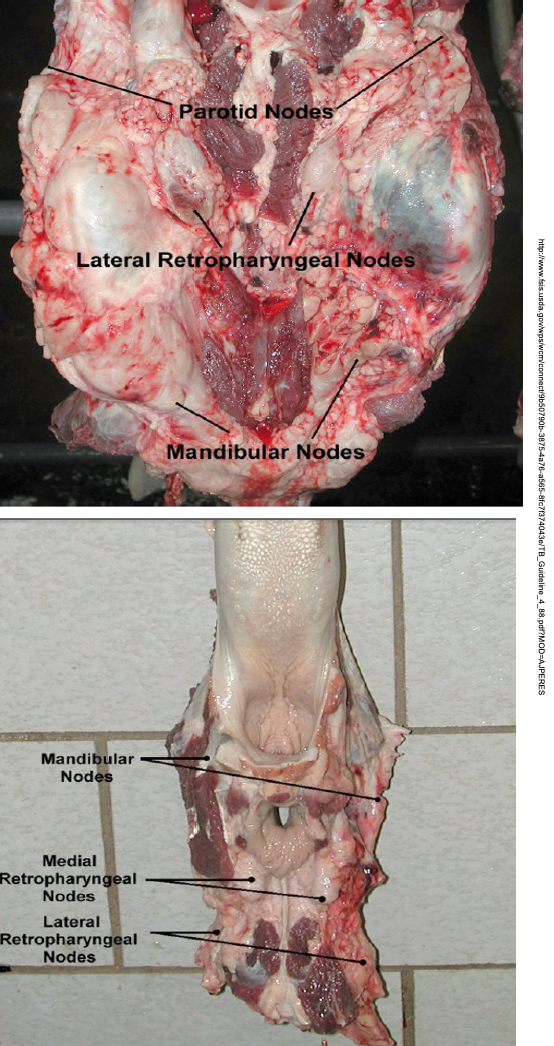
At what age is beef head inspection carried out? What does it involve?
>8 months
Visual inspection
Incision and examination of retropharyngeal LN, external masseters, 2 parallel invision to mandible and internal masseters
When there is risk to human health, animal health or welfare: submaxillary & parotid LNs incised & examined, palpate the tongue and fauces
At what age is offal inspection carried out?
>8 months
What are the different components of the offal inspection?
Visual of all of these
Trachea, oesophagus and lungs - bronchial and mediastinal LN incision
Pericardium and heart- incision lengthways
Liver, hepatic and pancreatic LNs- palpation of hepatic and pancreatic LNs
GI tract, mesentery, gastric and mesenteric LNs- incision and palpation of gastric and mesenteric LNs
Spleen - +palpation
Kidneys- incision and incision of renal LNs
Pleura and peritoneum
What should you be looking for at the point of carcass inspection?
Overall state (swelling, bruising, contamination, oedema)
Abnormal colour
Adhesions
Lymph nodes if needed
What are the three general stages of beef inspection?
Head inspection
Offal inspection
Carcass inspection
What weight of sample needs to be taken for trichinella spiralis?
1g for pig
5g for horse and wild boar
(Because of infective dose)
Where is the trichinella surveillance sample taken from?
Diaphragm
When is a trichinella diaphragm sample required?
Breeding domestic swine (sows and boars)
Wild boar (any age, whether wild or farmed)
Solipeds (any age)
All pigs that have not been reared in premises officially considered to apply controlled housing conditions (e.g. free range and organic pigs)
What is the alternative to trichinella testing?
Freezing-only for domestic (not often used)
Cooking inactivates it at >70°C
What are the different categorisations of erysipelothrix rhusiopathiae that will change the outcome?
Mild type: Diamonds visible on skin. Possible bacteraemia.
Judgement: depending on lesions
Acute or septicaemic.
Judgement: total rejection
Chronic: Arthritis, endocarditis, enlarged LNs
Judgement: local or total rejection depending on severity and extension of the lesions.
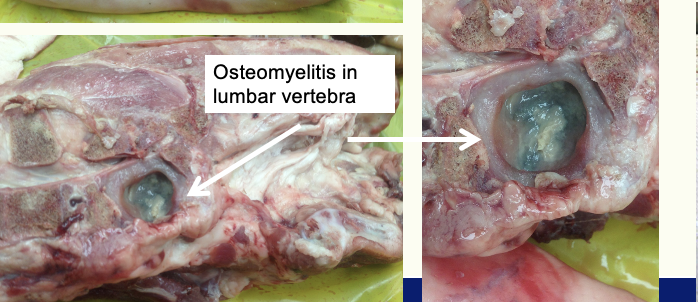
What can tail bites lead to at PMI?
Whole carcass might be moved as a Cat 2 ABP because of the osteomyelitis
All pathology found at PMI causes the classification of ABP to be Cat 2 except for 4 exceptions which can be classed as category 3 (lower risk) what are these 4 exceptions?
Liver fluke
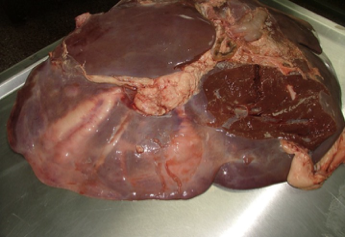
Melanosis
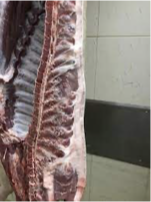
Milk spots
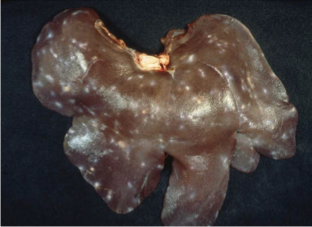
Muelleris capillaris