The Atom and Electron Configuration
0.0(0)
Studied by 0 people Call Kai
 Learn
Learn Practice Test
 Spaced Repetition
 Match
Match Flashcards
 Knowt Play
Card Sorting
1/42

Earn XP
Last updated 7:02 AM on 11/11/22
Name | Mastery | Learn | Test | Matching | Spaced | Call with Kai | Chat |
|---|
No analytics yet
Send a link to your students to track their progress
43 Terms
1
New cards
What is an atom?
The smallest particle of an element that has certain properties of that element
2
New cards
What are the three subatomic particles that make up an atom?
Protons, neutrons, and electrons
3
New cards
What does subatomic mean?
Smaller than an atom
4
New cards
What is the symbol for protons?
P
5
New cards
What is the symbol for electrons?
e-
6
New cards
What is the symbol for neutrons?
n
7
New cards
What charge do protons have?
+1
8
New cards
What charge do electrons have?
-1
9
New cards
What charge do neutrons have?
They have no charge
10
New cards
If +ve and -ve charges attract each other, what subatomic particle attracts what other subatomic particle?
Protons attract electrons
11
New cards
If all atoms have an equal number of p and e-, are atoms positive, negative, or neutral?
Neutral
12
New cards
What is the relative mass of a proton?
1 amu
13
New cards
What does amu stand for?
Atomic mass unit
14
New cards
What is the relative mass of a neutron?
1 amu
15
New cards
What is the relative mass of an electron?
1/1700 amu (basically 0)
16
New cards
Where do you find protons?
In the nucleus
17
New cards
Where do you find electrons?
In energy shells
18
New cards
Where do you find neutrons?
In the nucleus
19
New cards
What is the nucleus?
The centre of an atom that contains protons and neutrons
20
New cards
What do electrons occupy?
Distinct energy shells around the nucleus
21
New cards
What subatomic particles takes up 99.99% of an atoms volume?
Electrons
22
New cards
What is matter?
Anything with mass and volume
23
New cards
Where does the mass of an atom come from?
Protons and neutrons in the nucleus
24
New cards
Where does the volume of an atom come from?
Electrons in energy shells that surround the nucleus
25
New cards
How do you read the periodic table?
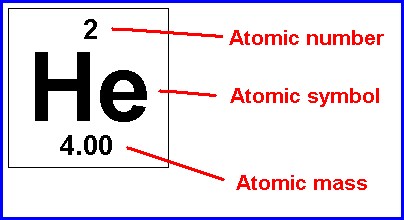
26
New cards
What is the atomic number of an element?
The number of protons in an atom
27
New cards
How do you know how many electrons an atom has?
Atoms are neutral and always have the same number of electrons as they do protons
28
New cards
What is the atomic mass?
The average mass of the atoms in an element
29
New cards
Why is the atomic mass sometimes a decimal?
Because of isotopes
30
New cards
What is an isotope?
A variant of an element which differs in the number of neutrons in the atom.
31
New cards
Do isotopes differ in how many protons there are in the atom?
No, all atoms of an element will have the same amount of protons
32
New cards
How do you calculate now many neutrons are in an atom?
Atomic mass minus the atomic number = the number of neutrons
33
New cards
What do you do if you calculate the number of neutrons in an atom and you get a decimal number?
You round, the number of neutrons is always a whole number
34
New cards
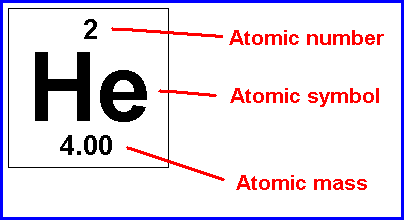
How do you write the symbol of an element?
The first letter is always capital and the rest are lowercase (See picture for example)
35
New cards
If Carbon has 6 protons, how many electrons does it have?
6
36
New cards
If carbon has an atomic mass of 12 and an atomic number of 6, how many neutrons does it have?
6
37
New cards
What order do you fill the shells when drawing bohr diagrams?
You always fill the innermost shell, then fill each shell after that
38
New cards
What shell has the lowest energy level?
The first shell
39
New cards
How many electrons can be on the first shell?
2
40
New cards
How many electrons can be on the second shell?
8
41
New cards
How many electrons can be on the third shell?
8
42
New cards
What is the electronic configuration of an atom?
The number of electrons in each shell
43
New cards
How do you write the electronic configuration
You write now many electrons are in the first shell, then the second shell, then the third. Ex. A chlorine atom has 17 electrons. First you fill the first shell, which holds two electrons. Then you fill the second shell, which holds 8 electrons. Then you fill the third shell, and you put 7 electrons in that shell. The electronic configuration for a chlorine atom would be 2, 8, 7. The first shell holds 2 electrons, second 8, and third 7.