urinary incontinence mohammad
 Call Kai
 Learn
Learn Practice Test
 Spaced Repetition
 Match
Match Flashcards
 Knowt Play
1/43

There's no tags or description
Looks like no tags are added yet.
Name | Mastery | Learn | Test | Matching | Spaced | Call with Kai | Chat |
|---|
No analytics yet
Send a link to your students to track their progress
44 Terms
urinary frequency is micturition more than _____ times per day
8
nocturia is more than ______ void(s) per night
1
which gender and age is most affected by urinary incontinence
women during menopause (almost 2x than men)
describe the normal physiology of how urine is releases
muscles/receptors/etc
to urinate:
detrusor contraction= M3
urethral relaxation= no adrenergic stim
inhibit urine:
detrusor relaxation= B3
urethra= a1
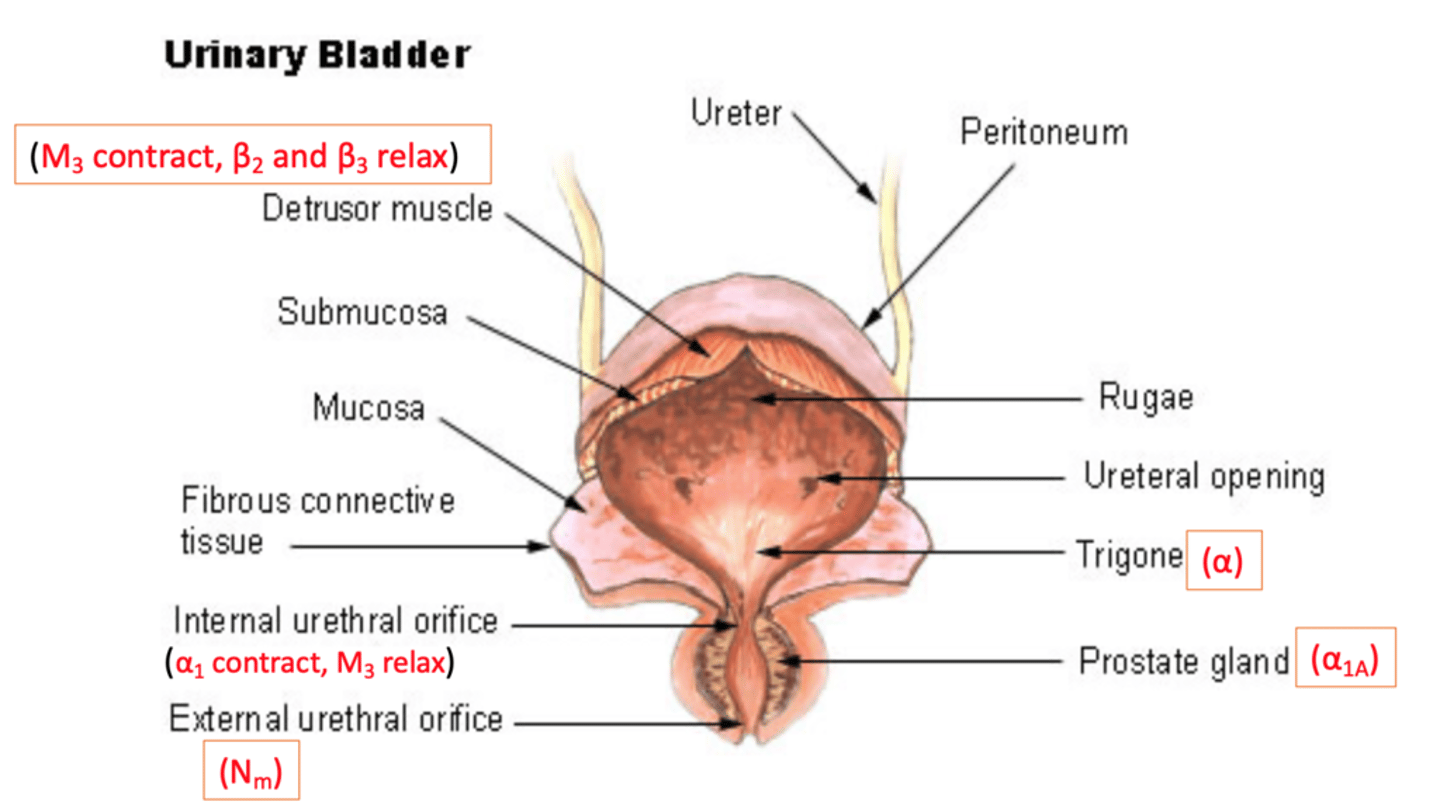
which receptor(s) would result in urine inhibition
detrusor= B3
urethra=a1
which receptor would result in urination
detrusor= M3
urethral relaxation= no adrenergic stim
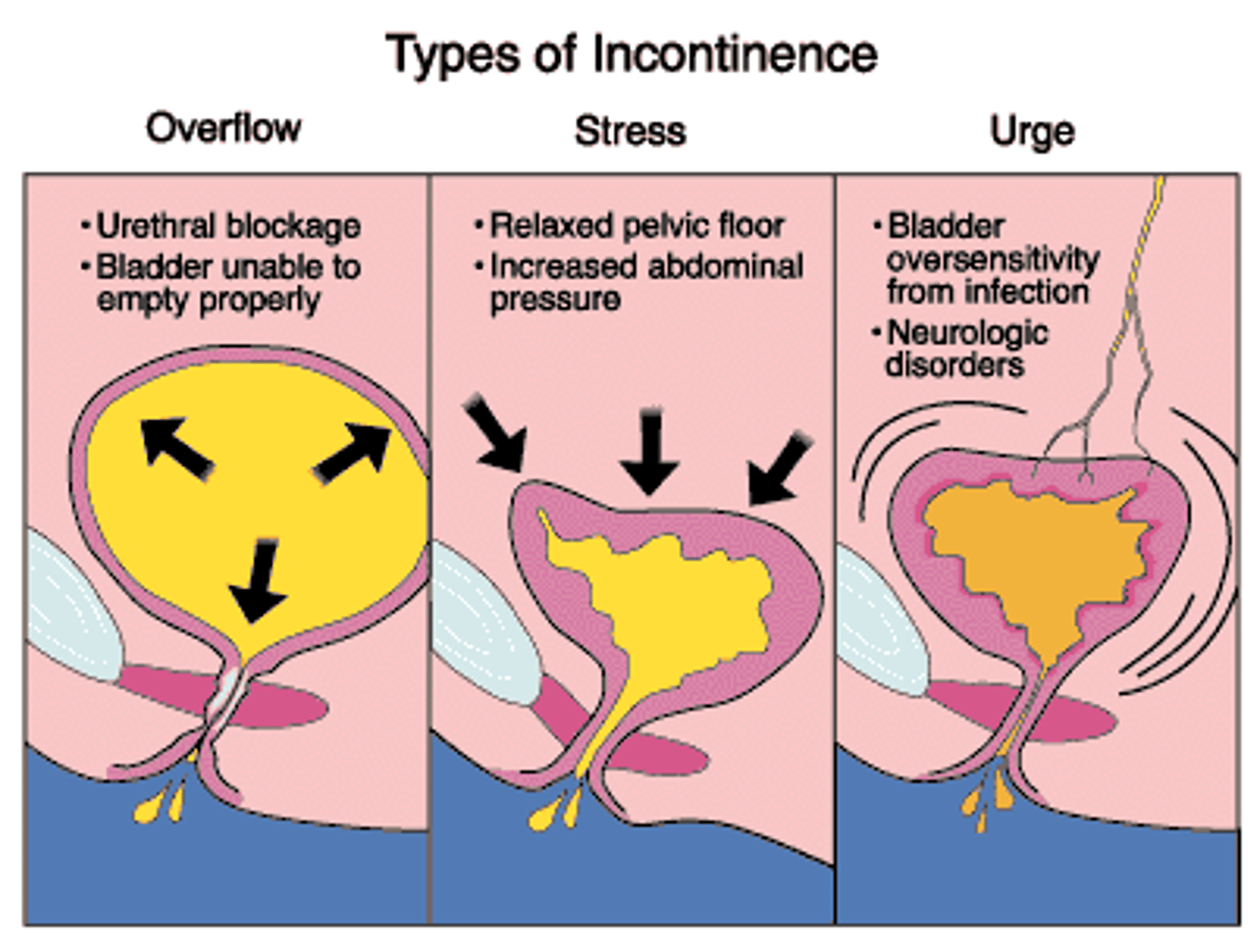
STRESS INCONTINENCE
etiology/receptors
s/s
- urethra not closing/weak (a1)
- when intra abdominal pressure increases
- small amounts of urine lost during activity, sneeze, cough, laugh
-no incontinence when sleeping/resting!
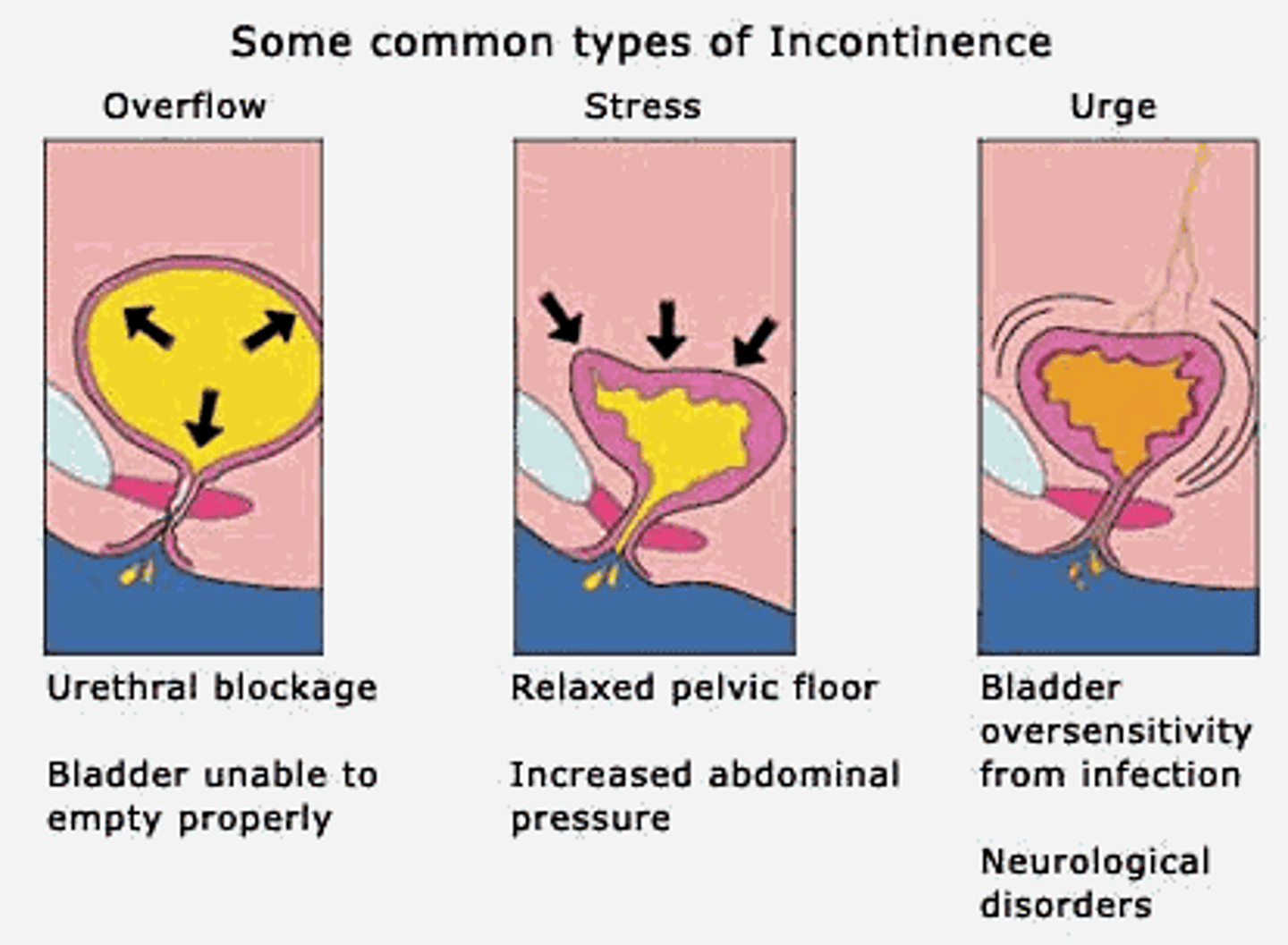
STRESS INCONTINENCE
risk factors
pregnancy
child birth
menopause
age
(remember this is bc of a weak urethra-> urine leaks out during activity)
Urge incontinence (OAB)
etiology/receptors
s/s
- bladder is overactive/ detrusor is contracting (M3)
urgency, frequency, nocturia
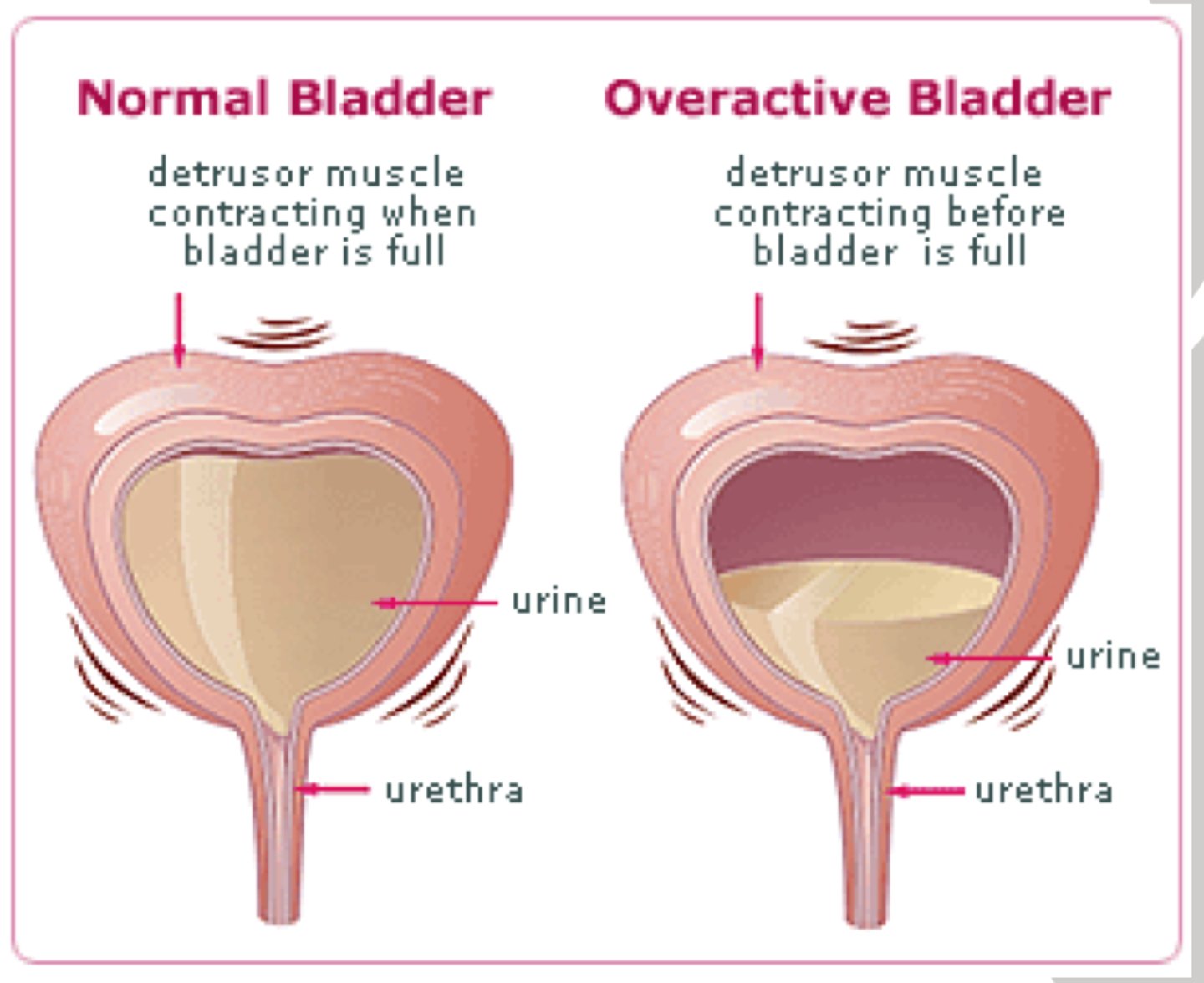
urge incontinence
risk factors
age, neurologic disease
(this is when detrusor contracts even if bladder isnt full)
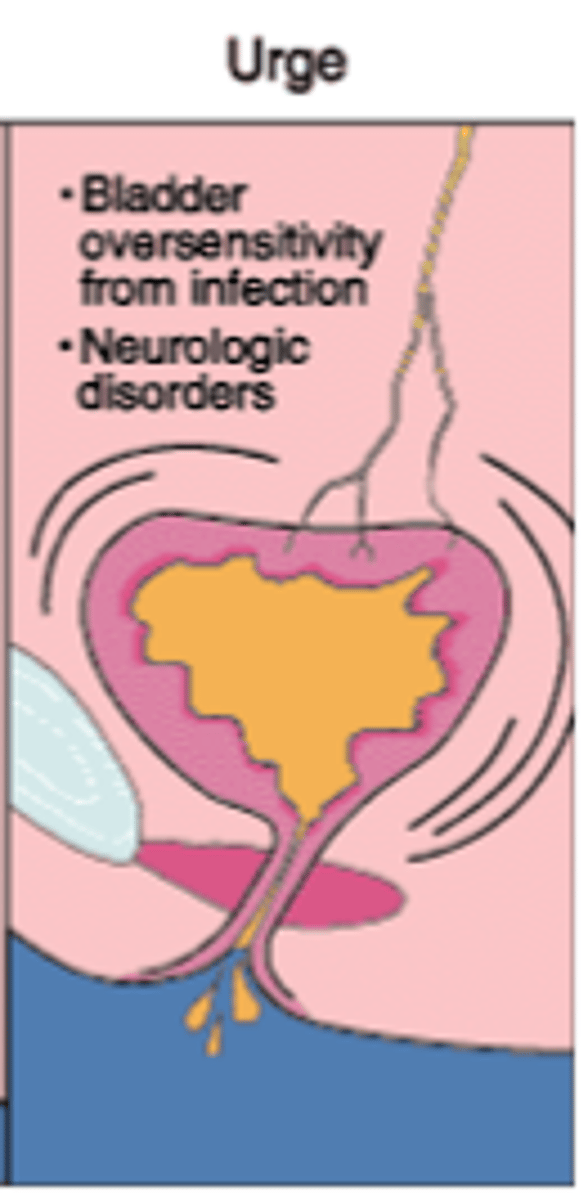
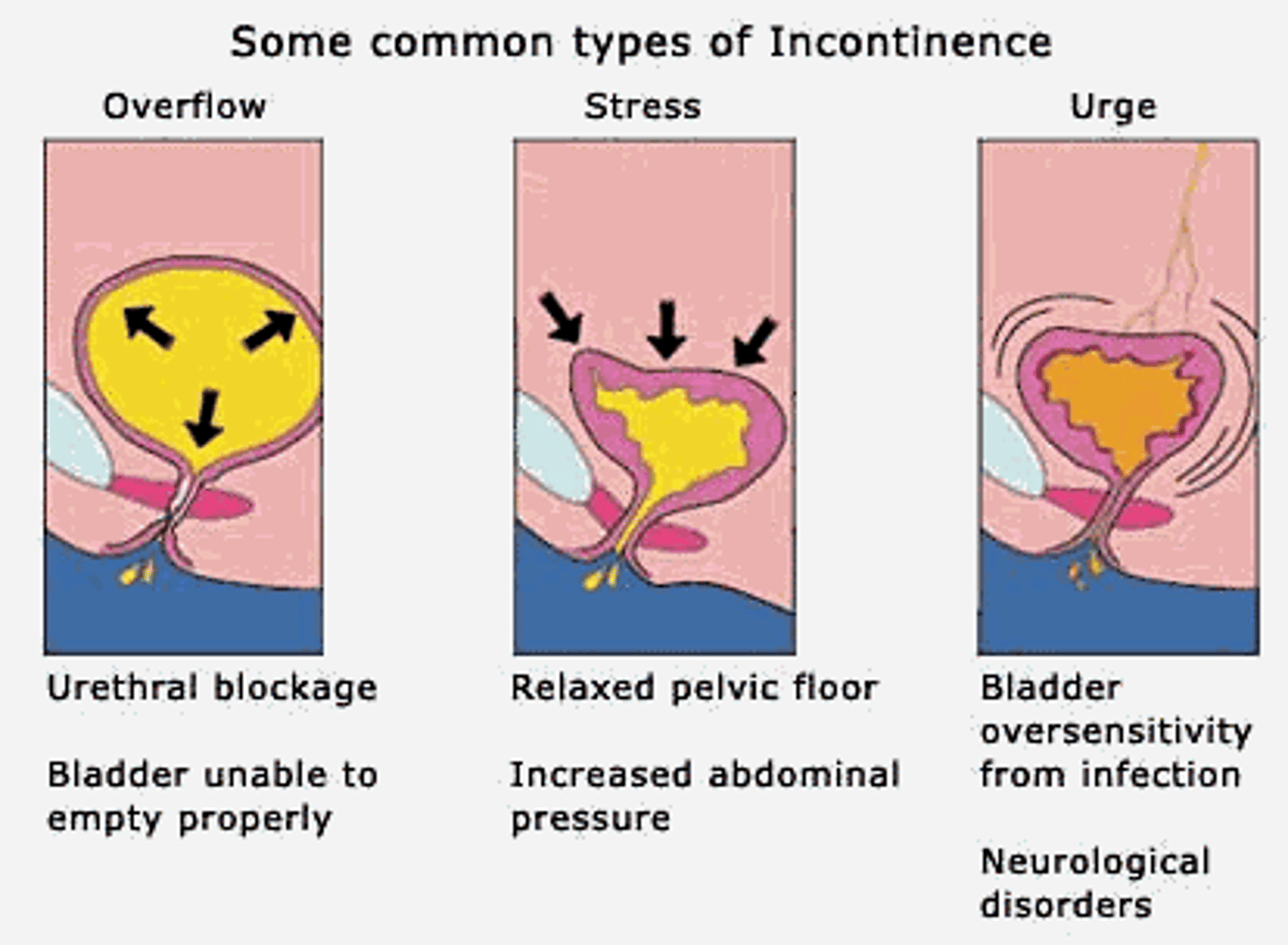
overflow incontinence
etiology
s/s
- urethra overactive (closes)
- bladder underactive (relaxed)
overfilled bladder that cant empty= leaks out
-sense of fullness, incomplete bladder emptying, frequency, straining
overflow incontinence
risk factors
bladder outlet obstruction (BPH)
spinal cord injuries
pelvic surgery
mixed incontinence
etiology
bladder is overactive (contracting) and urethra is underactive (not closing)
mix of stress (urethra) and urge (bladder overactive)
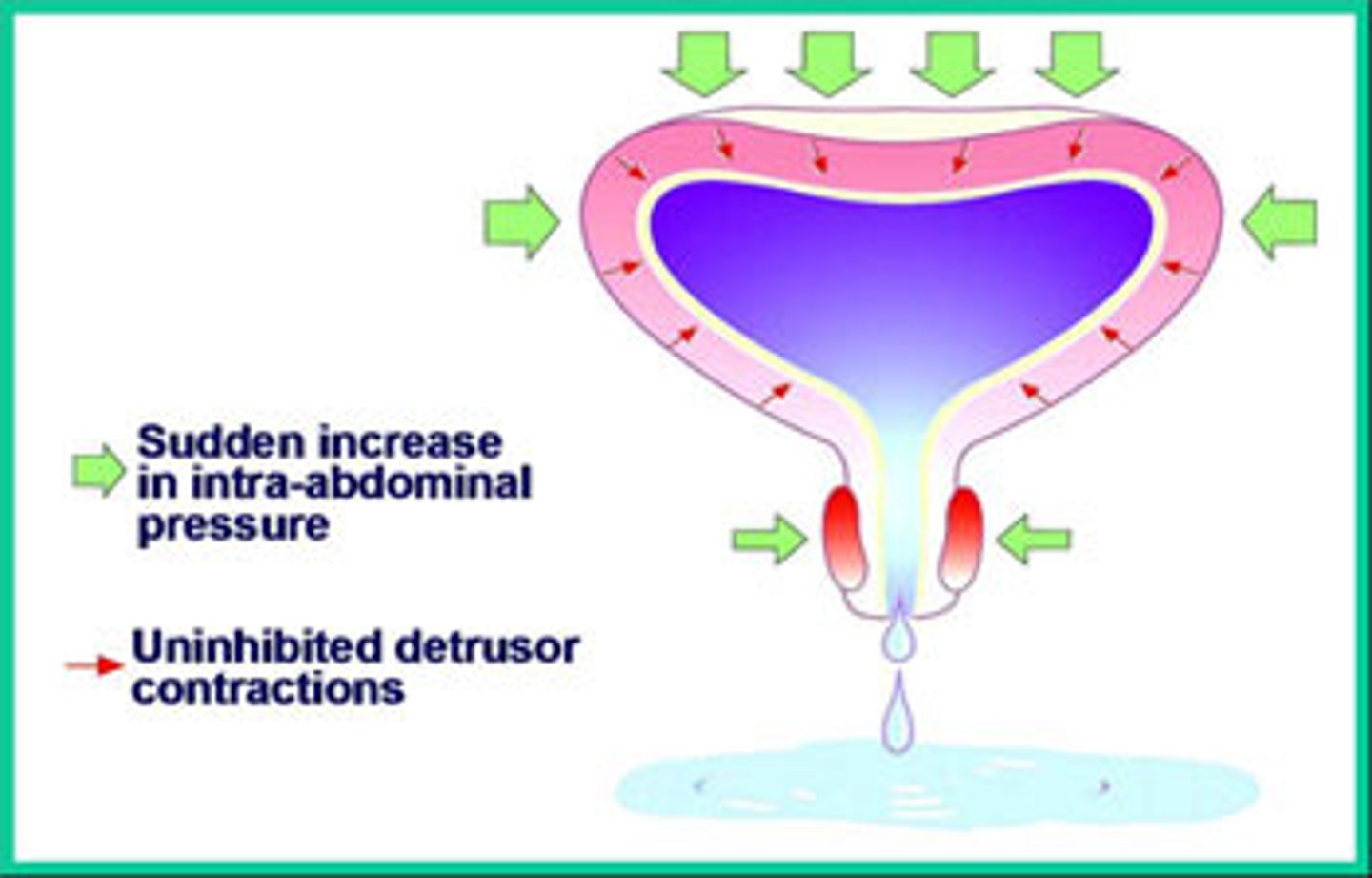
what is mixed UI a combo of
stress (weak urethra) and urge (detrusor contracting)
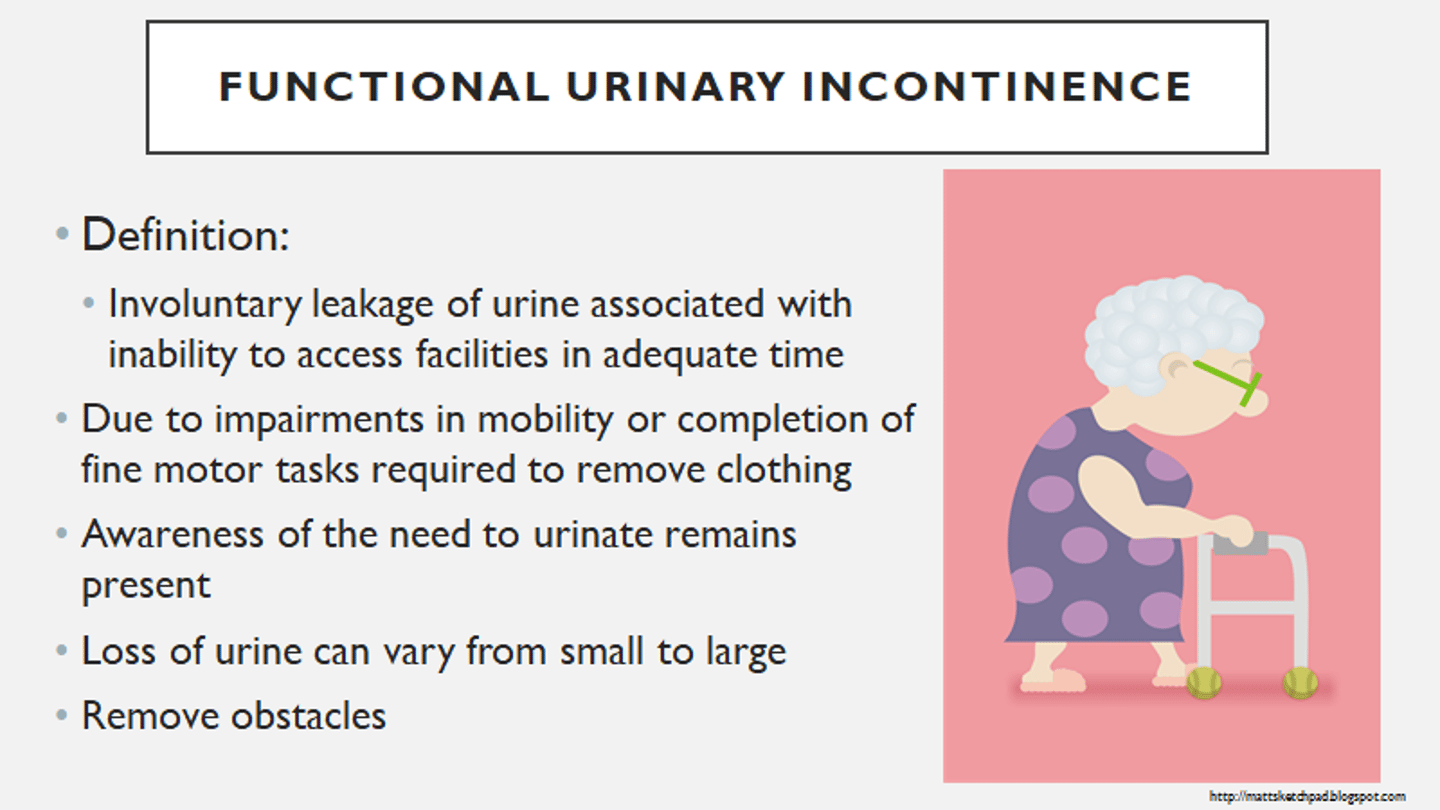
functional incontinence
etiology
risk factors
physiology is normal, but underlying disease (ex: dementia, immobile) prevents reaching toilet in time
risk factors: cognitive impairment, musculoskeletal limitations
how can overflow incontinence be diagnosed
measure amount of urine left in bladder after normal urination
normal: <50
repeat: 50-100
dysfunction: >200ml
what is first line therapy for UI
non-pharm
what lifestyle modifications should be recommended to pts with UI
- smoking cessation
- avoid caffeine and alcohol
- weight loss
- prevent constipation
other than lifestyle modifications, what non pharm tx is recommended for UI
- toilet scheduling: schedule time to go, increase time btwn breaks
- pelvic floor muscle exercises/Kegel: squeeze like youre trying to stop urine
which drugs can make all types of UI worse by increasing overall urination
- diuretics
- SGLT2 inhibitors (jardiance)
which drugs can make functional incontinence worse and why
impair cognition
- opioids
-benzos
- antipsychotics
- anticholinergics
which drugs make stress incontinence worse and how
relax urethra: alpha-1 antagonist (terazosin)
induce cough: ACE inhibitors
which drugs make overflow incontinence worse and how
relax detrusor(B3 or block M3): calcium channel blockers
anticholinergics/psychotics,
TCAs,
skeletal muscle relaxants
contract urethra(a1):
adrenergic agonist (pseudoephedrine),
alpha agonists (clonidine),
beta blockers
which drugs make urge/OAB worse and how
make detrusor contract (M3 ag)
cholinesterase inhibitors (donepezil)
bethanechol
functional UI
pharm tx:
no pharm agents. must remove underlying cause (why is there cognitive barrier?)
stress urinary incontinence
pharm tx:
remember due to weak urethra.
1. local estrogens
- estrogen vaginal cream 0.5g 3x weekly
- estradiol vaginal ring q3months
2. a1 agonists (to contract urethra)
- pseudoephedrine 15-60mg tid
- phenylephrine 10mg qid
3. duloxetine (in europe) bc NE reuptake inhibitor
when can local estrogens be used to treat UI?
mech?
examples?
AE?
stress incontinence to strengthen urethra
mech: increase thickness of urethral tissue/tone
- estrogen vaginal cream or ring
AE: vaginal spotting, breast tenderness, nausea
when can a1 agonists be used to treat UI?
examples?
AE?
CI?
stress incontinence to contract urethra (a1)
-pseudoephedrine, phenylephrine
AE: dizziness, increased bp, insomnia, headache
CI: HTN, arrythmias, CAD
t/f: a combination of local estrogens and a1 agonists may be more effective than monotherapy for stress UI
true
pharm tx for overflow incontinence
usually only non pharm
1. treat underlying obstruction (ex: BPH)
2. bethanechol (M3 contraction)
3. catheterization
pharm tx for urge UI/ OAB
problem is constant detrusor contractions (need M3 block or B3 stim)
1. anticholinergic/ antimuscarinic (m3)
-oxybutynin, tolterodine, fesoterodine, darifenacin, solifenacin, trospium
2. b3 agonists
- mirabegron, vibegron
which formulations for anticholinergics have the most side effects? least?
(most) IR> ER> topical (least)
where are M1, M2, and M3 receptors found? which AE are prominent due to blockade?
M1= nerves, salivary gland
- dizzy, impaired memory/cognition, dry mouth
M2= detrusor, heart, GI
- relax bladder, tachycardia, QT, constipation
M3= detrusor, salivary gland, GI
- relax bladder, dry mouth, constipation
which antimuscarinic agents can treat OAB? which have better tolerability due to greater affinity for M3?
agents: oxybutynin, tolterodine, fesoterodine, darifenacin, solifenacin, trospium
better= darifenacin, solifenacin, trospium
oxybutynin
use?
tolerability?
Ditropan
antimuscarinic for OAB
reduces detrusor contractions but also blocks salivary glands (dry mouth)
-most difficult one to tolerate!
why is oxybutynin ER and gel better tolerated than IR
ER has less first pass and less of the active metabolite. Gel bypasses the liver altogether= less active metabolite
tolterodine
Detrol
antimuscarinic for OAB
- better than oxybutynin bc less lipophilic so less reaches brain
fesoterodine
Toviaz
antimuscarinic for OAB
-this is prodrug of tolterodine, less side effects
darifenacin
Enablex
blocks M3, for OAB
more selective= better tolerated
solifenacin
vesicare
blocks M3, for OAB
more selective= better tolerated
trospium
Sanctura
blocks M3, for OAB
more selective= better tolerated
which B3 agonists are used for OAB
mirabegron (myrbetriq)
vibegron (Gemtesa)
t/f: combining an antimuscarinic and b3 agonist is more effective than monotherapy for OAB
false
after how long should you consider switching to another agent if the first one isnt working
8-12 weeks (up to 3 months)