Extreme Environments and Light
 Call Kai
 Learn
Learn Practice Test
 Spaced Repetition
 Match
Match Flashcards
 Knowt Play
1/67

There's no tags or description
Looks like no tags are added yet.
Name | Mastery | Learn | Test | Matching | Spaced | Call with Kai | Chat |
|---|
No analytics yet
Send a link to your students to track their progress
68 Terms
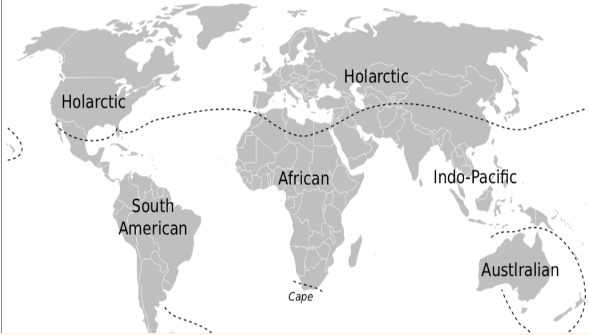
Floristic Kingdoms
Taxonomic groupings that reflect geological and evolutionary history
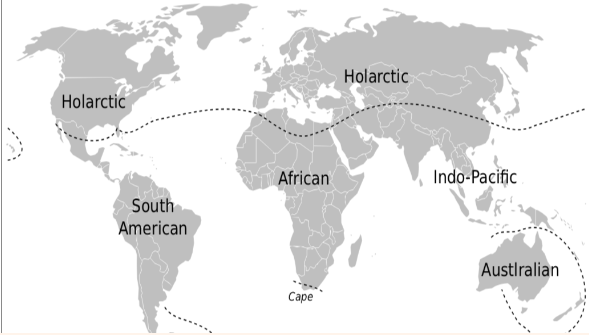
Holarctic
Most of North America and temperate Laurasia
a Floristic kingdom

South American
From South Florida to Patagonia
a Floristic kingdom

African
All of Africa except the Mediterranean area
a Floristic kingdom

Indo-Pacific
From India to Pacific Island (Southeast Asia)
a Floristic kingdom

Australian
Australia and some surrounding islands
a Floristic kingdom
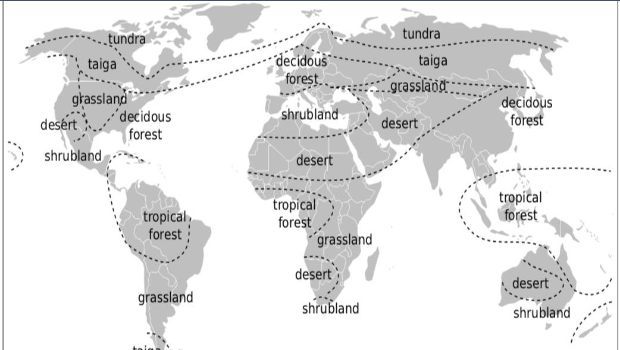
biomes
distinct region defined by its ecology and vegetation
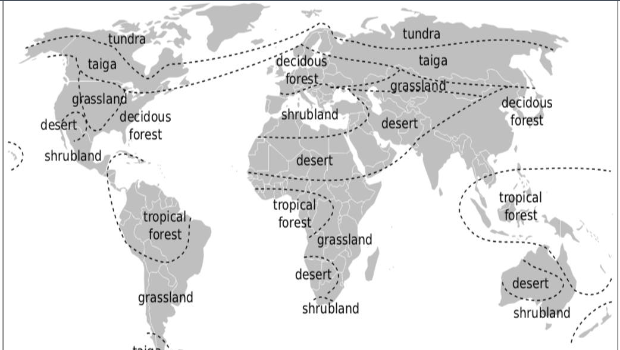
Tundra
Small-sized plants adapted to short seasons
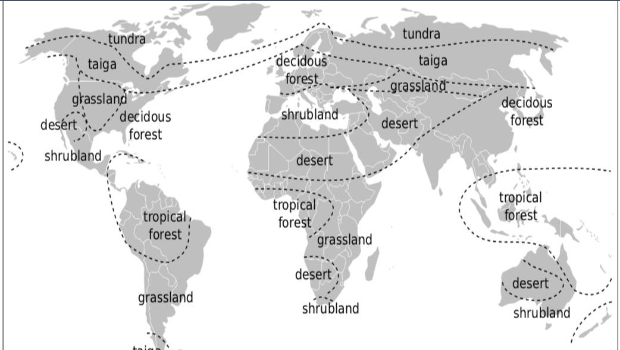
Taiga
Conifer Forests ‘northern’
ex: Canada

Deciduous Forests
Broad-leaf temperate forests (us in east America)

Grasslands
Prairies, Steppes, Savannah, Pampas
Shrublands
Chaparral, Scrub, etc. (westcoast US like California)

Desert
Plants are further apart than in shrublands, little water
Tropical Forests
Humid and warm with peak diversity
Environmental Factors
external influences that can impact the operation of the system
can be abiotic or biotic
Biotic factors
Resulting from interactions with other organisms such as : herbivory, infection, symbiosis, competition
ALIVE
Abiotic Factors
Nonliving components of environment. Includes parameters (temperature, pH, humidity, soil) and resources (light, water, minerals) that determine growth - as well as others that can add stress (ex: pollutants)
Limiting Factors
One environmental factor at suboptimal level can limit plant processes. things preventing plant from thriving
ex: At a given light intensity level photosynthetic rate can be limited by level of CO2
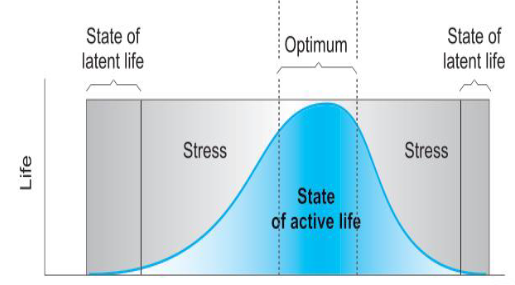
Stress
Occurs when essential factors (such as light, water, oxygen, nutrients) are at inappropriate levels (higher OR lower) outside of optimal range
diff from environmental noxa!
Environmental Noxa
Factors that trigger stress at ANY concentration. never good, bad at all lvls
heavy metals, pollutants, etc.
State of Latent Life
Minimal life processes occur when stress factors are too high/low
‘coma’ not doing much but not dead
Dormancy
an adapted latent life stage - triggered by environmental cues. Involves physiological changes (e.g. abscession (shedding) of leaves, production of bud scales, etc).
avoiding bad temperatures until conditions improve
Avoidance Strategy
Seeds and spores allow annual/ephemeral plants to avoid moments of highest environmental stress.
complete life cycle super quickly. will be dormant for most of life, then in small period where env. is good, they do everything in that short time
Mesophiles
Plants that require moderate temperatures to grow.
Hardening
The process by which tolerable stress levels trigger the plant to prepare for extreme conditions
a heads up to prep for extreme conditions
what are some changes plants make to adapt to extreme high temps?
dormancy or avoidance
in leaves:
change surface hairs
smaller, thicker leaves in high temp
angle leaves to reduce sunlight exposure
general:
increase transpiration if in hot wetlands
find shade or make it
Leaf Changes - Surface
Hairs can reduce evaporation and reflect intense sunlight
in high temps
Leaf Changes - Size
Smaller, thicker leaves help minimize effect of high light intensity
in high temps
Leaf Changes - Angle/Position
Some species (e.g. legumes) can move leaves to reduce exposure to sunlight.
in high temps
Transpiration
increased transpiration can help maintain the plant cooler than surrounding environment
adaptation to high temp if plant is in a wetland or swamp
Shading
Plants use some structures to protect others from direct sunlight
in high temps
Avoidance Strategy - Temperature
In hot environments, many species are short-lived annuals (ephemeral) - avoiding worst conditions
what r some adaptations to cold environments?
Rosettes/low growing plants → protect against weight of snow flattening them and env. is warmer closest to ground
Evergreen → high concn of sugar in leaves to reduce freezing pt.
Deciduous → lose leaves (abcession) and bud scales to protect axillary meristems
Rosette/Low growing plants
Protected against weight of snow & environment warmer close to ground
in cold env.
Evergreen Plants
High concentrations of sugar in leaves act as anti-freeze (reduces freezing pt.)
in cold env.
Deciduous Plants
Leaf abscission (shedding) and bud scales to protect axillary meristems in cold environemnts
Photosynthesis
A process that requires sunlight, carbon dioxide, and water as reactants and produces sugars and oxygen.
Chlorophyll
A green pigment found in the chloroplasts of plants, algae, and some bacteria
captures sunlight in the thylakoid membranes of chloroplasts

Thylakoid
A flattened membrane sac inside the chloroplast, used to convert light energy into chemical energy.

Sunlight
(via photosynthesis) produces the vast majority of energy for life on Earth.
intensity + composition vary w location, time, and season
Light - Too Low
Negative energy balance - not enough photosynthesis to cover plant's metabolic requirements
Light - Too High
Unused energy can lead to oxidative stress.
what can plants move to control exposure to light?
many can change position of their leaves
pulvini → joint like thickenings @ base of leaf that allows them to move
ferns, mosses, and some seed plants can move their chloroplasts to diff parts of the cell
Pulvini
Joint-like thickening at base of leaves ( in petiole) (ex: legumes) that allows for movement of leaves. do this to control their exposure to light
Chloroplasts
Capture energy from sunlight and use it to produce food for the cell. They will move to different parts of the cell
to increase or reduce exposure to light!
Sun Leaves
Smaller and thicker, with well- developed mesophylls and several layers of palisade cells - epidermal hairs might
minimize excess sunlight.
exposed to lots of sunlight so have chloroplasts w small grana and few stromal thylakoids. Photosystem has small properotion of antenna and many rxn centers
Shade Leaves
Larger and more tender, with weakly develop mesophylls - epidermal cells might act as lenses to increase/magnify light capture!
have large grana and many stromal thylakoids to maximize sunlight. Photosystems have large proportions of antenna and few rxn centers
Sun Leaves - Subcellular Level
Chloroplast with small grana and few stromal thylakoids cuz dont need to maximize sunlight since they alr get so much
Photosystem (Sun Leaves)
Small proportion of antenna and many reaction centers
Shade Leaves - Subcellular Level
Chloroplast with large grana and many stromal thylakoids cuz have to maximize sunlight
Photosystem (Shade Leaves)
Large proportion of antenna and few reaction centers
which type of leaf has few reaction centers and large proportions of antennas in their photosystem?
shade leaves
which type of leaf has small grana with few stromal thylakoids?
sun leaves
what r some ways plants spread (horizontal) to look for light?
stolons
aboveground stems! dvlp plantets
stoloniferous rhizomes
belowground stems! same as stolon
suckers
root instead of stem but does same thing
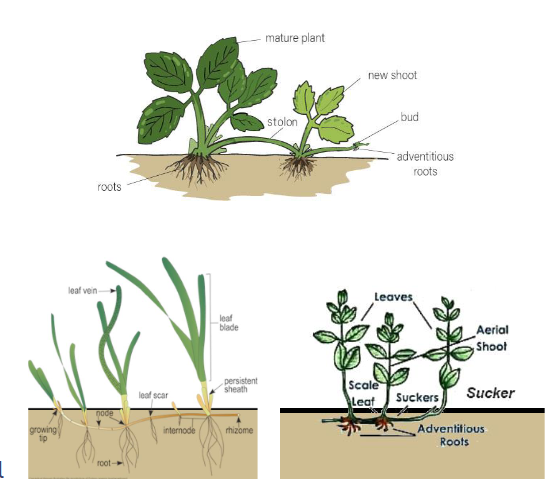
Stolons
Aboveground stems; emerge from crown and bend downwards; develop plantets where they touch the ground
Asexual!

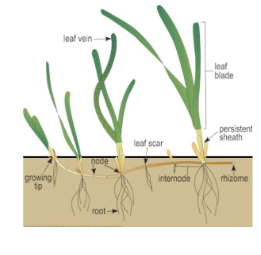
Stoloniferous Rhizomes
Belowground stems; upright shoots develop from axillary buds in nodes; adventitious roots in underside
Suckers
Upright roots/shoots growing from horizontal roots (aka "adventitious shoots")
same as belowground stem function but diff tissue!

how can plants climb to search for light?
twiners
stems of vines grow in spirals. supports itself
tendrils
modified leaf or short stem that hugs + provides support for main stem
adhesive pads
at tips of tendril-like short stems that allows them to stick to walls

Twiners
Stems of vines that grow in spirals around objects such as small trunks.
These stems support themselves!

Tendrils
Modified leaf or short stem that wraps around objects they touch. “hug”
These leaves/stems provide support for main stem

Adhesive Pads
At the tips of tendril-like short stems. These pads allow plants to attach to walls

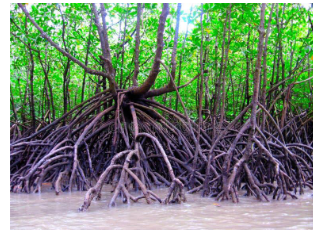
Supportive Roots
Roots that plants form in soft wet soils to help them grow taller
buttress roots
prop roots
Buttress Roots
Roots that are wedge-shaped, tall and wide - they prevent shallow-rooted trees from falling over in soft, wet soils
a type of supportive root

Prop Roots
Advetitious/aerial roots that arise from the trunk (or large branches) and grow downwards to provide support in
shifty wet soil conditions (e.g. mangroves)
a type of supportive root
how can plants steal light?
epiphytes
grow in wet areas and use roots to grasp tree branches and take water
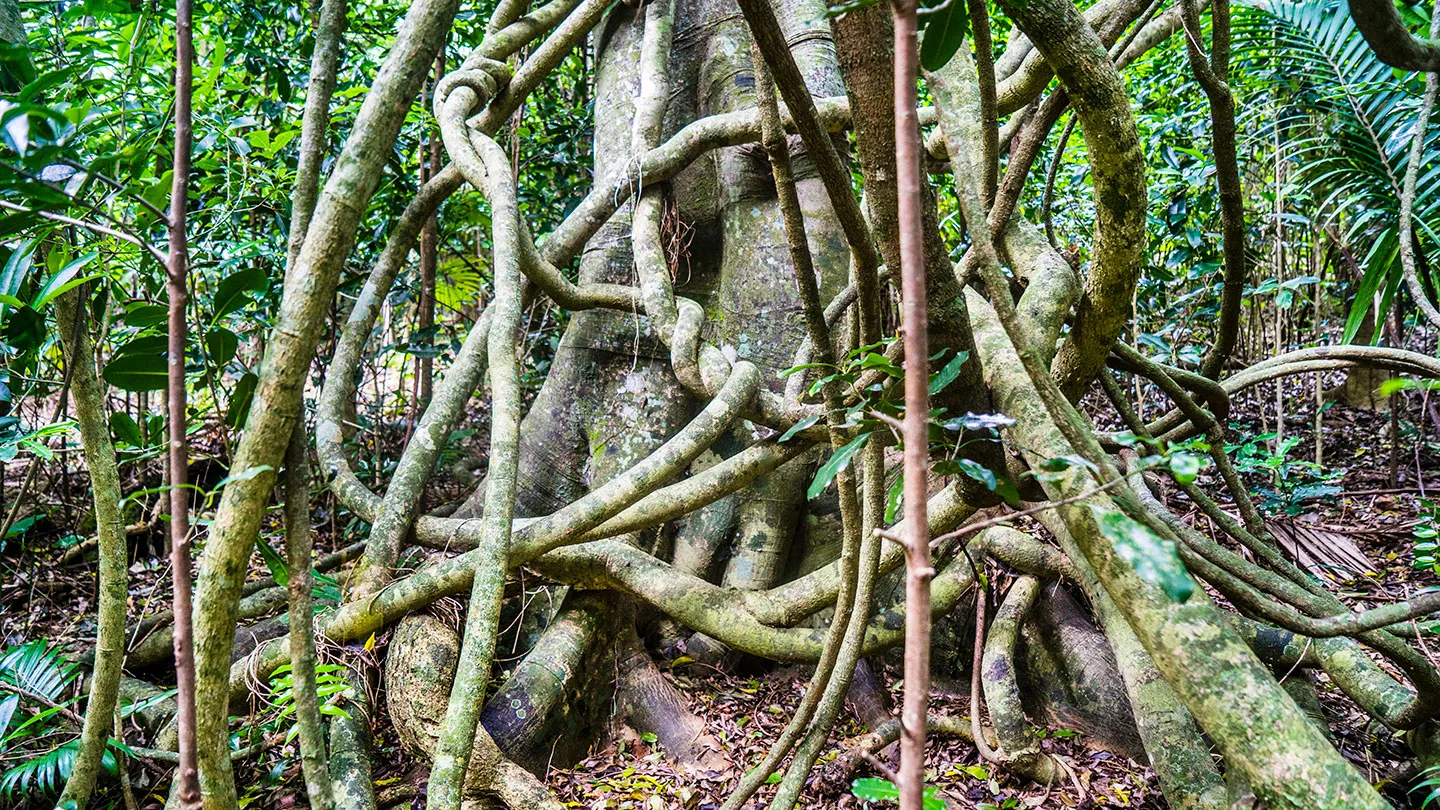
lianas
in rainforests. spread horizontally in canopy of rainforest

Epiphytes
Plants that grow in wet areas. They use their roots to grasp tree branches (instead of water absorption)
steal light

Lianas
Typically in rainforests; woody, creeping vines that spread through the canopy of rainforests spreading their leaves to the sun.
steal light
Raunkiaer hypothesis
Scientist that proposed a sequence of life forms/classification based on how they deal with protecting their meristem.
tried to explain why lower latitude flora is dominated by trees vs higher latitude by smaller herbaceious plants (shorter in cold)