622 10/28 GLA pt 3 Bacteria and Viruses
 Call Kai
 Learn
 Practice Test
 Spaced Repetition
 Match
 Flashcards
 Knowt Play
1/81

There's no tags or description
Looks like no tags are added yet.
82 Terms
Obligate Intracellular Parasites
viruses depend on host for replication and survival
Viruses
10-100x smaller than host cell, cannot be seen using light microscope, must be visualized using electron microscope
has to use host resources, disrupting host homeostasis and contributing to clinical presentation
Bacteria vs Virus Chart

Acellular
distinguishes viruses, no ribosomes for protein synthesis, no mito for energy, no metabolic enzymes for biochemical processes, can’t make ATP
Receptors
specific cellular structures that viruses need to identify adn bind to, determines tissue tropism and species specificity
3 Components of Viral Structure
genetic material (either DNA or RNA)
capsid (protective protein shell)
outer lipid envelope (not always)
Virion
virus particle, complete infectious virus, extracellular, outside of host cells
nucleic acid genome surrounded by protein coat and sometimes additional layers of material (envelope)
What facilitates transmission of a virus between host cells?
virion
Virion Diagram

Ligand
on virus particle to help it bind to host, often part of capsid shell or the envelope
interact with receptors on host
Ligands and Receptors
ligand of virus particle matches host receptor like a key and lock
determines virus’s tropism and host range
DNA Viruses
most posess dsDNA (double-stranded), linear or circular, range from small as 5kb to large as 200 kb
icosahedral capsid, replicate in nucleus, use host enzymes for replication
ssDNA
only present in parvoviridae family
RNA Viruses
posess +ssRNA (single-stranded positive-sense), -ssRNA (single-strand negative-sense), and dsRNA
Segmented Genome
quality of some RNA viruses (influenza and rotavirus) that enable genetic reassortment and greater evolutionary flexibility
RNA Virus Mutation Rate
10,000x higher than DNA viruses bc of lack of proofreading mechanism in RdRp
contributes to rapid viral evolution, antigenic drift, and challenges in vaccine development and long-term immunity
RNA-dependend RNA polymerases (RdRp)
enzyme that RNA viruses use to copy their genome, no proofreading mechanism
Capsid
protective protein shell, surrounds and protects viral genome while facilitating attachment and entry into host cells
Isocaheral Capsids
most common, 20 triangular faces arranged in a symmetrical structure
provides maximum internal volume with minimal protein requirements, making it highly efficient for viral replication

Adenoviruses
have icosahedral capsid, cause respiratory infections and HPV (leads to cervical cancer)
Helical Capsids
form cylindrical structures where capsid proteins spiral around the viral RNA genome
all medically important ones are enveloped (influenza and measles)

Complex Capsids
combine icosahedral and helical to make elaborate structures

Poxviridae Family
DNA virus, differ from other DNA viruses in that they have a complex capsid and replicate in the cytoplasm, includes smallpox and molluscum contagiosum
brick-shaped or ovoid capsids with complex internal structures that accomodate their large DNA genomes and numerous viral enzymesaccommodate
What do viral envelopes impact?
viral stability, transmission routes, and clinical management strategies
Enveloped Viruses
acquire a lipid bilayer membrane derived from host cell membranes during the budding process
more fragile and susceptible to environmental factors such as heat, detergents, and desiccation
Naked (Non-Enveloped) Viruses
only the genome and capsid
environmentally stable and can survive on surfaces, in water, and under harsh conditions for extended periods
Naked (Non-Enveloped) Viruses Examples
norovirus gastroenteritis, adenoviral conjuctivitis
Naked (Non-Enveloped) Viruses Spread
fecal-oral transmission, environmental spread
Enveloped Viruses Spread
direct contact with bodily fluids, respiratory droplets, blood, or organ transplantation
Enveloped Viruses Examples
HIV, hepatitis B, herpesviruses
Glycoproteins
in viral envelope, attachment proteins that determine host cell specificity and serving as important targets for neutralizing antibodies and antiviral drugs
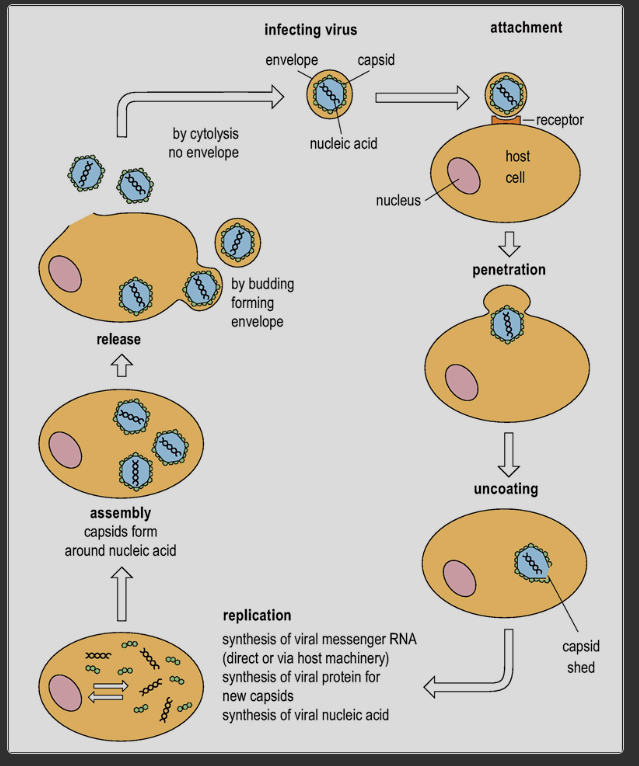
Virus Infection of Host Cell Stages
attachment/absorption of virus to a susceptible host cell
entry/penetration of the virion or its nucleic acid
synthesis of virus nucleic acid and protein by cell metabolism as redirected by virus
assemble of capsids and packaging of viral genomes into new virions (maturation)
release of mature virions form the host cell
Virus Infection of Host Cell Stages Diagram
Attachement Inhibitors
block initial virus-cell interactions by targeting viral attachment proteins or cellular receptors
Entry Inhibitors
target the membrane fusion processes
Uncoating Inhibitors
prevent viral genome release
Replication Inhibitors
largest class of antiviral drugs, target viral polymerases
Assembly and Release Inhibitors
offer newer therapeutic approaches including protease inhibitors that prevent proper viral protein processing and release
Combination Therapy
target multiple life cycle stages simultaneously, reducing the likelihood of resistance development
Abortive Infections
when virus enters cell but doesn’t complete replication cycle due to cellular restrictions or inadequate viral factors
may produce defective viral particles or incomplete viral proteins but do not generate infectious progeny
Abortive Infections Clinical Presentation
minimal symptoms, sometimes trigger immune responses and contribute to chronic inflammation in some cases
Acute Viral Infections
most recognizable, virus replicates with significant cytopathic effects, leading to cell death and tissue damage
Acute Viral Infections Clinical Presentation
rapid onset, intense symptoms, relatively short duration
predictable pattern of incubation, prodromal symptoms, peak illness, and resolution as the immune system clears the infection
Acute Viral Infections Examples
rhinovirus common colds, influenza infections, gastroenteritis caused by norovirus
Subacute Sclerosing Panencephalitis (SSPE)
delayed complication fo acute infection following measles
shows that even apparently resolved acute infections may have long-term consequences
Latency Viral Infections
long-term persistence, dormancy and reactivation
during latency, they produce minimal or no viral proteins so it can avoid host immune response
Herpes Simplex Virus (HSV)
establishes latency in sensory ganglia and reactivating during periods of immunosuppression or stress
Clinical Significance of Latent Infections
associated with malignant transformations (EBV, HPV, HHV-8 → cervical carcinoma, burkitt lymphoma, kaposi sarcoma)
Chronic Viral Infections
persistent viral replication and shedding over extended periods (years to decades)
Inclusion Bodies
most diagnostically useful cytopathic effect, distinct intracellular structures containing viral components
Nuclear Inclusion Bodies
relfect sites of viral replication and assembly
ex: pathognomonic “owls eye” inclusion in CMV and cowdry type a inclusions in HSV
Cytoplasmic Inclusion Bodies
often contain viral nucleocapsids, replication complexes, or viral proteins and can be identified through routine histopathology or immunofluorescence techniques
ex: negri bodies in rabies, acidophilic inclusions in poxyvirus
Syncytia Formation
can facilitate spread between cells while potentially helping viruses evade immune recognition by avoiding extracellular response
cytopathic effect where infected cells fuse to create multinucleated giant cells, caused by viral fusion proteins (HSV, VZV, paramyxoviruses, HIV)
Slow Viral Infection
prolonged incubation periods followed by gradual onset of neurological symptoms
ex: JC virus leads to PML
What does the type of genetic material of a virus determine?
where the replication occurs within the host cell, which enzymes are required, and what therapeutic targets are available
Baltimore Classification
organizes viruses into 7 classes based on their genome type and pathway used to make mRNA for protein synthesis
Baltimore Classification Diagram

Class I Viruses
dsDNA, replicative similarity to host cell DNA, uses host cell DNA polymerase and transcription machinery
Class II Viruses
+ssDNA, must first convert genome to dsDNA before transcription
Class III Viruses
dsRNA, carry their own RdRp to transcribe mRNA
Class IV Viruses
+ssRNA, genome serves directly as mRNA, replicates in cytoplasm
Class V Viruses
-ssRNA, carry their own RdRp for transcription
Class VI Viruses
+ssRNA-RT, reverse-transcribing, reverse transcribe their RNA genome into DNA that integrates into the host chromosome
ex: HIV
Class VII Viruses
dsDNA-RT, reverse-transcribing, use reverse transcription as part of their replication cycle but maintain DNA genomes
ex: hepatitis B
Fidelity
most DNA viruses use host cell DNA polymerase with 3’ to 5’ exonuclease proofreading activity, creating genetically stable viruses and selective antiviral targeting more challenging
Quasispecies
viral populations with extensive genetic diversity, results from RNA viruses using RdRps
allows rapid adaptation to selective pressures, including immune responses and antiviral drugs
What does the genetic stability of DNA viruses allow for?
more durable immune responses and more effective vaccination strategies
ex: hep b and HPV vaccines
What do high mutation rates in RNA viruses contribute to?
drug resistance development, necessitating combination therapy approaches
ex: HIV and hep c
Parvoviridae
DNA virus that is ssDNA and naked
RNA Virus Classification

Characteristics of RNA Viruses
contain RNA, replicate in cytoplasm
classified based on morphology of capsid and structure of genetic material
+ssRNA Viruses
contain RNA that can be directly translated by host cell because it is the most similar to the host cell mRNA
use host ribosomes to make proteins that function to replicate the virus
host ribosome synthesizes RdRp from RNA
-ssRNA Viruses
have RNA that is complementary to the translatable mRNA, must be transcribed before it can be used for protein synthesis
carry their own RdRp that transcribes it into a translateable RNA that the host can then translate into a protein and use for viral replication
dsRNA Viruses
carry RdRp, replicate the same as -ssRNA
recognized as foreign to host cell and will activate type i IFNs, so part of the replication cycle takes place in a viral particle
Retroviruses
can reverse transcribe their RNA genome into DNA using reverse transcriptase, allows genetic material from retovirus to become a permanent part of the DNA of an infected cell
ex: HIV (causes AIDS)
DNA Viruses
contain DNA, most are dsDNA and icosahedral (except parvoviridae and poxviridae), replication occurs in nucleus using host enzymes like DNA-dependent RNA polymerase
Exceptions to DNA Virus Replication
herpesviridae and adenoviridae may use their own polymerases for replication rather than the host machinery
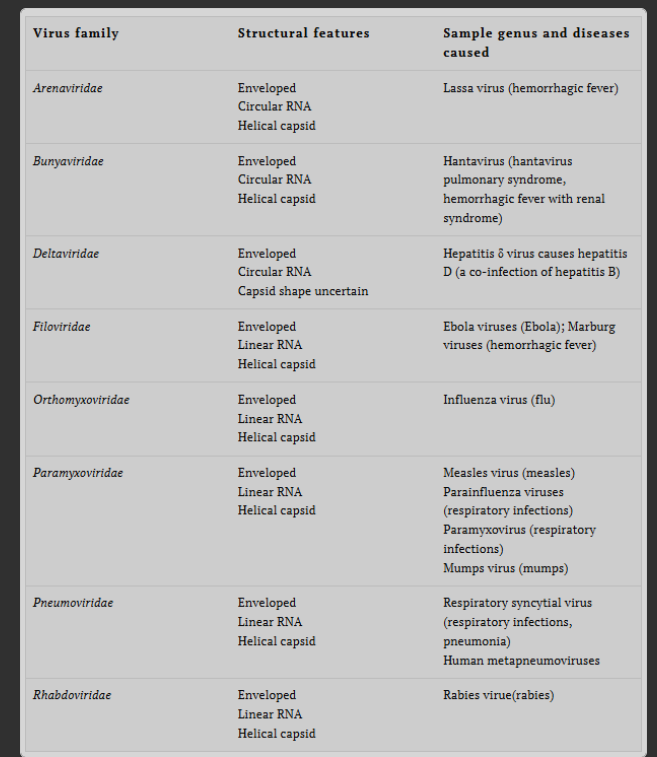
RNA Viruses Examples

Key DNA Virus Families and Diseases

Cytopathic Effects
inclusion bodies
syncytia formation
What families of RNA viruses do not replicate in the cytoplasm?
Orthomyxoviridae and Retroviridae families
DNA Viruses Summary
