Dehydration
 Call Kai
 Learn
 Practice Test
 Spaced Repetition
 Match
 Flashcards
 Knowt Play
1/8

There's no tags or description
Looks like no tags are added yet.
9 Terms
What happens to the kidneys with age?
Reduced:
kidney mass
nephron number
kidney blood flow
GFR
What is dehydration?
A decrease in total body water
Water loss dehydration: caused by insufficient fluid intake, produces decreased plasma volume with increased plasma osmolarity
Salt loss dehydration: deficit in both water and salt caused by excessive fluid loss, produces decreased plasma volume with normal plasma osmolarity
How do we respond to dehydration?
Thirst - increases water intake
Vasopressin - decreases water excretion

How does vasopressin release?
An increase in plasma osmolarity OR decrease in ECF/blood pressure
Hypothalamic osmoreceptors OR left atrial volume receptors sense
Activates hypothalamic neurons
Increases thirst and releases vasopressin
Stimulates insertion of aquaporins in distal tubule and collecting duct
Increases water reabsorption
Why are elderly people predisposed to dehydration?
Decreased total body water
Decreased sense of thirst
Decrease in urine concentration ability
Decrease in vasopressin effectivenesse
What are the effects of age on thirst?
The elderly are sensitive to changes in plasma osmolarity but less sensitive to changes in plasma volume
Why does urine output increase in the elderly?
The elderly are less able to concentrate urine because vasopressin receptors may be less sensitive and diurnal cycle in vasopressin may be dampened
What are some other factors causing dehydration in elderly?
Swallowing issues (dysphagia - up to 50% of nursing home residents)
Reduced appetite
Acute pathology (vomiting)
Medications
Cognitive problems
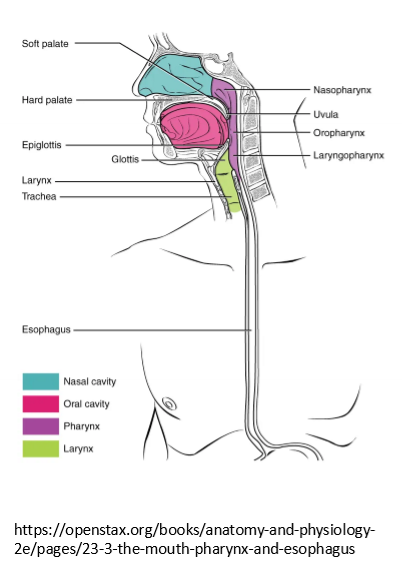
What are the types of dysphagia?
Oropharyngeal dysphagia - in mouth
Oesophagael dysphagia - food ‘sticking’ in throat or chest