Slide test 2 ART GVSU
 Call Kai
 Learn
 Practice Test
 Spaced Repetition
 Match
 Flashcards
 Knowt Play
1/22

There's no tags or description
Looks like no tags are added yet.
23 Terms

Title & Date: Figure of a Woman, c. 2400 BCE (Artist: Unknown)
Period: Cycladic Period
Context & Vocabulary: A minimalist marble figurine featuring a flat silhouette, shield-shaped head, folded arms, and incised pubic triangle, carved to lie flat in Bronze Age graves as an early precursor to the later Greek canon of proportion long before freestanding kouroi or korai.
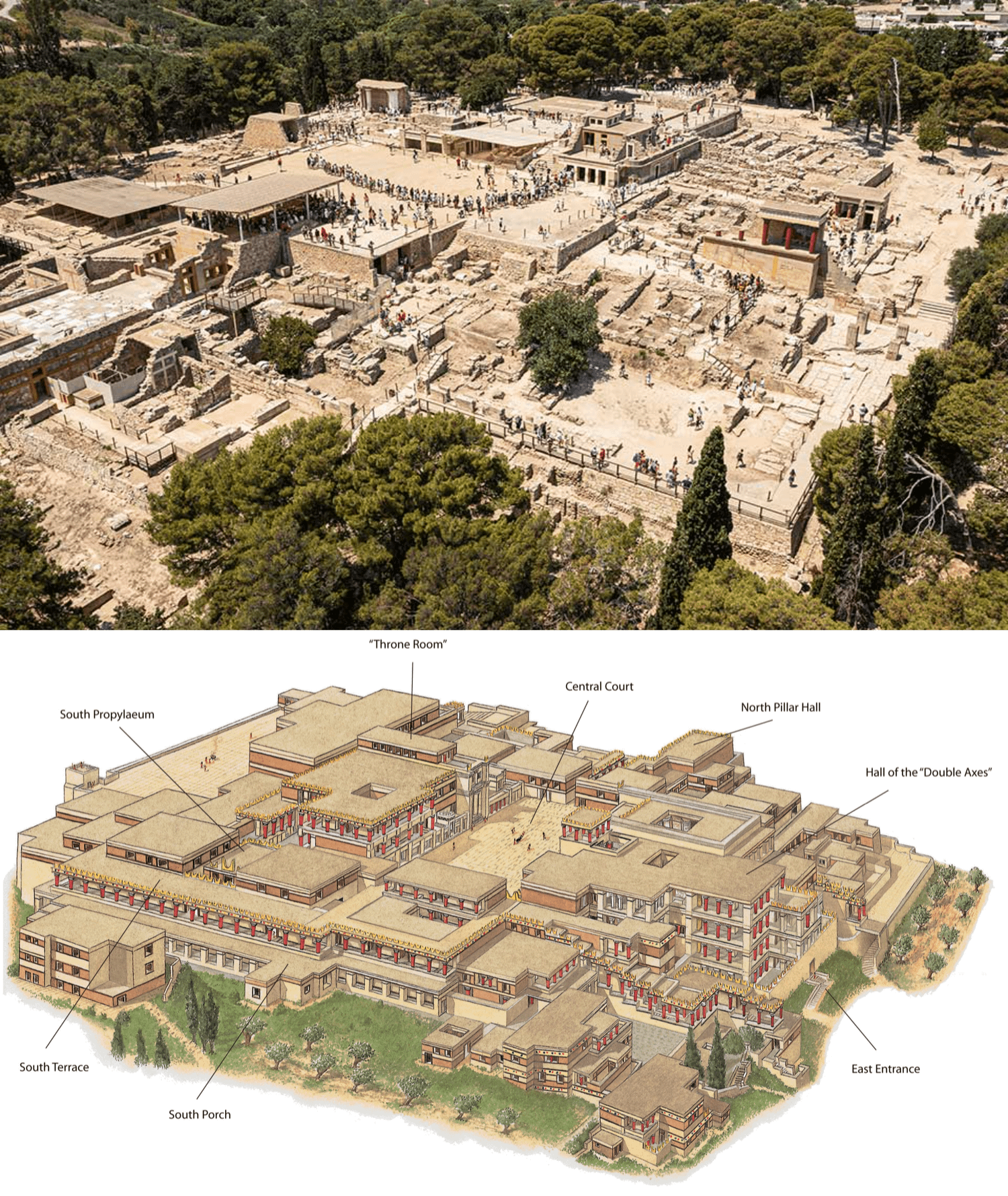
Title & Date: Palace at Knossos, c. 1375 BCE (Artist: Unknown)
Period: Minoan Period
Context & Vocabulary: An unfortified Bronze Age administrative complex featuring open courtyards, light wells, and painted wooden columns, whose open reception layout optimized ventilation and community gathering to directly anticipate the Mycenaean megaron

Title & Date: Bull-leaping Fresco, c. 1375 BCE (Artist: Unknown)
Period: Minoan Period
Context & Vocabulary: A vibrant palace wall mural using fluid lines and pinched waists to show figures leaping over a charging bull during a sacred ritual, contrasting with the static verticality of later Archaic kouros statues.

Title & Date: Flotilla Fresco, c. 1600 BCE (Artist: Unknown)
Period: Minoan Period
Context & Vocabulary: A long, narrow Akrotiri wall band functioning like an architectural frieze depicting boats traveling between island towns, celebrating Minoan maritime trade and naval power before a volcanic eruption destroyed Thera.

Title & Date: Octopus Flask, c. 1450 BCE (Artist: Unknown)
Period: Minoan Period
Context & Vocabulary: A Marine Style terracotta jug featuring an octopus whose swirling tentacles wrap around the spherical pottery walls, ignoring the rigid vertical alignments seen in later Doric or Ionic designs.

Title & Date: Citadel at Mycenae, c. 1250 BCE (Artist: Unknown)
Period: Mycenaean Period
Context & Vocabulary: A hilltop Bronze Age fortress enclosed by massive "Cyclopean" stone walls built for siege defense, centering on the megaron—a rectangular throne room with a central hearth that served as the prototype for future Greek temples.

Title & Date: Lion Gate at Mycenae, c. 1250 BCE (Artist: Unknown)
Period: Mycenaean Period
Context & Vocabulary: A monumental post-and-lintel gateway incorporating an open relieving triangle above the beam filled with a carved lion slab to divert heavy wall weight away from the lintel and project royal power.

Title & Date: Treasury of Atreus, c. 1250 BCE (Artist: Unknown)
Period: Mycenaean Period
Context & Vocabulary: A subterranean tholos tomb featuring a beehive-shaped chamber built using corbeling—layering stone rings inward to a top capstone—to create a protected burial vault for Mycenaean kings.

Title & Date: Funerary Mask ("Mask of Agamemnon"), c. 1600 BCE (Artist: Unknown)
Period: Mycenaean Period
Context & Vocabulary: A death mask crafted via repoussé (hammering gold sheet from behind) to cover a deceased ruler's face and preserve his elite status long before the invention of the stylized Archaic smile.

Title & Date: Warrior Krater, c. 1250 BCE (Artist: Unknown)
Period: Mycenaean Period
Context & Vocabulary: A ceramic mixing bowl depicting marching soldiers in rigid, repetitive shapes, reflecting Late Bronze Age military readiness over the fluid nature scenes of earlier Minoan art.

Title & Date: Man and Centaur, c. 750 BCE (Artist: Unknown)
Period: Geometric Period Greece
Context & Vocabulary: A small bronze votive statuette from Olympia using simplified shapes like cylindrical limbs and a triangular torso, showing Dark Age artists studying mythic combat before establishing a formal canon of proportion.

Title & Date: Funerary Vase (Dipylon Krater), c. 750–700 BCE (Artist: Unknown)
Period: Geometric Period Greece
Context & Vocabulary: A six-foot-tall Athenian ceramic vessel with an open base for liquid grave offerings, featuring geometric bands and silhouette mourners to fulfill the grave-marker role later adopted by marble kouroi and korai.

Title & Date: Achilles and Ajax Playing a Game, c. 540 BCE (Artist: Exekias)
Period: Archaic Period Greece
Context & Vocabulary: A black-figure amphora depicting two Trojan War heroes whose hunched backs and diagonal spears form a triangular composition mirroring a temple pediment to focus narrative tension.

Title & Date: Anavysos Kouros, c. 530 BCE (Artist: Unknown)
Period: Archaic Period Greece
Context & Vocabulary: A marble kouros grave marker for a fallen warrior featuring a rigid frontal stance, left foot forward, and an Archaic smile carved to project life while blending Egyptian blockiness with ideal youth.

Title & Date: Peplos Kore, c. 530 BCE (Artist: Unknown)
Period: Archaic Period Greece
Context & Vocabulary: A votive kore statue standing column-still on the Acropolis in a heavy woolen dress, using painted details (polychromy) and a subtle Archaic smile to convey divine favor and female modesty.
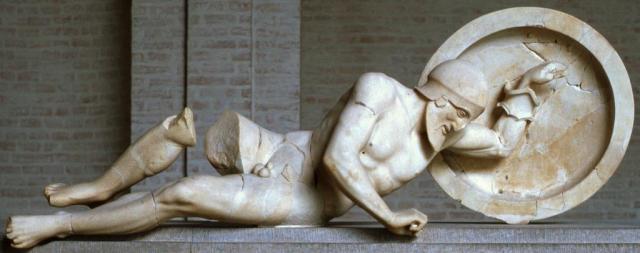
Title & Date: Dying Warrior from the Temple of Aphaia, c. 480 BCE (Artist: Unknown)
Period: Archaic Period Greece
Context & Vocabulary: A mortally wounded soldier wedged into the tight corner of a Doric temple pediment pulling a spear from his chest while wearing an artificial Archaic smile, marking the transition toward Classical realism.
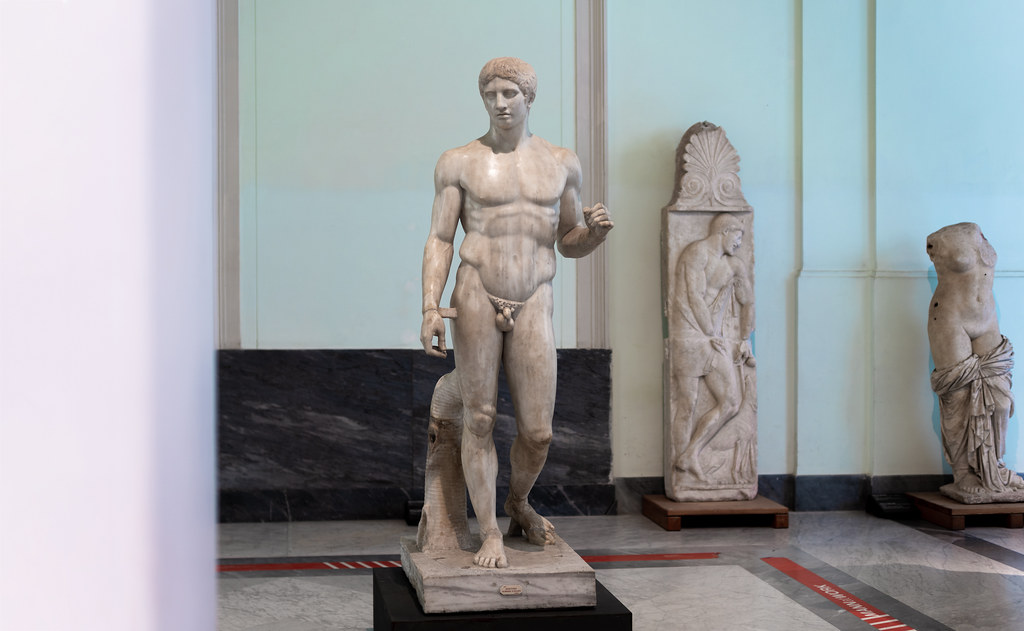
Title & Date: Doryphoros (Spear Bearer), c. 450–440 BCE (Artist: Polykleitos)
Period: Classical Period Greece
Context & Vocabulary: A marble athletic sculpture created to embody Polykleitos's written canon of proportion, utilizing shifted weight (contrapposto) and mathematical ratios to achieve ideal High Classical balance between rest and motion.

Title & Date: Parthenon, Athens, 447–438 BCE (Architects: Iktinos and Kallikrates)
Period: Classical Period Greece
Context & Vocabulary: A High Classical Doric temple built with Delian League funds after the Persian Wars, featuring exterior triglyphs, metopes, and pediments wrapped around an inner Ionic frieze to celebrate civic pride.

Title & Date: Marshals and Young Women (Parthenon Frieze), c. 447–432 BCE (Artist: Phidias/Workshop)
Period: Classical Period Greece
Context & Vocabulary: A shallow relief panel along the cella wall's upper Ionic frieze depicting Athenian citizens in the Panathenaic procession, elevating everyday democratic civic life alongside the gods.

Title & Date: East Pediment of the Parthenon, c. 438–432 BCE (Artist: Phidias/Workshop)
Period: Classical Period Greece
Context & Vocabulary: High-relief marble statues depicting the birth of Athena, with figures reclining at sloping angles to fit seamlessly inside the sharp downward frame of the temple's triangular pediment.

Title & Date: Nike Adjusting Her Sandal, c. 410 BCE (Artist: Unknown)
Period: Classical Period Greece
Context & Vocabulary: A relief on an Ionic temple parapet utilizing contrapposto and delicate "wet" drapery to reveal the goddess's body beneath, humanizing victory during the Peloponnesian War.

Title & Date: Nike of Samothrace, c. 180 BCE (Artist: Unknown)
Period: Hellenistic Period Greece
Context & Vocabulary: An eight-foot-tall winged goddess standing on a stone ship prow, using strong forward diagonals and wind-whipped drapery to replace static Archaic korai poses with dynamic, theatrical Hellenistic drama.

Title & Date: Athena Attacking the Giants (Altar of Zeus, Pergamon), c. 175–150 BCE (Artist: Unknown)
Period: Hellenistic Period Greece
Context & Vocabulary: A high-relief frieze wrapping around a monumental altar with deeply carved, contorted bodies expressing intense emotional turmoil (pathos), anticipating the elaborate foliage designs of the Corinthian order.