Therapeutic Cancer Vaccines and checkpoint inhibitors in Oncology
 Call Kai
 Learn
 Practice Test
 Spaced Repetition
 Match
 Flashcards
 Knowt Play
1/8

There's no tags or description
Looks like no tags are added yet.
9 Terms
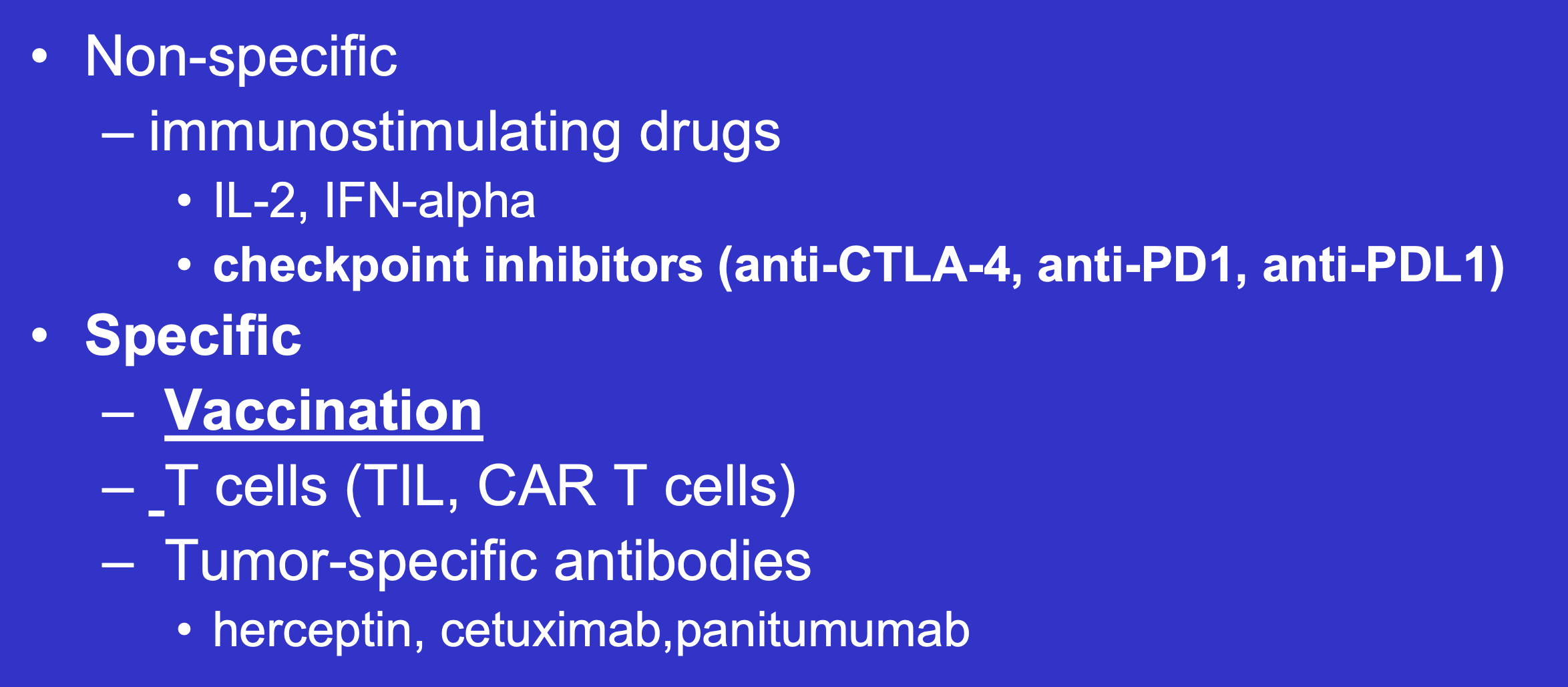
Example for non specific and specific immunotherapy
What type of cells/ proteins/ enzymes can be used for vaccine
- whole cells/lysates
- peptides/proteins
- RNA/DNA
- dendritic cells
What is active specific immunotherapy? What is the rationale
A treatment that stimulates the patient's own immune system to mount an antigen-specific response against cancer.
Vaccination after surgery aims to reduce recurrence from residual disease.
What is a potential route for vaccination and why
Intradermal - contains APC
What is an allogeneic tumour vaccine, and what are its advantages and disadvantages compared with an autologous vaccine?
An allogeneic tumour vaccine uses tumour cells from another individual, whereas an autologous vaccine uses the patient's own tumour cells.
Advantages:
Contains multiple tumour antigens.
Can be produced in large quantities.
May be more immunogenic.
Easier to standardise and manufacture.
May be useful as adjuvant treatment to prevent recurrence.
Disadvantages:
May lack tumour antigens specific to the patient.
Therefore, the immune response may not effectively target the patient's tumour.
Key difference: Autologous = personalised but difficult to manufacture. Allogeneic = standardised and easier to produce but less personalised.
What is GM-CSF transfection in tumour vaccination, and how does it work?
Genetic modification: Genes encoding GM-CSF are introduced into tumour cells used in the vaccine.
GM-CSF secretion: The modified cells produce GM-CSF after administration.
Recruitment of immune cells: GM-CSF attracts and supports antigen-presenting cells (APCs), particularly dendritic cells, at the vaccination site.
Antigen presentation: Dendritic cells take up tumour antigens and present them to T cells, helping activate tumour-specific immune responses.
Antitumour immunity: Activated T cells can recognise and attack tumour cells carrying the relevant antigens.
Factors associated with efficacy of immunotherapy
▪ Performance
▪ Stage of disease (M1a vs M1b vs M1c)
▪ CRP or ESR
▪ albumin
▪ Myeloid derived suppressor cells
▪ LDH
▪ Mutational load
Personalised neoantigen vaccines + checkpoint inhibition- why?
Personalised neoantigen vaccines may improve the effectiveness of checkpoint inhibition by broadening or strengthening tumour-specific T-cell responses.