terms for health assessment
 Call Kai
 Learn
 Practice Test
 Spaced Repetition
 Match
 Flashcards
 Knowt Play
1/55

There's no tags or description
Looks like no tags are added yet.
56 Terms
crepitus/clicking/snapping
hearing sounds such as cracking, popping, grating during joint movement
contracture
a condition in which muscles or tendons shorten, leading to decreased joint mobility.
contract = shorten/ shrink
ankylosis
a condition characterized by stiffness or fusion of a joint, resulting in limited movement.
subluxation
a partial dislocation of a joint, where the surfaces are still in contact but not aligned properly.
metatarsus adductus
a foot deformity in which the front part of the foot is turned inward towards the body, often seen in infants.

club foot
foot down and inward

polydactyly
extra digits
syndactyly:
fused digits
suffix: -osis
condition or state
suffix: dactyly
the arrangement, number, or condition of digits
newborn has what kind of spine
C-shaped curve
3-4 month infant or when they start lifting their head and bing lifting their head what kind of shaped spine should they have
inward shaped spine
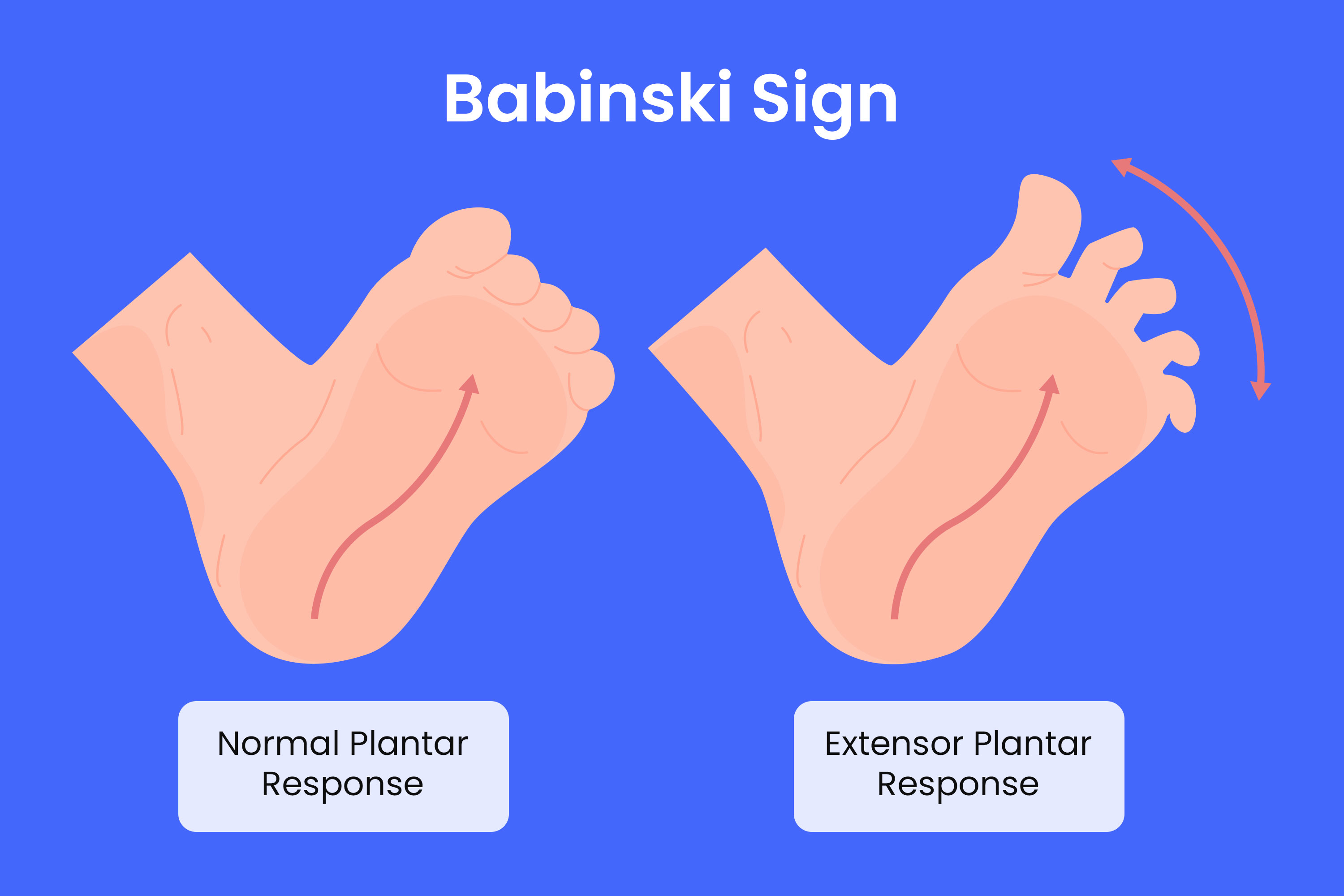
extensor plantar (babinski)
toes fan out
ortolani maneuver test:
IN = developmental dysplasia of the hip
barlow’s maneuver test
OUT = ADDUCTION to see if the hip bone is unstable
dysplasia
the presence of abnormal or abnormal structural development within a tissue or organ
allis test
OUT = compares knee height with flat feet to identify asymmetry SIGN OF HIP DYSPLASIA
MUSCLE TESTING:
COMPARE BOTH ARMS SIMULTANEOUSLY
MUSCLE TESTING: 0
zero movement or contraction
MUSCLE TESTING: 1
muscle can contract (flex) no joint movement
MUSCLE TESTING: 2
full movement with gravity eliminated
Clinical Example: A patient lying flat in bed cannot lift their leg straight up off the mattress, but when you support their leg or let it rest on the bed, they can slide their heel sideways toward the bed rail.
MUSCLE TESTING: 3
full movement against gravity; no resistance
MUSCLE TESTING: 4
movement against gravity and some resistance
MUSCLE TESTING: 5 NORMAL
normal strength against full resistance
arthritis:
cause inflammation, pain, swelling, and stiffness in one or more joints
flaccidity
being soft, limp, or lacking normal muscle tone (hypotonia) and firmness
spasticity
stiffen, tighten, or contract involuntarily because of damage to the central nervous system (think stroke)

tics
brief repetitive movements

tremor
rhythmic shaking

fasciculations
small muscle twitches

myoclonus
sudden brief jerks

chorea
irregular flowing movements
GSC - Eye Opening (1)
1 = No response.
GSC - Eye Opening (2)
To pain: opens eyes only when stimulated (like a gentle pinch)
GSC - Eye Opening (3)
To speech: opens eyes when spoken to.
GSC - Eye Opening (4)
Spontaneous: opens eyes on their own.
Motor Response (M) IS ?
shows how the person moves in response to commands or pain.
Eye Opening IS ?
shows how easily the person opens their eyes
Motor response (1)
No response.
Motor response (2)
Abnormal extension (decerebrate).
Motor response (3)
Abnormal flexion (decorticate)
Motor response (4)
Flexion withdrawal: pulls away from painful stimulus
Motor response (5)
Localizes pain: tries to move away from the pain
Motor response (6)
obeys verbal command: can move or follow directions
Verbal Response IS ?
assesses how the person speaks or communicates
Verbal Response (1)
Verbal Response (2)
Verbal Response (3)
inappropriate words: random or irrelevant words
Verbal Response (4)
confused conversation: talks but is disoriented
Verbal Response (5)
oriented and appropriate: knows name, date and place
Muscle Strength test Grade 0
no visible or palpable contraction
Muscle Strength test Grade 1
contraction present, no joint movement
Muscle Strength test Grade 2
full movement no gravity involved
Muscle Strength test Grade 3
full movement against gravity, no added resistance
Muscle Strength test Grade 4
movement against gravity with some resistance
Muscle Strength test Grade 5
normal with FULL resistance