4- The Work of Angels; sculptors and scribes
 Call Kai
 Learn
 Practice Test
 Spaced Repetition
 Match
 Flashcards
 Knowt Play
1/26

There's no tags or description
Looks like no tags are added yet.
27 Terms
The High Cross and ‘celts’
not celtic!
it can’t be celtic, because celtic is prepagan and iron age, and these are medieval early christian

kilnasaggart
example of cross-inscribed pagan standing stone
high cross use
today, used as burial marker
originally:
bible quote inscriptions on them → teaching aides for reading
markers for boundaries of monasteries
political statements
skeuomorph
something is copied in different material
thoguht that maybe high cross originally was wood
features of high cross
boss + ring → raised round studs on cross
on wood / metal this is support structure
on stone, this is decorative
may represent halo
rope molding → decorative, copying bands of metal crosses maybe
insular art
interlace, human figures
ossory, barrow, scripture, late
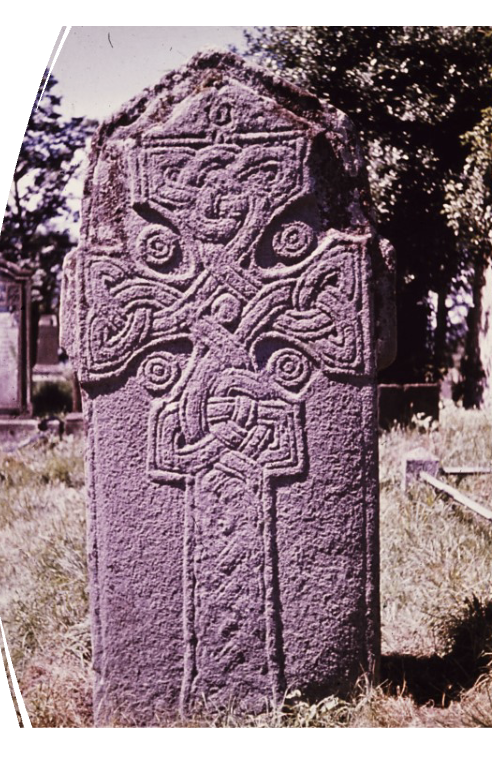
fahan mura donegal
interwoven bands and simple human figrues (in photo)
very characteristic of this insular art
example of insular art in stone prior to high cross

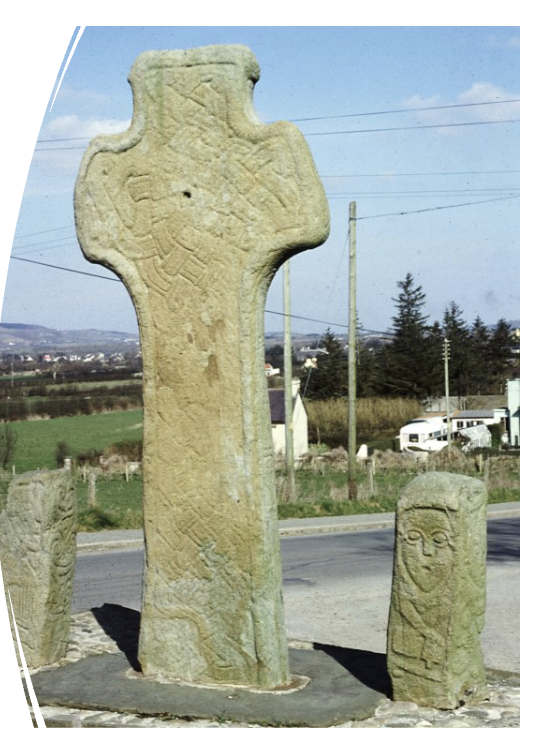
carndonagh donegal
1st truly freestanding stone cross
has interlace and human figures!
7th century (?)
ossory group of high crosses
earliest group of true high crosses
sabdstone
boss, ring, rope moulding
interlace, la tene spirals, geometric art
very little figure art on cross itself, mostly at base
some suggest they may have been painted
@ end of this group, south cross at clonmacnoise had crucifixion carved onto cross itself
ossory group cross ex
south cross, ahenny
north cross, ahenny
kilkieran, kilkenny
killamery, kilkenny
kilree, kilkenny
roscrea, tipperary
seir kieran, offaly
lorrha crosses tipperary
south cross clonmacnoise offaly
barrow group of high crosses
9th century crosses
ring, rope moulding
granite
insular art:
emphasis now on carved bible scenes
crucifixtion present
some interlace and geometric art
barrow group high cross examples
old kilcullen, kildare → clearly carved scenes
graiguenamanagh, kilkenny → clear crucifixtion
oldcourt, wicklow → we still see carvings at the base of the cross
moone, kildare
castedermot, kildare south cross
depicts crucifixtion at the center of the cross
becomes common feature of next cross

moone cross, kildare
2nd tallest still standing high cross
granite
barrow group
depicts adam and eve in eden
12 apostles
crucifixtion
scripture crosses
ring, rope moulding, sandstone
insular art:
emphases on biblical scenes
crucificion present, typically at center
represents classic art style, most popular group of high cross
9th + 10th century
scripture crosses ex
cross of patrick and colmcille → possibly earliest of scripture crosses
west cross monasterboice, louth
tallest still standing cross
10th century
late crosses high cross group
11th - 12th century revival of the form
ring occasionally, mix of stone types
insular art:
large protruding almost 3d figures
crucifix on one side
illuminated manuscripts in order
the cathach → 6th century AD
Usher gospel → early 7th century
Bobbio MS S.45 → 7th century
Bobbio MS D.23 → 7th century
Durham A.II.10 → mid 7th century
Book of Durrow → late 7th or early 8th century
Book of Lindisfarne → 698 - 721
8th century
St Gall Gospels
Book of Dimma
Book of Mulling
9th century
Book of Kells
Book of Mac Regol
Book of Armagh
Book of Mac Durnan
10th-11th century
MS Cotton
Southampton Psalter
the cathach
6th century AD (earliest)
linked to St Colmcille (columba)
he exiled himself to Iona where he found a monastery
written on vellum
it’s a psalter → contains psalms, each beginning w decorated capital letter (irish majuscule)
diminuendo → letters start large then get smaller until standard
motifs:
spirals, scrolls, crosses, animal heads, trumpets
us(s)her gospel
early 7th century AD
use of dots (coptic / eastern influence)
less insualr and more continental

durham a.II.10
proper interlace
colored ink!
mid 7th century
gospel book
book of durrow
gospel book
founded in irish monastery
contains:
carpet page → unique to irish manuscripts
whole page covered in ornament
bordered, broad ribbon interlace → mediterranean
zoomorphic interlace → introduced by anglo saxons
page of spirals → la tene art

book of durrow features

symbols of the gospels
mark → lion
luke → calf
john → eagle
matthew → man
before end of 7th century new versions of manuscript art emerge →
spirals get less prominent
more emphasis on complex interlace
capital letters get larger
everything gets more ornate

book of lindisfarne
start 8th century
pages are bigger
45 distinct shades of color!
each gospel begins w portrait + symbol of writer followed by carpet page
emphasis on symmetry
the book of kells
end of 8th / start of 9th century
book of armagh
no color
807-808 AD
begin to see shift perhaps to simplicity but not explicitly until cotton manuscript
Cotton manuscript
start of 10th century
minimal decor
shift back to simple less ornate work