Week 12: Public Policy
0.0(0)
Studied by 0 people Call Kai
 Learn
 Practice Test
 Spaced Repetition
 Match
 Flashcards
 Knowt Play
Card Sorting
1/21

Earn XP
Description and Tags
22 Terms
1
New cards
cultural/ structural lag in policy
public policy was designed for a young society and policy for older generations were a secondary consideration
* lag can be intensified in developing countries experiencing rapid population growth
* lag can be intensified in developing countries experiencing rapid population growth
2
New cards
3 stages of a life course model
education
work
retirement
work
retirement
3
New cards
recap 1
* Status of population aging
* Higher proportions of older adults due to demographic and epidemiological transitions
* Impacts of aging population on society and vise versa
* Possibility of dependency issues
* How the society responses to the issue of population aging and the impact on older individuals
* Can be changed by education and policy
* The most extreme response: Ageism
* Causes
* Detrimental effects on older people and on the society
4
New cards
Recap 2
The three main dimensions of ‘health’ applies to older adults as well
* Specific physical and mental health issues
* Exploring and prevention not different from other age groups
* Risk factors, models, ….
* Complexity of social life and social health in old age
* Policy and programs can make some changes
* The concept of healthy aging
1) Follows the wholistic definition of health
2) Achievable at the population level
3) Interventions, designed carefully, will improve healthy aging
5
New cards
Recap 3
* Systematic response to aging of population
* Classical healthcare system
* How to provide a robust social support system for older adults
* Informal care
* Burden
* Palliative care
* Classical healthcare system
* How to provide a robust social support system for older adults
* Informal care
* Burden
* Palliative care
6
New cards
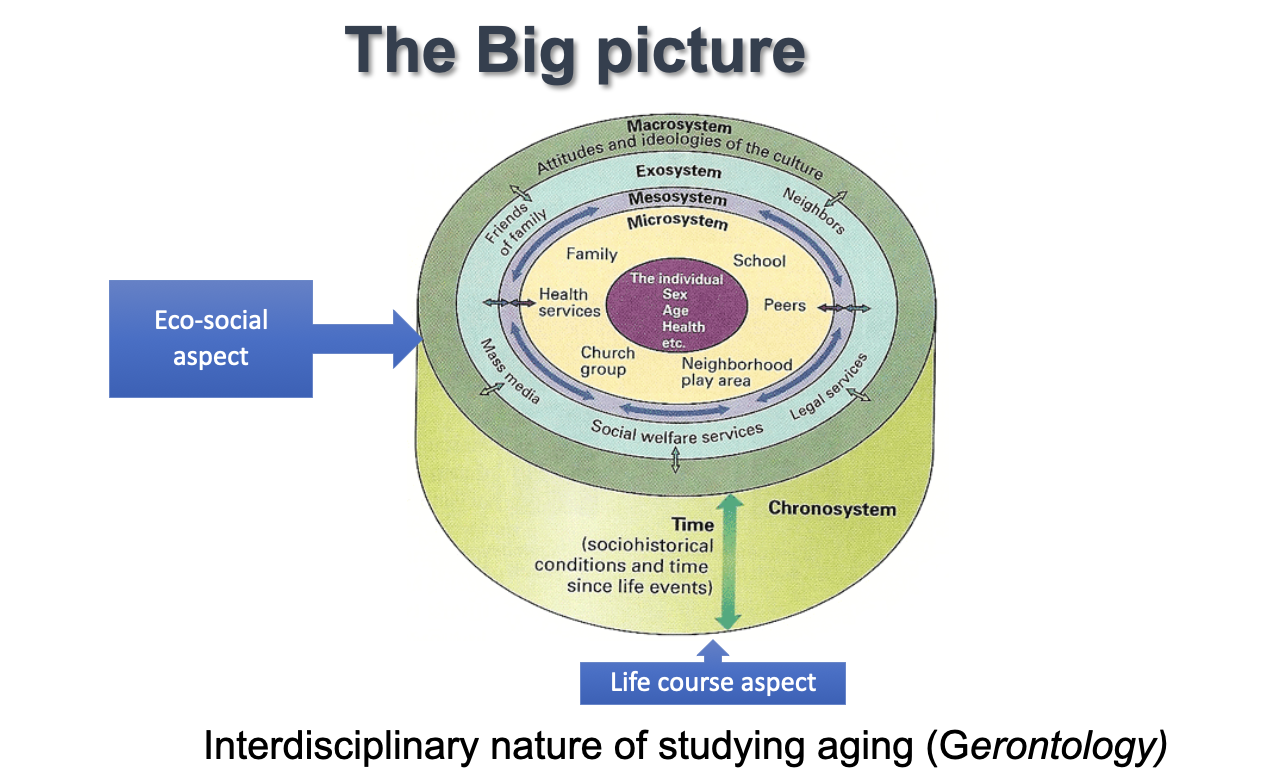
The big picture
7
New cards
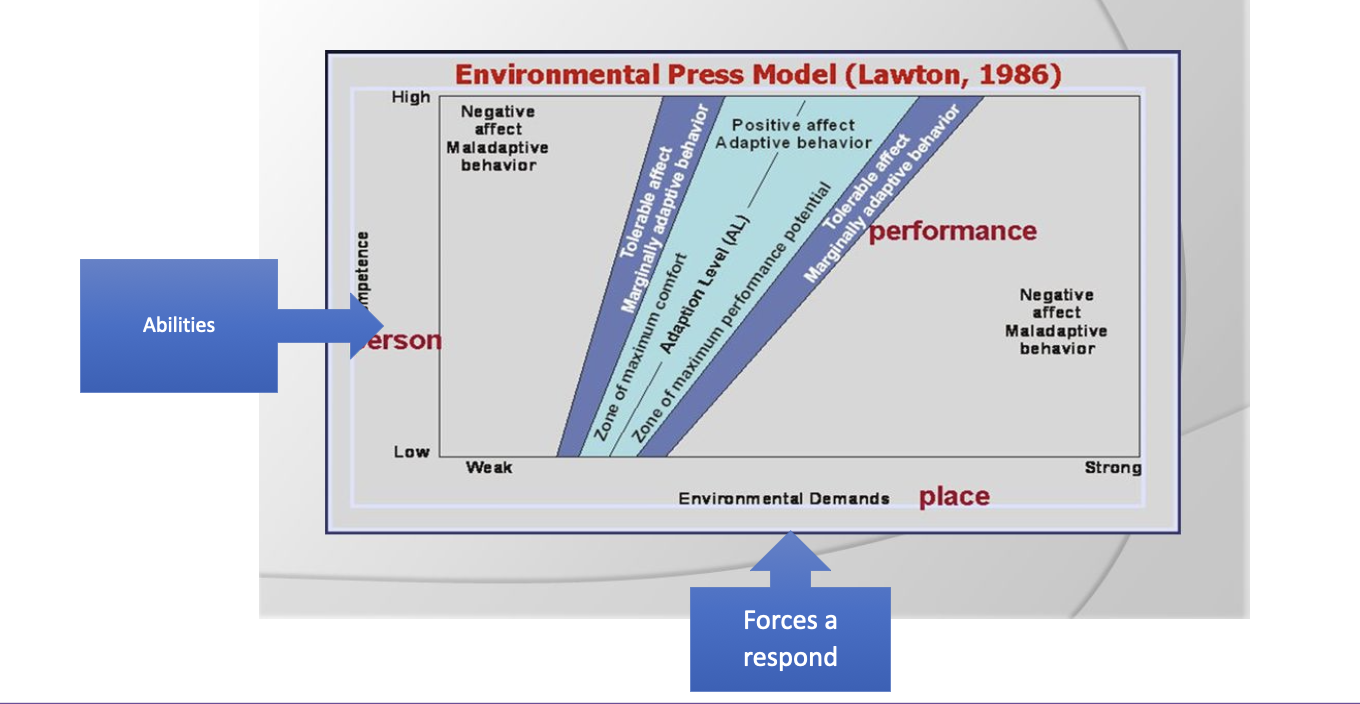
Lawton’s ecological model
8
New cards
Key considerations in healthy aging
1. There is no typical older person
2. A large proportion of differences in capacity in older age is due to the cumulative (lifecourse) impact of advantage and disadvantage across people’s lives
3. Intervention is possible
* Social and behavioural interventions
4. Focus on improving quality of (remaining) life rather than only lengthening life
9
New cards
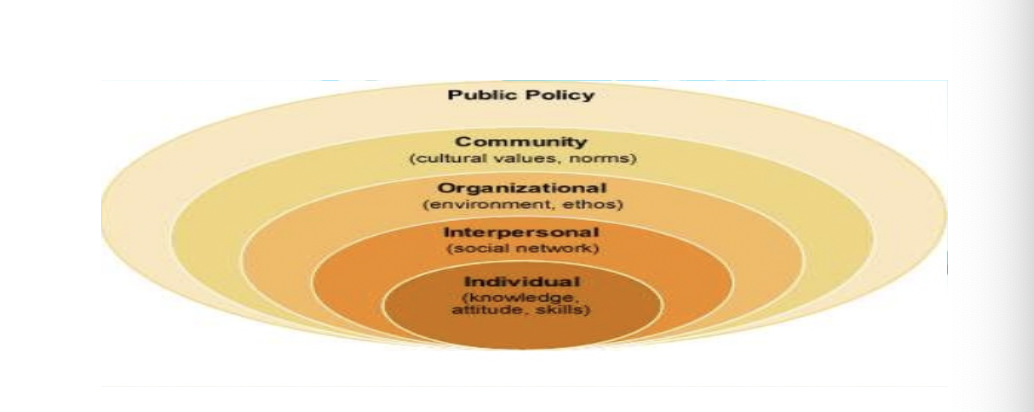
healthy aging integrated into the big picture
How can we have a sustainable environment to support health aging?
10
New cards
healthy communities
* A place friendly with aging
* Hence providing healthy aging by active aging
* maintenance of positive subjective well-being, good health and continued involvement in social life throughout the aging process
* A WHO initiative
* With consideration of
1. Complexities of place-person relationships
2. Special needs of older adults
11
New cards
contextual vs compositional effects
* A healthy community makes individuals healthy
* Contextual effect
* Healthy individuals make a community healthy
* Compositional effect
* Contextual effect
* Healthy individuals make a community healthy
* Compositional effect
12
New cards
Public policy
Policy: A course or principle of action adopted or proposed by a government, party, business, or individual.
\
Guidelines for actions
* For executive branches of the government
* With regard to a class of issues
* Consistent with law and institutional customs
\
Guidelines for actions
* For executive branches of the government
* With regard to a class of issues
* Consistent with law and institutional customs
13
New cards
Public policy and aging
* Policies are designed for young people (mostly)
* Except health and support-related policies
\
* Assumption: old adults being **dependent** and in need for help
\
* Contradicts the healthy aging/communities philosophy
* Except health and support-related policies
\
* Assumption: old adults being **dependent** and in need for help
\
* Contradicts the healthy aging/communities philosophy
14
New cards
Public policy in Canada
* A welfare state
* Well-being of citizens and a safety net
* Multi-level structure of government
* Federal, provincial, municipal
* Public pension: federal
* Healthcare: provincial
* Possibility of clashes and legal loopholes
* Well-being of citizens and a safety net
* Multi-level structure of government
* Federal, provincial, municipal
* Public pension: federal
* Healthcare: provincial
* Possibility of clashes and legal loopholes
15
New cards
Public policy issues
* Reactive not proactive
(treatment vs. prevention)
* Equity
* Accommodation of differences
* Consideration of an eco-social model helps
* Addressing rights not only needs
* How much individuals are responsible
(treatment vs. prevention)
* Equity
* Accommodation of differences
* Consideration of an eco-social model helps
* Addressing rights not only needs
* How much individuals are responsible
16
New cards
takeaways
* Health of older adults is a function of interactions between individual and environmental level factors
* A wholistic approach is needed for making healthy communities for older adults
* Involving family, local networks/communities, all levels of government
* A wholistic approach is needed for making healthy communities for older adults
* Involving family, local networks/communities, all levels of government
17
New cards
Aging research
*Aging is a change in one characteristic of human populations*
Demographic vs. epidemiological approaches
* Demography:
*demo* (people)+ *graphy* (description, measurement )
* Epidemiology:
*epi* (among, upon)+*demo* (people) +*logia* (study of)
Demographic vs. epidemiological approaches
* Demography:
*demo* (people)+ *graphy* (description, measurement )
* Epidemiology:
*epi* (among, upon)+*demo* (people) +*logia* (study of)
18
New cards
Demography
*The study of the size, structure, and distribution of human populations*
* Spatial or temporal changes
* Aging a major reason for changes
* Spatial or temporal changes
* Aging a major reason for changes
19
New cards
Epidemiology
* Age is a crucial factor for health
* Aging-related health issues are studied the best by epidemiological studies
* Wholistic approach to address the bio-psycho-socio-cultural aspects of aging
* Aging-related health issues are studied the best by epidemiological studies
* Wholistic approach to address the bio-psycho-socio-cultural aspects of aging
20
New cards
Epidemiological studies
*A clear aim, specific target population*
* Longitudinal studies follow the participants in time
* Changes in health or social status
* If long enough and follow a birth cohort
* Lifecourse exposures
* Longitudinal studies very useful for exploring age-related changes
* Longitudinal studies follow the participants in time
* Changes in health or social status
* If long enough and follow a birth cohort
* Lifecourse exposures
* Longitudinal studies very useful for exploring age-related changes
21
New cards
Aging infrastructure in Canada
* Most universities in Canada have a centre for aging
* **13** centres in Ontario
* Main focus on health and society
* Researchers from health sciences, social work, medicine/nursing, psychology, sociology
* **13** centres in Ontario
* Main focus on health and society
* Researchers from health sciences, social work, medicine/nursing, psychology, sociology
22
New cards
The CIHR institute
\*one of the 13 institutes
\
goal:
* to improve the quality of life and health of older Canadians by understanding and addressing the consequences of a wide range of factors associated with aging
* Provides funding for research
* Seeks out partnerships with other agencies with similar interests
* Stays connected to community
\
goal:
* to improve the quality of life and health of older Canadians by understanding and addressing the consequences of a wide range of factors associated with aging
* Provides funding for research
* Seeks out partnerships with other agencies with similar interests
* Stays connected to community