Neuro dxs of cattle
 Call Kai
 Learn
 Practice Test
 Spaced Repetition
 Match
 Flashcards
 Knowt Play
1/73

There's no tags or description
Looks like no tags are added yet.
74 Terms
What elements should you include in your history taking for farm neurology?
Age
When calved?
Acute onset?
Continuous or episodic?
Number of animals affected
Did problems start when housed or at pasture?
Possibility of access to poisons – inspection of surroundings
Diet and recent dietary changes
Time of the year
What should you inspect in the surrounding if you have a neuro case?
Lead (old batteries/ paint)
Ration
Proportion concentrates in ration
Quality of the silage
Poisonous plants
Cadavers
What should you observe at a distance in a FA neuro case?
Behaviour
Consciousness
Stance
Locomotion
Differentiate ortho from neuro
How can behaviour indicate certain localisations?
Circling- asymmetric cortex lesion
Falling- cerebellum lesion
Head pressing- Inc cranial pressure/ encephalitis
How can you differentiate ortho from neuro disease on observation?
Limbs carried= ortho
Limb dragged= neuro
Shortened step= ortho or muscular
Inc step length= neuro
What should you do in the hands on clinical exam of a neuro case?
Skull and vertebrae
Inspection, palpation, pain, percussion, passive movement
Reflexes
Cerebrum, cerebellum and labyrinth (coordination)
Brainstem
Spinal reflexes
List the specific steps of a neuro exam?
1) Mental status
Differentiate between intracranial and extracranial
Brainstem- appears sedated
Thalamocortx- fails to react to stimuli
2) Cranial nerves
3) Gait and posture
4) Postural reactions
5) Spinal reflexes
6) Response to pain
What does nasal septum stimulation test?
CN V and thalamocortex
Can be done with little finger, increase stimulus and monitor response – animal may or may not blink but should pull its head away as a pain response
What cranial nerve tests can you do on a cow?
Menace response
PLR
Eye position and movement
Palpebral reflexes
Head til and pathological nystgamus
Food prehension
Dysphagia and layngeal problems
What are the three types of ataxia?
Vestibular - has head tile and hypermetria and hypertonia
Cerebellar - no proprioceptive deficits
Proprioceptive
What spinal reflexes can you evaluate in a cow?
Extensor reflex of front limb- observe weight bearing on front limb
Patellar reflex
Flexor reflexes- axillary, median and ulnare nerves in FL and sciatic and femoral nerve in HL
Muscle tone
Perineal reflex
Cutaneous trunci - pinch skin from wing of ileum to Tw
What diagnostic tests can you perform for farm animal neruology?
Bloods
Colostrum transfer
CSF
List some common clinical signs localisable to the cerebrum
Opisthotonos - stargazing
Apparent blindness (intact PLR)
Abnormal mentation
Change in behaviour
Aimless wandering or compulsive circling
Seizures
Abnormal vocalisation
List some common clinical signs localisable to the cerebellum
Ataxia without weakness
Truncal sway – not specific as this can also happen in animals with spinal cord lesions
Hypermetria – easiest to see in the front limbs
Absent menace
Wide base stance – not specific
Intention tremors
List some common clinical signs localisable to the vestibular system

List some common clinical signs localisable to the cranial nerves
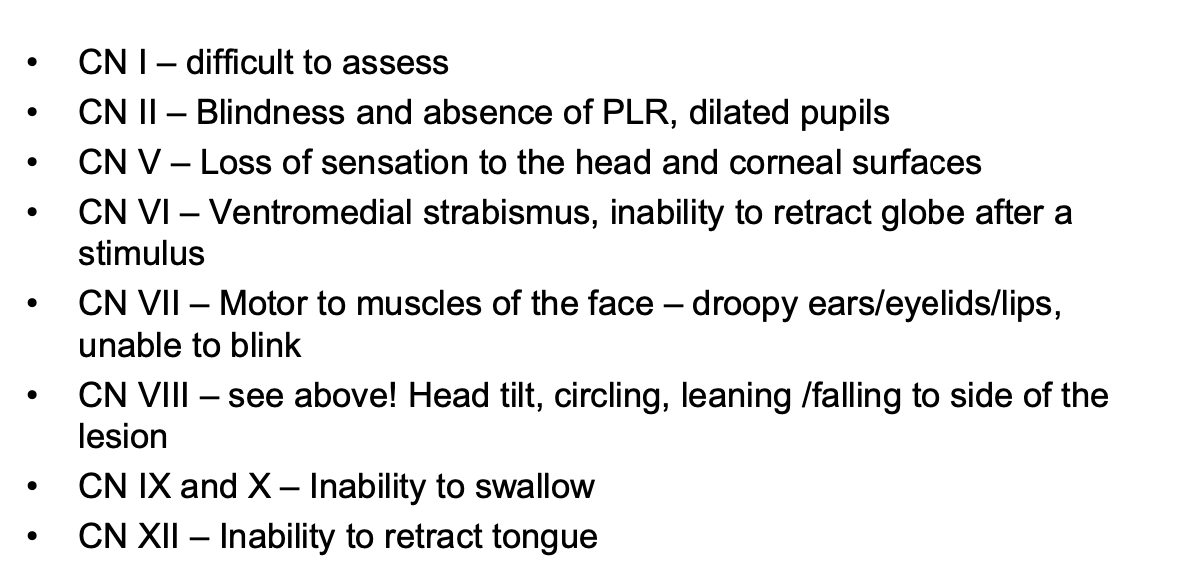
List some common clinical signs localisable to the ARAS, thalamus, hypothalamus
Depression. Altered mentation
Difficulty regulating body temperature
Depressed Respiration
List some common clinical signs localisable to the spinal cord
C1 - C5 – altered head and neck movements with no CN abnormalities. Reflexes of FL and HL are exaggerated
C6 -T2 – depressed or absent reflexes with reduced muscle tone in the
FLs and exaggerated HL reflexes with normal muscle tone in the HLs.
T3 - L3 – Reflexes FLs normal, HL reflexes exaggerated. Proprioreceptive deficits in the HLs with ataxia
L4 - L6 – absence of HL reflexes and decreased muscle tone
S1 - S3 – decreased anal tone, loss of sensation to perineal region
Cerebral disease Ddxs
How does meningitis present?
1 week of age
Havent had enoguh colostrum
Extension of local infection
May present like hypomagnesaemia
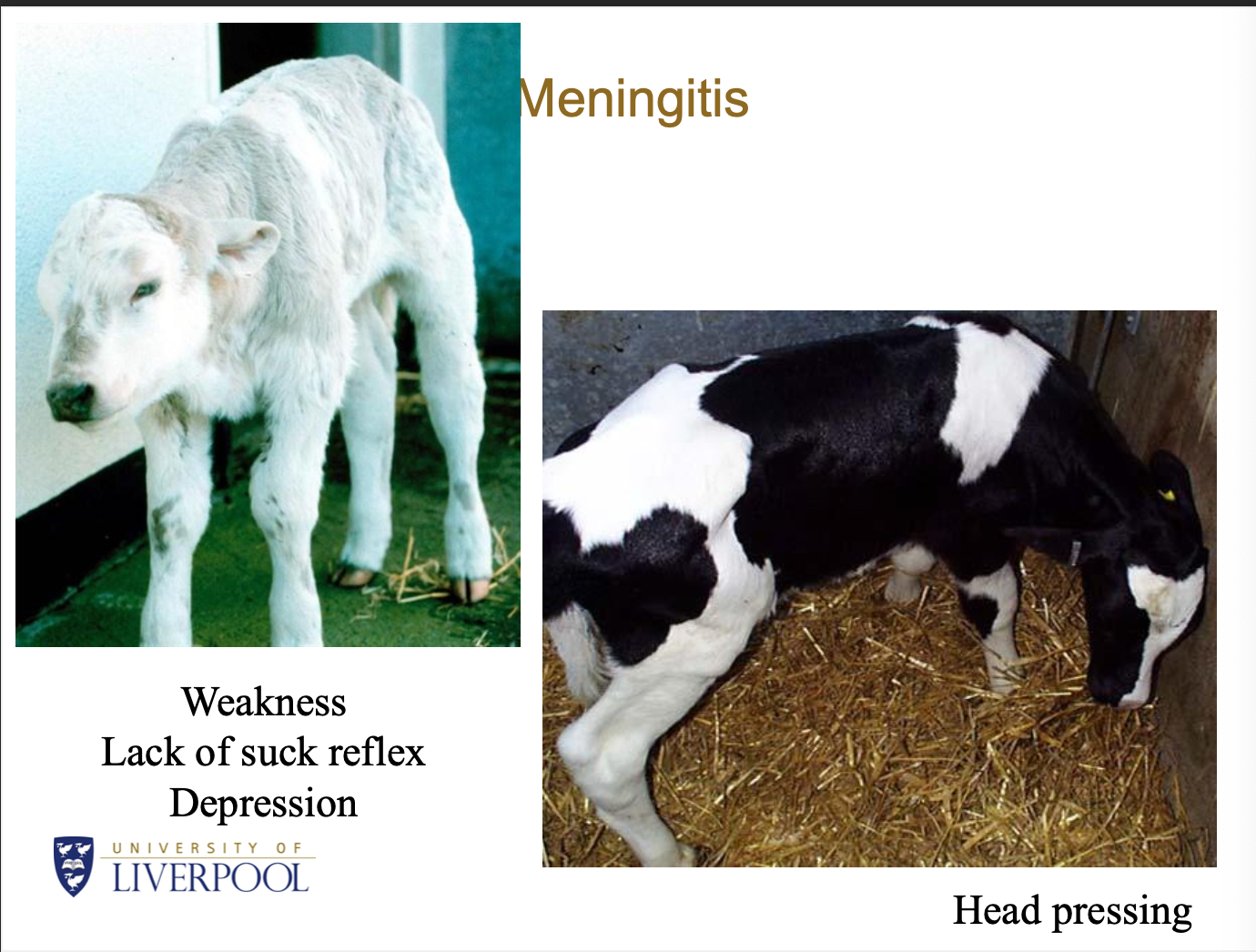
What are the clinical signs of meningitis?
Fever, anorexia, stiff neck, hyperaesthesia;
Spasmodic extension of limbs (when stimulated), muscle fasciculations; depression or ‘mania’,
Signs of pain when neck extended, tetraparesis, hyperflexia
Circling, falling over; cranial nerves may be involved (nystagmus, facial palsy, blindness etc.);
Diarrhoea, coma/fitting
How is meningitis diagnosed and treated?
Definitive: CSF
Inc TP and WBC
Poor prognosis- humane euthanasia usually, can attempt AB
What should the features of AB be for meningitis?
IV, bactericidal, 10-14 days
Dexameth or NSAIDs as well
B lactams or TMPS
How do you prevent meningitis?
Colostrum management
Hygiene
Management practices – umbilicus – dipping
What is the main cause of a brain abscess?
Trueperella pyogenes
Often extension of sinus infection
Slower onset and more asymmetric than meningitis
How does brain abscess present?
Initially vision loss/mydriasis in contralateral eye, may progress to compulsive walking, head pressing, circling, head tilt (towards lesion), depression or mania, coma.
When extending to base of the brain may give ‘cranial nerve signs’.
Later stages: hypertonicity, hyperflexia, opisthotonus, coma, convulsions
How are brain abscess treated?
AB like meningitis but often response temporary
Poor prognosis
What breeds are predisp to hydrocephalus (occ acute cortical disease)
Holstein, Jersey, Friesain, Guernsey
How does hydrocephalus present?
Domed cranium
Diffuse cerebral signs mania head pressing muscles tremor, convulsions, blindness, weakness
Results from drainage of CSF and inc ICP
What causes CCN?
Thiamine deficiency
Absolute in pre ruminant calves
Relative from lots of concentrates
What age is CCN most common in?
6-18 months old
What are the clinical signs of CCN?
Found dead
Early signs:
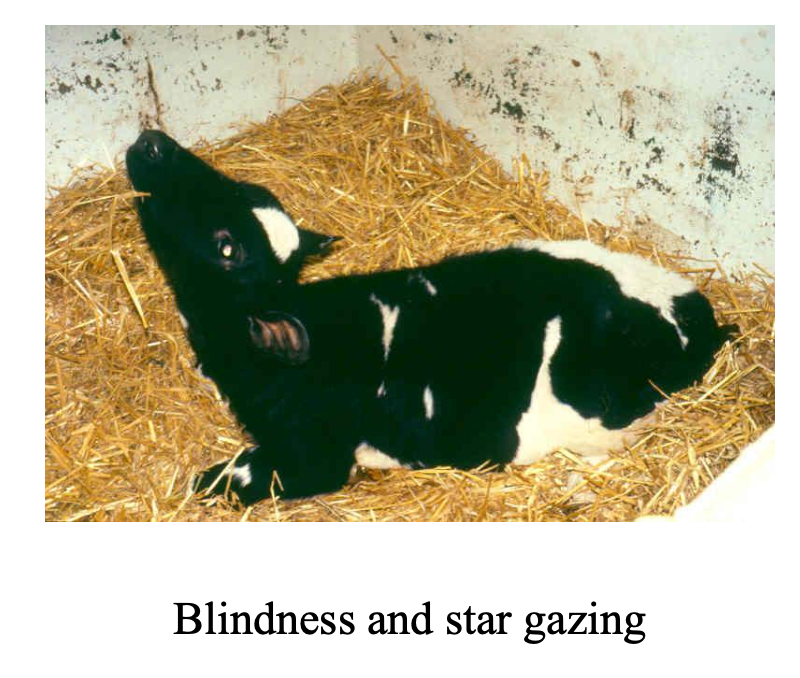
Head up in the air and appear blind (negative menace but has PLR) – animal disorientated and unaware of its surroundings; diarrhoea (concentrates?);
Hyperesthesia and muscle tremors also possible.
Late signs:
Opisthotonos, head-pressing, strabismus, miosis, excitement, recumbent,
Repetitive chewing, facial twitching, nystagmus, head tilt, convulsions (leg paddling).
How is CCN diagnosed?
Ante mortem difficult
Hist/ CS/ Response to Tx
Blood thiaminase assay
PM
Brain pale and swollen, patchy yellow discolouration
Lipfuscin fluoresce under UV light
How is CCN treated?
Thiamine supp every 4 hr for 24hrs
Corticosteroids
What does lead poisoning cause in cows?
Acute encephalopathy
Cerebral and GI signs
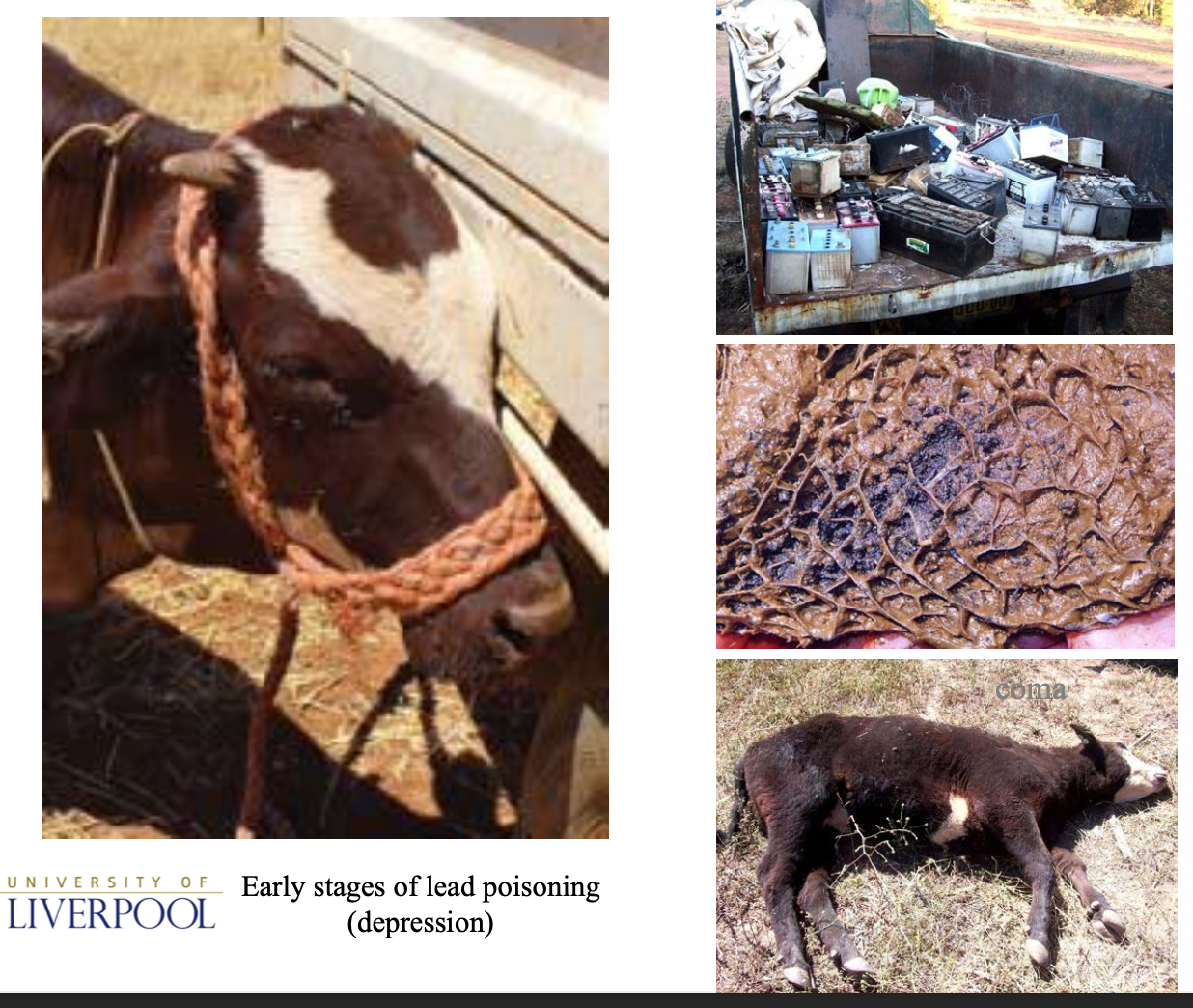
What are the clinical signs of lead poisoning?
First stages: stand alone, depressed, hyperaesthesia, muscle fasciculations
Progress to ataxia, blindness, headpress, episodic manic behaviour, convulsions, coma
Abdo pain, bloat, D+, frothing
Severe will die 12-24 hrs/ sudden death
How is lead poisoning treated?
Chelate lead CaEDTA slow drip
Thiamine
Oral magnesium sulphate
What is nervous ketosis?
Aetiology as ketosis
Acute onset obsessive licking, circling, staggering, head pressing, PICA, aggression
Signs last 1-2 hours and then recur 10 hrly
How is nervous ketosis diagnosed and treated?
Dx- ketones blood
Tx- IV glucose, propylene glycol BID, corticosteroids
What nervous signs can you get with hypocal?
Weakness to collapse and recumbency
Ca involved in nerve transmission
What nervous signs can you get with hypomag?
Hyperexcitable, may charge
Erect ears, ear twitching, hyperaesthesia, muscle fasciculation/ tremors
Frenzied running turning into staggering
Later on- recumbency, violent seziures
Dead within an hour of seizure
Found dead
What causes salt poisoning?
From water with too much salt or water deprivation
Mostly during summer
Na deposition in brain inc ICP
What are the signs of salt poisoning? How do you treat it
Dehydrated, depression, diarrhoea and colic, star-gazing, blindness, aggressiveness, hyperexcitability, vocalisation, head pressing, teeth grinding
Poor prognosis- rehydrate first then hypertonic saline
How does pseudorabies present (Aujesky's)?
NB- Notif
Depression, ataxia, conscious proprioceptive deficit, circling, nystagmus, strabismus, aggression, pruritis (of head)
Dead within 2 days
Contact with pigs
How does rabies present?
Hyperexcitability, fear, rage, depression, flaccid paralysis
What causes BSE?
Modified prion PrP
What are the clinical signs of BSE?
Initially subtle but always progressive
Over 2-3 weeks of several months
Hyperaesthesia, fine fasciculations of head and neck, should flank, teeth grindign
Apprehensive when approached, reluctant to be milked or moved through gate ways
Ataxia
Aggression
How is BSE diagnosed?
PM
Histopath
Western blot
Immunocytochemistry
What can cause hypovitaminosis A?
Usually straw/cereal based diet in housed animals
Calves born to deficient dams or deficient calves/ cattle
What are the signs of hypovitamonisis A?
Signs caused by thickening dura mater/ abnormal bony growth in brain cavity
Inc CSF pressure
Congenital or acquired
Retinal degeneration- absent PLR
Calves born to deficient dams- blindess, weakness, domed forehead, thickened carpal joints
Deficient calves- blindness, anorexia, diarrhoea, pneumonia (ill-thrift)
Older cattle- blindess, star gazing, nystagmus, ataxia, convulsion, diarrhoea, occ thickening and whitening of cornea
How is hypovitaminosis A treated?
Vitamin A supplement
Check diet
Older animals with ocular form dont respond well
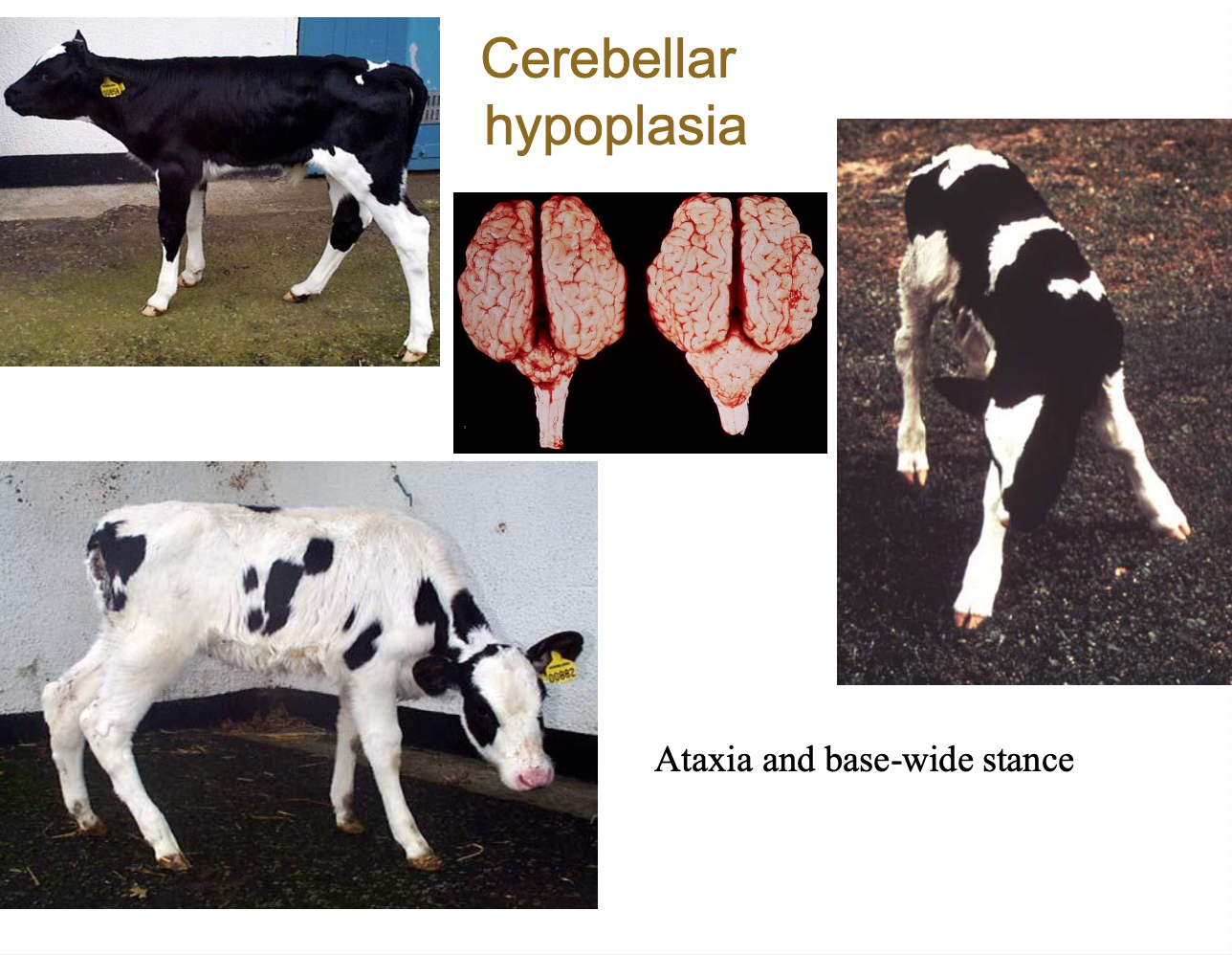
What causes cerebellar hypoplasia in cattle?
Inhertied in hereford, guernsey, holstein, shorthorn
BVD
What are the signs of cerebellar hypopalsia?
Balance or unable to stand
Tremor, hypermetria
Nystagmus
Severe opisthotonus
What disease presents prinicpally with brain stem and cranial nerve dysfunction?
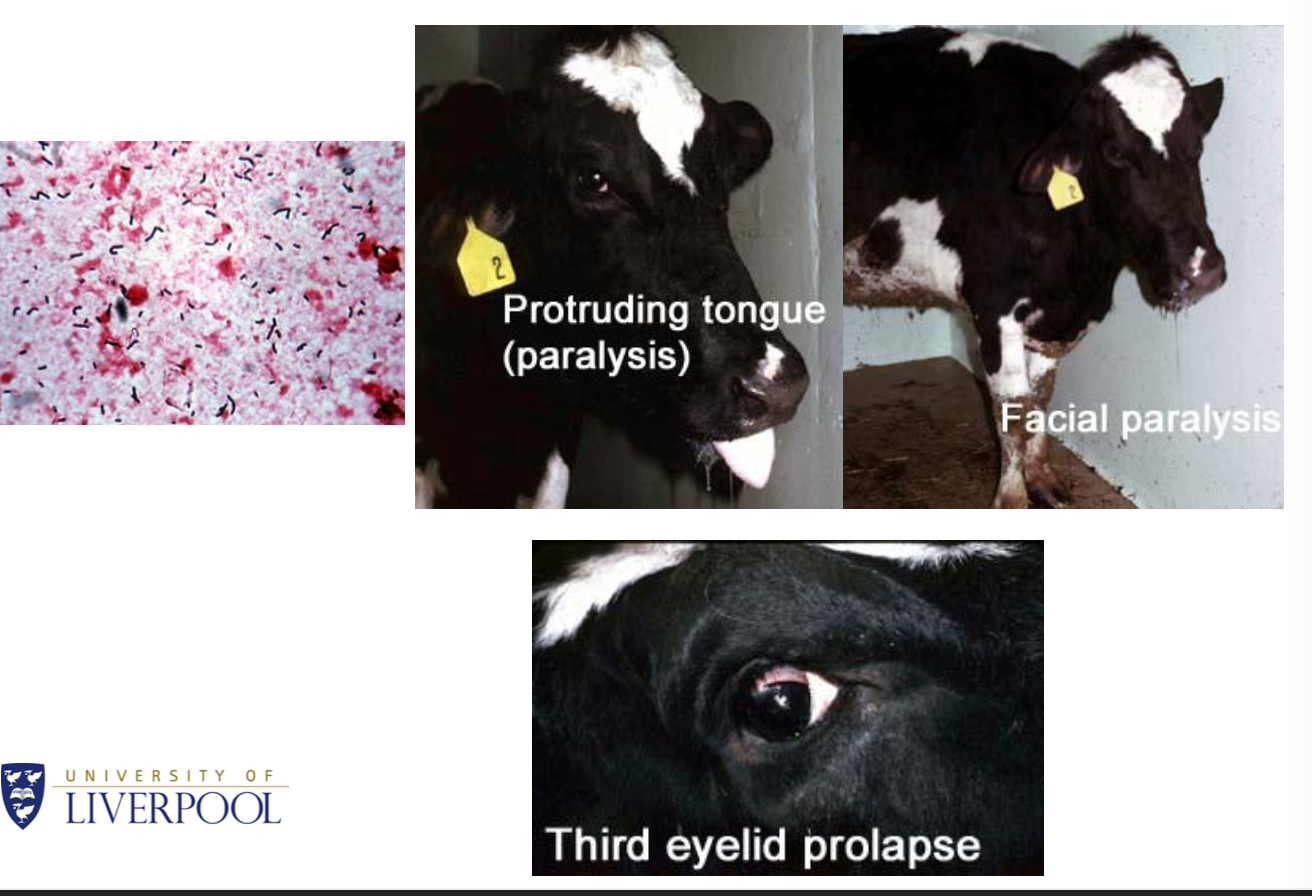
Listeria monocytogenes
What are the signs of listeriosis?
Pyrexic, Dull
Loss of lip and cheek muscle tone
Can't eat, chew, cud accumulates, tongue protrudes
Ptosis, ear droop on deviant side, circling
Head press, propulsive walking
How is listeriosis treated?
High dose penicillin
or High dose oxytet
Remove cause- ie silage
What diseases produce spinal cord or peripheral nerve signs?
Spinal fractures
Spinal abscess
Spastic paresis
Tetanus
Botulism
Peripheral Neuropathies
What causes spinal abscesses?
Normally 2° to osteomyelitis
Often cervical, haematogenous or injections
T. pyogenes, Staph aureus, P. haemolytica, F. necrophorum
(Tx- AB)
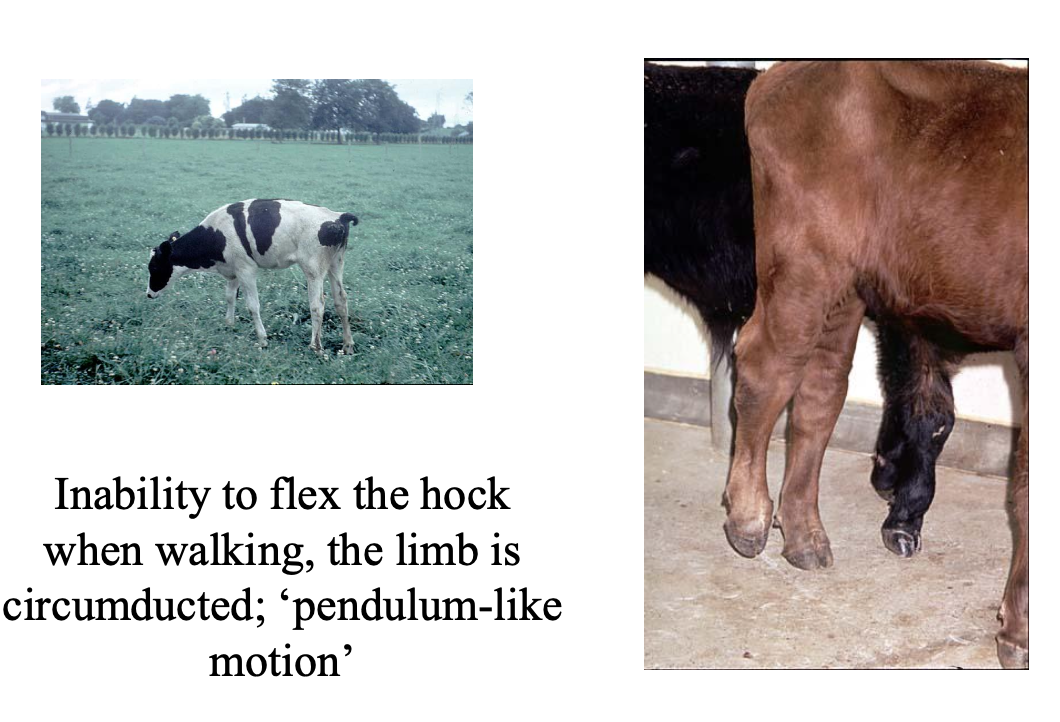
What is spastic paresis?
Asymmetric spasticity and hypertonia of the extensor muscles of the rear limbs
Continuous when the animal stands but not when it lays down
Most breeds
A few weeks to 6 months
Genetic predisposition
What are the clinical signs of spastic paresis?
Excessive Tone of Gastrocnemius Muscle
Hyperextended hock
Unilateral or Bilateral
If unilateral the affected leg is thrust out behind during walking and advanced with a swinging motion without touching ground
Often spend longer lying downa
How is spastic paresis treated?
Neurectomy of the tibial nerve rootlets innervating the gastrocnemius muscle
High epidural or GA
If bilateral then leave 6-10 weeks in-between
Success rate ~ 60%
Where are the sources of tetanus?
Soil and GI tract
Through wound
Directly through GI tract (idiopathic tetanus)
What are the clinical signs of tetanus?
Variable incubation
Stiffnesss, reluctance to move, muscle tremors
3rd eye prolapse
Rumen tympany
Elevated tail, progresses to generalised muscle tetany and rocking horse position
Recumbacny, convuslions, death
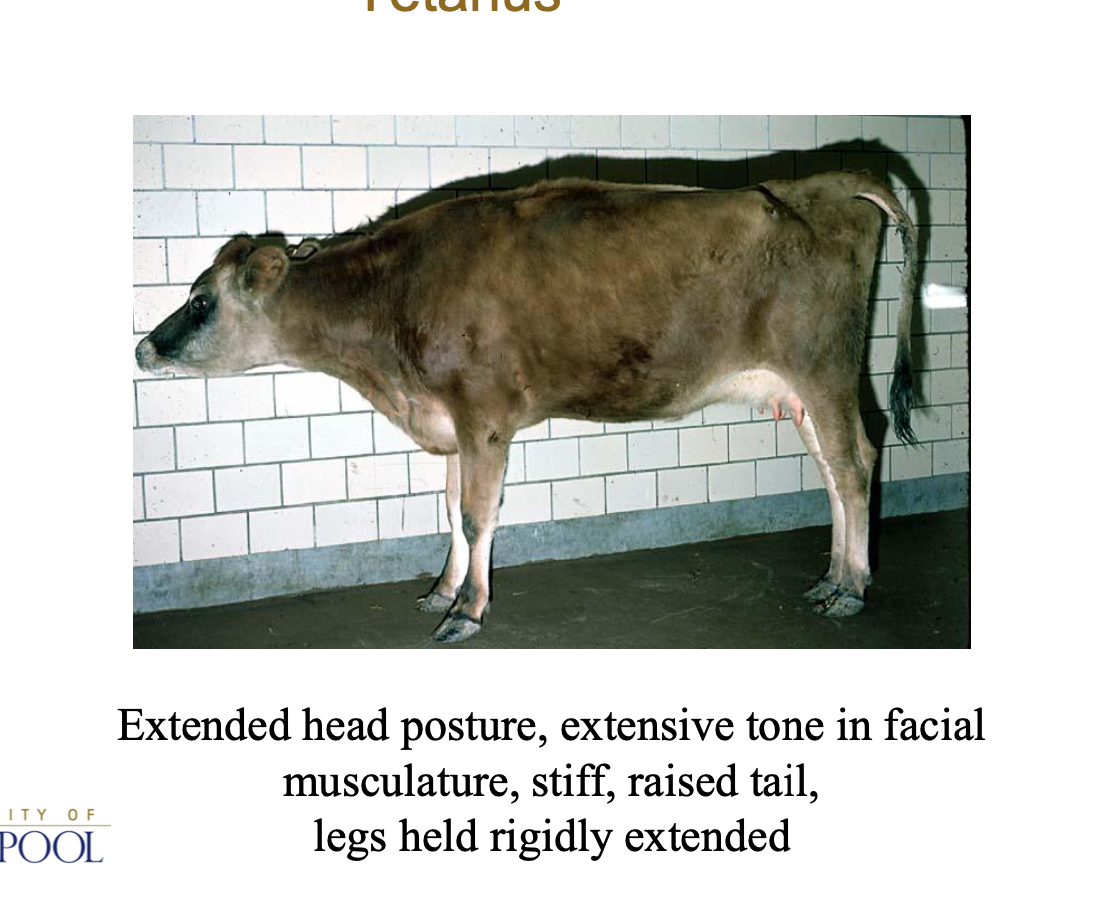
How is tetanus diagnosed and treated?
No test or PM signs
ID site of infection adn try to culture
Prognosis poor
Keep in dark and quiet
High dose penicillin, irrigate infection site, antitoxin, muscle relaxants
Vaccinate
What are the sources of botulism?
Ensiled poultry waste
Poultry litter
Carcasses in pasture or feed
What are the clinical signs of botulism?
Found dead
Muscle wekaness priogressing to ataxia and paralysis
Anorexia, dilated pupils
Drooling
Droopy expression
Dec rumen motility, bloat, constip
Resp faiilure-> death
How is tetanus diagnosed?
Hist / CS
No specific PM findings
Toxin in serum ELISA
Feed or bed samples
How is tetanus treated?
Supportive
Emetics to remove toxins
Fluid
Poor prognosis
What are the possible peripheral neuropathies?
Obturator
Perineal
Sciatic
What can cause obturator neuropathy?
Dystocia
Esp heifers
Damaged by foetal pressure
What are the signs and treatment for obturator neuropathy?
Can't adduct limb (splits)
Treatment= chain between HL, soft bedding, corticosteroids
What are the causes, signs and treatment for perineal neuropathy?
Cause- recumbent cow or fall
Signs: hyperextension of hock fetlock and digits flexed (knuckled over); loss of skin sensation below fetlock dorsal surface
Tx: self cure, can bandage or cast to fetlock to prev self trauma
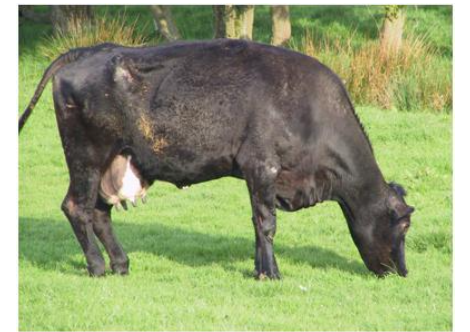
What are the causes, signs and treatment for sciatic nerve damage?
Cause- recumbent and struggling to rise
Signs: non weight bearing, no sensation distal to stifle (median mid tarsal region ok)
Guarded prognosis
What is a ddx for sciatic nerve damage?
Femoral fracture