IAT 102 Midterm
 Call Kai
 Learn
 Practice Test
 Spaced Repetition
 Match
 Flashcards
 Knowt Play
1/90

There's no tags or description
Looks like no tags are added yet.
91 Terms
Graphic design
A creative process that combines art and technology to communicate ideas
Designer
Works to convey a message from a client to a particular audience
image and typography
The main tools of a designer
Logo
A graphic mark or emblem commonly used by commercial enterprises, organizations and individuals to aid and promote instant public recognition
Logotype
Refers to the words of a logo. Can be made a stylized custom font or standard type
Corporate identity
The overall image of a corporation or firm or business in the minds of the public, such as customers and investors and employees
Cuneiform
In Latin means "wedge-shaped"
Hieroglyphs
The form of writing used by ancient Egyptians, consisting of figures of objects directly or figuratively representing words or syllables
Hieratic
A cursive form of Egyptian hieroglyphics; used especially by the priests and scribes using a brush
Demotic
The simplified form of Egyptian hieratic script used first for business and social correspondence
Kerning
Space between two letters or characters
Leading
The vertical spacing between lines of continuous text
Tracking
The space between all letters in a word
Baseline
The invisible line that the characters sit on
Meanline
The invisible line that falls at the top of lowercase letters
x-height
The distance between the meanline and the baseline
Cap Height
The distance from the baseline to the top of uppercase letters
Ascender
Part of a character that extends above the meanline
Descender
Part of a character that extends below the baseline
Serifs
Font distinguishable by the extra stroke at the ends of characters
Stem
Vertical line of a B and the primary diagonal line of a V
Bar
Horizontal or diagonal lines of a letter; are open on at least one sidde
Bowl
An open or closed circular line that creates interior space, such as in e and b
Counter
Letters containing closed spaces including A B D O P Q R a b d e g o p q 0 4 6 8 9
Leg
The bottom stroke of a letter such as the base of an L or diagonal stroke of a K
Shoulder
The curve at the beginning of a leg of a character such as m
Terminal
End of a stroke that lacks a serif such as f
Apex
A point at the top of a character where two strokes meet
Aperture
The gap or opening at an open counter
Ligature
Two or more letters are joined together to form one glyph
Ear
A small stroke projecting from the upper right bowl of some lowercase g's
Humanist serif
Garamond, Caslon 540, Bembo

Transitional serif
Baskerville

Modern serif
Bodoni

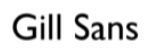
Humanist sans serif
Gill Sans
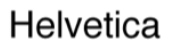
Transitional sans serif
Helvetica
Egyptian/slab serif
Rockwell

Geometric sans serif
Futura and Century

Typeface
The letters, numbers and symbols that make up a design of type
Font
A collection of all the characters of a type in one size and one style
Type family
The complete assembly of all sizes and styles of one typeface
Simple, memorable, scalable, colour, works across media
What makes a branding successful?
Abstract Expressionism
A post WW2 art movement in American painting, developed in New York City in the 1940s
Geometric Abstraction
A form of abstract art based on the use of geometric forms sometimes, though not always, placed in non-illusiontristic space and combined into non-objective compositions
Bauhaus
International style that is radical functionalism with simplicity and effectiveness
Ulm School of Design
Approach of integrating art, craft and technology. Has courses of sociology, psychology, politics, economics, philosophy, aesthetics, semiotics, technology, etc
Gestalt Psychology
Emphasizes a "unified whole" in that the whole of anything is greater than it's parts
Gestalt
Means form, pattern or configuation
Gestalt Theory
Describes how people visualize elements organized into groups or unified wholes when certain principles are applied
Cohesive design
Gestalt theory can be used in branding to create a __________
Proximity, Similarity, Continuation, Closure, Figure-ground
Gestalt laws or grouping principles
Proximity
Occurs when elements are placed close together. Perceived as group (unity) but otherwise separate
Similarity
Occurs when objects look similar to one another. People often perceive them as a group or pattern.
Dis-similiarity
Break of similarity
Continuation
The viewer's eye will naturally follow a line or curve
Closure
Occurs when an object is incomplete or a space is not completely enclosed
Figure-ground
The eye differentiates an object from its surrounding area (especially with high contrast). A shape or silhouette is naturally perceived as a figure while the surrounding area is perceived as the ground
Semiotics
The study of signs, how they work under cultural and anthropological contexts and linguistically
Icon
Physically resembles what it stands for
Index
Implies or suggests the object. Example, metaphor
Symbol
Abstract, bears no resemblance to the meaning
Denotation
Literal description of something
Connotation
Individual or cultural meanings of something that often have emotional association
Futurism
Early 20th century Italian art movement that had an enthusiasm for war, machine age, speed and modern life
Russian Constructivism
1917 Eastern Europe that was about pure abstraction and a simple palette
Jan Tschichold
A Swiss national, born in Germany. He was a typography, book designer, teacher and writer
Modernist design
Tschichold became the leading advocate of ________
Swiss Design
After WW2 had asymmetrical organization, grid, objective photography, clear and factual, sans serif typography, neutral and objective
Inge Aicher-Scholl, Otl Aicher, Max Bill
Founded the Ulm School of Design in 1953 with the main task of incorporating design into the industry and shaping our material culture
Shape, form, spatial awareness, typography, dynamism, emphasis, contrast, colour
5 building blocks essential to good graphic design
Theory of colours
Goethe's "_____________" provided the first systematic study of the physiological effects of colour (1810)
Protanopia
lack of functioning red cones
Deuteranopia
lack of functioning green cones
Trichromats
Humans are ______ because we perceive colour as a combination of three wavelengths (red, yellow, blue_
Message and composition
Colour can help to reinforce the meaning of elements and can help direct attention or group elements
HSB
hue, saturation, brightness
RGB
red, green, blue; additive
CMYK
Cyan, Magenta, Yellow, Black; subtractive
key
also known as black in CMYK
Chroma
purity or intensity of color
Value
The lightness or darkness of a color
Hue
Another name for colour
Tint
Refers to the amount of white we add to a hue
Shade
refers to the amount of black we add to a hue
Saturation
The amount of hue in a given object, independent of value
Colour harmonies
Refer to the different sets of colour combinations that work well together
Analogous harmonies
colors adjacent to one another on the color wheel
Complementary harmonies
involve colors directly opposite each other on the color wheel
Monochromatic harmonies
All the hues (tints and shades) of a single colour
Triadic colour harmonies
uses colours that are evenly spaced around the colour wheel
Split complementary harmonies
a color with the two colors adjacent to its' complement