PBS Unit 1.1: Investigating the Scene
 Call Kai
 Learn
 Practice Test
 Spaced Repetition
 Match
 Flashcards
 Knowt Play
1/66

Earn XP
Description and Tags
Comprehensive vocabulary flashcards covering search methods, sketches, polygraphs, trace evidence (hair and fingerprints), serology and blood spatter, and DNA profiling techniques from Unit 1.1.
67 Terms
Crime Scene Investigator (CSI)
A professional responsible for observing, documenting, collecting, and preserving physical evidence at a crime scene to help reconstruct events and aid legal investigations.

Link Method
A crime scene search method based on logic and associations between scene evidence, where search paths proceed systematically from one item of evidence to the next.

Line (Strip) Method
A search pattern where investigators walk in parallel straight lines across an outdoor or large search area at regular, set intervals.
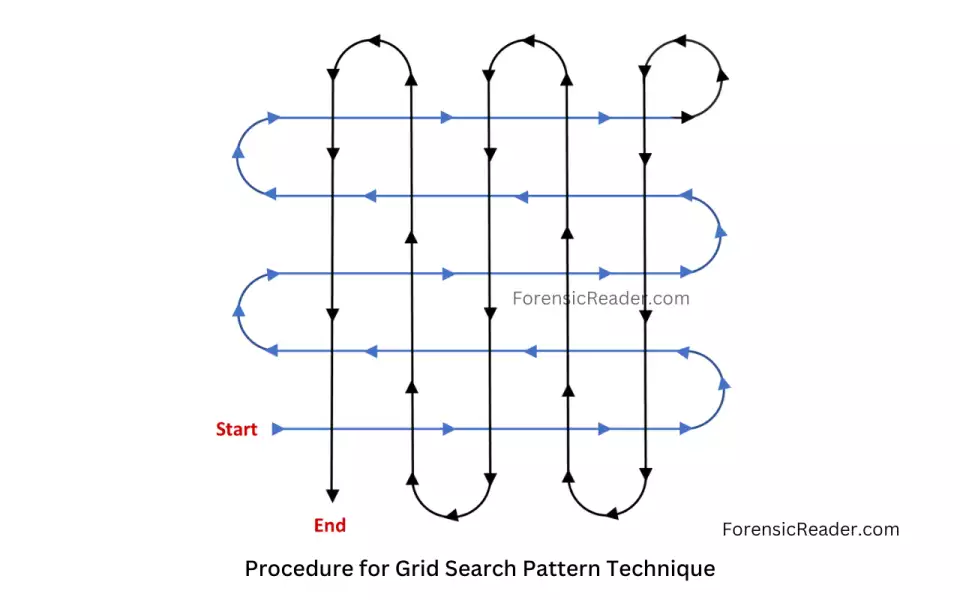
Grid Method
A search pattern that performs two successive, perpendicular line/strip searches over the same area to ensure thorough coverage of large outdoor areas.
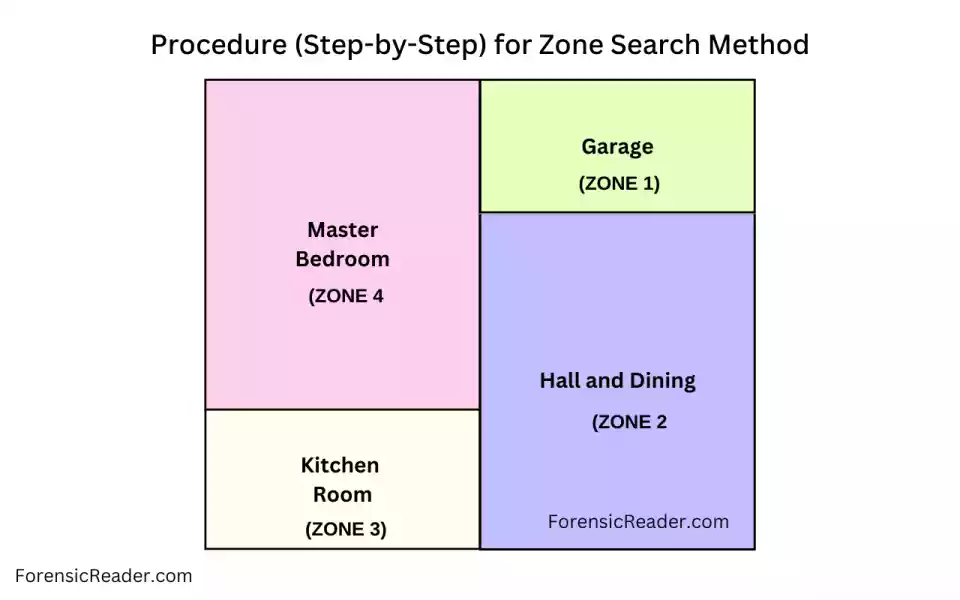
Zone (Quadrant) Method
A search method where the crime scene is divided into manageable sectors, rooms, or quadrants, which are then searched individually using other patterns.
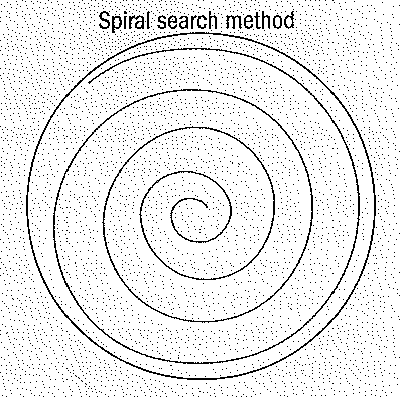
Spiral Method
A search pattern where the investigator moves along an inward or outward circular spiral path, commonly employed in scenes with no physical barriers or in open water.
Wheel (Ray) Method
A search method that begins at a central point and moves straight outward along radial paths, or vice versa, typically utilized in small, circular crime scenes.
Informal / Rough Sketch
A quick, preliminary freehand drawing of a crime scene made at the scene that records evidence locations and approximate dimensions, but is not drawn to scale.
Formal / Finished Sketch
A precise, scaled final diagram of a crime scene completed after initial documentation that includes a key, compass orientation, scale, and exact measurements.

Overview Sketch
A top-down bird\'s-eye view floor plan or overhead map displaying the horizontal dimensions and evidence locations of a scene.

Elevation Sketch
A vertical-plane crime scene diagram illustrating vertical surfaces, showing slopes, heights, elevations, or evidence on walls, windows, and stairs.

Exploded Sketch (Cross-Projection)
A diagrammatic sketch where walls and ceiling are laid flat like an unfolded box, enabling evidence on floors and walls to be visualized simultaneously.

Perspective Sketch
A sketch drawn in three dimensions to represent objects and their spatial depth relations as they appear to the human eye.
Polygraph (lie detector)
An instrument commonly termed a lie detector that records multiple involuntary physiological responses (breathing, pulse, blood pressure, skin conductivity) as questions are asked.
Control Questions
Baseline inquiries asked during a polygraph examination to establish an individual\'s normal resting physiological baseline for comparison.
Case-Relevant Questions
Inquiries directly pertaining to the crime under investigation during a polygraph exam, whose physiological responses are evaluated against baseline data.
Physiological Data (Polygraph)
Involuntary autonomic metrics recorded during a polygraph exam, including diaphragmatic breathing, thoracic breathing, perspiration (sweat), pulse, blood pressure, and body movements.
Cuticle
The outermost protective coat of a hair shaft, formed by overlapping, hard keratinized cells that resemble scales or roof shingles.
Cortex
The thick middle structural layer of a hair strand that contains pigment granules and gives hair its strength, moisture, color, and texture.
Medulla
The innermost central canal or cellular core of a hair shaft, which may be continuous, fragmented, or absent entirely (especially in fine or light blonde hair).

Arch Pattern
A fingerprint pattern in which ridge lines enter from one side of the print, rise slightly in the center, and flow out smoothly through the opposite side without forming recurving loops or deltas.

Loop Pattern
A fingerprint pattern featuring friction ridges that enter from one side, curve backward around a central core, and exit toward the originating side, possessing exactly one delta.

Whorl Pattern
A fingerprint pattern characterized by circular, spiral, or concentric circular ridge formations that make complete circuits and contain two or more deltas.

Minutiae
Tiny, individual ridge characteristics within a fingerprint—such as ridge endings, forks (bifurcations), short ridges, dots, bridges, hooks, eyes, and deltas—used to establish positive identification.
Latent Fingerprint
An invisible friction ridge impression deposited onto a surface by transferred natural perspiration, oils, and body secretions, requiring development methods to visualize.
Digital Evidence
Information or operational data of forensic value that is stored on, transmitted by, or extracted from electronic and digital devices.
Digital Forensics Investigator
A specialized forensic analyst responsible for locating, retrieving, securing, and analyzing digital data from computers, cell phones, and electronic memory drives.
Plasma
The pale-yellow liquid extracellular component of blood, consisting of approximately 92% water, 7% proteins (albumins, globulins, fibrinogen), and 1% dissolved electrolytes, nutrients, and waste.
Erythrocyte
A biconcave, non-nucleated red blood cell containing hemoglobin, specialized for transporting respiratory gases (oxygen and carbon dioxide) between the lungs and body tissues.
Hemoglobin
An iron-containing protein package found inside erythrocytes that reversibly binds oxygen molecules for transport throughout the circulatory system.
Leukocytes
Nucleated, colorless white blood cells of the immune system (such as neutrophils, lymphocytes, monocytes, eosinophils, and basophils) that defend the body against infections and disease.
Thrombocytes
Colorless, non-nucleated cellular fragments called platelets that adhere to damaged tissue walls and aggregate to form clots during blood coagulation.
Presumptive Test
A quick preliminary test used to screen for whether a recovered unknown biological stain could be blood based on the catalytic activity of hemoglobin\'s iron.
Kastle-Meyer Test
A presumptive blood test utilizing phenolphthalein and hydrogen peroxide, which oxidizes in the presence of hemoglobin\'s iron cofactor to turn bright pink.

Leucocrystal Violet (LCV)
A chemical reagent used for presumptive blood testing and enhancement of latent bloodstain patterns, producing a distinct violet-purple color reaction upon contact with hemoglobin.
Luminol
A presumptive reagent that reacts with the iron in blood via chemiluminescence, causing latent or cleaned-up bloodstains to emit a bright blue glow under darkness.

Confirmatory Test
A highly specific laboratory test used to definitively and conclusively identify that a suspected substance is human blood.
RSID Blood Test
A rapid stain identification test that uses an antibody-coated strip to confirm human blood by detecting the human erythrocyte membrane antigen glycophorin A.

ABO Blood Typing Test
A laboratory test that classifies blood into group A, B, AB, or O by exposing patient red blood cells to known anti-A and anti-B antibodies to observe agglutination.
Antigen
A specific protein or carbohydrate molecule situated on the surface of erythrocyte membranes that can induce an immune response and defines blood types.
Antibody
A circulating serum protein of the immune system that binds specifically to its corresponding complementary foreign antigen.
Agglutination
The clumping reaction that occurs when red blood cells containing specific surface antigens interact with corresponding serum antibodies.
Passive Stain
Bloodstains—such as drops, flows, and pools—created purely by the downward force of gravity acting on liquid blood without an external kinetic force.
Transfer Stains
Blood patterns generated when a wet, bloody object comes into physical contact with an unstained surface, producing swipes, wipes, or recognizable pattern transfers.
Projected / Impact Stains
Bloodstains resulting from an external kinetic energy force or pressure acting on a source of blood, producing spatters, arterial spurts, or cast-off tracks.

Cast-off Stains
A projected bloodstain pattern formed by droplets released from a blood-bearing object (such as a bat or weapon) during its swinging trajectory.

Point of Origin
The three-dimensional location in space from which blood droplets originated during an impact event, determined by calculating lines of convergence and impact angles.

Angle of Impact
The acute internal angle formed between the flight path of a blood droplet and the flat target surface it strikes, calculated using θ=arcsin(lengthwidth).
Independent Variable
The variable in a scientific experiment that is deliberately changed or manipulated by the researcher; an experiment is limited to only one independent variable.
Dependent Variable
The factor measured or observed in an experiment that changes in direct response to the manipulation of the independent variable.
Controlled Variable (Constant)
Any factor in an experimental setup that is intentionally kept constant and unchanging throughout all trials across all test groups.
Control Group
The standard reference group in an experiment that is maintained under normal baseline conditions or left unexposed to the independent variable for comparison.
Deoxyribonucleic Acid (DNA)
A biological macromolecule composed of nucleotide chains that carries hereditary genetic instructions for synthesizing proteins and directing cell activities.
Double Helix
The characteristic spiral ladder structure of double-stranded DNA, composed of two antiparallel polynucleotide chains held together by complementary base pairs.
Nucleotide
The monomer subunit of DNA, consisting of a deoxyribose five-carbon sugar, a phosphate group, and one of four nitrogenous bases (adenine, thymine, guanine, or cytosine).
Deoxyribose
The five-carbon pentose sugar component found in DNA nucleotides that links covalently to a phosphate group to form the structural backbone.
Phosphodiester Bond
The strong covalent chemical linkage joining the phosphate group of one nucleotide to the hydroxyl group on the 3\' carbon of the deoxyribose sugar in an adjacent nucleotide.

Purines
Double-ring nitrogenous bases found in nucleic acids, consisting of Adenine (A) and Guanine (G).
Pyrimidines
Single-ring nitrogenous bases found in nucleic acids, consisting of Thymine (T) and Cytosine (C) in DNA, and Uracil (U) in RNA.
Gene
A discrete coding sequence of nucleotide bases along a segment of DNA that provides instructions for building a specific functional protein.
Allele
Different alternative sequence versions of the same gene that code for variations of a particular phenotypic trait.

Single Nucleotide Polymorphism (SNP)
A variation at a single specific nucleotide base position within a genomic sequence that differs among individuals in a population.
Short Tandem Repeat (STR)
Short sequences of DNA (typically 2–6bp long) that repeat consecutively in tandem, where the repeat count varies highly from person to person.

Polymerase Chain Reaction (PCR)
A laboratory technique used to amplify and produce millions of copies of a targeted DNA region through repeated cycles of denaturation, annealing, and extension.

Restriction Enzyme (Endonuclease)
A bacterial enzyme that recognizes a specific palindromic DNA sequence and cleaves phosphodiester bonds, cutting DNA into fragments with sticky or blunt ends.

Gel Electrophoresis
A laboratory method that separates negatively charged DNA fragments through an agarose gel toward the positive anode according to size, where smaller fragments travel farther.
DNA Ladder (Marker)
A standard solution of DNA fragments of known base pair (bp) sizes loaded into a gel lane to calibrate and estimate the sizes of unknown experimental bands.