ANS 214L - Practical 1
 Call Kai
 Learn
Learn Practice Test
 Spaced Repetition
 Match
Match Flashcards
 Knowt Play
1/375

There's no tags or description
Looks like no tags are added yet.
Name | Mastery | Learn | Test | Matching | Spaced | Call with Kai | Chat |
|---|
No analytics yet
Send a link to your students to track their progress
376 Terms
brachi-
arm
cauda-
tail
cervic-
neck
corpus
body
ped, pod
foot
pharyngo-, laryngo-
throat
nas-, rhin-
nose
-plasty
plastic surgery
pleur-
chest lining
pneum-, pulm-
lungs
thora-
chest
trache-
windpipe
salivary glands
Glands of the mouth that produce saliva, a digestive secretion

What are the three parts of the salivary glands?
parotid, submandibular, sublingual

Paritoid Salivary Gland
located below the ears

submaxillary (submandibular) salivary gland
located at the base of the jaw on the medial edge

sublingual salivary gland
located on either side, below the tongue

What does saliva contain?
water, mucin, salivary amylase, secretory immunoglobulin A, electrolytes, lingual lipase, lysozyme

function of the salivary gland
the salivary glands secrete mucin, bicarbonate, water, and salivary amylase
buccal cavity
empty space in the mouth

hard plate
roof of the mouth with underlying bone
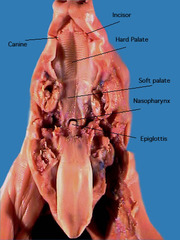
soft plate
The softer tissue posterior to the hard plate

Pharynx
the open space behind the buccal cavity. it begins at the soft plate and ends at the juncture of the larynx and esophagus
T/F The pharynx is a joint passageway for both food/drink and air, and is thus part of both the digestive and respiratory system
true
larynx
part of the respiratory tract between the pharynx and the trachea
function of the larynx
vocalization, contains vocal cords
thyroid cartilage of larynx
forms anterior wall of the larynx and functions of protect the vocal cords

epiglottis
curled inside the opening into the trachea, blocks the larynx during swallowing - PREVENTS FOOD AND DRINK FROM ENTERING THE LARYNX (and into the lungs)

trachea
transports air from the larynx to the bronchi (white)

esophagus
carries ingested food from the pharynx to the stomach (pink)

pleura
membrane lining the walls of the thoracic cavity

pleura function
cushion the lungs and provides lubrication to allow the lungs to move smoothly within the thoracic cavity

lungs
paired organs are dorsal to the heart

lungs functions
air distribution and gas exchange

heart
located caudally to the larynx and ventrally to the lungs

pericardium
Membrane surrounding the heart

pericardium function
functions to contain the heart within the chest cavity and to prevent the heart from over-expanding when blood volume increases

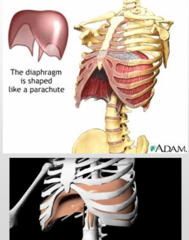
diaphragm
skeletal muscle separates the thoracic cavity

diaphragm function
increases the size of the thoracic cavity
peritoneum
membrane that lines the abdominal cavity and surrounds the vital organs

peritoneum function
supports the vital organs and serves as a conduit for blood and lymph vessels and nerves

liver function
major metabolic processing unit that maintains levels of nutrients in the blood, function is secretion of bile

gall bladder function
stores and secretes bile

stomach function
produces HCl and the enzyme pepsinogen to being the digestion of proteins

greater omentum
part of peritoneum, covers the stomach and looks lacey in appearance

greater omentum function
part of the immune system, leukocyte production occurs here, fat can be deposited here

spleen functions
- largest lymphatic organ in the body, part of immune system and produces lymphocytes
- removes old and damaged erythrocytes, recycling components for other uses in the body

pancreas
looks like chewing gum, found in duodenal loops of the small intestine

pancreas function
both endocrine functions, secretes hormones insulin and glucagon, and exocrine functions, secretes digestive enzymes like proenzymes

three parts of the small intestine
duodenum, jejunum, ileum

which is longer, the small intestine or large intestine
the small intestine
small intestine functions
digestion of foodstuffs and absorption of the digestive products

duodenum
- first part of the small intestine, which receives chyme from the stomach, forms a duodenal loop

duodenum function
produces lots of bicarbonate to neutralize the acidic chyme and receives bile from the gall bladder and the enzymes secreted by the pancreas

jejunum
middle part of the small intestine, usually the longest

jejunum function
digestion of proteins and carbohydrates is fairly complete, absorption of amino acids, monosaccharides, calcium, and iron occurs here

ileum
connects to the large intestine, enters the large intestine at a y-shaped juncture with the cecum and colon

ileum function
absorption of biles, salts, water, electrolytes, and vitamin B12

ileocecal valve
regulates flow of material from the ileum into the large intestine

mesentery
folds of the peritoneum that connect and anchor the small intestine

hepatic portal system
network of blood vessels that collects blood from the stomach, small intestine, and large intestine
hepatic portal system function
delivers the blood, which will be high in absorbed nutrients after a meal, directly to the liver

large intestine
Absorbs water and forms feces, larger in diameter and thinner walled than the small intestine,

three sections of the large intestine
cecum, colon, rectum

cecum (blind sac and first part of large intestine)
microbial fermentation of residual starch and some cellulose, and absorption of fermentation products and water occurs here

colon (middle part of large intestine)
longest part of the large intestine, microbial fermentation of residual starch and some cellulose, and absorption of fermentation products and water occurs here

rectum
last part of the large intestine, responsible in formation of the characteristic shape of droppings found in many animals
what is the cecum, colon, and rectum all involved in?
fermentation
anus
external opening of digestive tract, fecal matter exits here
kidneys function
removal of waste products from blood and regulation of blood volume and body pH

urinary bladder
stores urine in mammals

T/F Equine animals do not have a gall bladder
true
T/F In piglets, the small intestine is approx 2-4 meters long. In mature pigs, the small intestine is approx 16-21 meters long. Majority of growth is in the first two weeks of life
true
name three major parts of salivary glands. where is each located?
parotid: below ears
submaxillary: base of jaws
sublingual: below tongue
what are the four major components of saliva?
bicarbonate, mucin, water, salivary amylase
what are the two major body cavities?
dorsal and ventral
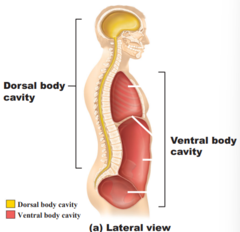
what major organs are located in the ventral and dorsal cavities?
ventral: heart, lungs, stomach, intestines, repro organs
dorsal: brain and spinal cord
what are the parts of the small intestine?
duodenum, jejunum, ileum
what are the parts of the large intestine?
cecum, colon, rectum
arteri-
artery
cardi-
heart
-emia
blood
erythro-
red
hemo-
blood
leuko-
white
vaso-
vessel
Functions of the circulatory system
- carry nutrients like amino acids, glucose, fatty acids and oxygen to tissues
- carry waste products from tissues for disposal like urea, NH3, and CO2
- lymphatic system

lymphatic system
return extracellular fluid to the veins, functions in disease control

arteries
carry blood AWAY from the heart
Arteries have three layers made up of
connective tissue, elastin and collagen, and smooth muscle
elastin
protein that allows for greater elasticity of tissues
- found in skin, lung, and artery tissues

collagen
main structural protein which provides strength to tissues and gives protection to more fragile structures like organs (kidneys and spleen)
- makes up 25-30% of body protein

How many layers of tissue do arteries have?
3
tunica intima
innermost layer, consists of a continuous layer of epithelial cells that line the lumen and a layer of supporting connective tissue

tunica media
middle layer, contains smooth muscle circularly arranged elastin. this is usually the thickest

Tunica Aventitia (Externa)
outer most layer, connective tissue containing elastin and collagen

what are the three types of arteries?
elastic, muscular, arterioles
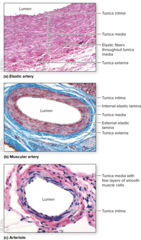
elastic (large) arteries
large, thick walled arteries near the heart; have a high proportion of elastin. includes the aorta and its major branches

muscular (distributing) arteries
deliver blood to specific body organs. have a high proportion of smooth muscle

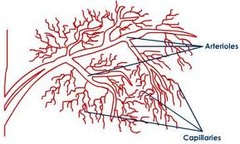
arterioles
the smallest arteries, with lesser proportions of smooth muscle and elastin