MGT 3303 Test 1 Review
 Call Kai
 Learn
Learn Practice Test
 Spaced Repetition
 Match
Match Flashcards
 Knowt Play
1/69

Earn XP
Description and Tags
Name | Mastery | Learn | Test | Matching | Spaced | Call with Kai | Chat |
|---|
No analytics yet
Send a link to your students to track their progress
70 Terms
What is management?
process of working with people and resources to accomplish organizational goals. good managers are both effective and efficient
What is effectiveness?
to achieve organizational goals (outcome)
What is effciency
to achieve goals with minimal waste of resources
what are the 5 functions of management
planning, organizing, staffing, leading, and controlling
4 levels of managers
top managers, middle managers, first-line managers, team leaders
Interpersonal Roles
leader, liaison, figurehead
leader
developing effective strategies to achieve organizational goals
liaison
maintaining a network of outside stakeholders and alliances that provide information and favors
figurehead
performing symbolic duties on behalf of an organization, like greeting important visitors and speaking at important events
planning
specifying the goals to be achieved and deciding in advance appropriate actions needed to achieve goals
organizing
process of assembling and coordinating the human, financial, physical, informational, and other resources needed to achieve goals
staffing
A management function that includes hiring, motivating, and retaining the best people available to accomplish the company's objectives
leading
stimulating people to be high performers. includes motivating and communicating with employees. managers must be good at mobilizing and inspiring
controlling
about monitoring performance and making necessary changes in a timely manner. is this going the way it should, can i use less resources. looks at expected outcome
technical skills
ability to perform a specialized task that involves a certain method or process
Conceptual and decision skills
skills pertaining to the ability to identify and resolve problems for the benefit of the organization and its members
interpersonal and communication skills
people skills; the ability to lead, motivate, and communicate effectively with others
Informational Roles
monitor, disseminator, spokesperson
monitor
seeking information to develop a thorough understanding of the organization and its environments. bring info in
Disseminator
sharing information between different people. sending out info
spokesperson
communication on behalf of the organization about plans, policies, actions, and results
Decisional Roles
entrepreneur, disturbance handler, resource allocator, negotiator
4 Manager Skills
interpersonal, technical, conceptual and decision, design
Design skills
skills needed to solve that problem. come out with best outcome
who has a lot of power over companies
customers and suppliers
evironmental scanning
the process of collecting information about forces in the marketing environment
diversification
a firm’s investment in a different product, business, or geographic area
prospector
are those characterized by a broad product domain, innovation and change and have a flexible organization structure.
defenders
companies that stay within a stable product domain as a strategic maneuver
Benchmarking
a process by which a company compares its performance with that of high-performing organizations
independent strategies
strategies that an organization acting on its own uses to change some aspect of its current environment
Generic Strategies
three widely applicable classic strategies for businesses of all types- differentiation, cost, and focus
low-cost leadership
the company maintains an advantage because it operates at lower cost than its competitors
Differentiation strategy
advantage of having a unique good or service for which customers are willing to pay a premium price
organizational culture
the set of assumptions that members of an organization share to create internal cohesion and adapt to the external environment
3 levels of organizational culture
observable artifacts, values, unconscious assumptions
visible artifacts
visible signs of an organization's culture, such as the office design and layout, company dress code, and company benefits and perks, like stock options, personal parking spaces, or the private company dining room
values
the underlying qualities and desirable behaviors that are important to the organization
unconscious assumptions
strongly held and taken-for-granted beliefs that influence behavior in the firm
a ___ culture can be a real advantage to the organization if the behaviors it encourages and facilitates
strong
Mission Statement
a short, specific written statement of the reason a business exists and what it wants to achieve
clan culture
Type of organizational culture that has an internal focus and values flexibility rather than stability and control
Hierarchical Culture
Ordered, Uniform
Hierarchical Culture
Ordered, Uniform
Leader as administrator
Bonded by formal Rules, Policies
Emphasis on predictability and consistency of processes
Success= smooth dependable delivery of service
perspective shapes your what?
ethics
universalism
the ethical system stating that all people should uphold certain values that society needs to function
egoism
an ethical principle holding that individual self-interest is the actual motive of all conscious action
utilitarianism
an ethical system stating that the greatest good for the greatest number should be the overriding concern of decision makers
relativism
a philosophy that bases ethical behavior on the opinions and behaviors of relevant other people
Sarbanes-Oxley (SOX) Act
an act that established strict accounting and reporting rules to make senior managers more accountable and to improve and maintain investor confidence
Sarbanes-Oxley made it harder for companies to retaliate against
whistle blower
scenario planning
a systematic process of thinking about alternative futures and what the organization should do to anticipate and react to those environments
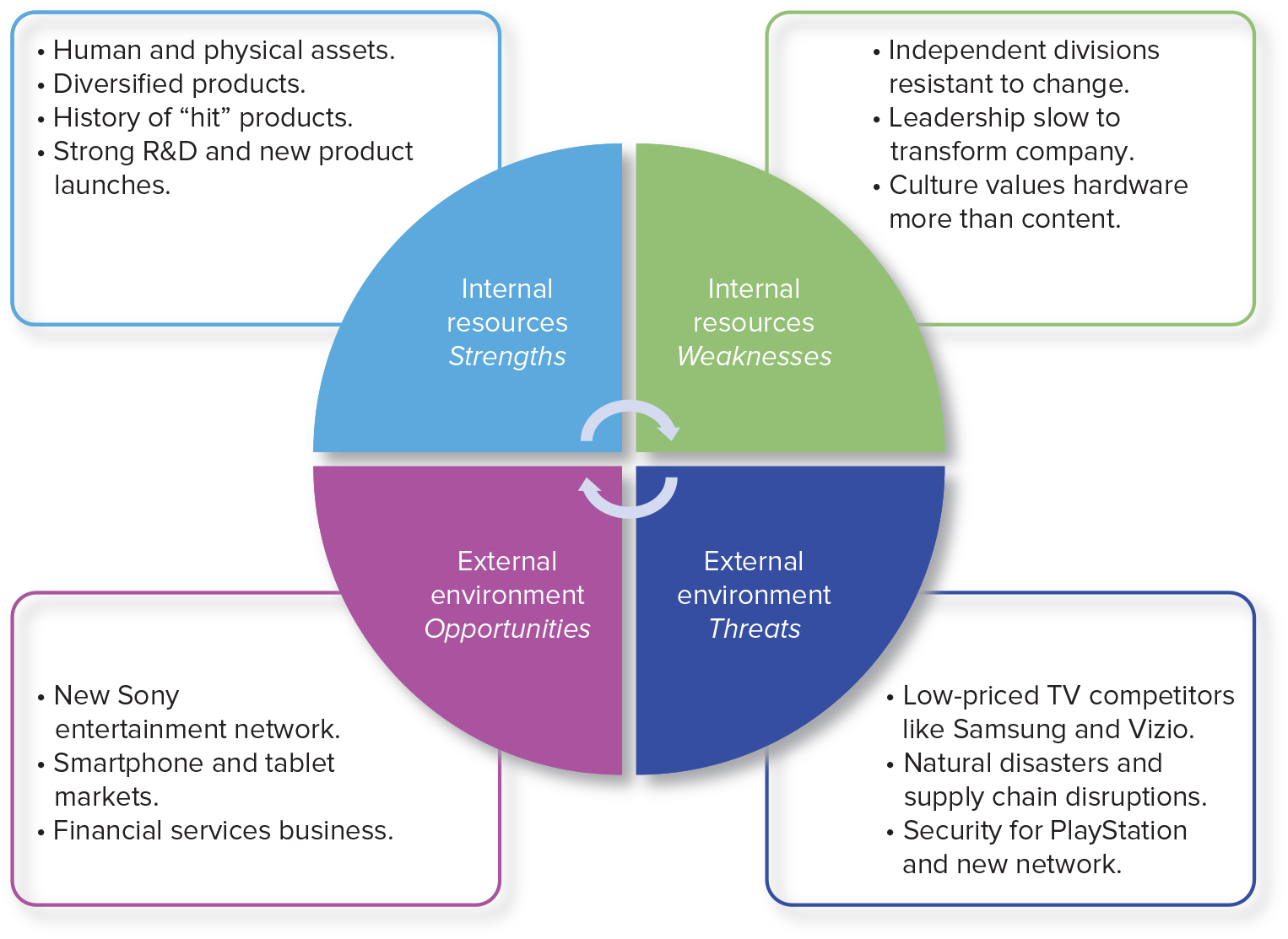
SWOT analysis
a comparison of strengths, weaknesses, opportunities, and threats that helps executives formulate strategy
Corporate Strategy
the set of businesses, markets, or industries in which an organization competes and the distribution of resources among those entities
4 types of corporate strategy
concentration, vertical integration,, related diversification, unrelated diversification
BGC Matrix
analyzes business opportunities according to market growth rate and market share
4 Categories of BCG Matrix
stars, question marks, cash cows, dogs
situational analysis
a process planners use, within time and resource constraints, to gather, interpret, and summarize all information relevant to the planning issue under consideration
formal planning steps
1. Situational Analysis
2. Alternative Goals and Plans
3. Goal and Plan Evaluation
4. Goal and Plan Selection
5. Implementation
6. Monitor and Control
operational planning
the process of identifying the specific procedures and processes required at lower levels of the organization
strategic vision
the long-term direction and strategic intent of a company
tangible assets
real estate, facilities, raw materials, etc
intangible assets
reputation, culture, patents, knowledge, learning
swot example
internal and external
concentration
a strategy employed by an organization that operates a single business and competes in a single industry
vertical integration
the acquisition or development of new businesses that produce parts or components of the organization’s product
related diversification
a strategy used to add new businesses that produce related products or are involved in related markets and activities
unrelated diversification
a strategy used to add new businesses that produce unrelated products or are involved in unrelated markets and activities
functional strategies
strategies implemented by each functional area of the organization to support the organization’s business strategy
barriers to entry
conditions that prevent new companies from entering an industry