Lab 11
 Call Kai
 Learn
 Practice Test
 Spaced Repetition
 Match
 Flashcards
 Knowt Play
1/30

There's no tags or description
Looks like no tags are added yet.
31 Terms
layers of skin from superficial to deep.
epidermis, dermis, hypodermis, muscle
Identify the cell indicated by the line.
Identify the cell indicated by the line.
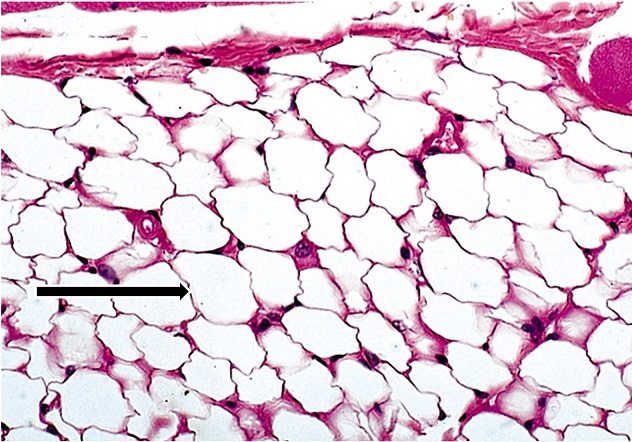
adipocyte
facts regarding epithelial structure/function.
simple squamous epithelium allows for rapid diffusion. the microvilli on simple columnar epithelium helps to maximize absorption. transitional epithelium of the urinary bladder can change shape to accomodate bladder wall stretching.
Identify the tissue shown in the image.
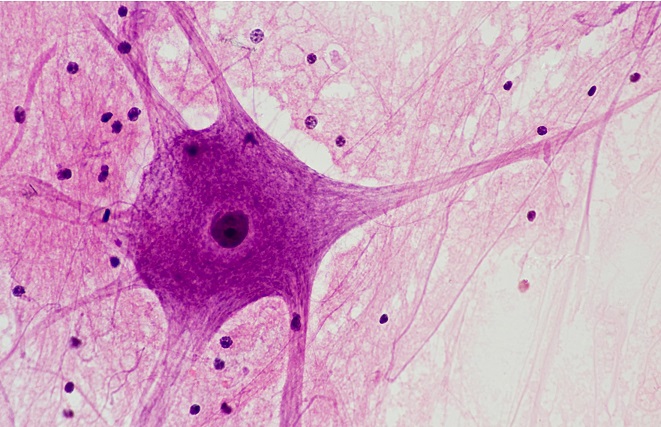
nervous tissue
epithelial tissue is composed of cell and matrix
false
what are functions of connective tissue?
they support the internal frame of the body, store energy, hormone transport, protect the vital organs, form the structural framework of the liver.
what are functions of the simple columnar epithelium?
absorption, secretion of mucus, movement of egg through uterine tube, movement of embryo through uterine tube
what is not a function of simple columnar epithelium?
filtration
what are functions of epithelial tissue?
protection, absorption, sensation, structure building.
what are places you would find non kerantinized stratified squamous epithelium?
esophagus, vagina
what are places you would not find non kerantinized stratified squamous epithelium?
epidermis of skin, trachea of the respiratory tract, endothelium of arteries
what is epithelium that consists of more than one layer of cells called?
stratified
a single layer of columnar or high cuboidal cells resting on a basement membrane.
basale
is composed of many layers of keratinocytes that are firmly attached to each other by desmosomes. This layer also contains dendritic cells.
spinosum
is composed of 3–5 layers of flattened keratinocytes containing dark staining keratohyalin granules.
granulosum
a translucent layer composed of 3–5 layers of keratinocytes without nuclei or organelles.
lucidum
composed of up to 30 layers of cornified, dead cells.
corneum
what describes kerantinocytes?
Produce proteins and lipids associated with waterproofing of the skin (keratin and lamellar granules) The most common cell type in the epidermis (make up about 90% of epidermal cells) Produced by undifferentiated stem cells in the stratum basale
what describes melanocytes?
Produce the pigment (melanin) that shields nuclei from UV light. Increased production rates of pigment in darker-skinned individuals (note: all humans have roughly the same number of melanocytes, just differing rates of melanin production and breakdown)
the order of layers of epidermis from superficial to deep.
corneum, lucidum, granusolum, spinosum, basale
Which of the following is a true statement regarding sebaceous glands?
they secrete an oily substance called sebum. they are found at the base of eyelash hairs. they are responsible for the oil that coats the hair on your scalp.
what are characteristics of sebaceous glands?
coat the scalp hair with oil, blockage and infection can cause pimples, secretes sebum, usually open up the hair follicle
what are characteristics of ceruminous glands?
secrete earwax, waterproof the ear canal, simple coiled tubular glands in the external auditory meatus
Includes 4–5 strata (basale, spinosum, granulosum, lucidum, corneum)
Creates a water barrier with the environment
Avascular (receives nutrients via diffusion from the dermis)
Keratinized stratified squamous epithelium
epidermis
Principally comprised of dense irregular connective tissue (specifically in the reticular layer)
Includes hair follicles, glands, and blood vessels
Contains papillary and reticular layers
dermis
Not actually part of the skin (lies deep to the dermis, anchoring skin to underlying structures)
Abundant in adipose tissue
Functions in energy storage and insulation
hypodermis
As a result of impermeable cellular junctions and water-proofing lipids, how does the epidermis function?
in creating a barrier to some fluids.
Skin contains keratin and desmosomes that confer a mechanical strength to the epidermis which does what?
resists mechanical traumas
The skin assists endocrine function by playing a role in what which is needed for calcium homeostasis
vitamin d synthesis
receptors for touch, cells associated with nervous system functions
tactile cells
cells of the lymphatic system, phagocytes that ingest pathogens of the epidermis
dendritic cells